How do you draw a submarine?
Short answer
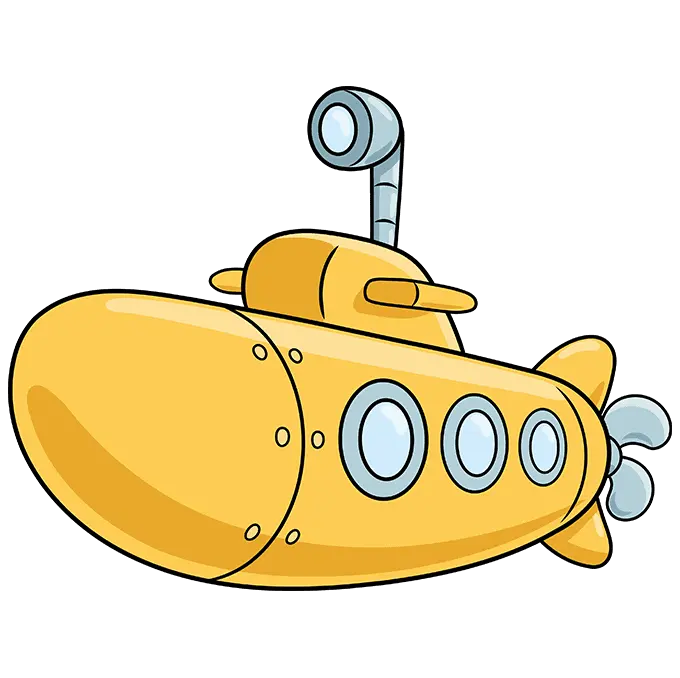
Drawing a submarine involves sketching a elongated, cigar-shaped hull with rounded ends. Add a central conning tower, known as a sail, and include details like periscopes, rudders, and propellers. Focus on maintaining a streamlined, hydrodynamic silhouette. By layering basic geometric shapes, you can easily construct a realistic vessel from any viewing angle.
On this page
How to draw a submarine for beginners
To draw a submarine, start by sketching a long, horizontal oval or a "pill" shape. This serves as the primary hull, which is the main body of the vessel. Keep your lines light so you can erase them later. Once the hull is established, draw a smaller rectangle or trapezoid on the top center to represent the sail. The sail is the vertical structure that houses the bridge and periscopes.
After establishing the basic silhouette, refine the shapes to look more hydrodynamic. Submarines are designed to move efficiently through water, so avoid sharp, jagged edges. Round off the bow, which is the front of the submarine, and taper the stern, the back end, to a point. Adding a slight curve to the bottom of the hull helps create a sense of depth and realism.
- Draw a long, thin oval for the hull.
- Add a trapezoid on top for the sail.
- Round the front and taper the back.
- Erase overlapping lines to clean up the form.
Best tools for drawing marine vessels
For beginners, a standard HB graphite pencil is ideal because it allows for both light sketching and darker detailing. Use a kneaded eraser to lift away graphite without damaging the paper surface. If you want to add professional polish, use a fine-liner pen to trace your final outlines. This creates a bold, technical look often found in naval blueprints or engineering diagrams.
When adding texture, consider using charcoal or soft pencils to shade the hull. Submarines are typically painted in dark, matte colors like black, dark grey, or navy blue to remain hidden underwater. Practice your shading by focusing on a single light source. This will help you create highlights along the top of the hull and deep shadows underneath, giving the drawing a three-dimensional, metallic appearance.
- Use HB pencils for initial construction lines.
- Utilize fine-liner pens for permanent outlines.
- Apply charcoal for realistic metallic shading.
- Use a ruler for straight periscope lines.
How to add realistic submarine details
Once the main structure is complete, focus on the functional components that make a submarine look authentic. Add a periscope, which is a thin, vertical rod extending from the top of the sail. You can also include radar masts or communication antennas near the sail to add complexity. These small, vertical details contrast with the smooth, horizontal lines of the hull, making the drawing more interesting.
Don’t forget the propulsion and steering systems located at the stern. Draw a small propeller at the very back of the hull and add vertical and horizontal fins, known as hydroplanes and rudders. These parts allow the submarine to steer and maintain depth. Keep these elements proportional to the size of the hull to ensure the vessel looks like it could actually function in the ocean.
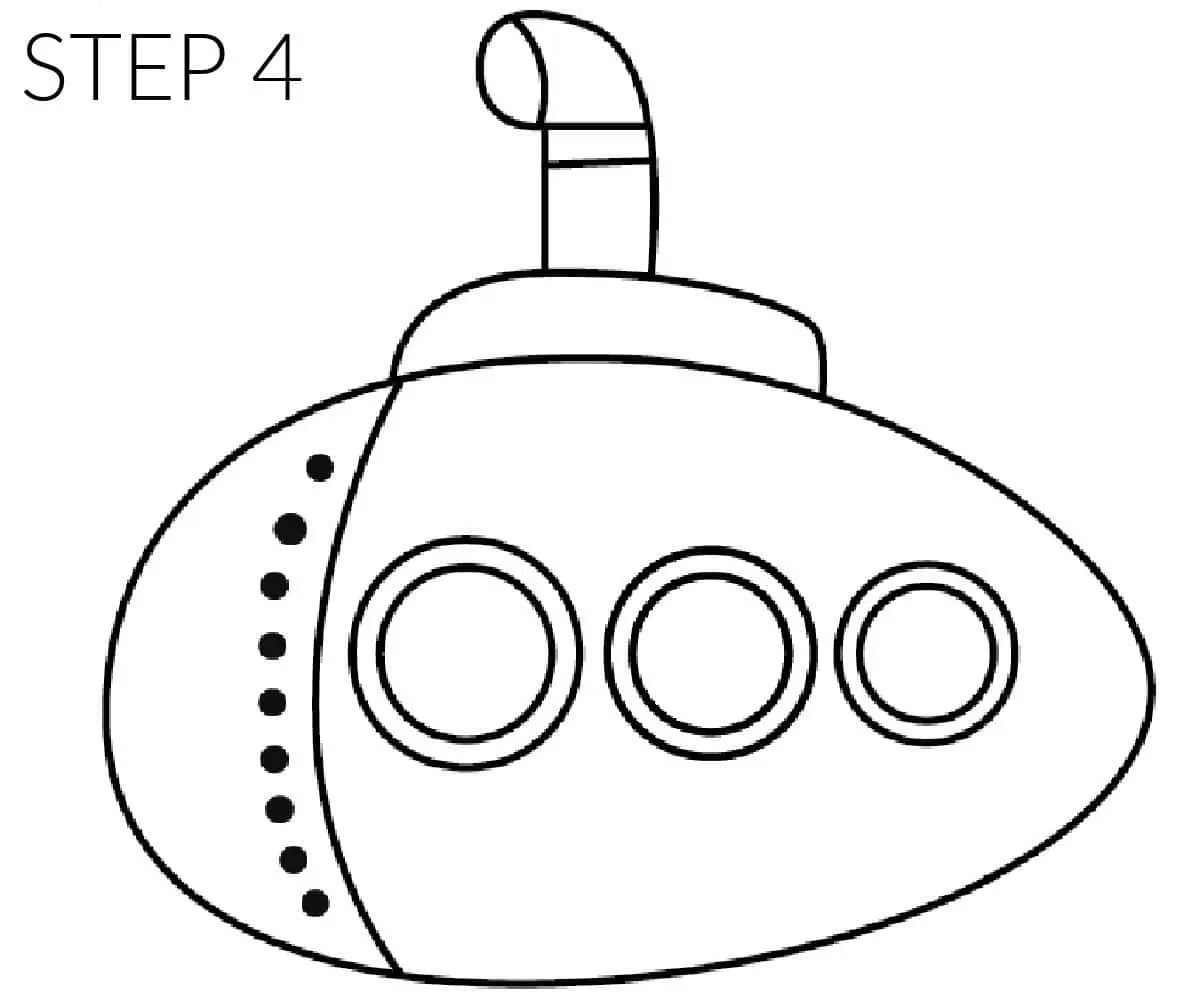
Common mistakes when drawing submarines
One of the most frequent errors is making the hull too boxy or rigid. Submarines are engineered to withstand immense pressure, meaning they rely on curved, circular cross-sections. If the hull looks like a rectangular box, it will lose the "underwater" aesthetic. Always ensure the nose and tail are rounded or tapered to maintain that iconic, sleek look characteristic of modern naval craft.
Another common mistake is neglecting the scale of the sail. If the sail is too large, the submarine looks like a small boat; if it is too small, the proportions feel off. Aim for a sail that occupies about one-fifth to one-sixth of the total hull length. Additionally, avoid placing too many windows or portholes on the hull. Most modern military submarines do not have large windows, as they would be structural weak points.
Why submarines look the way they do
The design of a submarine is dictated entirely by physics and fluid dynamics. The cigar-like shape minimizes drag, allowing the vessel to glide through water with minimal noise and energy consumption. This is why your drawing should prioritize smooth, continuous curves over complex geometry. Understanding that the hull is essentially a pressure vessel helps you visualize why the shapes remain simple and reinforced.
When you finish your drawing, consider adding an environment to provide context. A few simple horizontal lines representing the water surface or bubbles rising from the stern can bring the image to life. By keeping the background minimal, you ensure that the submarine remains the focal point of your work. Practice these techniques consistently, and you will soon be able to draw various types of underwater vessels with ease and technical accuracy.
Key facts
- Submarines are primarily defined by their "teardrop" or cylindrical hull shape, which minimizes water resistance and manages high pressure.
- Start your drawing by sketching a long, slightly curved horizontal oval to serve as the main pressure hull.
- Always include a conning tower, or "sail," located on the top-center of the hull to house periscopes and radar equipment.
- Add horizontal planes, known as diving planes, near the bow and stern to help the vessel control its depth while submerged.
- A common mistake is drawing the propeller too large; in reality, submarine propellers are precision-engineered to be quiet rather than just powerful.
- Use a ruler to ensure the hull remains symmetrical, as uneven lines can make the vessel look unstable or unrealistic.
The bottom line
Drawing a submarine requires balancing structural accuracy with simple geometric shapes. By starting with a streamlined, cylindrical hull and adding essential features like the sail and hydroplanes, you create a recognizable profile. Focus on the vessel's sleek, functional design rather than complex surface details. Mastering these core components ensures your drawing captures the essence of these sophisticated underwater machines, whether you are sketching for fun or technical study.
People also ask
Why do most modern submarines have a teardrop shape?
This design, perfected in the 1950s with the USS Albacore, allows the vessel to move through water with minimal drag. It mimics the natural shape of marine mammals, which are highly efficient swimmers.
What is the purpose of the sail on top of a submarine?
The sail acts as a fairing for masts, antennas, and the periscope. It also provides a bridge for crew members to stand on when the submarine is surfaced.
How do you draw the windows on a submarine?
You generally should not draw windows on the main hull, as military submarines use sonar rather than visual observation to navigate. If you must add them, place them only on the sail's bridge area.
What are the small fins on the side of the hull?
These are hydroplanes, which act like wings underwater to steer the submarine up or down. They are essential for maintaining buoyancy and depth control during transit.
Should I add weapons to my submarine drawing?
You can add torpedo tube doors at the bow, which are typically represented by small circular or rectangular outlines. Avoid drawing external missiles, as these are usually stored inside vertical launch systems.
How can I make my drawing look more realistic?
Add details like hatch covers, drainage holes along the bottom, and subtle shading to show the curvature of the steel hull. Adding a waterline or bubbles can also provide a sense of scale and environment.
This answer was created with the help of AI research tools and reference sources. Spotted an error? Let us know — we correct mistakes quickly. See our editorial policy.