How do you draw a tiger face?
Short answer
Drawing a tiger face requires establishing a symmetrical foundation using basic geometric shapes. Focus on the triangular nose, almond-shaped eyes, and the distinct striped pattern. By layering these features onto a rounded head shape and paying close attention to fur direction, you can create a realistic and expressive feline portrait.
On this page
How to structure the basic tiger face shape
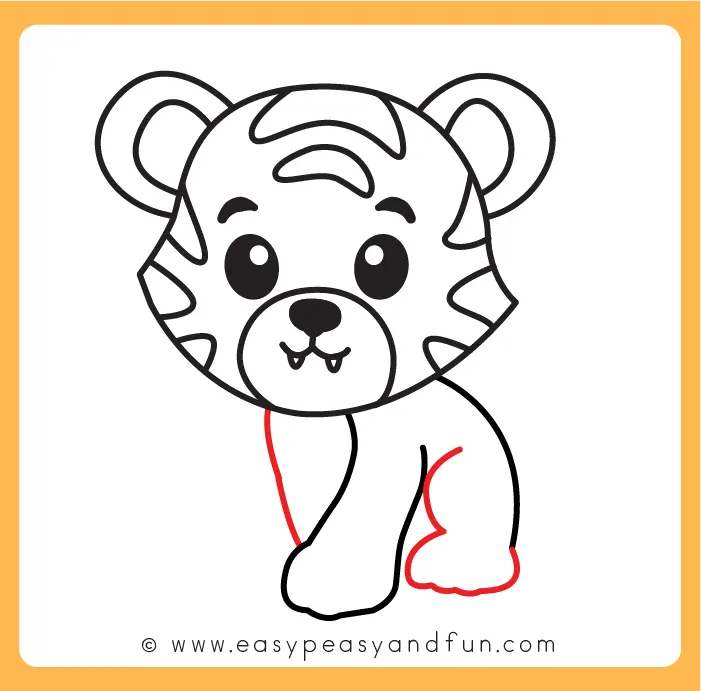
Begin by drawing a large circle to represent the cranium and a smaller, slightly flattened oval overlapping the bottom half for the muzzle. Tigers have broad, powerful skulls, so ensure the width of the head is substantial compared to the height. Use a light pencil to draw a vertical center line through both shapes to maintain symmetry, which is vital for a realistic look.
Once the main structure is set, add two smaller circles at the top of the head for the ears. Position these slightly to the sides rather than directly on top. The muzzle area should be divided into two distinct pads where the whiskers grow. Keep your initial lines very faint, as these serve only as a guide for the final features.
- Sketch a circle for the skull and a smaller oval for the muzzle.
- Draw a vertical line down the center to guide eye and nose placement.
- Add two rounded ear shapes at the upper corners of the skull.
- Mark the jawline by extending the sides of the head downward toward the chin.
What are the key facial features of a tiger
The eyes of a tiger are set forward and are almond-shaped with round pupils. Draw these along the horizontal midline of the upper circle, ensuring they are spaced far enough apart to accommodate the bridge of the nose. The nose itself is a prominent, fleshy triangle located at the top of the muzzle oval. It should be slightly wider at the base than at the top.
The mouth is defined by a downward-curving line that extends from the bottom of the nose, leading into the jowls. Tigers possess thick, white fur around the cheeks and chin, which adds volume to the lower face. When drawing the mouth, remember that the upper lip is often slightly tucked under the nose, while the lower jaw is robust and rounded.
- Eyes: Almond-shaped with intense, focused pupils.
- Nose: Triangular, often pink or dark brownish-red.
- Muzzle: Broad and rectangular, covered in dense, short fur.
- Whiskers: Long, stiff hairs emerging from the side pads.
How to draw realistic tiger stripes
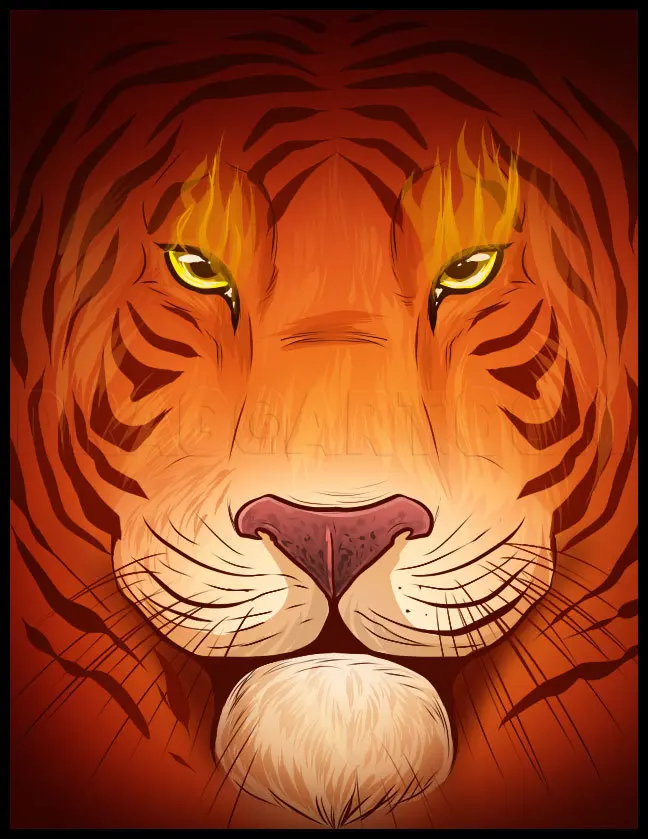
Stripes are the most recognizable feature of a tiger, yet they are not merely random lines. They follow the contours of the face, radiating outward from the nose and eyes toward the edges of the head. Use a tapering motion with your pencil to make the stripes thickest near the center and thinner at the ends. Avoid drawing perfectly straight lines; instead, use slightly wavy, irregular strokes to mimic the organic nature of fur.
Focus on the "M" pattern that often appears on the tiger’s forehead. This is a signature marking that helps define the animal's intense expression. As you move toward the cheeks and chin, the stripes should become shorter and more fragmented. Always consider the direction of the fur growth, as the stripes should appear to wrap around the three-dimensional form of the head rather than sitting flat on top of it.
Best tools for drawing a tiger face
For beginners, a set of graphite pencils ranging from 2H to 6B is ideal for capturing the contrast of a tiger's coat. The 2H pencil is perfect for the initial structural sketches, while the 4B and 6B pencils allow for deep, dark shading on the stripes and pupils. A kneaded eraser is essential for lifting graphite to create highlights, such as the glint in the eye or the white fur on the muzzle.
Using a smooth-surface drawing paper will help you achieve clean, sharp lines for the whiskers and individual hairs. If you prefer to add color, colored pencils or soft pastels work well for blending the orange and black tones. When layering colors, always start with the lightest shades and gradually add the darker stripes. This layering technique provides depth and prevents the colors from becoming muddy or overly dense on the paper.
Common mistakes when drawing a tiger face
One of the most frequent errors is making the eyes too small or too close together. Tigers have a wide facial structure, and placing the eyes too centrally makes the animal look more like a domestic cat than a powerful predator. Additionally, many artists fail to account for the thickness of the fur. Remember that the outline of the tiger’s head should not be a perfectly smooth circle; it should have a slightly fuzzy or jagged edge to represent the fur.
Another mistake involves the stripes. Beginners often draw them as uniform, parallel lines that look like a barcode. In reality, tiger stripes are varied in length and thickness, often branching off into smaller segments. Finally, ensure the nose is not too sharp or pointed. A tiger’s nose is broad and fleshy, which is a key characteristic of its anatomy. By observing these proportions and maintaining a focus on the organic flow of the stripes, you will achieve a much more convincing result.
Key facts
- A tiger’s head is roughly circular, but you should draw it as a slightly flattened oval to account for the jaw structure.
- The eyes of a tiger are positioned near the horizontal midline of the head, not at the very top.
- Tiger stripes are not uniform; they are irregular, jagged, and thicker toward the outer edges of the face.
- The "M" shape marking on a tiger’s forehead is a signature feature that acts as a visual anchor for the rest of the facial symmetry.
- A tiger’s ears are rounded, positioned on the upper corners of the head, and feature a distinct white spot on the back.
- Always sketch the muzzle as a separate, smaller rounded shape overlapping the lower third of the main head oval.
The bottom line
Drawing a tiger face requires careful attention to the structural proportions of the skull and the unique, irregular pattern of its stripes. By starting with a flattened oval and anchoring your design with the forehead "M" marking, you establish a realistic foundation. Focus on the heavy muzzle and properly placed eyes to capture the animal's intensity, ensuring your final details emphasize the natural, jagged flow of fur.
People also ask
Why does my tiger drawing look like a house cat?
You are likely making the muzzle too small and the eyes too large. Tigers have heavy, powerful snouts and smaller, more intense eyes relative to their skull size.
How do I make the stripes look realistic?
Avoid drawing straight lines or perfect triangles. Vary the thickness of each stroke and ensure they taper off into thin, wispy points as they reach the center of the face.
Should I draw the whiskers starting from the nose?
No, whiskers emerge from the whisker pads, which are the puffy areas on the sides of the muzzle. Place them slightly below the nose, extending outward in long, sweeping curves.
What is the best way to shade a tiger's fur?
Use short, directional pencil strokes that follow the growth pattern of the fur. Focus on creating depth around the eyes and under the jaw to give the face a three-dimensional appearance.
Are all tiger faces symmetrical?
While they appear symmetrical, natural markings often have slight variations. Aim for general balance, but do not worry about making every stripe a mirror image of the other side.
How do I draw the tiger's mouth effectively?
Draw a small, inverted "Y" shape for the nose and mouth area. Keep the mouth line relatively short unless you are drawing the tiger with its jaws open in a snarl.
This answer was created with the help of AI research tools and reference sources. Spotted an error? Let us know — we correct mistakes quickly. See our editorial policy.