How do you draw a teepee?
Short answer
Drawing a teepee involves creating a tall, narrow cone shape anchored by a series of intersecting poles. Start by sketching a wide triangle, then add vertical lines near the top to represent the wooden frame. Refine the structure by adding a flap opening and textured details to signify the canvas cover.
On this page
How to draw a basic teepee shape
To draw a teepee, begin by sketching a large, inverted V-shape on your paper. Connect the bottom ends with a slightly curved horizontal line to establish the base of the structure. This curved line creates the illusion of depth, making the circular floor of the teepee appear three-dimensional rather than flat. Ensure your triangle is tall and narrow, as traditional teepees are designed to be slender and aerodynamic.
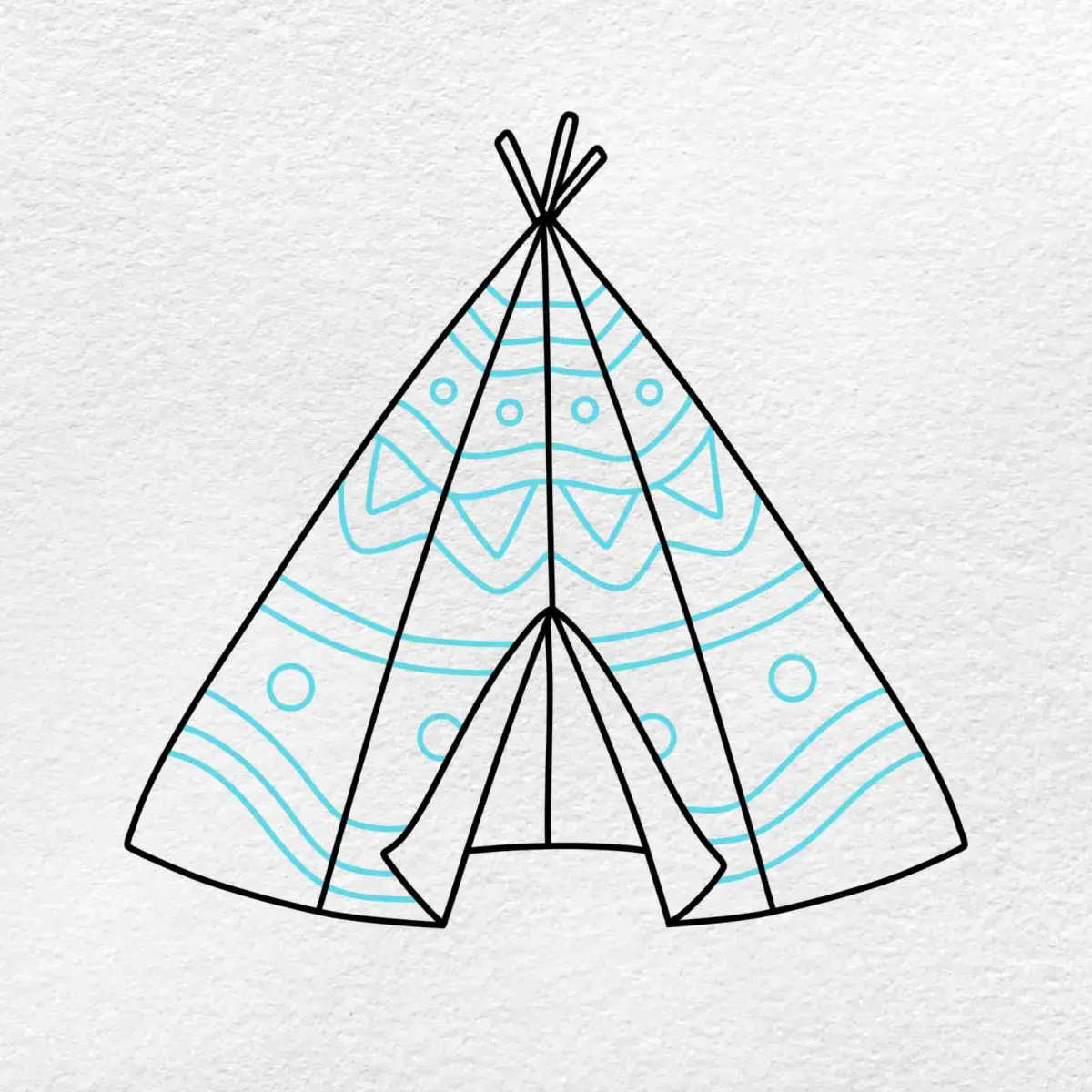
Once the main silhouette is established, draw a smaller, thin triangle or a rectangular flap on one side of the front face. This represents the entrance of the structure. You can add a small vertical line extending from the top of the cone to represent the poles poking through the cover. Keep your initial lines light so you can easily erase or adjust the proportions before finalizing the outline with a darker pencil or ink.
How to add realistic structural details
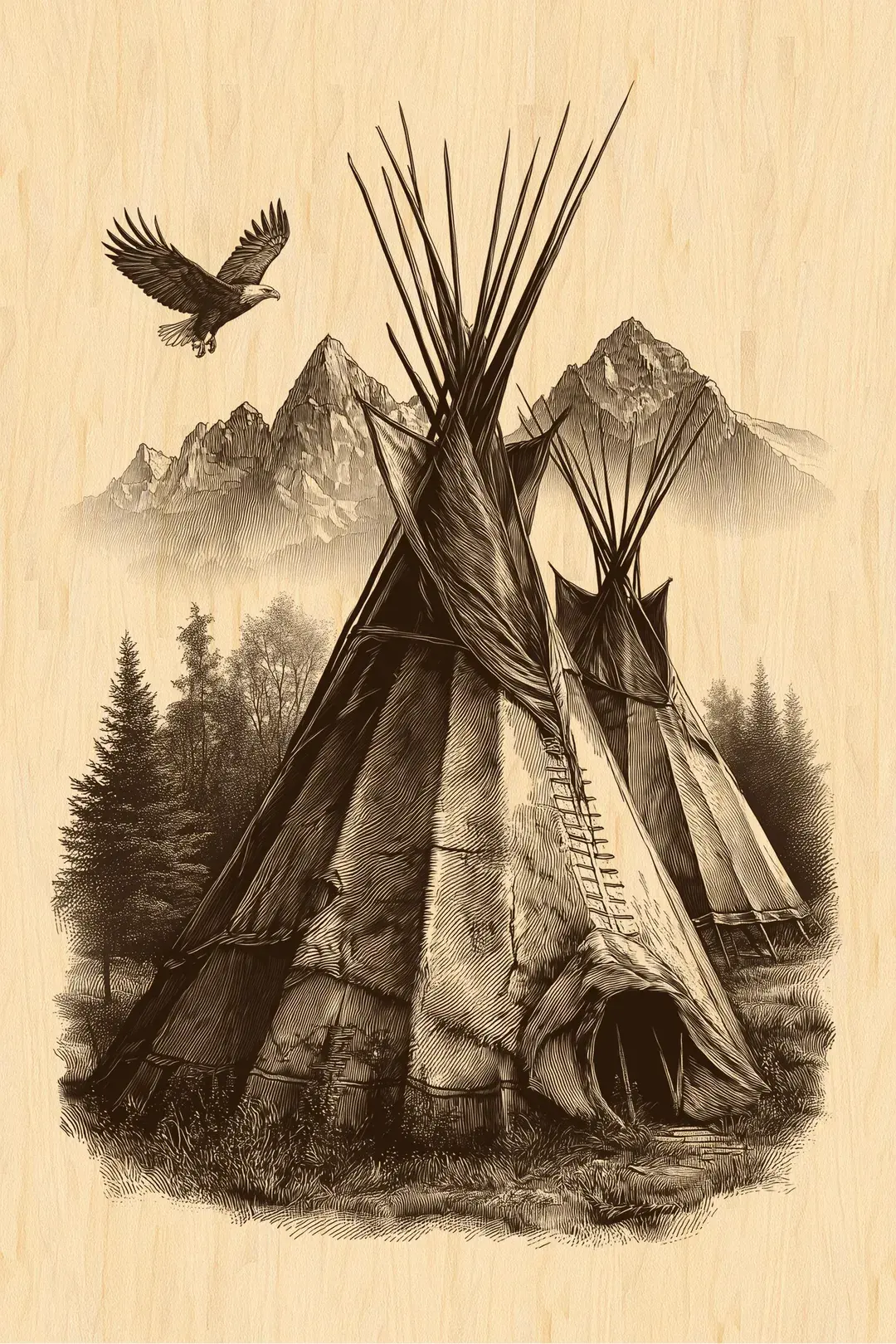
A teepee is defined by its wooden frame, which consists of long, sturdy poles bundled together at the top. To illustrate this, draw several straight lines extending from the apex of your triangle downward toward the base. These lines should be slightly uneven to mimic natural wood. Make sure these poles cross each other at the very top, as this intersection is the structural anchor of the entire dwelling.
Adding texture to the exterior cover is essential for a realistic look. You can use light, irregular strokes to suggest the heavy canvas or hide material used in construction. Consider adding these details to your drawing:
- Cross-hatching near the base to suggest heavy fabric folds.
- Small, dark circles at the base of the poles to represent where they touch the ground.
- A slight sag in the fabric between the poles to show the weight of the material.
- Decorative patterns or symbols near the entrance flap for cultural authenticity.
Best drawing tools for beginners
For those new to sketching, using a graphite pencil with a medium hardness, such as an HB or 2B, is ideal. These pencils allow for both light sketching and darker, more defined lines. Avoid pressing too hard initially, as this makes erasing difficult and can leave indentations on the paper. A soft white eraser is also necessary to clean up stray marks and refine the edges of your teepee.
If you want to add depth, consider using a blending stump or a piece of soft tissue to smudge your shading. Focus your shading on one side of the teepee to suggest a light source, which helps the structure stand out from the background. For final outlines, a fine-liner pen or a sharp-tipped marker works well to create crisp, permanent lines that define the shape of the poles and the entrance flap clearly.
Common mistakes when drawing a teepee
One frequent error is drawing the teepee as a perfectly symmetrical, flat triangle. Because teepees are conical structures, the base should always be drawn with a curve to indicate that it sits on the ground. If the base is a perfectly straight line, the drawing will look like a two-dimensional paper cutout rather than a sturdy, three-dimensional shelter. Always check that your base curve matches the perspective of the rest of the drawing.
Another common mistake is neglecting the poles at the top. If you draw the cone without showing the ends of the wooden poles extending upward, the structure loses its characteristic silhouette. Additionally, avoid making the entrance flap too large. A teepee entrance is typically a small, functional opening that does not span the entire height of the structure. Keep the entrance proportional to the overall size of the teepee to maintain a sense of scale and realism.
How to refine your teepee illustration
Once the basic structure is complete, you can enhance the drawing by adding environmental context. Placing your teepee on a slight incline or adding a few tufts of grass at the base helps ground the object. You might also consider drawing a small fire pit in front of the entrance or adding light smoke rising from the top. These small additions provide a narrative quality to your work and make the scene feel lived-in and authentic.
Follow these steps to finalize your illustration:
- Review the overall proportions to ensure the apex is centered or slightly offset for a natural look.
- Darken the lines of the poles to make them appear thicker and more structural.
- Add subtle shading on the side opposite your light source to create volume.
- Erase any construction lines that are no longer needed to clean up the workspace.
- Apply final touches like textures or patterns to the fabric to complete the look.
Key facts
- A teepee (or tipi) is a conical tent traditionally used by Indigenous peoples of the Great Plains in North America.
- The structure relies on a tripod of primary poles, which provide stability against high winds.
- When drawing a teepee, start with a wide, inverted "V" shape to establish the base.
- Draw the poles extending slightly beyond the top of the cone to represent the smoke flaps.
- Use vertical lines or cross-hatching to suggest the texture of animal hides or canvas covers.
- Avoid drawing a perfectly symmetrical cone, as authentic teepees have a slight slant toward the back.
The bottom line
Drawing a teepee requires capturing its iconic conical silhouette while acknowledging its functional design. By sketching a sturdy tripod frame topped with extending smoke flaps, you create a recognizable and historically grounded image. Remember to incorporate slight irregularities to reflect the organic nature of the structure. Mastering these simple geometric steps allows you to accurately depict this important symbol of Great Plains Indigenous culture and architectural ingenuity.
People also ask
What is the difference between a teepee and a wigwam?
A teepee is a portable, conical structure made of poles and hides, while a wigwam is a stationary, dome-shaped dwelling made of arched branches and bark.
Why do teepees have flaps at the top?
The flaps at the top, known as smoke holes, are adjustable to allow smoke from an interior fire to escape while preventing rain from entering.
What materials were traditionally used to cover teepees?
Historically, teepees were covered with tanned bison hides, though modern versions often use heavy-duty canvas or synthetic fabrics.
How many poles are required to build a standard teepee?
A traditional teepee typically requires a foundation of three or four main poles, supplemented by 12 to 20 additional poles for the frame.
Are teepees still used today?
Yes, many Indigenous communities continue to use teepees for ceremonial purposes, cultural gatherings, and as a symbol of heritage and identity.
Can I draw a teepee with a door on both sides?
While you can draw it that way, traditional teepees feature a single entrance flap, usually oriented toward the east to welcome the rising sun.
This answer was created with the help of AI research tools and reference sources. Spotted an error? Let us know — we correct mistakes quickly. See our editorial policy.