What are good art activities for toddlers?
Short answer
Engaging toddlers in art fosters fine motor skills, sensory exploration, and creative expression. Focus on process-oriented activities rather than finished products, using safe, non-toxic materials. Excellent options include finger painting, sensory bins, collage making, and clay modeling. Keep sessions brief, typically 10 to 15 minutes, to match their developing attention spans.
On this page
Why art activities are important for toddlers
Art is a fundamental developmental tool for children aged 18 months to three years. Engaging in creative tasks helps toddlers refine their fine motor skills, such as the pincer grasp used for holding crayons or picking up small collage items. Beyond physical development, these activities provide a safe environment for emotional expression and sensory processing. When a toddler interacts with different textures like wet paint, sticky glue, or malleable clay, they are actively building neural connections.
Furthermore, art encourages cognitive growth by allowing children to experiment with cause and effect. They learn that pressing a marker harder creates a darker line or that mixing yellow and blue paint produces green. This scientific inquiry happens naturally through play. By focusing on the process rather than the final result, parents help children build confidence in their own ideas. This foundation supports later academic skills, including writing, problem-solving, and spatial awareness, while providing a constructive outlet for high energy.
Best art materials for beginners
When selecting supplies, prioritize safety, washability, and ease of use. Toddlers lack the dexterity for delicate tools, so choose materials that are chunky and durable. Always ensure that every item is labeled non-toxic to account for the common toddler habit of putting objects in their mouths.
- Large-grip crayons or egg-shaped chalk.
- Washable tempera paints in primary colors.
- Oversized paper or butcher paper taped to the floor.
- Glue sticks or non-toxic white school glue.
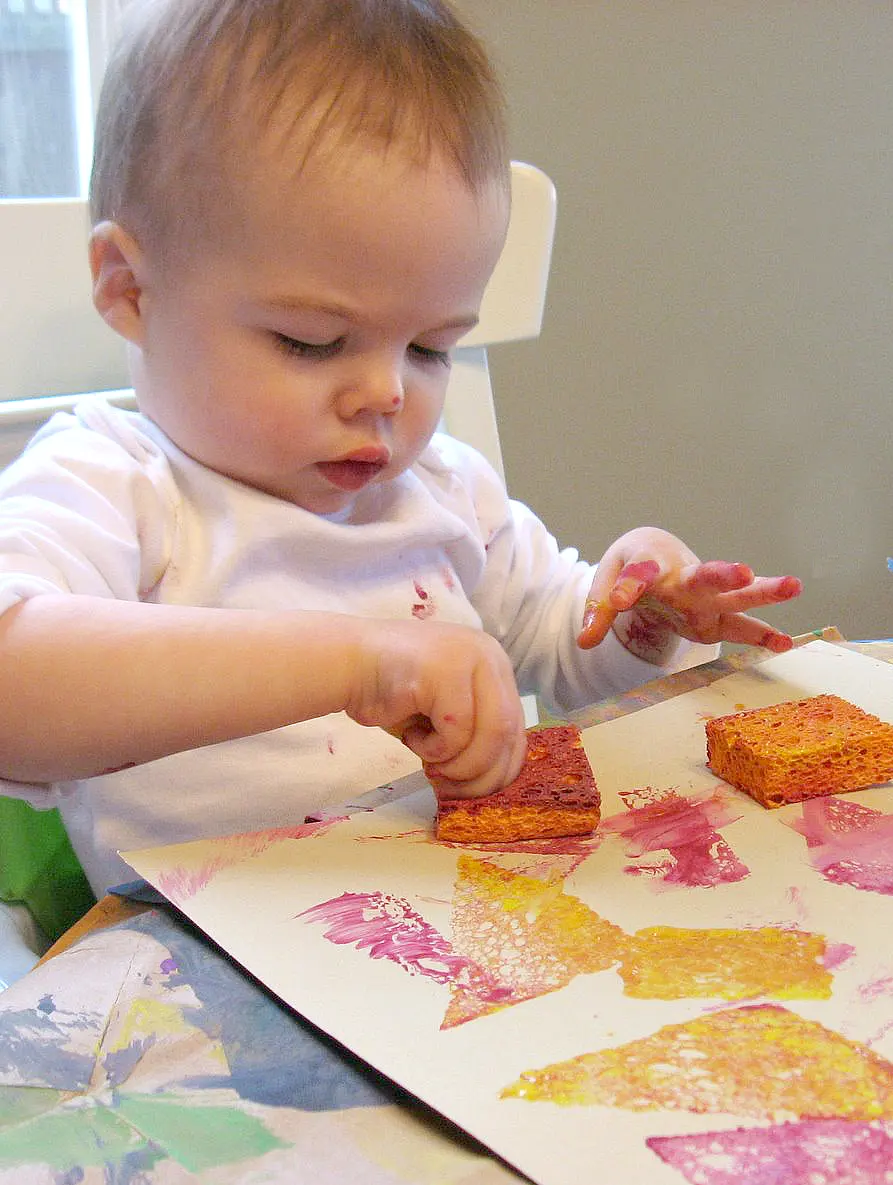
- Thick-handled brushes or foam sponges.
Start with a limited selection to avoid overwhelming the child. Offering too many choices at once can lead to distraction or frustration. Begin with one or two colors and a single medium, such as finger paint, to allow the child to focus entirely on the sensory experience of the material. As they become more comfortable, you can introduce additional textures like construction paper scraps or textured stickers to expand their creative repertoire.
How to set up a toddler art station
Creating a dedicated space for art helps establish a routine and minimizes cleanup stress. Choose an area with a surface that is easy to wipe down, such as a kitchen table or a plastic mat on the floor. Natural light is beneficial, but ensure the space is free from hazards like sharp corners or nearby breakable items.
- Cover the floor or table with a plastic tablecloth or newspaper.
- Put the toddler in an old oversized shirt or a waterproof smock.
- Place a small amount of supplies within the child's reach.
- Keep a damp cloth or baby wipes nearby for quick cleanup.
- Display the finished work in a prominent place to encourage pride.
Keeping the setup simple is key to success. If the process of preparing the space takes longer than the activity itself, both the parent and the child may become discouraged. By keeping a "go-bag" or a designated bin with art supplies ready, you can facilitate spontaneous creative sessions whenever the mood strikes.
Common mistakes when doing art with toddlers
The most frequent error is focusing on the outcome rather than the process. Parents often feel the need to guide the child toward making a recognizable shape or picture, but toddlers are cognitively unable to focus on representation. Forcing them to "draw a flower" or "paint a house" can stifle their natural curiosity and lead to frustration. Instead, praise their effort and the colors they choose, regardless of what the paper looks like.
Another mistake is providing too much structure. If you dictate exactly how the materials must be used, you remove the child's autonomy. If a toddler wants to paint with their hands instead of a brush, or if they decide to glue paper to the table instead of the page, let them explore those impulses. Additionally, avoid long sessions. Toddlers typically have a short attention span, and forcing them to sit for more than 15 minutes often results in messy behavior or a loss of interest in future art projects.
How to store and display toddler artwork
Managing the volume of art produced by a creative toddler can be challenging. To keep your home organized, implement a system for rotating the display. Use a piece of string with clothespins or a dedicated magnetic board to hang current favorites. This makes the child feel like a professional artist and keeps the clutter contained to one specific area of the house.
For pieces you wish to keep long-term, create a digital archive by taking high-quality photographs of the work. This allows you to store the memories without keeping every single scrap of paper. For the physical pieces you do save, use a dated portfolio folder to track their development over months and years. When the child sees their work displayed, it reinforces the value of their creative efforts and encourages them to continue experimenting with new materials and techniques in the future.
Key facts
- Use non-toxic, washable materials to ensure safety and simplify cleanup.
- Toddlers develop fine motor skills by grasping thick crayons or chunky paintbrushes.
- Focus on the process of creating rather than the final aesthetic result.
- Provide large surfaces like butcher paper on the floor to encourage freedom of movement.
- Limit the number of color choices to two or three to prevent sensory overload.
- Incorporate natural items like leaves or twigs to introduce texture and tactile exploration.
The bottom line
Engaging toddlers in art is less about creating a masterpiece and more about sensory discovery and physical development. By providing safe, age-appropriate tools and a dedicated space for exploration, you foster your child's confidence and motor skills. Keep sessions brief, allow for plenty of mess, and celebrate the act of creation itself. This supportive approach builds a lifelong foundation for curiosity and creative self-expression.
People also ask
What is the best age to introduce art supplies to a toddler?
You can introduce art as soon as a child can sit up independently, usually around 12 to 15 months. At this stage, focus on safe, edible materials like yogurt mixed with food coloring.
How do I handle the mess during art time?
Lay down a plastic tablecloth or a vinyl shower curtain to protect your floors. Keep a damp cloth nearby for quick cleanups and have the child wear an oversized old t-shirt as a smock.
Should I teach my toddler how to draw specific shapes?
No, toddlers are in the "scribble stage" of artistic development. Forcing them to draw shapes can cause frustration and stifle their natural interest in exploration.
What are the best art materials for a one-year-old?
Use chunky beeswax crayons, finger paints, and large sheets of heavy paper. These items are easy to grip and durable enough to withstand vigorous, uncoordinated movements.
How long should an art session last?
Toddlers typically have an attention span of 5 to 15 minutes for a single activity. If they lose interest, allow them to move on rather than insisting they finish the project.
Are there benefits to art beyond creativity?
Yes, art activities improve hand-eye coordination and spatial awareness. It also provides a sensory-rich environment that helps toddlers process emotions and develop self-expression.
This answer was created with the help of AI research tools and reference sources. Spotted an error? Let us know — we correct mistakes quickly. See our editorial policy.