What are cool things to draw?
Short answer
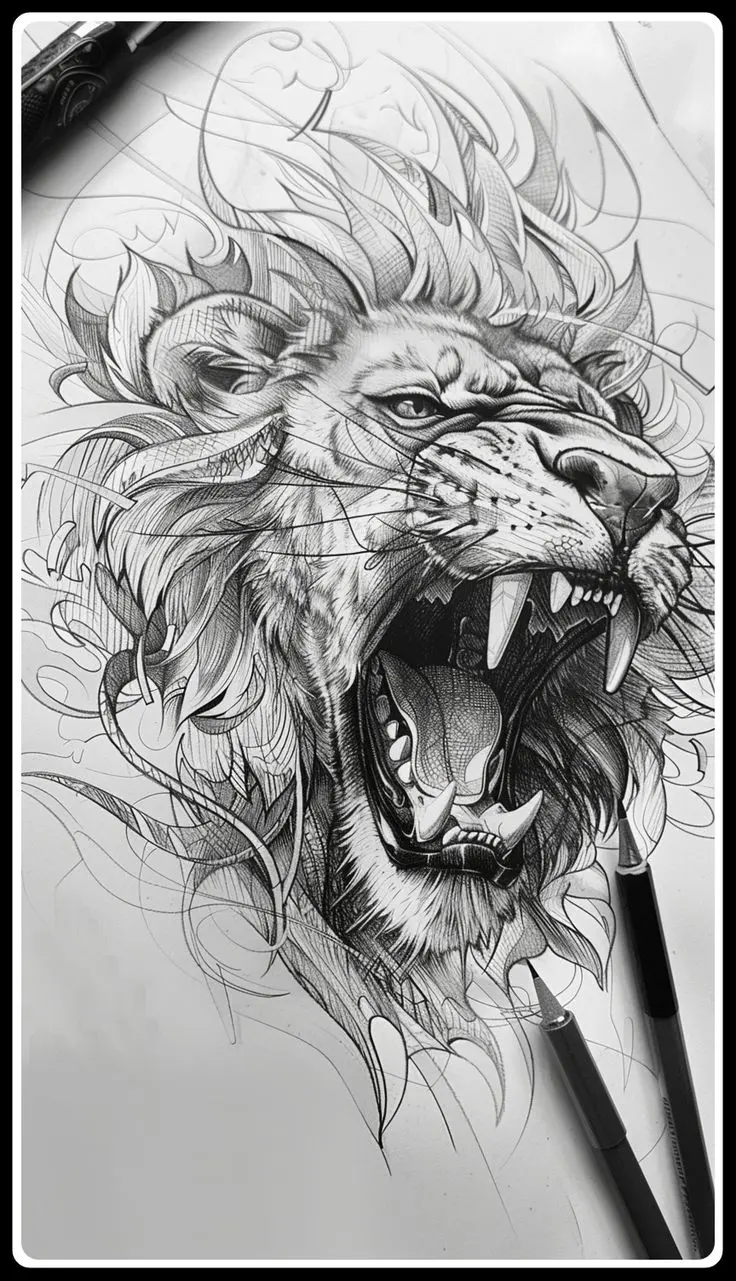
Cool things to draw include dynamic human figures, intricate natural textures, architectural landmarks, and imaginative creature designs. Focusing on subjects that challenge your spatial awareness, such as perspective-heavy cityscapes or complex organic forms, helps build technical skill. Choose themes that excite your curiosity to ensure consistent practice and creative growth over time.
On this page
How to choose subjects for drawing
Selecting a subject begins with identifying your current skill level and personal interests. Beginners often find success with simple geometric forms, such as spheres, cubes, and cylinders, which serve as the foundation for all complex objects. Once you master these, transition to still-life arrangements, like a piece of fruit or a coffee mug, to practice observing light and shadow.
Intermediate artists should focus on subjects that require anatomical accuracy or structural integrity. Drawing portraits, animal skeletons, or mechanical parts helps refine your understanding of volume and proportion. To keep the process engaging, rotate between different categories to avoid burnout. Consider these popular starting points:
- Human eyes, hands, and feet for anatomical study.
- Botanical illustrations of local flowers or leaves.
- Urban sketching of street corners or park benches.
- Mythological creatures like dragons or griffins for fantasy practice.
Best drawing ideas for beginners
The most effective way to start is by drawing objects you encounter in your daily environment. This approach removes the pressure of needing perfect reference photos and encourages you to study real-world lighting. Focus on the interplay between highlight, midtone, and core shadow to give your drawings a three-dimensional appearance.
If you prefer structured themes, try the following exercises to build confidence:
- Sketch a single piece of fruit, focusing on its unique texture and surface reflections.
- Draw a pair of your own shoes from three different angles to understand foreshortening.
- Observe a houseplant and attempt to capture the specific growth pattern of its leaves.
- Create a simple landscape by breaking a view out of your window into basic shapes.
Consistency is more important than complexity during these early stages. Aim to complete one small sketch daily rather than a single masterpiece once a month.
Why perspective is important in drawing
Perspective is the mathematical system that allows artists to represent three-dimensional space on a two-dimensional surface. Without an understanding of vanishing points and horizon lines, drawings often appear flat or distorted. Mastering linear perspective—whether one-point, two-point, or three-point—is essential for creating convincing architectural scenes or deep, immersive landscapes.
To practice perspective, start by drawing a series of boxes scattered across a page, all aligned to a single horizon line. As you move the boxes closer to the vanishing point, their sides become less visible, demonstrating how distance affects size. Common mistakes include ignoring the horizon line entirely or failing to keep vertical lines parallel. By grounding your drawings in these geometric rules, you provide a stable framework that makes even the most imaginative subjects feel grounded and realistic to the viewer.

Common mistakes when drawing complex subjects
Many artists struggle when they attempt to draw highly detailed subjects without first establishing a rough structural sketch. Jumping straight into fine details often leads to proportions that are off-balance or limbs that look unnatural. Always start with light, loose gestural lines to map out the general shape and placement before committing to permanent marks or shading.
Another frequent error is the "symbol drawing" trap, where you draw what you think an object looks like rather than what you actually see. For example, people often draw an eye as a simple almond shape because that is the symbol for an eye in their mind. Instead, observe the specific curvature of the upper lid and the way the iris overlaps with the eyelid. To avoid these pitfalls, try turning your reference photo upside down. This forces your brain to process the image as a collection of abstract shapes and lines rather than recognizable objects.
How to improve drawing skills over time
Improving your craft requires a combination of deliberate practice and critical analysis of your own work. Keep a dedicated sketchbook to track your progress over months and years, which helps identify recurring technical weaknesses. Do not be afraid to revisit subjects you found difficult in the past; you will likely find that your improved spatial awareness makes them much easier to execute.
Incorporate these habits to ensure long-term development:
- Dedicate specific sessions to studying anatomy or perspective rather than just drawing for fun.
- Use high-quality reference materials, such as photographs or live models, to understand how light behaves on different surfaces.
- Seek constructive feedback from other artists or online communities to gain new perspectives on your technique.
- Experiment with various mediums, including graphite, charcoal, and ink, to see how different tools influence your style.
By treating every drawing as a learning opportunity, you will naturally expand your repertoire of subjects and refine your artistic voice.
Key facts
- Drawing from life improves spatial awareness by forcing you to translate three-dimensional objects onto a two-dimensional surface.
- The "rule of thirds" is a composition technique where you divide your canvas into a grid to place focal points along the lines.
- Using a variety of graphite pencils, ranging from 4H (hard/light) to 6B (soft/dark), allows for a broader range of tonal values.
- Gesture drawing involves capturing the movement and posture of a subject in under 60 seconds to build fluid hand-eye coordination.
- Negative space, the area surrounding a subject, is often easier to draw than the subject itself and helps maintain accurate proportions.
- Practicing daily for just 15 minutes is more effective for skill retention than a single four-hour session once a week.
The bottom line
The best subjects to draw are those that challenge your observation skills rather than your ability to memorize symbols. By focusing on fundamental elements like light, shadow, proportion, and perspective, you can transform simple objects into compelling artwork. Consistency and patience are your most valuable tools. Embrace the process of learning through trial and error, and remember that every sketch is a step toward greater artistic mastery.
People also ask
How do I overcome the fear of a blank page?
Start by making random marks, scribbles, or geometric shapes to break the intimidation factor of the white surface. Focusing on low-stakes exercises, like drawing continuous lines without lifting your pencil, helps you transition into more deliberate work.
What is the most common mistake for beginners?
Beginners often focus on drawing symbols of objects, such as a cartoonish eye, rather than observing the actual shapes and shadows present in reality. Always look at the specific light source and the way it creates highlights and dark patches on the subject.
Should I use an eraser frequently?
Frequent erasing can damage the paper's surface and disrupt your creative flow. Try to keep your initial sketches very light, and only erase once you have established the correct proportions and structure of your drawing.
How can I improve my shading technique?
Avoid smudging your graphite with your fingers, as the oils from your skin can create uneven, muddy patches. Instead, use a blending stump or a piece of tissue to smooth out transitions between light and dark areas.
What are the best subjects for practicing perspective?
Architectural elements like buildings, windows, and interior corners are ideal for understanding vanishing points. These structures provide clear, straight lines that help you visualize how objects recede into the distance.
Is it better to draw from photos or real life?
Drawing from life is superior for understanding depth and color, but photos are excellent for subjects that move or are inaccessible. Use photos as a reference for detail, but prioritize life drawing to develop your fundamental observation skills.
This answer was created with the help of AI research tools and reference sources. Spotted an error? Let us know — we correct mistakes quickly. See our editorial policy.

