What are good drawing prompts?
Short answer
Good drawing prompts are specific, open-ended challenges that bridge the gap between imagination and technique. They help artists overcome creative blocks by providing a clear starting point. Effective prompts range from observational studies of everyday objects to abstract conceptual exercises, allowing practitioners of all skill levels to practice composition, anatomy, and perspective.
On this page
How to choose the best drawing prompts
Selecting the right prompt depends on your current goals and the time you have available. If you are looking to improve technical skills, choose prompts that focus on observational drawing, such as sketching the contents of your refrigerator or a specific piece of furniture. These subjects provide clear shapes and textures that allow you to focus on light, shadow, and proportion.
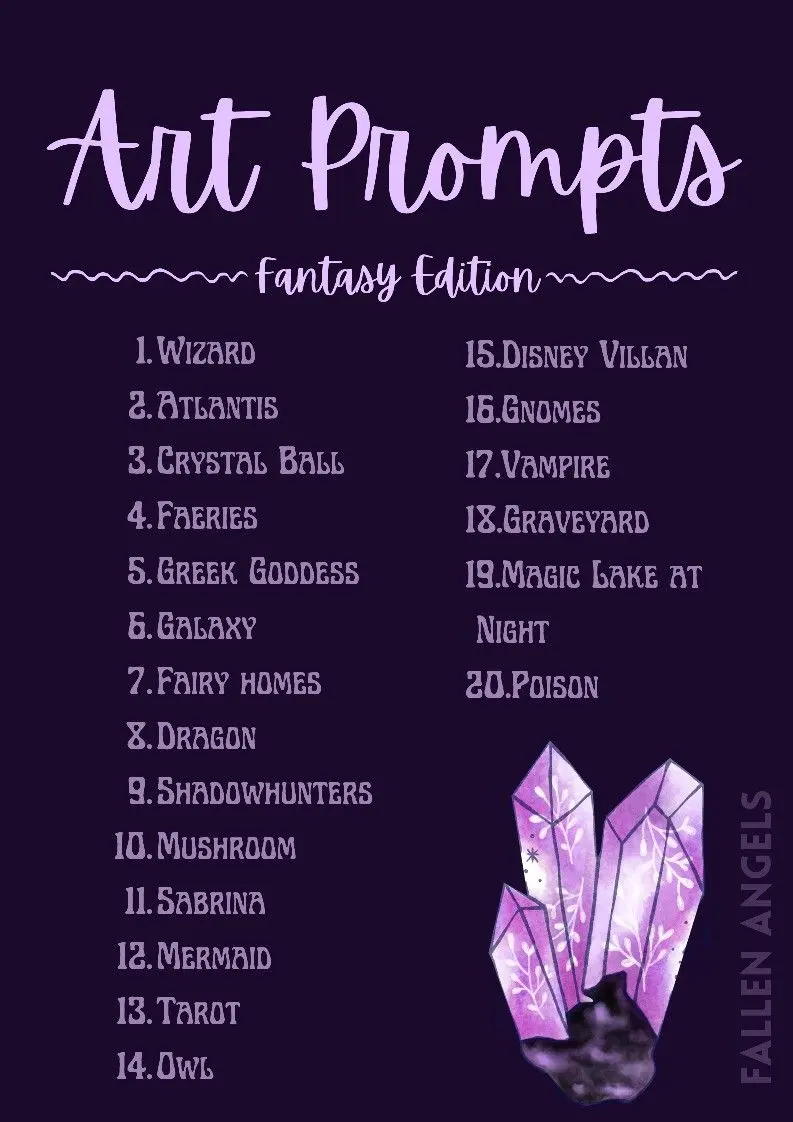
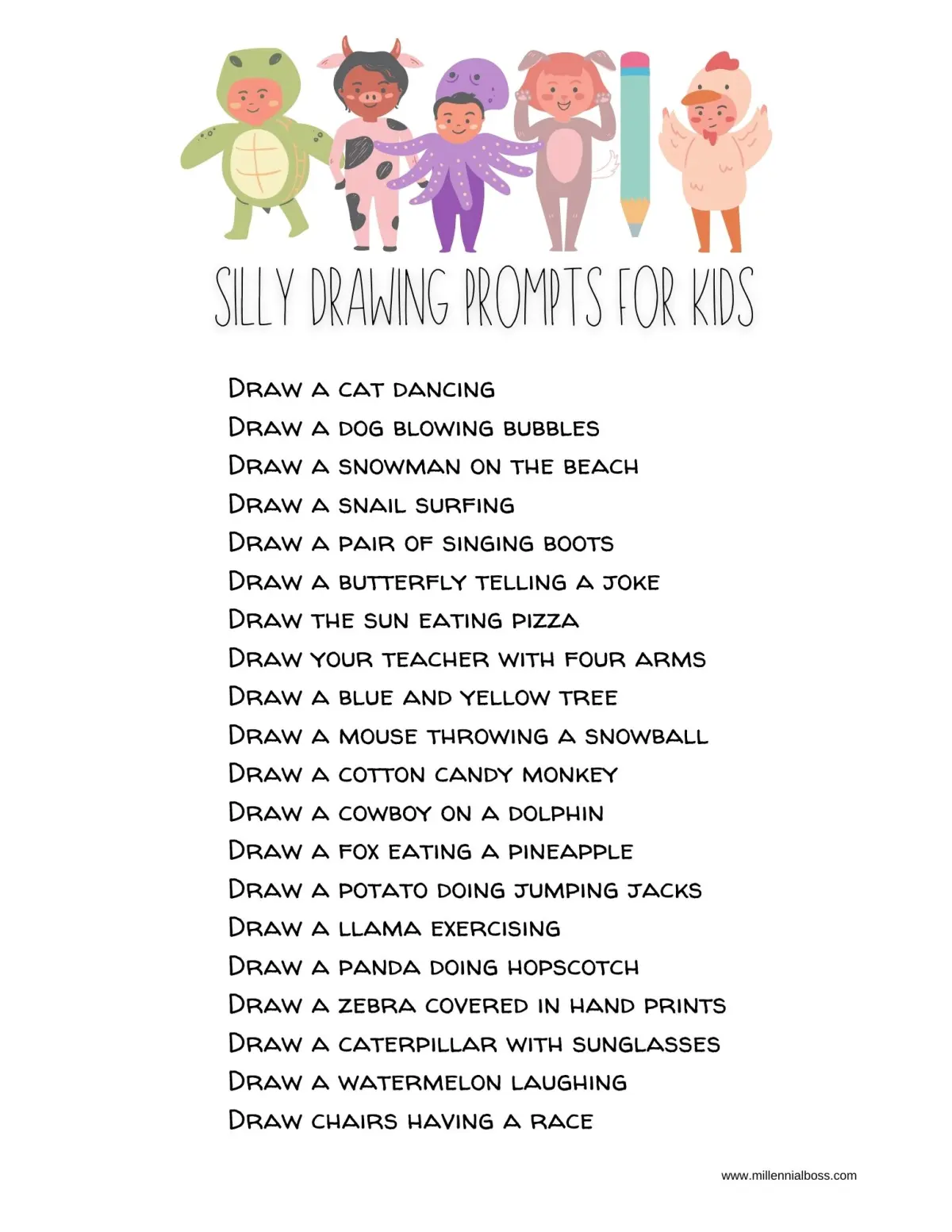
If you want to boost your creativity, opt for imaginative or conceptual prompts. These might include combining two unrelated objects, such as a clock and a tree, or illustrating a specific emotion like nostalgia. By alternating between observational and imaginative tasks, you build a balanced skill set that keeps your practice engaging. Consider these categories when selecting your next subject:
- Still life: Focuses on lighting and texture.
- Character design: Focuses on anatomy and personality.
- Environmental studies: Focuses on perspective and depth.
- Abstract concepts: Focuses on visual storytelling and metaphor.
Best drawing prompts for beginners
Beginners benefit most from prompts that emphasize basic geometric forms and simple compositions. Starting with complex figures often leads to frustration, so focus on mastering the fundamentals through manageable exercises. A great starting point is to draw a single piece of fruit from three different angles to understand how light interacts with curved surfaces.
Another effective approach is to focus on daily items that have distinct, recognizable silhouettes. By simplifying these objects into circles, squares, and triangles, you learn how to construct complex images from basic shapes. Follow these steps to maximize your learning:
- Select a simple object, like a coffee mug or a pair of scissors.
- Spend five minutes sketching the basic geometric forms that make up the object.
- Add details and shading only after the proportions are correct.
- Repeat the process with a different object to see how your speed and accuracy improve over time.
How to use prompts to improve skills
To effectively use prompts, you must treat them as structured training rather than casual doodles. Dedicate a specific sketchbook to your prompts and date every entry to track your progress over weeks or months. When you finish a drawing, take a moment to critique your work by identifying one area that went well and one area that needs improvement in your next session.
Consistency is more important than the complexity of the prompt itself. Even a ten-minute sketch session is more valuable than a single, exhaustive drawing done once a month. To push your boundaries, try setting constraints on your prompts, such as limiting yourself to a single pencil grade or forcing yourself to complete a drawing without using an eraser. This forces you to be more intentional with every mark you make on the page.
Common mistakes when using drawing prompts
A frequent mistake is choosing prompts that are too vague or overly ambitious for your current skill level. For example, attempting to draw a complex city scene when you have not yet mastered one-point perspective will likely result in discouragement. Always assess your current abilities honestly and select prompts that offer a slight challenge without being overwhelming.
Another common pitfall is ignoring the importance of reference material. Even when working on imaginative prompts, looking at real-world examples of textures, anatomy, or lighting will significantly increase the quality of your output. Do not rely solely on your mental image of an object, as memory is often imprecise. Instead, gather photos or observe real objects to ensure your drawings are grounded in reality, which provides a better foundation for artistic growth.
Why drawing prompts help creativity
Prompts function as a mental catalyst, removing the "blank page syndrome" that often prevents artists from starting a session. When you are given a specific task, your brain stops worrying about what to draw and begins focusing entirely on how to execute the drawing. This shift in focus allows you to enter a state of flow more quickly, where technical execution becomes intuitive rather than forced.
Furthermore, prompts expose you to subjects you might never have considered on your own. By forcing yourself to draw things outside of your comfort zone, you expand your visual vocabulary and discover new interests. Whether you are drawing a historical figure, a futuristic vehicle, or a microscopic organism, each prompt adds a new tool to your artistic arsenal. Over time, this practice builds a deep repository of knowledge that informs your future work and helps you develop a unique, recognizable style that is distinctly your own.
Key facts
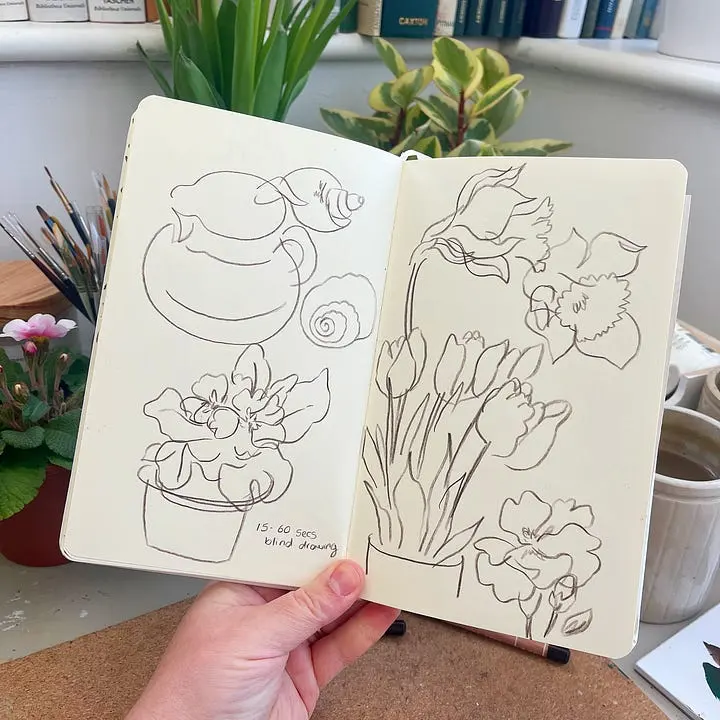
- Use a timer to practice gesture drawing, which involves sketching a subject in under 60 seconds to capture movement.
- Combine two unrelated objects, such as a toaster and a bird, to challenge your visual problem-solving skills.
- Focus on negative space by drawing the empty areas around an object rather than the object itself.
- Limit your color palette to two or three shades to simplify complex scenes and improve composition.
- Draw from life rather than photographs to better understand depth, perspective, and lighting.
- Maintain a dedicated sketchbook to track your progress and revisit ideas that did not work initially.
The bottom line
Effective drawing prompts act as catalysts for skill development by forcing you to move beyond your comfort zone. Whether you are practicing rapid gesture sketches or exploring complex still life compositions, the goal is to observe the world with intent. By consistently experimenting with new subjects and techniques, you will sharpen your artistic vision and build the technical confidence required to execute your creative ideas accurately.
People also ask
How do I overcome creative block when I have nothing to draw?
Start by drawing the objects currently on your desk, such as a coffee mug, keys, or a pen. Focusing on the textures and shadows of mundane items helps reset your creative flow.
Should I use pencils or pens for practice?
Pencils are ideal for beginners because they allow for erasing and layering, while pens force you to commit to your lines. Using pens helps you become more confident and decisive with your mark-making.
How long should a drawing session last?
Aim for 15 to 30 minutes of focused practice daily rather than long, infrequent sessions. Consistent, short bursts of drawing improve muscle memory and observation skills more effectively than sporadic marathon sessions.
Is it better to draw from imagination or reality?
Drawing from reality is essential for building a foundation of anatomy, light, and perspective. Once you understand how objects exist in physical space, your imaginative drawings will become much more convincing.
How can I improve my shading technique?
Practice creating a value scale with at least five distinct shades from white to black. This exercise teaches you how to control pressure and build depth on a two-dimensional surface.
What is the most common mistake beginners make?
Many beginners focus too much on small details before establishing the overall shape and proportions. Always sketch the basic structure of your subject first to ensure the composition is balanced before adding texture.
This answer was created with the help of AI research tools and reference sources. Spotted an error? Let us know — we correct mistakes quickly. See our editorial policy.