How do you draw a cute dragon?
Short answer
Drawing a cute dragon involves emphasizing rounded shapes, large expressive eyes, and simplified, non-threatening features. By prioritizing soft curves over sharp angles and keeping the body proportions stout, you create an approachable character. Focus on oversized facial features and a friendly posture to ensure the creature appears endearing rather than fierce.

On this page
How to structure a cute dragon body
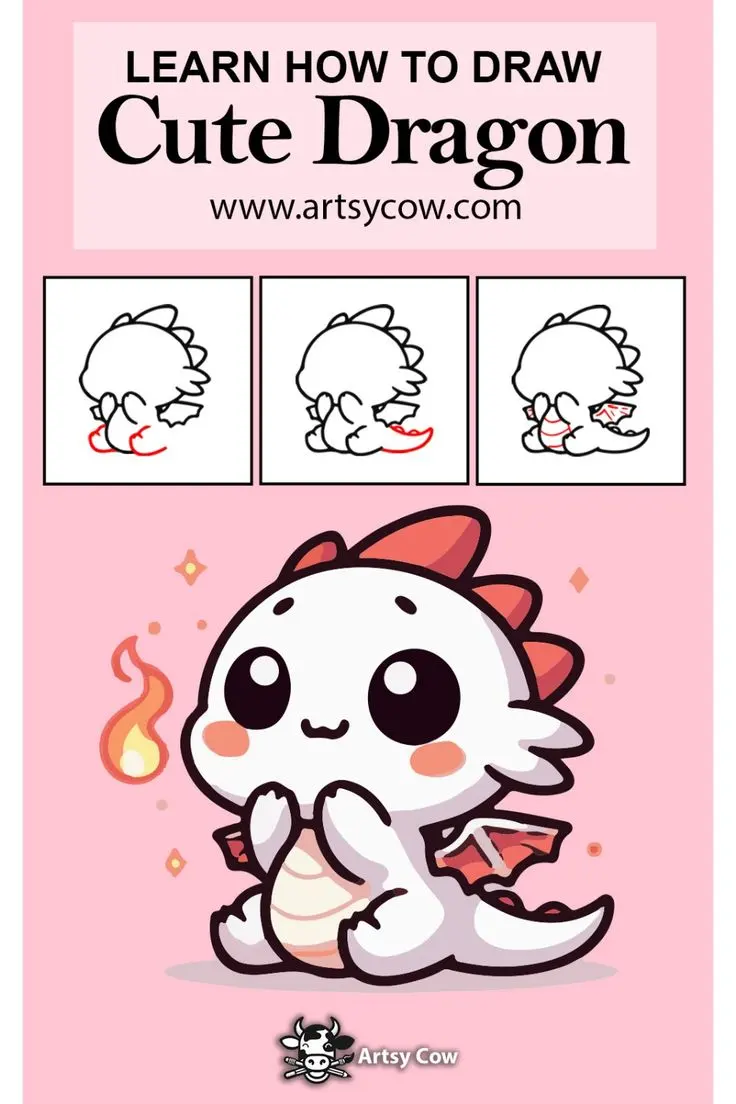
To create a cute dragon, start with basic geometric shapes that emphasize roundness. Avoid sharp, jagged lines that typically signify danger or aggression in traditional fantasy art. Instead, use a large circle for the head and a slightly larger, pear-shaped oval for the torso. These soft, bulbous forms immediately signal to the viewer that the character is gentle and approachable.
When sketching the limbs, keep them short and stubby rather than long and muscular. A "chibi" or miniature style works best for cuteness, where the head is disproportionately large compared to the body. Connect these shapes with smooth, flowing lines to ensure the silhouette remains soft. Ensure the tail is thick at the base and tapers off into a gentle, rounded curl, which adds a playful element to the overall design.
- Draw a large circle for the head.
- Add a smaller, soft oval for the snout.
- Place a large, rounded body shape beneath the head.
- Attach short, rounded limbs to the sides of the body.
- Sketch a curled, thick tail extending from the lower back.
Best features for a cute dragon face
The face is the most critical element for establishing a "cute" aesthetic. Large, wide-set eyes are the primary indicator of youth and innocence in character design. Position the eyes low on the face, leaving plenty of space for a high, rounded forehead. Add large, circular pupils and a small highlight in each eye to give the dragon a sparkling, lively appearance that draws the viewer in immediately.
The snout should be short and button-like rather than elongated or pointed. A small, simple curve for the mouth provides a friendly expression, while tiny, rounded nostrils can add detail without making the dragon look aggressive. Keep the ears or horns soft and rounded at the tips; avoid sharp spikes or jagged edges, as these features often detract from the intended gentle personality of the character.
- Use large, circular eyes with wide pupils.
- Keep the snout short, rounded, and button-like.
- Add small, soft horns or ears with rounded tips.
- Use a simple, curved line for a smiling mouth.
- Place the features low on the head to emphasize a large forehead.
How to choose colors for a cute dragon
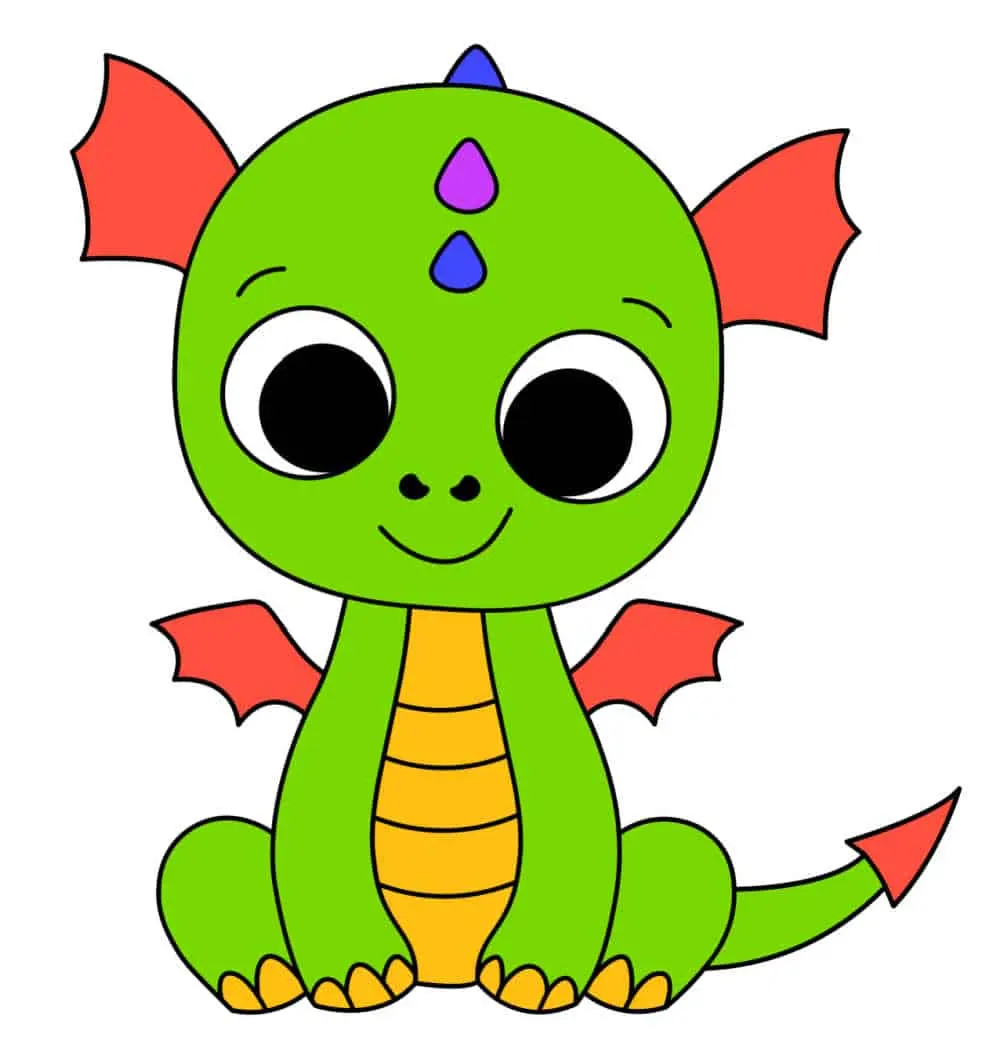
Color theory plays a significant role in how a character is perceived. To maintain a cute aesthetic, lean toward pastel or bright, saturated color palettes. Soft pinks, mint greens, sky blues, or warm yellows evoke a sense of playfulness and safety. Avoid dark, desaturated, or muddy colors like deep browns, grays, or blacks, as these can make the dragon appear intimidating or villainous.
Consider using a secondary, lighter color for the dragon's belly, inner ears, and the underside of the wings. This contrast adds depth to the design while keeping the overall look soft. When shading, use gentle gradients rather than harsh, high-contrast shadows. Soft, diffused lighting helps maintain the "cuddly" quality of the drawing, ensuring the dragon looks like a friendly companion rather than a fearsome beast from a dark dungeon.
Common mistakes when drawing cute dragons
One frequent error is making the dragon's claws or teeth too prominent. Even if you want to include these features, ensure they are rounded and small, resembling fingernails or baby teeth rather than sharp talons. Another mistake is drawing the neck too long or thin, which can make the dragon look elegant or serpentine instead of cute. A short, thick neck helps anchor the head to the body, reinforcing the stout, friendly proportions.
Avoid adding too many complex details or scales. Over-detailing can make the design feel cluttered and take away from the simplicity that makes a character appear cute. If you choose to add scales, limit them to a few subtle patterns on the back or cheeks, and keep the rest of the skin smooth. Simplicity is key; focus on the overall silhouette and expression rather than intricate, realistic textures that might distract from the character's charm.
How to add personality through posture
The dragon's pose is the final touch in defining its personality. A cute dragon should look curious or playful, so avoid rigid, aggressive stances. Have the dragon sitting on its haunches with its front paws tucked in or raised as if waving. Tilting the head slightly to one side creates an inquisitive look, which is a classic technique in character design to make a creature seem more relatable and endearing to the audience.
You can also add small, non-threatening props to enhance the narrative. A dragon holding a small flower, chasing a butterfly, or curled up sleeping adds a layer of vulnerability and sweetness. By focusing on these gentle, everyday actions, you transform a generic monster into a character with a distinct personality. Always ensure the center of gravity feels stable and low, as this reinforces the idea that the dragon is a grounded, friendly creature.
Key facts
- Use large, circular shapes for the head and body to create a soft, approachable silhouette.
- Position the eyes low on the face and make them disproportionately large to evoke a sense of innocence.
- Keep the snout short and rounded rather than sharp or elongated to avoid a menacing appearance.
- Simplify the wings by using rounded, scalloped edges instead of jagged, bat-like points.
- Incorporate a thick, stubby tail that curls gracefully to add a playful element to the pose.
- Use pastel or warm color palettes, such as soft greens, pinks, or blues, to enhance the friendly aesthetic.
The bottom line
Drawing a cute dragon is primarily about prioritizing rounded geometry and expressive facial features over traditional, fearsome traits. By focusing on large eyes, a compact snout, and soft, flowing lines, you can create a character that feels approachable and charming. Practice balancing these simple shapes while keeping the overall design clean, and remember that subtle details like a playful tail pose will bring your creation to life.
People also ask
What is the best medium for beginners to practice drawing dragons?
Graphite pencils are ideal because they allow for easy erasing and layering of shapes. Once the basic sketch is complete, fine-liner pens can be used to define the final outlines.
How do I make my dragon look friendly instead of scary?
Focus on roundness and avoid sharp angles or aggressive teeth. Giving the dragon a gentle smile and large, expressive eyes will immediately make the character appear inviting.
Should I add scales to a cute dragon?
Adding too many scales can make a character look reptilian and intimidating. Instead, use a few small, subtle markings or spots to suggest texture without overwhelming the simple design.
How can I make the dragon appear more dynamic?
Try drawing the dragon in an action pose, such as chasing a butterfly or sitting with its head tilted. A slight tilt in the head adds personality and curiosity to the character.
Do cute dragons need horns?
Horns are optional, but they should be small, rounded, or nub-like if included. Avoid long, curved, or spike-like horns, as these are typically associated with traditional, fierce dragon designs.
What is the most common mistake when drawing a dragon's wings?
Many beginners draw wings that are too small to support the dragon's body weight. Even for a cute design, ensure the wings are large enough to look functional relative to the torso.
This answer was created with the help of AI research tools and reference sources. Spotted an error? Let us know — we correct mistakes quickly. See our editorial policy.