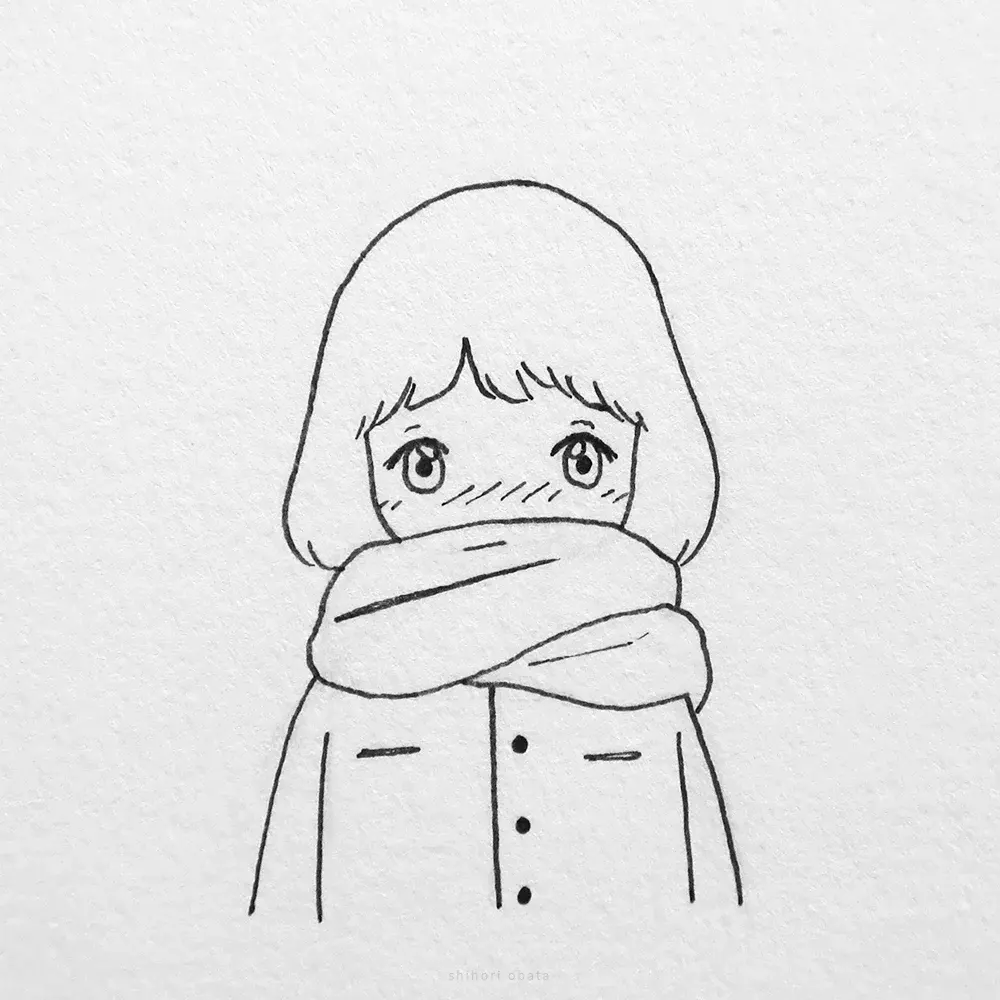
Can you teach yourself to draw?
Short answer
Yes, you can teach yourself to draw. Drawing is a learned motor skill rather than an innate talent. By consistently practicing observational techniques, understanding fundamental principles like perspective and light, and studying the work of masters, anyone can develop the hand-eye coordination and spatial reasoning necessary to create accurate, compelling visual art.
On this page
How long does it take to learn to draw?
The timeline for learning to draw depends entirely on the consistency of your practice rather than natural ability. Most beginners can expect to see significant improvement in their technical accuracy within three to six months of daily, focused practice. Mastery, however, is a lifelong pursuit that involves refining your personal style and deepening your understanding of complex subjects like human anatomy or architectural perspective.
Progress is rarely linear, often characterized by periods of rapid growth followed by plateaus. It is helpful to track your development by keeping a sketchbook and dating your entries. By reviewing work from six months prior, you will notice improvements in line quality and proportions that are not always visible on a day-to-day basis. Aim for at least 30 minutes of deliberate practice daily to build muscle memory.
- Set aside a consistent time each day for focused drawing.
- Complete small studies rather than attempting complex, multi-day projects.
- Keep a dedicated sketchbook to document your progression over time.
- Review your older work periodically to identify specific areas for improvement.
Best tools for beginners to start with
You do not need expensive equipment to learn the fundamentals of drawing. In fact, starting with a limited set of supplies prevents you from becoming overwhelmed by technical choices. A simple kit allows you to focus on the essential principles of mark-making, value, and composition. The following items are considered the industry standard for those beginning their artistic journey.
- Graphite pencils: Start with a 2B for general sketching and a 4B or 6B for darker values.
- Erasers: A kneaded eraser is essential because it can be molded into shapes to lift graphite gently.
- Paper: A standard sketchbook with medium-tooth paper works well for both graphite and charcoal.
- Sharpener: A high-quality metal sharpener ensures your lead does not break during detailed work.
Avoid purchasing large, professional sets immediately, as most of the included pencils will remain unused. Focus on mastering the range of values possible with just two or three grades of graphite. As you gain confidence, you can experiment with charcoal, ink, or colored pencils to expand your creative range.
Why drawing from observation is important
Drawing is fundamentally the act of seeing. Beginners often make the mistake of drawing what they think an object looks like—relying on mental symbols—rather than what is actually in front of them. Drawing from observation forces your brain to translate three-dimensional reality onto a two-dimensional surface by analyzing angles, negative space, and relationships between objects.
When you observe a subject, your brain must process light, shadow, and perspective accurately. This process strengthens your spatial reasoning and visual memory. If you practice drawing from life, such as sketching a piece of fruit or a household object, you learn to identify the specific curves and shadows that define form. This is far more effective for skill development than drawing from photographs, which have already flattened the subject and distorted the perspective.
- Focus on the negative space—the shapes between objects—to improve your accuracy.
- Use a pencil as a measuring tool to compare the height and width of your subject.
- Look for the "gesture" or the underlying movement of the subject before adding details.
- Squint your eyes to simplify complex scenes into basic shapes and value masses.
Common mistakes when learning to draw
The most frequent error beginners make is rushing to add details before establishing the underlying structure. If the initial proportions are incorrect, no amount of shading or fine-tuning will make the drawing appear accurate. Always start by breaking complex subjects down into simple geometric shapes like spheres, cubes, and cylinders. This structural approach ensures that your drawing has a solid foundation before you commit to permanent marks.
Another common pitfall is the "smudging" habit. Many beginners use their fingers to blend graphite, which introduces natural oils to the paper and creates a muddy, gray appearance. Instead, learn to control your pencil pressure to create varied tones or use a blending stump if necessary. Furthermore, avoid drawing with a heavy hand. Pressing too hard creates indentations in the paper that cannot be erased, making it difficult to correct mistakes or adjust values later in the process.
- Do not outline everything; use light, gestural marks to define shapes.
- Avoid using your fingers to blend, as it creates a messy, uneven texture.
- Do not ignore the light source; consistent shadows are vital for creating depth.
- Avoid working on small, cramped surfaces; use enough paper to move your arm freely.
How to structure your practice sessions
A structured curriculum is essential for self-taught artists. Without a plan, practice often becomes repetitive or aimless. Dedicate your sessions to specific concepts, such as linear perspective, human anatomy, or value studies. By isolating these skills, you can master one element at a time before attempting to combine them into a finished, complex composition. Research the works of historical masters like Leonardo da Vinci or contemporary illustrators to see how they applied these principles.
Consistency is more valuable than intensity. It is better to draw for 20 minutes every day than to draw for five hours once a week. This daily repetition keeps your hand-eye coordination sharp and prevents the frustration that comes from losing momentum. As you advance, challenge yourself by drawing subjects that feel difficult, such as hands, feet, or complex interiors. Embracing these challenges is the fastest way to bridge the gap between your current skill level and your artistic goals.
Key facts
- Drawing is a motor skill that relies on hand-eye coordination rather than innate talent.
- Consistent practice of 15 to 30 minutes daily is more effective than long, infrequent sessions.
- The "50 percent rule" suggests spending half your time studying from life and half on creative projects.
- Learning to see shapes, such as spheres and cylinders, simplifies complex subjects into manageable forms.
- Perspective drawing, pioneered by Renaissance artists like Filippo Brunelleschi, provides the foundation for spatial depth.
- Using a graphite pencil set ranging from 2H to 6B allows for a full spectrum of light and shadow.
The bottom line
Teaching yourself to draw is entirely possible through deliberate practice and systematic study. By focusing on fundamental skills like observation, proportion, and shading, you can develop technical proficiency over time. Success requires patience and the willingness to embrace mistakes as learning opportunities. With consistent effort and a structured approach to analyzing the world around you, anyone can master the art of drawing and express their creative vision.
People also ask
Do I need expensive art supplies to start learning?
No, a simple HB pencil, a sketchbook, and an eraser are sufficient for beginners. High-quality materials do not compensate for a lack of foundational practice.
How long does it take to become proficient at drawing?
Most dedicated students see significant improvement within six months of daily practice. Mastery is a lifelong pursuit, but basic competence is achievable for anyone who remains consistent.
Should I learn to draw from my imagination or from reference photos?
Beginners should prioritize drawing from life or high-quality references to train their visual observation. Imagination relies on a "mental library" that you must build through real-world observation first.
What is the most common mistake beginners make?
Many beginners focus on drawing details before establishing the overall proportions and structure of their subject. Always sketch the "gesture" or basic shape of an object before adding texture or shading.
Can I teach myself without taking formal classes?
Yes, many professional artists are self-taught through structured study of anatomy, light, and perspective. Free resources like library books and instructional videos can guide your self-directed curriculum effectively.
Why do my drawings look flat?
Drawings often lack depth because the artist has not accounted for light sources and cast shadows. Learning to identify values—the range from white to black—will add three-dimensional volume to your work.
This answer was created with the help of AI research tools and reference sources. Spotted an error? Let us know — we correct mistakes quickly. See our editorial policy.