How do you become a concept artist?
Short answer
Becoming a concept artist requires mastering fundamental art skills, such as anatomy, perspective, and lighting, while developing a specialized portfolio. You must gain proficiency in digital painting software, build a professional network, and consistently produce high-quality visual designs that solve narrative problems for film, video games, or animation studios.
On this page
How to build fundamental art skills
Concept art is primarily about visual problem-solving rather than just creating beautiful illustrations. Before focusing on industry-specific software, you must master the core principles of traditional art. This includes understanding light and shadow, color theory, composition, and human or creature anatomy. Without a strong grasp of these basics, your designs will lack the structural integrity required for 3D modelers and animators to translate your work into a final product.
To build these skills, consider the following approach:
- Study life drawing to understand the mechanics of movement and form.
- Practice perspective drawing daily to ensure your environments have depth and scale.
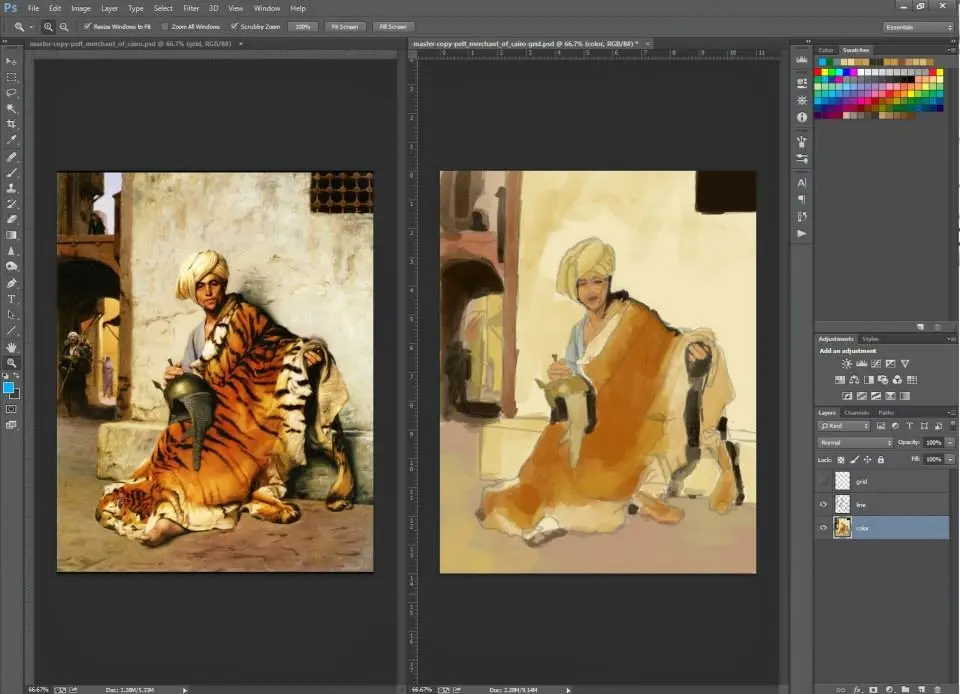
- Analyze master painters to understand how they use focal points to guide the viewer’s eye.
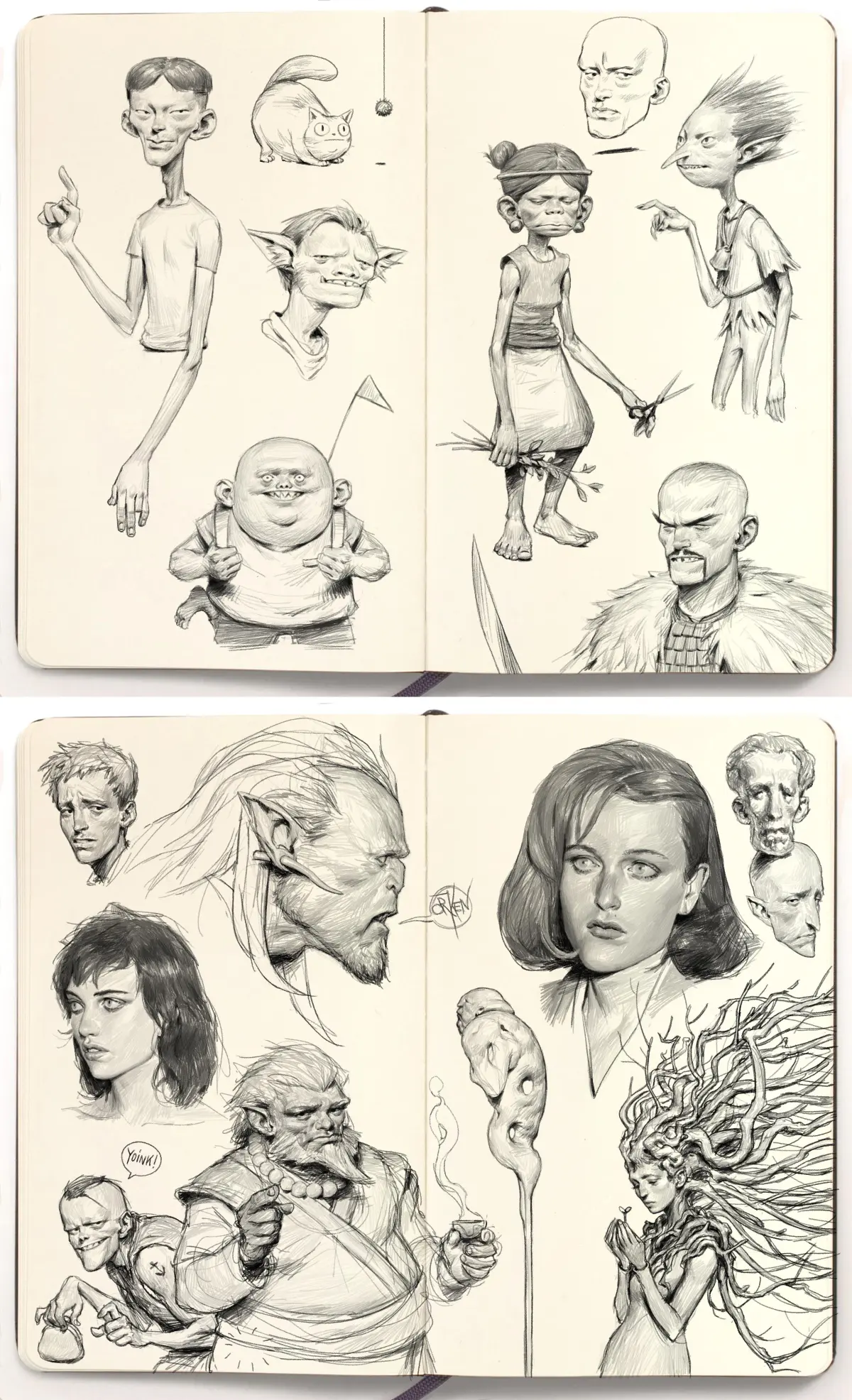
- Keep a sketchbook to document ideas and observations from the real world.
Dedicate at least two hours a day to these fundamentals. Consistent, deliberate practice is far more effective than sporadic, long sessions. Focus on drawing from reality rather than copying other artists, as this trains your brain to translate three-dimensional objects onto a two-dimensional surface accurately.
What software do concept artists use
Industry standards have evolved, but the core toolset remains centered on high-end digital painting applications. Adobe Photoshop is the universal standard in almost every professional studio due to its robust layer management, brush engine, and integration with other creative pipelines. While other programs like Procreate or Clip Studio Paint are excellent for sketching and personal work, professional environments often require the specific file formats and workflows that Photoshop provides.
In addition to 2D painting software, many modern concept artists utilize 3D tools to speed up their workflow. Learning the basics of 3D modeling can significantly improve your perspective and lighting accuracy.
- Download a 3D software like Blender, which is free and industry-capable.
- Learn to block out basic shapes for environments or props.
- Use these blocks as a base for your 2D painting to save time on perspective construction.
- Experiment with basic rendering to understand how light interacts with complex surfaces.
By combining 2D painting with 3D blocking, you can produce more iterations in less time, which is a highly valued trait in fast-paced production environments.
How to create a concept art portfolio
Your portfolio is the most important asset for securing employment. Studios are not looking for a collection of every drawing you have ever made; they are looking for a curated selection of work that demonstrates your ability to solve specific design challenges. A strong portfolio should contain 8 to 12 high-quality pieces that show a clear design process, from initial rough sketches to the final polished concept.
A professional portfolio should include the following categories:
- Character design: Showing a character in various poses and expressions.
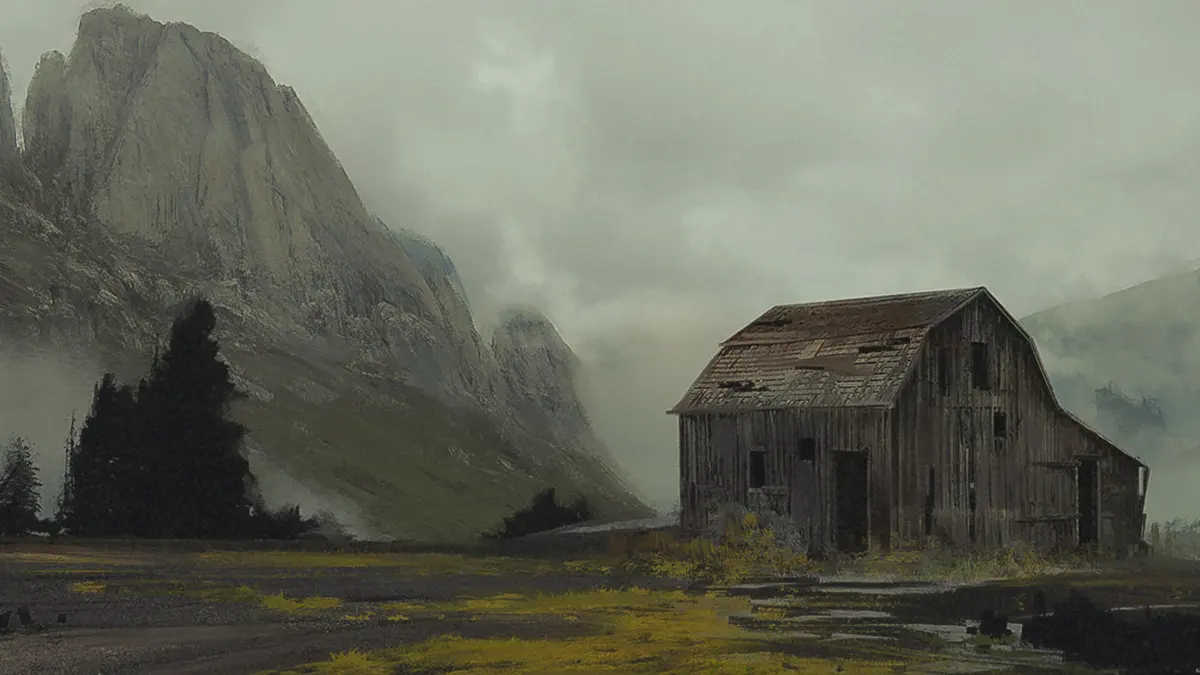
- Environment design: Demonstrating scale, atmosphere, and architectural logic.
- Prop design: Focusing on functional objects like weapons, vehicles, or tools.
- Callout sheets: Detailed views of specific parts of a design for technical teams.
Avoid including fan art or generic sketches that do not show a design process. Recruiters want to see how you think. Include "callout sheets" that show your designs from multiple angles, as this proves you understand how an object functions in three-dimensional space, which is critical for game and film production.
How long does it take to become a professional
The timeline for becoming a professional concept artist varies significantly based on your dedication and the quality of your feedback loop. Most professionals spend three to five years of intensive, focused study before they reach a level of proficiency that allows them to land junior-level roles. This journey is rarely linear; it involves significant periods of frustration followed by breakthroughs in skill and understanding.
To accelerate your growth, seek out mentorship or structured educational programs. Feedback from experienced industry professionals is invaluable, as they can point out flaws in your work that you may be unable to see yourself.
- Join online communities where artists provide constructive critiques.
- Participate in industry-standard challenges to test your speed and creativity.
- Attend workshops or enroll in specialized art schools that focus on entertainment design.
- Set measurable goals, such as completing one finished design project every two weeks.
Do not compare your progress to others. Focus on the incremental improvements in your own work and ensure that every piece you create is better than the last.
Common mistakes when starting out
Many aspiring artists fall into traps that hinder their professional growth. One of the most common mistakes is focusing too much on "rendering"—the final polish—while neglecting the underlying design. If the silhouette, functionality, or composition of your concept is poor, no amount of detailed texture or fancy lighting will make the design successful. Always prioritize the "readability" of your work; a viewer should understand exactly what the object is and how it works within seconds of looking at it.
Another frequent error is failing to understand the production pipeline. Concept art is a collaborative field, and your work must be usable by others.
- Do not ignore technical constraints like polygon counts or animation requirements.
- Avoid using overly complex brushes that hide a lack of fundamental drawing skill.
- Do not neglect the importance of clear communication in your design documents.
- Stop working in isolation; engage with other artists to learn about industry expectations.
By understanding how your work fits into the larger puzzle of game or film development, you become a much more valuable asset to any studio team.
Key facts
- A concept artist’s primary goal is to solve visual problems for film, games, or animation rather than creating a finished illustration.
- Proficiency in industry-standard software like Adobe Photoshop, Blender, or ZBrush is essential for professional workflows.
- Building a focused portfolio that demonstrates a clear understanding of design fundamentals, such as silhouette, composition, and lighting, is more important than a formal degree.
- Most concept artists specialize in a specific niche, such as environment design, character design, or hard-surface prop design.
- The average concept artist spends roughly 80 percent of their time on iteration and problem-solving and only 20 percent on final polish.
- Networking at industry events like LightBox Expo or GDC is often as critical for landing a job as the quality of one's artwork.
The bottom line
Becoming a successful concept artist requires a mastery of fundamental design principles and a relentless focus on visual problem-solving. Instead of aiming for perfect illustrations, prioritize clear communication and iteration in your portfolio. By combining technical proficiency in industry software with a deep understanding of shape language and composition, you can build a career creating the foundational designs that bring modern films and games to life.
People also ask
Do I need a college degree to become a concept artist?
No, studios prioritize your portfolio over academic credentials. While art school can provide structure and networking, many successful artists are self-taught or learn through specialized online mentorship programs.
What is the difference between a concept artist and an illustrator?
A concept artist creates designs that explain how something looks and functions for a production team. An illustrator focuses on creating a single, finished image intended for marketing or narrative storytelling.
How many pieces should I include in my portfolio?
Aim for 8 to 12 high-quality pieces that demonstrate your specific design process. It is better to show three strong, finished projects than twenty mediocre drawings.
Is it necessary to know 3D modeling for concept art?
Yes, 3D modeling has become a standard requirement in modern production pipelines. It allows artists to quickly iterate on perspectives, lighting, and complex mechanical designs that are difficult to draw from scratch.
How long does it take to become a professional concept artist?
Most professionals spend three to five years of intense, daily practice to reach a hireable level. This timeline varies based on your dedication to studying fundamentals like anatomy, perspective, and color theory.
What are the most common mistakes beginners make?
Beginners often focus too much on rendering details rather than establishing strong shapes and clear communication. Another mistake is failing to show the iteration process, which is what art directors actually look for during hiring.
This answer was created with the help of AI research tools and reference sources. Spotted an error? Let us know — we correct mistakes quickly. See our editorial policy.