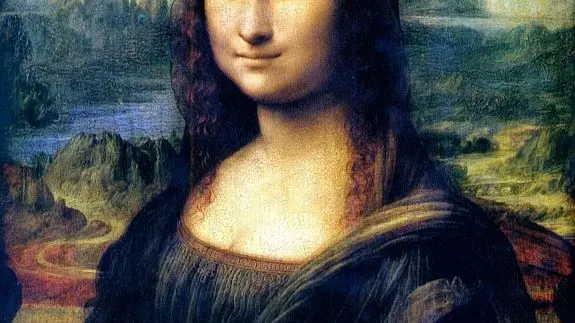
What was the first art movement?
Short answer
The Renaissance is widely considered the first formal art movement in Western history. Emerging in 14th-century Italy, it marked a conscious departure from medieval styles by prioritizing humanism, linear perspective, and anatomical accuracy. This period established the modern concept of the artist as an individual innovator rather than a nameless craftsman.
On this page
What defines an art movement
An art movement is a collective trend in art with a shared philosophy or goal, followed by a group of artists during a restricted period of time. Before the Renaissance, artistic styles evolved slowly over centuries, often dictated by religious institutions or guilds rather than individual creative manifestos. The Renaissance changed this by introducing the concept of the "artist" as a visionary who explores new techniques and intellectual themes.
To identify a true art movement, historians look for three specific criteria:
- A shared stylistic approach or visual language.
- A documented or understood philosophical goal.
- A group of practitioners who influence one another within a specific timeframe.
While ancient civilizations like those in Egypt or Greece had distinct, long-lasting styles, these are generally categorized as "periods" rather than "movements." Movements imply a self-aware rebellion against the status quo, which first took shape in the transition from Gothic art to the early Renaissance.
How the Renaissance began
The Renaissance, beginning in Florence around 1400, was fueled by a rediscovery of classical Greek and Roman texts. Artists like Filippo Brunelleschi and Donatello sought to move away from the flat, symbolic imagery of the Middle Ages. They introduced linear perspective, a mathematical system that allowed painters to create the illusion of three-dimensional depth on a flat surface.
This shift was supported by the patronage of wealthy families like the Medici, who encouraged artists to experiment with secular themes alongside religious ones. The movement spread rapidly across Europe, facilitated by the invention of the printing press, which allowed artistic theories to be shared among distant scholars and painters.
Key developments during this era included:
- The mastery of chiaroscuro, the use of strong contrasts between light and dark to model three-dimensional forms.
- An increased focus on human anatomy, often involving the study of cadavers to achieve realistic proportions.
- The elevation of the artist’s status from a manual laborer to an intellectual and philosopher.
Why the Renaissance was revolutionary
The Renaissance was revolutionary because it placed the human experience at the center of art. Medieval art focused primarily on the divine and the afterlife, often using stylized, non-realistic figures to represent spiritual concepts. Renaissance artists, conversely, applied scientific observation to their work, treating the canvas as a window into a naturalistic world.
This movement fostered an environment of competition. Artists vied for commissions from the church and nobility, leading to rapid technical advancements in oil painting, fresco techniques, and sculpture. The focus shifted from merely depicting a story to capturing the psychological depth and emotional complexity of the human subject.
By prioritizing individual observation over tradition, the Renaissance set the stage for all subsequent art movements. It established the precedent that art should be a vehicle for personal expression and intellectual inquiry, a standard that continues to define the artistic process in the modern era.
Common mistakes when studying art history
A frequent error is assuming that art movements happen in a vacuum. Beginners often believe that a new movement completely replaces the previous one overnight. In reality, artistic shifts are gradual, with many artists continuing to work in older styles long after a new trend has gained popularity. Styles often overlap, creating periods of transition that can be difficult to categorize.
Another mistake is focusing solely on the visual output while ignoring the historical context. Art does not exist independently of politics, religion, or economic conditions. To truly understand why a movement emerged, one must consider the societal pressures of the time.
To avoid these common pitfalls, follow these steps:
- Research the political and social climate of the era before analyzing the art itself.
- Compare the works of artists from the beginning and the end of the movement to see how the style evolved.
- Look for the "manifesto" or written critiques of the time to understand what the artists were trying to achieve.
Best ways to explore early art movements
To gain a practical understanding of the Renaissance and its origins, visit museums that house extensive collections of 14th- and 15th-century works. Observing the brushwork and scale of these paintings in person provides a perspective that digital images cannot replicate. Many major museums offer free virtual tours, which are excellent for comparing works from different regions.
Reading primary source material, such as Giorgio Vasari’s Lives of the Most Excellent Painters, Sculptors, and Architects, offers a contemporary perspective on how these artists viewed their own work. Vasari’s writing is essential for understanding the shift from the medieval mindset to the Renaissance ideal.
Engaging with art history is a lifelong process of observation and questioning. By focusing on the intent behind the brushstroke and the context of the era, you can better appreciate how the Renaissance transformed the role of the artist and laid the foundation for the diverse world of art that we experience today.
Key facts
- The term "art movement" generally refers to a collective style or philosophy shared by a group of artists during a specific period.
- Renaissance art (c. 1400–1600) is often considered the first formal movement, as it marked a distinct departure from the medieval style.
- Early movements were defined by shared techniques, such as the use of linear perspective and humanistic themes in the Renaissance.
- Impressionism (1874) is widely cited as the first "modern" art movement because it explicitly challenged the established rules of the French Academy.
- Before the 19th century, art was categorized by era or region rather than by self-identified groups with manifestos.
- To identify an art movement, look for a group of artists who exhibited together, shared a philosophy, and responded to contemporary social changes.
The bottom line
While the Renaissance established the first cohesive shift in artistic philosophy, the concept of an "art movement" as a self-conscious group endeavor truly emerged with the rise of modernism. By understanding that movements are defined by shared intent rather than just time periods, you can better appreciate how artists collectively challenge tradition and reshape our visual culture through organized, purposeful innovation and stylistic rebellion.
People also ask
How do art movements begin?
Most movements start when a group of artists rejects the status quo or traditional techniques. They often gather in specific cities, publish manifestos, and hold exhibitions to promote their new vision.
Is cave painting considered an art movement?
No, prehistoric art is categorized as a period rather than a movement. Movements require a conscious, organized group of artists working toward a shared aesthetic or ideological goal.
Why are art movements important for history?
Movements provide a framework for understanding how art evolves in response to politics, technology, and philosophy. They help historians group works that share common visual or conceptual DNA.
Can an artist belong to more than one movement?
Yes, many influential artists transitioned between styles throughout their careers. For example, Pablo Picasso helped pioneer Cubism but also explored Surrealism and Neoclassicism.
What is the difference between a period and a movement?
A period is a broad chronological span, such as the Baroque era, while a movement is a specific, often shorter-lived trend within that time. Periods are usually defined by historians; movements are often defined by the artists themselves.
How can I distinguish between similar art movements?
Focus on the primary goal of the artists involved. Ask if they were focused on capturing light, expressing inner emotions, or deconstructing objects, as these core motivations usually distinguish one movement from another.
This answer was created with the help of AI research tools and reference sources. Spotted an error? Let us know — we correct mistakes quickly. See our editorial policy.