What is the history of printmaking?
Short answer
Printmaking is the process of creating artworks by transferring images from a matrix onto another surface, usually paper or fabric. Originating in ancient China for textile decoration, it evolved into a sophisticated artistic medium in Europe during the 15th century, eventually becoming a vital tool for mass communication, political expression, and fine art.
On this page
How did printmaking begin?
The history of printmaking traces back to ancient China, where woodblock printing was initially developed to decorate textiles. By the 9th century, the Diamond Sutra, produced in 868 CE, became the earliest known dated printed book, demonstrating the technique's application for religious texts. These early woodcuts relied on simple relief methods, where the artist carved away the negative space of a design, leaving the image raised to receive ink.
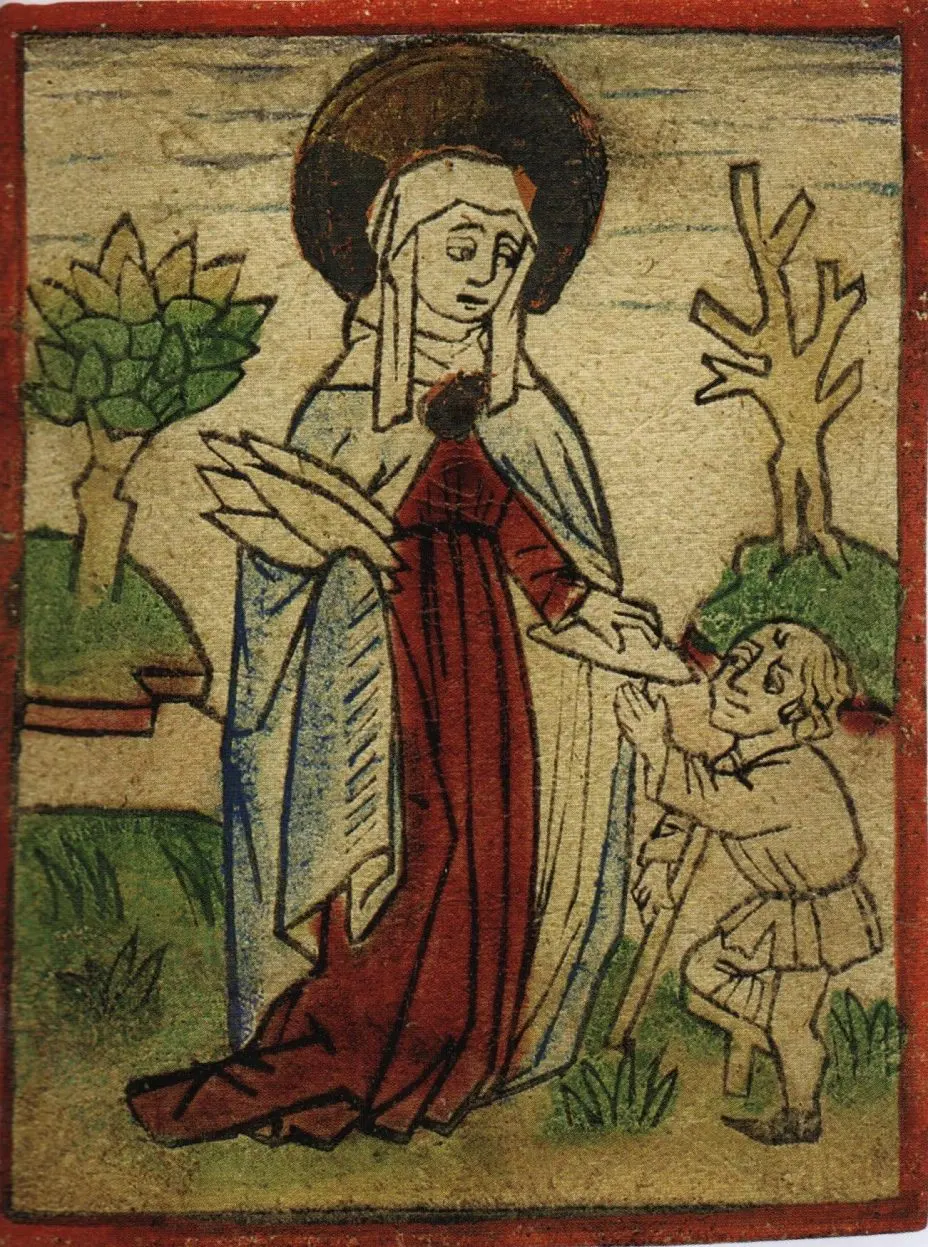
In Europe, the practice gained momentum during the 14th century, initially used for playing cards and religious icons. The invention of the Gutenberg printing press in the mid-15th century revolutionized the field, shifting printmaking from a purely artisanal craft to a cornerstone of the Renaissance. This period saw the rise of master printmakers like Albrecht Dürer, who elevated woodcuts and engravings to the status of high art, allowing images to circulate widely among the European public for the first time.
What are the main types of printmaking?
Printmaking is categorized by the physical method used to transfer the image. Each technique requires specific tools and materials to achieve distinct visual textures and line qualities. The four primary categories are:
- Relief: The artist carves away material, leaving the image raised (e.g., woodcut, linocut).
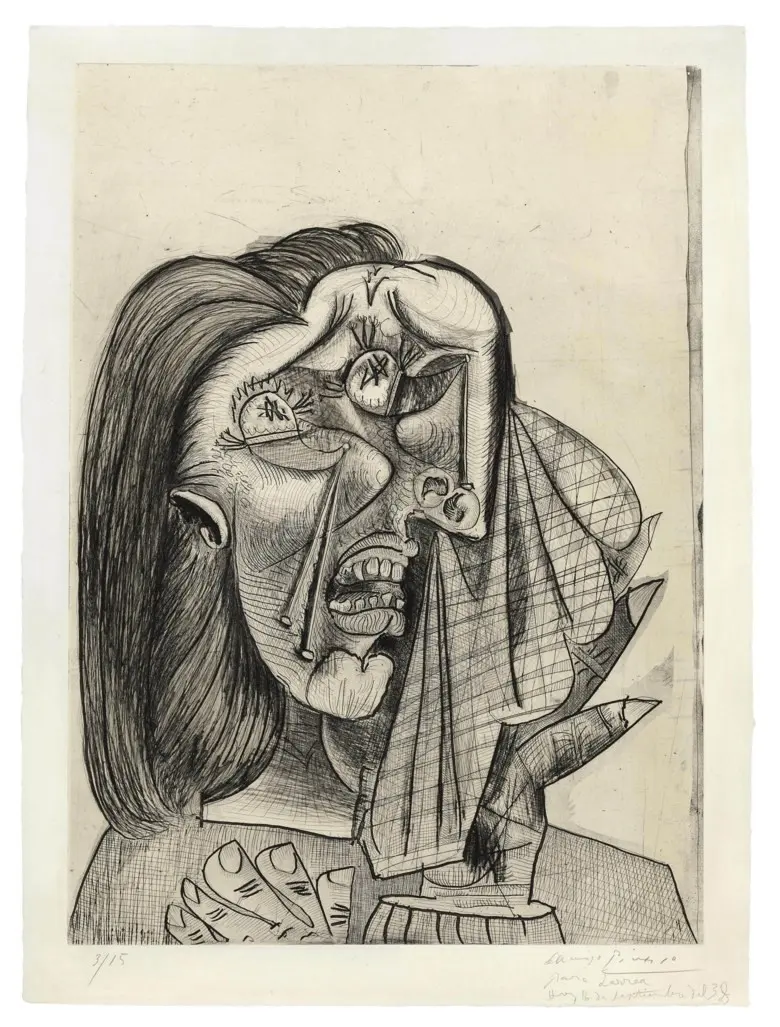
- Intaglio: The image is incised into a metal plate, and ink is held in the grooves (e.g., etching, engraving).
- Planographic: The surface remains flat, relying on the chemical repulsion of oil and water (e.g., lithography).
- Stencil: Ink is pushed through a perforated screen or mask (e.g., screen printing).
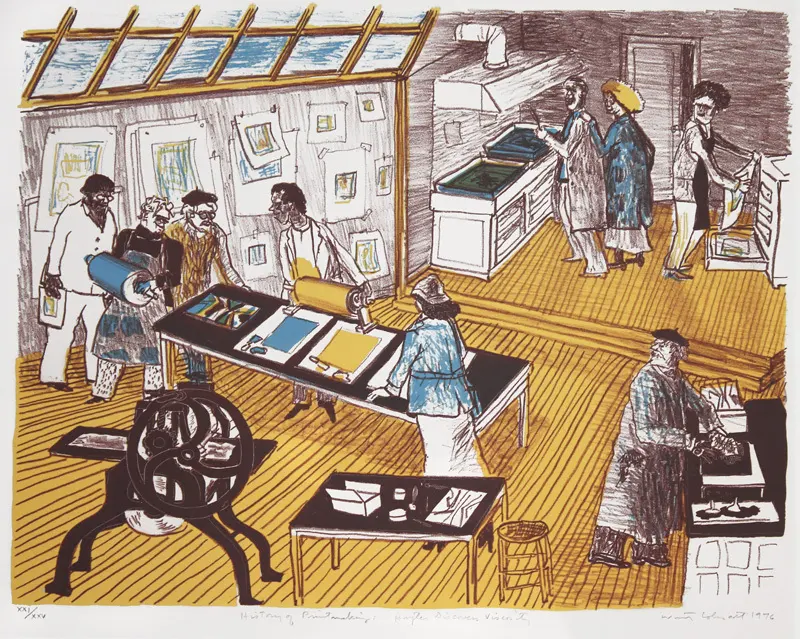
These methods evolved over centuries, with intaglio techniques like etching gaining popularity in the 17th century through artists like Rembrandt. Lithography, invented in 1796 by Alois Senefelder, allowed for more painterly effects, while screen printing emerged in the 20th century as a medium for commercial design and pop art.
How do you start a basic woodcut print?
Creating a relief print is an accessible entry point for beginners. The process requires a soft wood block, a set of carving gouges, printing ink, and a brayer. Follow these steps to produce your first print:
- Sketch your design directly onto the wood block, remembering that the final image will be mirrored.
- Use a V-shaped gouge to outline your design and a U-shaped gouge to clear away the background areas.
- Apply a thin, even layer of ink to the block using a brayer.
- Place a sheet of paper over the block and apply firm, even pressure with a barren or the back of a wooden spoon.
- Carefully peel the paper back to reveal your completed print.
Always ensure your carving tools are sharp, as dull blades require more force and are more likely to slip, potentially causing injury or damaging the block.
Why do printmakers use limited editions?
In the world of fine art, printmakers often produce "limited editions" to maintain the value and integrity of their work. An edition is a set number of identical prints pulled from the same matrix. Once the predetermined number is reached, the plate or block is often defaced or canceled to ensure no further impressions can be made. This process creates scarcity, which is essential for collectors.
The artist typically signs and numbers each print, such as "1/50," indicating the specific print number out of the total edition. This practice distinguishes original prints from mass-produced commercial posters. By controlling the quantity, the artist ensures that each piece remains a unique, high-quality representation of their vision. The history of this practice is rooted in the 19th-century art market, which sought to formalize the status of prints as legitimate, collectible fine art objects alongside paintings and sculptures.
Common mistakes when printmaking for beginners
Newcomers often encounter technical hurdles that affect the quality of their final output. One frequent error is applying too much ink, which causes the details to fill in and the lines to appear blurry or smudged. Another common issue is uneven pressure during the transfer process, leading to "ghosting" or areas that fail to pick up ink entirely. To avoid these problems, maintain a consistent workspace and test your technique on scrap paper before committing to your final, high-quality paper.
- Using improper paper: Always choose paper with the right weight and absorbency for your specific ink.
- Ignoring safety: Always carve away from your body to prevent deep cuts if the tool slips.
- Improper storage: Prints should be stored flat and away from direct sunlight to prevent fading or warping.
- Rushing the drying: Allow prints to dry completely in a dust-free environment before handling or framing them to prevent smearing.
By mastering these fundamental techniques and avoiding common pitfalls, you can effectively navigate the rich, historical craft of printmaking and produce professional-grade results.
Key facts
- Woodcut printing emerged in China around the 8th century, with the Diamond Sutra (868 CE) being the oldest dated printed book.
- Intaglio techniques like engraving and etching gained prominence in 15th-century Europe, allowing for finer detail than woodblocks.
- Lithography was invented by Alois Senefelder in 1796, utilizing the chemical repulsion of oil and water to print images.
- Screen printing, or serigraphy, was patented in 1907 and became a favored medium for pop artists like Andy Warhol in the 1960s.
- When carving a woodblock, always cut away from your body to prevent injury and ensure controlled, smooth lines.
- A common mistake in printmaking is using too much ink, which fills in delicate details; apply a thin, even layer with a brayer.
The bottom line
Printmaking is a versatile art form that has evolved from ancient woodblock techniques to sophisticated modern processes like screen printing and digital lithography. By understanding the relationship between the matrix and the final impression, artists can produce multiple high-quality works. Whether you are a collector or a practitioner, mastering the balance of ink, pressure, and technique remains the essential foundation for creating compelling, reproducible visual art.
People also ask
What is the difference between an original print and a reproduction?
An original print is an image created by an artist using a matrix like a plate or block, where the artist oversees the printing process. A reproduction is a photographic copy of an existing work, lacking the unique physical texture and intentional marks of a hand-pulled print.
How do artists number their prints?
Artists use a fraction format, such as 5/50, where the first number indicates the specific print's sequence and the second represents the total edition size. This system ensures scarcity and helps collectors identify the print's place within the limited production run.
What is a "proof" in printmaking?
A proof is a trial impression made by the artist to check the progress of the work before the final edition is printed. Common types include artist’s proofs, which are reserved for the creator and are usually not part of the numbered edition.
Why do prints appear in reverse?
Because the image is carved or etched onto a surface and then transferred to paper, the final print is a mirror image of the matrix. Artists must account for this reversal during the design phase, especially when including text.
What materials are needed for basic relief printing?
You need a carving tool, a linoleum or wood block, water-based or oil-based ink, a brayer for rolling the ink, and paper. Starting with soft linoleum is recommended for beginners because it is easier to carve than traditional wood.
How do you know if a print is valuable?
Value is determined by the artist's reputation, the rarity of the edition, the condition of the paper, and the presence of a signature. Prints signed in pencil by the artist generally hold more market value than unsigned or mass-produced copies.
This answer was created with the help of AI research tools and reference sources. Spotted an error? Let us know — we correct mistakes quickly. See our editorial policy.