What techniques did M.C. Escher use?
Short answer
M.C. Escher utilized traditional printmaking techniques, primarily woodcuts, lithographs, and mezzotints, to explore mathematical concepts. He combined meticulous observation with geometric transformations, including tessellations, hyperbolic geometry, and impossible constructions. By mastering the physical demands of engraving and stone printing, he translated complex spatial paradoxes into highly detailed, visually coherent graphic works.
On this page
How did M.C. Escher create his prints?
Escher was a master of traditional printmaking, favoring techniques that required extreme precision and physical labor. He began his career focusing on woodcuts, where he carved images into blocks of pearwood. This process is subtractive; every line that remains must be carefully preserved while the surrounding material is cut away. Because he worked in reverse, he had to be exceptionally disciplined with his planning.
Later in his career, Escher transitioned to lithography and mezzotint to achieve more subtle tonal gradients. Lithography allowed him to draw directly onto limestone with greasy crayons, providing a freedom of line that woodcuts lacked. Mezzotint, a much more labor-intensive process, involved roughening a copper plate with a rocker to create a solid black surface, then burnishing areas to create highlights. These methods allowed him to manipulate light and shadow to make his impossible architectures appear solid and believable.
How to design a tessellation like Escher
Tessellations, or regular divisions of the plane, were a cornerstone of Escher’s work. He was inspired by the intricate Moorish tile patterns he saw at the Alhambra in Spain, which he studied and adapted into his own "metamorphosis" series. To create a tessellation, he used geometric shapes like squares, hexagons, or triangles as a base, then modified their edges to create interlocking figures.
If you want to construct a basic tessellation, follow these steps:
- Start with a simple square or hexagon on a piece of grid paper.
- Cut a shape out of one side of the square and translate it to the opposite side, taping it down to create a new edge.
- Repeat this process for the remaining sides, ensuring the shapes interlock perfectly without gaps.
- Trace this master template repeatedly across a page to fill the entire surface.
Common mistakes include failing to maintain the geometric symmetry of the original shape, which causes the pattern to drift or overlap incorrectly as you continue the sequence.
Why do Escher’s impossible objects look real?
Escher’s "impossible" structures, such as those seen in Relativity (1953) or Waterfall (1961), rely on the manipulation of perspective. He used a technique called "non-Euclidean geometry" to create spaces that defy the laws of physics. By drawing objects that appear to be three-dimensional from a specific vantage point, he tricked the human brain into accepting contradictory visual information as a coherent whole.
He often utilized "Penrose triangles" or "staircases" that loop infinitely. These rely on the fact that the human eye naturally seeks to close shapes and complete patterns. By breaking the connections of a structure just enough to hide the logic of the joints, Escher created a cognitive dissonance. The viewer’s brain attempts to reconcile the local details, which look correct, with the global structure, which is physically impossible. This tension is exactly what gives his work its enduring intellectual and visual appeal.
What tools are best for beginners?
For those interested in exploring Escher’s methods, you do not need expensive printing presses. You can start by practicing the mathematical principles of his work using simple drafting tools. A high-quality compass, a protractor, and a sharp mechanical pencil are essential for mapping out the geometric grids that underpin his more complex designs.
- Use tracing paper to experiment with rotations and reflections of your shapes.
- Keep a sketchbook dedicated to "tiling" to track how different motifs fit together.
- Use a fine-liner pen to finalize the contours of your tessellations once the grid is established.
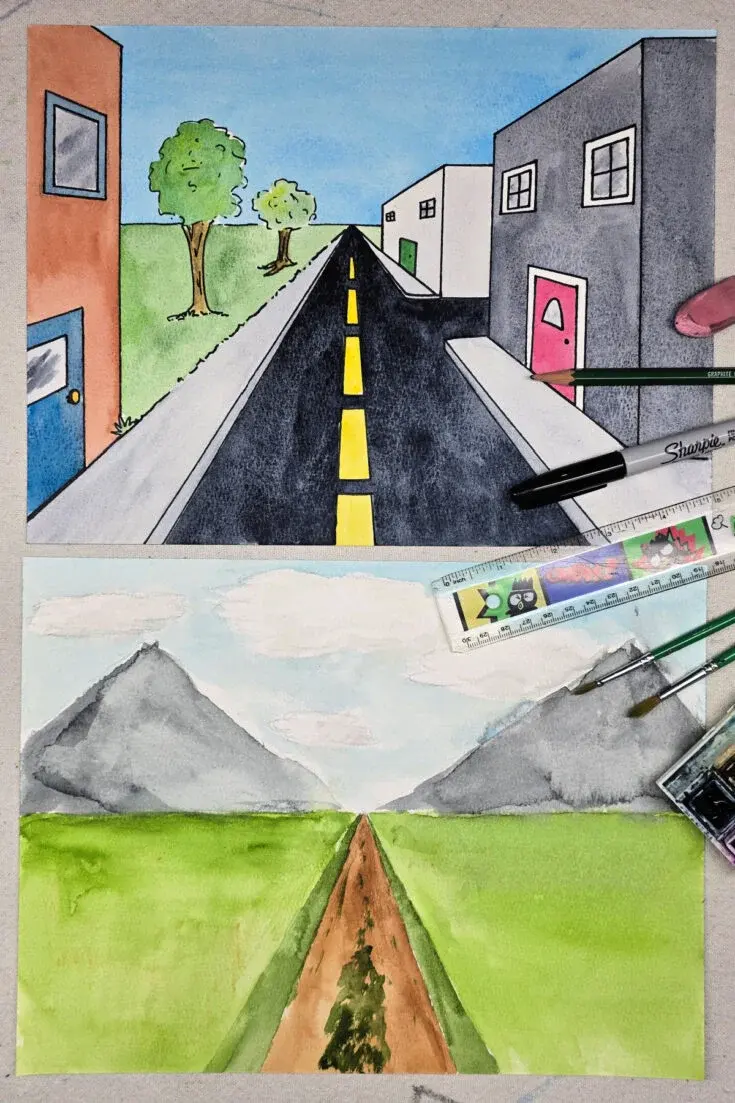
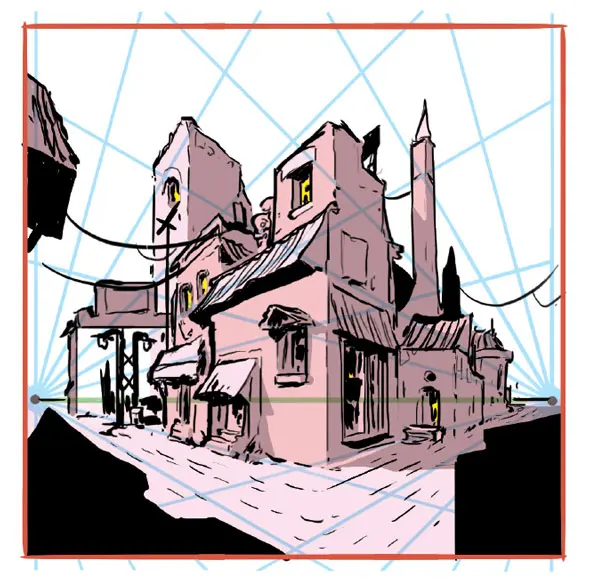
- Study the concept of "vanishing points" in linear perspective to understand how he created depth.
Avoid using soft graphite pencils for final lines, as they tend to smudge during the repetitive process of drawing interlocking patterns. Instead, use a harder lead, such as an H or 2H, to maintain crisp, clean edges that define the boundaries of your figures.
Common mistakes when drawing Escher-style art
A frequent error when attempting Escher-style art is ignoring the importance of scale and proportion. Escher spent years sketching landscapes and buildings in Italy, which gave him an intuitive grasp of how light hits surfaces and how shadows define volume. Many beginners focus too heavily on the "trick" or the paradox, neglecting the underlying structural integrity of the objects themselves.
Another mistake is the lack of tonal contrast. Escher’s work is highly readable because he used a full range of values, from deep blacks to bright whites, to separate his figures from the background. If your drawing lacks clear contrast, the tessellation will look flat and the impossible geometry will lose its impact. Always ensure your light sources are consistent across the entire composition, even if the architecture itself is impossible. By grounding his work in realistic shading, he ensured that the viewer was fully invested in the scene before the paradox was revealed.
Key facts
- Escher primarily utilized woodcuts, lithographs, and mezzotints to achieve his high-contrast, graphic style.
- He employed mathematical concepts like tessellation, which involves covering a plane with repeating geometric shapes without gaps or overlaps.
- To create impossible objects, he manipulated perspective by using non-Euclidean geometry and contradictory vanishing points.
- He used a technique called "division of the plane" to systematically transform one shape into another, as seen in his Metamorphosis series.
- Many of his works rely on the "impossible triangle" or Penrose triangle, a shape that cannot exist in three-dimensional space.
- When drafting, he often used grid paper to maintain precise symmetry and scale before transferring his designs to woodblocks or lithographic stones.
The bottom line
M.C. Escher’s mastery lay in the synthesis of rigorous mathematical precision and imaginative artistic vision. By utilizing traditional printmaking techniques like woodcuts and lithography, he transformed abstract concepts—such as tessellation, non-Euclidean geometry, and infinite recursion—into accessible visual puzzles. His work remains a testament to how discipline and structural logic can be harnessed to challenge human perception and expand the boundaries of representational art.
People also ask
Did M.C. Escher use computers to create his mathematical patterns?
No, Escher never used computers, as his most prolific work occurred between the 1920s and 1960s. He performed all his complex geometric calculations and intricate drawings entirely by hand using pencil, ink, and traditional printmaking tools.
What is the "impossible cube" technique?
This technique involves drawing a shape that appears to be a three-dimensional cube but features edges that connect in ways that defy physical laws. By drawing lines that seem to recede into the distance while simultaneously coming forward, Escher forces the viewer's brain to reconcile two conflicting spatial realities.
How can I practice tessellation like Escher?
Start by cutting a simple shape, such as a square, and altering one side by cutting a piece out and taping it to the opposite side. This creates a "tile" that will interlock perfectly with itself when traced repeatedly across a sheet of paper.
What is a common mistake when drawing impossible geometry?
A common error is failing to maintain consistent line weight throughout the drawing. If the lines are not uniform, the illusion of depth breaks down, and the viewer immediately sees the drawing as a flat, disconnected set of lines rather than a cohesive, impossible structure.
Why did Escher focus so much on reflection and symmetry?
Escher was fascinated by the concept of infinity and the way shapes could repeat indefinitely. He used symmetry to create a sense of order and balance, which served as a stark contrast to the chaotic or impossible nature of the subjects he depicted.
Did Escher invent the mathematical concepts he used?
Escher did not invent the mathematics, but he was a pioneer in applying them to visual art. He often corresponded with mathematicians like Roger Penrose and Harold Coxeter to better understand the theoretical frameworks behind his complex, repeating patterns.
This answer was created with the help of AI research tools and reference sources. Spotted an error? Let us know — we correct mistakes quickly. See our editorial policy.