What is one point perspective?
Short answer
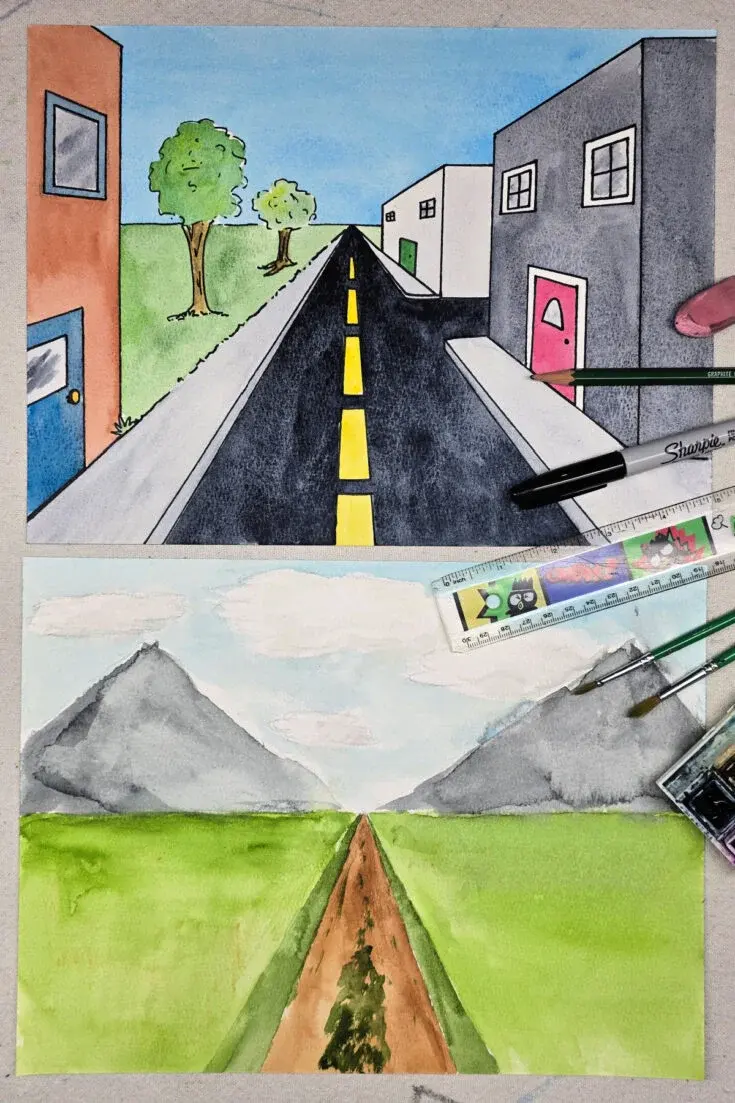
One point perspective is a mathematical drawing technique that creates the illusion of three-dimensional depth on a flat surface. It uses a single vanishing point on the horizon line where all parallel lines appear to converge. This method is primarily used to depict objects viewed directly from the front.
On this page
How does one point perspective work?
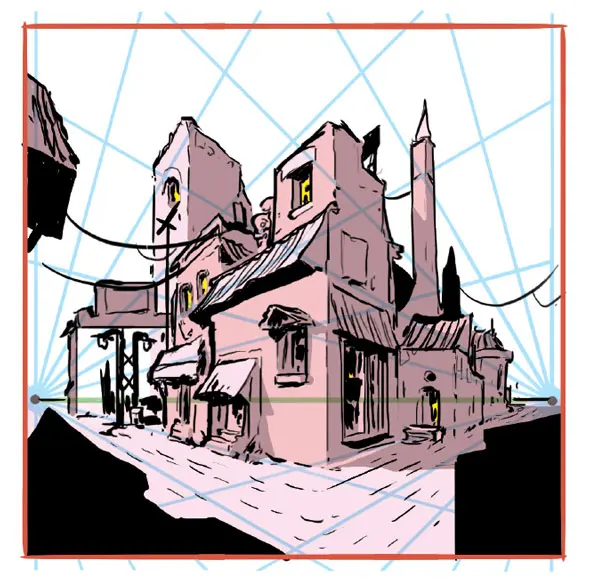
One point perspective relies on the geometric principle that parallel lines appear to meet as they recede into the distance. This visual phenomenon is known as linear perspective, a system formalized during the Italian Renaissance by architects like Filippo Brunelleschi around 1415. The technique requires three primary components: the horizon line, the vanishing point, and orthogonal lines.
The horizon line represents the viewer's eye level, effectively separating the sky from the ground. The vanishing point is the specific coordinate on that horizon line where all lines perpendicular to the viewer converge. Orthogonal lines are the diagonal lines drawn from the edges of objects toward this central point. By aligning these elements, an artist can simulate the way human vision perceives space, making objects closer to the viewer appear larger and those further away appear smaller.
How to draw in one point perspective
To begin a drawing using this technique, you need a pencil, a ruler, and a flat surface. The accuracy of your orthogonal lines is the most critical factor in maintaining the illusion of depth. Follow these steps to construct a simple cube:
- Draw a horizontal line across your paper to serve as the horizon line.
- Mark a single dot anywhere on this line to act as your vanishing point.
- Draw a square or rectangle below or above the horizon line.
- Use your ruler to draw light lines from each corner of the square to the vanishing point.
- Draw horizontal and vertical lines between these orthogonal lines to define the back of the object.
- Erase the excess lines extending beyond the back of the object to complete the shape.
Why use one point perspective in art?
Artists and architects use one point perspective to provide a clear, organized sense of space. It is particularly effective for interiors, such as long hallways or rooms, where the viewer is positioned to look straight down a central axis. By placing the vanishing point in the center of the composition, the artist creates a sense of balance and symmetry that draws the viewer’s eye directly into the scene.
Beyond architecture, this technique is essential for establishing scale and proportion. It allows for the consistent placement of furniture, windows, or figures within a room, ensuring that every element adheres to the same spatial logic. When used correctly, it prevents the common issue of "floating" objects, as everything is anchored to the same horizon line. This creates a cohesive environment that feels grounded, logical, and immersive for the observer.
Common mistakes when drawing perspective
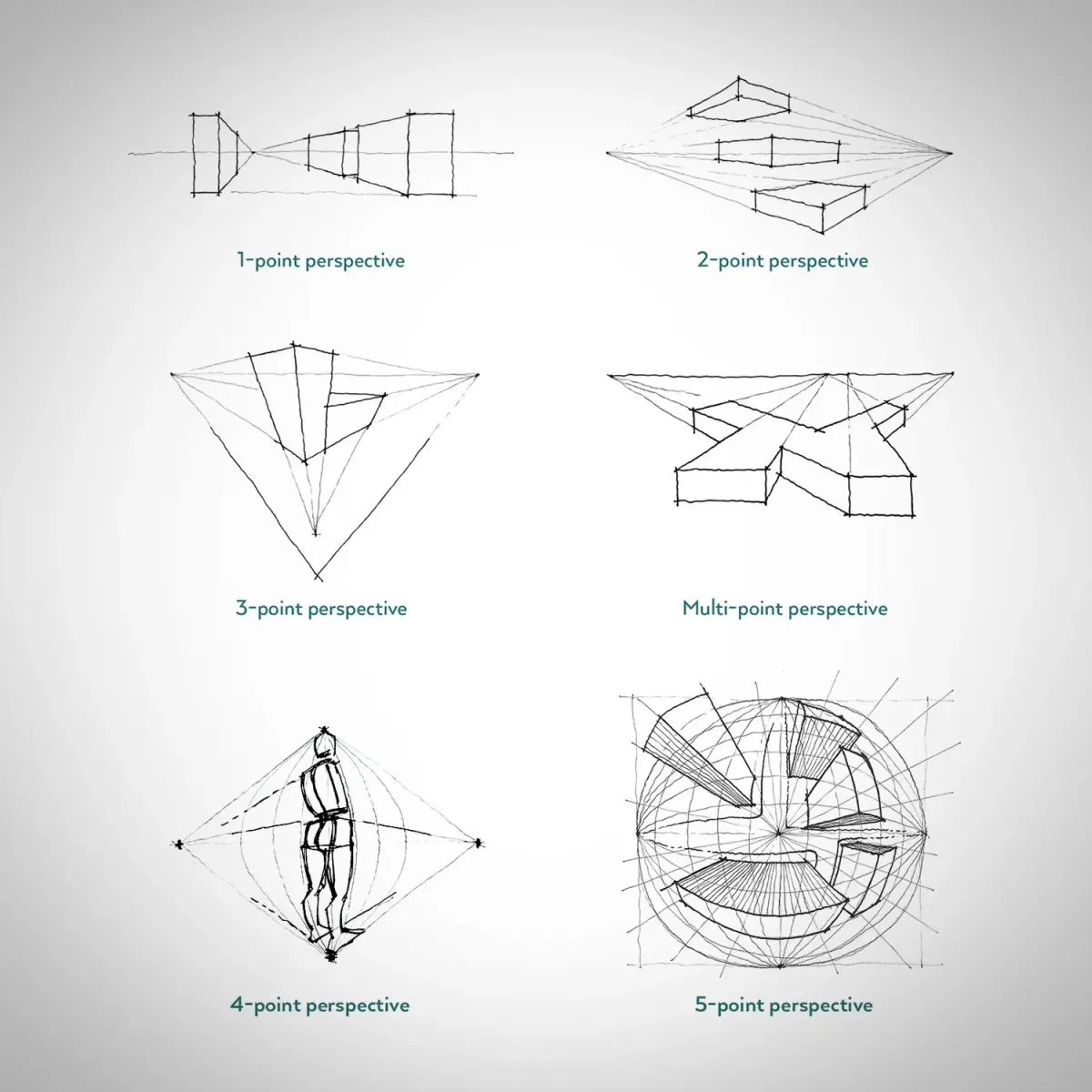
Even experienced artists can struggle with the strict geometry required for perspective drawing. One of the most frequent errors is failing to keep the horizon line perfectly horizontal. If the horizon line is tilted, the entire structure of the drawing will appear to slide or collapse, breaking the illusion of a stable, three-dimensional space. Another common issue involves inconsistent vanishing points.
- Using multiple vanishing points for a single object, which creates a distorted, non-Euclidean appearance.
- Drawing orthogonal lines that are not perfectly straight, which causes the receding edges to look curved or warped.
- Placing the vanishing point too close to the edge of the paper, which can lead to extreme, unnatural distortion of the objects.
- Forgetting to erase the construction lines, which makes the final image appear cluttered and confusing to the viewer.
- Ignoring the viewer's eye level, which results in objects that look like they are floating in mid-air.
Best tips for perspective beginners
Mastering perspective is a matter of practice and patience. Start by drawing simple geometric shapes like cubes, cylinders, and prisms before attempting complex architectural scenes. It is helpful to visualize the scene as a series of transparent boxes, which allows you to map out the depth of every object before adding details. Always keep your construction lines very light so they can be easily removed later.
When you are ready to advance, experiment with placing the vanishing point in different locations on the horizon line. You will quickly notice how moving the point to the left or right changes the viewer's perspective of the object. Remember that the closer an object is to the vanishing point, the more it will appear to diminish in size. By consistently applying these rules, you will develop a strong intuition for spatial representation that will improve your overall drawing accuracy and technical skill.
Key facts
- One-point perspective uses a single vanishing point on the horizon line where all parallel lines appear to converge.
- The technique relies on the horizon line, which represents the viewer's eye level in the composition.
- Orthogonal lines are the diagonal lines drawn from the edges of objects directly to the vanishing point.
- It is most effective for drawing scenes where the viewer is looking directly at a flat surface, such as a wall or a road.
- To maintain accuracy, ensure all horizontal and vertical lines remain perfectly parallel to the edges of your paper.
- Avoid placing the vanishing point exactly in the center of the page if you want to create a more dynamic, asymmetrical composition.
The bottom line
One-point perspective is a powerful drawing technique that creates the illusion of depth on a two-dimensional surface. By anchoring all receding lines to a single vanishing point on the horizon, you can accurately represent space and scale. Mastering this method allows you to construct realistic environments, providing a clear structure for your compositions while ensuring that objects appear correctly positioned relative to the viewer’s eye level.
People also ask
How do I find the horizon line in a drawing?
The horizon line is always placed at the level of the viewer's eyes. If you are standing, it is higher on the page; if you are sitting or lying down, it is lower.
Can I have more than one vanishing point in a drawing?
Yes, two-point perspective uses two vanishing points, usually placed on opposite ends of the horizon line. This is used when viewing an object, like a building, from a corner angle.
Why do my drawings look distorted when using perspective?
Distortion often occurs when objects are placed too far from the vanishing point or when orthogonal lines are not perfectly straight. Always use a ruler to ensure lines converge precisely at the designated point.
What is the difference between one-point and three-point perspective?
One-point perspective focuses on depth, while three-point perspective adds a vertical vanishing point to simulate looking up at a tall object or down from a high vantage point.
Is one-point perspective only used for architectural drawings?
While common in architecture, it is also used in landscape and interior design to create a sense of scale. It helps artists guide the viewer's eye toward a specific focal point in any scene.
What is the most common mistake beginners make with perspective?
Beginners often fail to keep vertical lines perfectly upright. If your vertical lines tilt, the entire structure of the drawing will appear to collapse or lean unnaturally.
This answer was created with the help of AI research tools and reference sources. Spotted an error? Let us know — we correct mistakes quickly. See our editorial policy.