Why is The Hunters in the Snow so famous?
Short answer
The Hunters in the Snow, painted by Pieter Bruegel the Elder in 1565, is famous for pioneering the genre of landscape painting. It revolutionized Western art by elevating the environment to the primary subject rather than a mere backdrop, while its intricate detail and seasonal symbolism offer a profound meditation on human existence.
On this page
Why is The Hunters in the Snow so famous?
This masterpiece is celebrated primarily for its departure from religious or historical narratives, which dominated European art during the 16th century. By focusing on the harsh realities of winter, Bruegel captured the essence of the "Little Ice Age," a period of cooling that drastically altered European agriculture and daily life. The painting is part of a series representing the months of the year, commissioned by the wealthy merchant Nicolaes Jonghelinck.
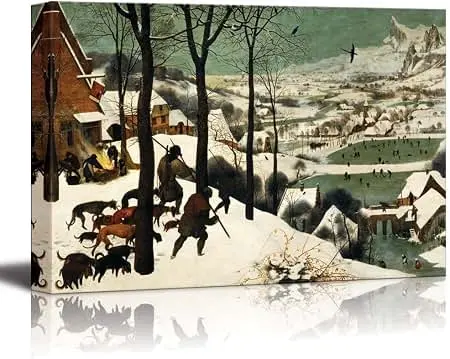
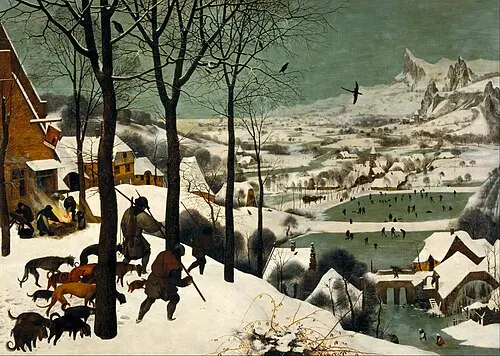
The work is famous because it bridges the gap between the medieval tradition of illuminated calendars and the modern landscape genre. Bruegel utilized a sophisticated aerial perspective, drawing the viewer’s eye from the foreground hunters down into the sprawling, icy valley below. This composition creates a sense of vastness that was unprecedented at the time. It serves as a visual encyclopedia of 16th-century rural life, documenting everything from communal slaughtering of pigs to the intricate architecture of village inns.
How to analyze the composition of the painting
To truly appreciate Bruegel’s genius, one must look at how he organizes space. He uses a "diagonals" technique to guide the viewer through the scene, starting with the weary hunters on the left and moving toward the frozen ponds and jagged mountains in the distance. This movement creates a narrative flow that feels both natural and highly structured.
When examining the painting, consider these specific visual elements:
- The stark contrast between the warm, dark tones of the foreground hunters and the cool, pale blues of the icy background.
- The repetition of vertical lines in the trees, which mirror the posture of the hunters and emphasize the cold, still atmosphere.
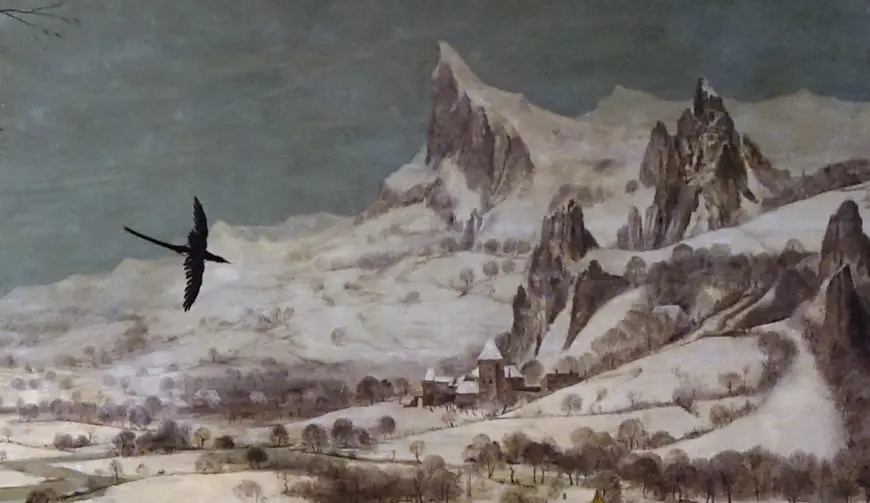
- The use of atmospheric perspective, where distant objects are painted with less detail and lighter colors to simulate depth.
By following these visual cues, you can see how Bruegel forces the viewer to participate in the journey. The composition is not static; it invites the eye to wander through the village, finding new details with every glance.
What is the symbolism in the painting?
The painting is deeply rooted in the concept of the "labors of the months," a tradition where specific seasonal activities represent the cycle of human life. The hunters, returning empty-handed, symbolize the struggle against nature, while the skaters on the ice represent the fleeting, precarious nature of human joy. Bruegel is not just painting a landscape; he is painting a moral allegory about the human condition.
Several key symbols appear throughout the scene:
- The sign on the inn, depicting Saint Hubert, serves as a reminder of the religious context of the era.
- The fire in the foreground, where villagers are singeing a pig, represents the domestic struggle to survive the cold.
- The jagged, impossible mountains in the background, which were inspired by Bruegel’s travels through the Alps, symbolize the overwhelming power of the natural world.
These symbols collectively suggest that humans are small, fragile beings navigating a world that is indifferent to their efforts. This philosophical depth ensures the painting remains relevant to modern viewers.
Common mistakes when interpreting Bruegel’s work
One common mistake is assuming that the painting is a purely realistic depiction of a specific place. While Bruegel based his details on real observations, he synthesized different elements—such as the Flemish village and the Alpine mountains—into an idealized landscape. He was not trying to capture a photograph; he was trying to capture the "idea" of winter.
Another frequent error is ignoring the role of the viewer's perspective. Bruegel painted this work to be hung in a high-ceilinged room, meaning the perspective is slightly distorted to account for the viewer looking up at it. If you view it at eye level, the composition may seem slightly compressed. Always remember that the artist intended for the painting to function as a window into an artificial, constructed world. By viewing it through the lens of a "constructed reality" rather than a "photographic record," you gain a much better understanding of the artist's intent and his mastery of visual storytelling.
Where to see the original painting today
If you wish to view this work in person, you must travel to the Kunsthistorisches Museum in Vienna, Austria. It is one of the most prized pieces in their collection, housed alongside other legendary works by Bruegel. Because the panel is painted on wood with oil, it is highly sensitive to environmental changes, meaning it is rarely lent out for traveling exhibitions.
When planning your visit, keep these tips in mind:
- Arrive early in the morning to avoid the largest crowds, as this is one of the museum's most popular attractions.
- Bring a pair of high-quality binoculars or a magnifying glass, as the museum allows close-up viewing that reveals the microscopic details of the skaters and the hunters.
- Check the museum’s official website for temporary closures or special exhibition schedules that might affect the display of the painting.
Seeing the original allows you to appreciate the texture of the paint and the subtle color gradations that are often lost in digital reproductions. It remains a cornerstone of Western art history, standing as a testament to the enduring power of the landscape genre.
Key facts
- Pieter Bruegel the Elder painted The Hunters in the Snow in 1565 using oil on wood panel.
- It is part of a series of six paintings depicting the months or seasons of the year.
- The work measures approximately 117 cm by 162 cm and is housed in the Kunsthistorisches Museum in Vienna.
- It is considered one of the earliest examples of a landscape painting that treats the environment as the primary subject rather than a backdrop.
- The composition utilizes a "diagonal" perspective, drawing the viewer's eye from the foreground hunters down into the valley.
- When viewing the painting, look for the intricate details of the distant skaters on the ice, which represent the daily lives of common people.
The bottom line
The Hunters in the Snow remains famous for its revolutionary shift toward landscape painting and its profound portrayal of the human condition. By blending technical mastery of perspective with minute, realistic details of winter life, Bruegel created an immersive world that feels timeless. It serves as a bridge between medieval tradition and the modern focus on naturalism, making it a cornerstone of Western art history.
People also ask
What does the painting symbolize?
The work is widely interpreted as a reflection on the harshness of winter and the cycle of human life. It contrasts the weary hunters returning home with the lively activities of villagers below, highlighting the persistence of humanity against the cold.
Why are the hunters shown from behind?
By depicting the hunters from behind, Bruegel encourages the viewer to look past them and into the landscape. This technique invites the audience to enter the scene and explore the depth of the valley.
Is this painting considered a masterpiece of the Northern Renaissance?
Yes, it is a definitive work of the Northern Renaissance because of its realistic detail and focus on secular, everyday life. It moved away from the religious themes that dominated art during the preceding centuries.
How did Bruegel achieve such realistic snow effects?
Bruegel used a limited, cool color palette of whites, grays, and muted greens to capture the atmosphere of a frozen day. He also carefully applied paint to show how snow clings to the jagged branches of the trees.
Are all six paintings in the series still in existence?
Only five of the original six paintings from the series have survived to the present day. One painting, which likely represented the transition between late spring and early summer, is considered lost.
What is a common mistake when viewing this painting?
Many viewers focus only on the foreground and miss the small, narrative vignettes in the background. To truly appreciate the work, scan the entire panel to find the small figures tending fires, skating, and preparing food.
This answer was created with the help of AI research tools and reference sources. Spotted an error? Let us know — we correct mistakes quickly. See our editorial policy.