What is Métis beadwork?
Short answer
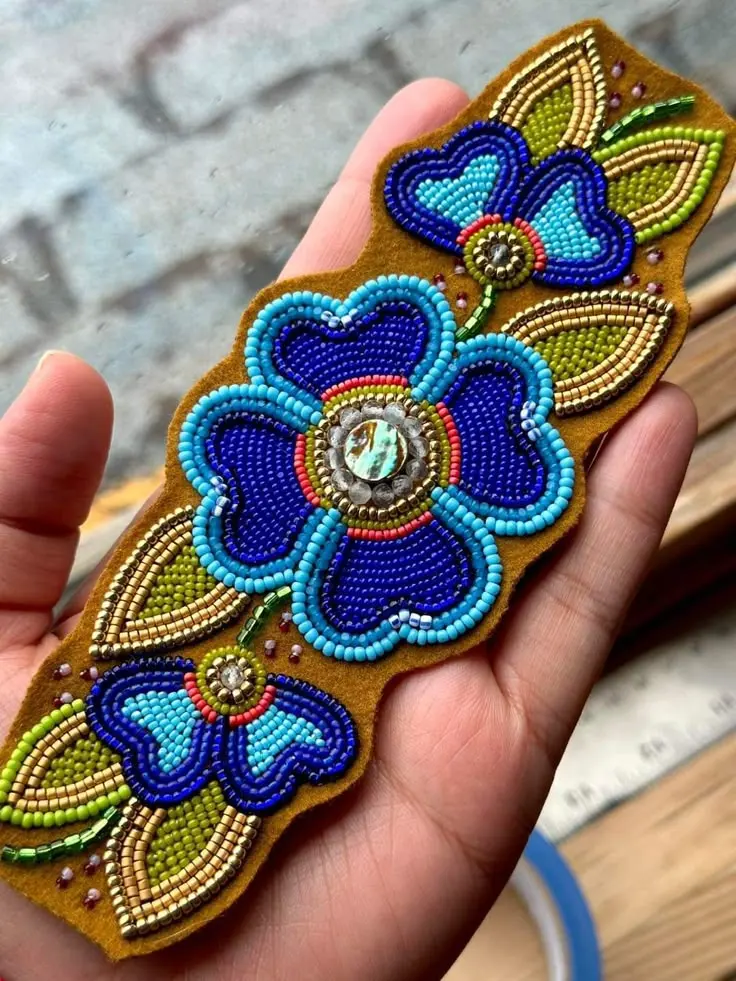
Métis beadwork is a distinctive Indigenous art form characterized by vibrant floral patterns, particularly roses, stitched onto hide or fabric. Often called the "Flower Beadwork People," the Métis blend European trade bead aesthetics with traditional Indigenous techniques. It serves as a vital cultural marker, representing history, identity, and artistic resilience.
On this page
What is the history of Métis beadwork?
The emergence of Métis beadwork is deeply intertwined with the fur trade in North America during the 18th and 19th centuries. As European traders introduced glass beads, Métis women integrated these materials into their existing quillwork traditions. This fusion created a unique visual language that signaled Métis identity across the Great Plains and the Red River Settlement.
By the mid-1800s, the style became synonymous with the Métis people. The intricate floral motifs often symbolized the landscape and the natural world, reflecting a deep connection to the land. While beadwork was initially used for functional items like moccasins and pouches, it evolved into a sophisticated decorative art form. Today, it remains a powerful medium for storytelling and a way to preserve ancestral knowledge for future generations.
How to identify Métis floral patterns
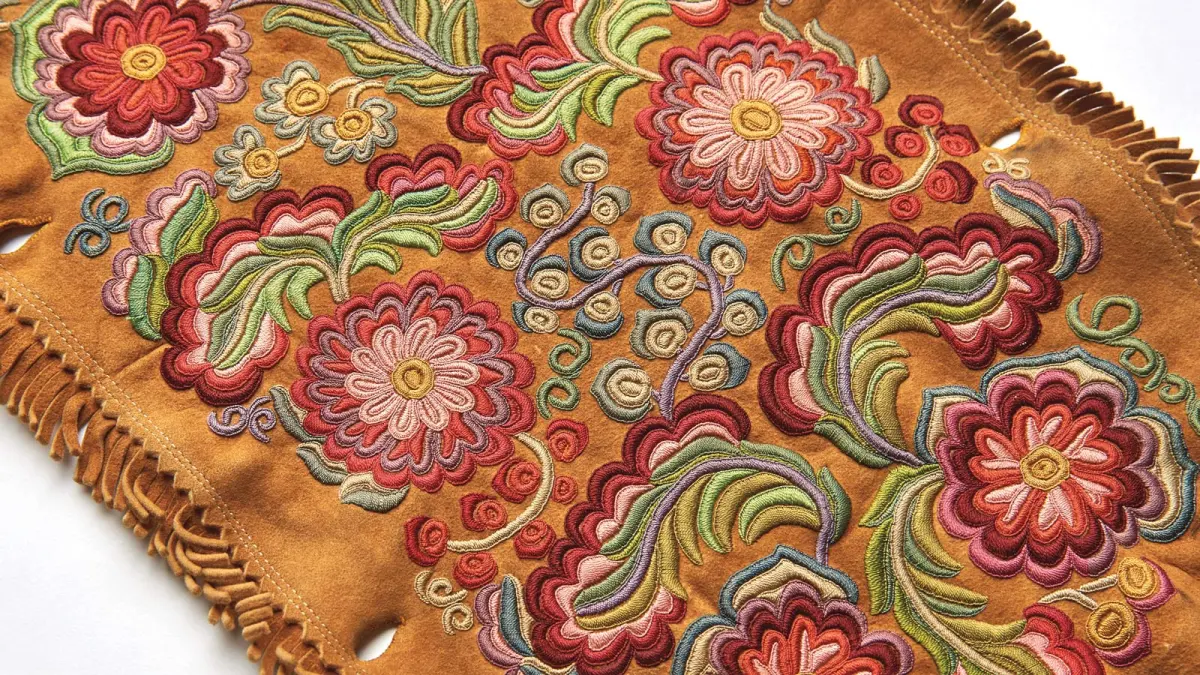
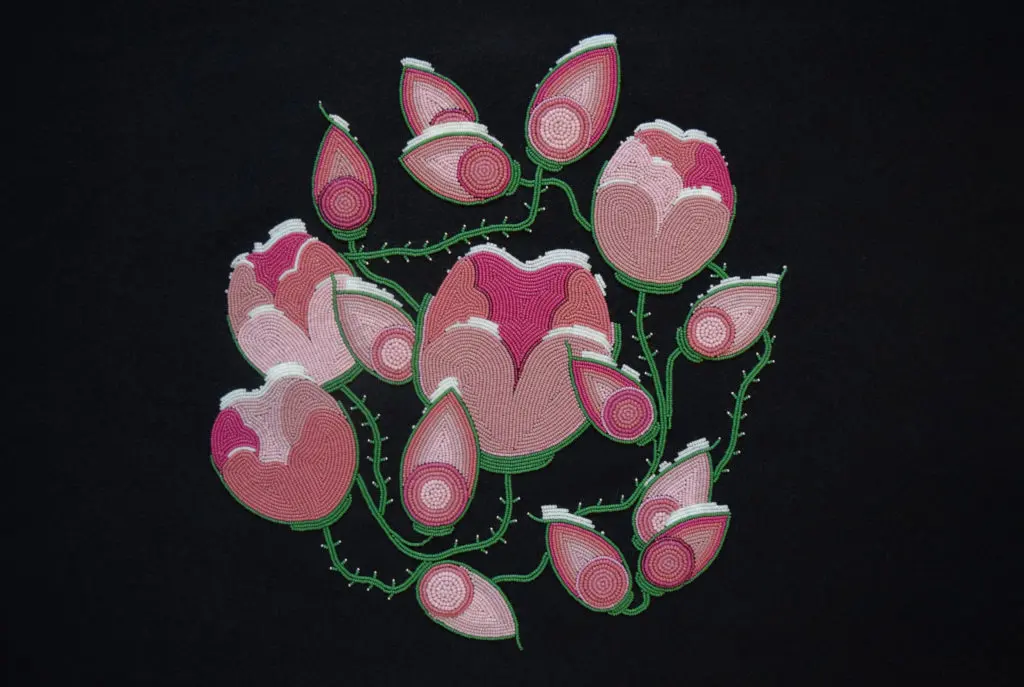
Métis beadwork is most famous for its "flower beadwork" aesthetic, which features organic, flowing designs. Unlike the geometric patterns common among many other Indigenous nations, Métis artists favor asymmetrical arrangements of roses, leaves, and vines. These designs are typically rendered in bold, contrasting colors that pop against dark velvet or tanned hide backgrounds.
Key characteristics of these patterns include:
- Symmetrical or asymmetrical floral sprays that appear to grow from a central point.
- The use of specific "Métis roses," which often feature layered petals in shades of pink, red, and white.
- Curvilinear lines that mimic the natural movement of plants rather than rigid, angular shapes.
- A focus on "filling" the space, often leaving very little background fabric visible in traditional pieces.
What materials are used in Métis beadwork?
Traditional Métis beadwork relies on high-quality materials that ensure both beauty and longevity. Historically, artists used brain-tanned deer or moose hide as the primary base, though black velvet became popular during the Victorian era due to trade influences. The beads themselves were originally small, opaque glass seed beads imported from Europe, often referred to as "pony beads" or smaller "seed beads."
To create a professional piece, you will need:
- Seed beads in various sizes, typically 11/0 or 13/0 for fine detail.
- A sturdy needle, specifically a size 10 or 12 beading needle.
- Strong, waxed nylon or silk thread, which prevents tangling and snapping.
- A piece of fabric or hide, backed with stiff interfacing if the material is thin.
- A beading mat to keep the tiny beads from rolling away during the process.
How to start your first beading project
Beginners should start with a small, flat project, such as a needle case or a small patch, before attempting complex garments. The most common technique is the "two-needle" method, where one needle strings the beads and a second needle "couches" or tacks the thread down to secure the beads to the fabric. This allows for smooth, curved lines that are essential for floral designs.
Follow these steps to begin your journey:
- Sketch your floral design onto paper, then transfer the outline to your fabric using a white tailor’s chalk or a disappearing ink pen.
- Thread your needle and knot the end securely, starting from the back of the fabric.
- String a small number of beads—usually 3 to 5—and lay them along your drawn line.
- Use your second needle to bring the thread up between the beads and back down, effectively "stitching" the strand into place.
- Repeat this process, following the curves of your pattern until the design is filled.
Common mistakes when learning beadwork
One of the most frequent mistakes beginners make is pulling the thread too tightly. If the thread is too taut, the fabric will pucker, causing the design to warp and look uneven. Conversely, if the thread is too loose, the beads will sag or shift over time, ruining the crispness of the floral edges. Always aim for a tension that allows the beads to lie flat against the surface.
Another common error is failing to plan the color palette before beginning. Because Métis beadwork relies on the contrast between the flower petals and the background, choosing colors that are too similar can make the design look muddy. Always test your color combinations on a scrap piece of fabric first. Finally, avoid using cheap, plastic beads that may fade or break; investing in high-quality glass beads ensures your work remains vibrant for years. By practicing patience and focusing on consistent stitch length, you will gradually master the rhythm required for this historic craft.
Key facts
- Métis beadwork is often called "the flower beadwork people" due to the iconic, vibrant floral patterns that define the style.
- Early beadwork utilized natural materials like porcupine quills and moose hair before the widespread introduction of European glass trade beads in the 18th century.
- The "lazy stitch" technique is a common method where multiple beads are strung on a single thread and tacked down at intervals to create raised, textured rows.
- Floral designs are typically symmetrical and feature bold, organic shapes like roses, leaves, and vines, often rendered in bright, contrasting colors.
- A common mistake for beginners is using low-quality, inconsistent beads, which prevents the pattern from laying flat and looking uniform.
- Beginners should always use a high-quality, waxed synthetic thread, as cotton thread is prone to snapping and rotting over time.
The bottom line
Métis beadwork is a vibrant, historically significant art form characterized by its signature floral motifs and precise craftsmanship. By blending Indigenous techniques with European trade materials, Métis artisans created a unique visual language that adorns both functional clothing and ceremonial objects. Today, this practice remains a vital expression of Métis identity, reflecting a rich cultural heritage that continues to evolve through the hands of contemporary practitioners.
People also ask
What materials are traditionally used in Métis beadwork?
Traditionally, artisans used materials from the land, such as sinew for thread and porcupine quills for decoration. Today, the craft primarily uses glass seed beads, felt or hide backings, and durable nylon or polyester threads.
How do Métis floral patterns differ from other Indigenous styles?
Métis floral designs are distinct for their use of realistic, symmetrical botanical motifs that often incorporate shading and depth. Unlike some geometric Indigenous styles, Métis work focuses on fluid, organic shapes inspired by the natural environment.
Is Métis beadwork considered a functional or decorative art?
It is both. Historically, beadwork was applied to functional items like moccasins, jackets, gauntlets, and cradleboards to provide both aesthetic beauty and spiritual protection.
What is the significance of the "flower beadwork people" moniker?
This name highlights the deep cultural identification of the Métis people with the intricate, colorful floral patterns that became a hallmark of their material culture. It serves as a visual marker of identity that emerged from the fusion of European and Indigenous artistic traditions.
Can anyone learn to do Métis-style beadwork?
Yes, anyone can learn the techniques, though it requires patience and practice to master the tension and spacing. It is important to approach the craft with respect for its cultural origins and to seek guidance from experienced Métis knowledge keepers.
What is the best way to start a new beadwork project?
Start by sketching your floral design on paper, then transfer the pattern onto a piece of felt or hide using a tailor's chalk or a transfer pen. Focus on mastering a single stitch type, such as the backstitch or lazy stitch, before attempting complex multi-layered designs.
This answer was created with the help of AI research tools and reference sources. Spotted an error? Let us know — we correct mistakes quickly. See our editorial policy.