What is Sandro Botticelli known for?
Short answer
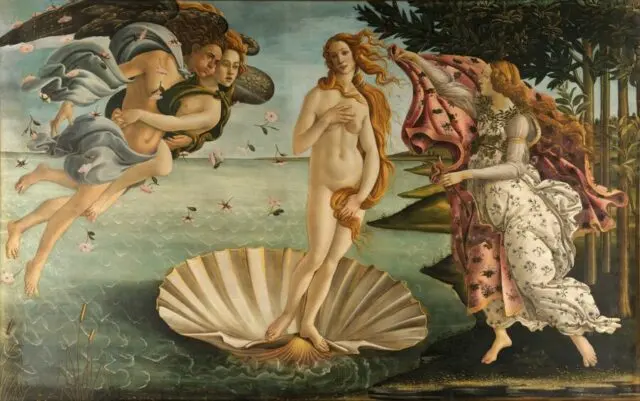
Sandro Botticelli was a defining painter of the Italian Renaissance, celebrated for his lyrical style and mythological themes. He is most famous for masterpieces like The Birth of Venus and Primavera. His work blends graceful line work with Neoplatonic philosophy, capturing the intellectual and aesthetic spirit of 15th-century Florence under the Medici family.

On this page
Why is Sandro Botticelli considered a Renaissance master?
Botticelli, born Alessandro di Mariano di Vanni Filipepi in 1445, became a central figure in the artistic circle of Florence. He is primarily recognized for his mastery of tempera on panel, a technique that allowed for the delicate, luminous surfaces seen in his best-known works. Unlike many of his contemporaries who focused heavily on scientific perspective, Botticelli prioritized elegance, rhythmic lines, and emotional depth.
His work reflects the unique cultural climate of the Medici court, which favored the revival of classical antiquity. By merging Christian iconography with pagan mythology, he created a visual language that was both innovative and deeply intellectual. His ability to convey complex allegories through graceful figures established him as one of the most influential painters of the Early Renaissance.
What are the most famous Botticelli paintings?
The artist’s reputation rests largely on a small group of mythological paintings created during the 1480s. These works are characterized by their elongated figures, intricate drapery, and dreamlike settings. They remain among the most recognizable images in the history of Western art, frequently reproduced and studied for their stylistic departure from the rigid realism of the period.
- The Birth of Venus (c. 1484–1486): Depicts the goddess Venus arriving at the shore, symbolizing the arrival of beauty in the world.
- Primavera (c. 1477–1482): An elaborate allegory of spring featuring mythological figures in a lush, highly detailed garden.
- Pallas and the Centaur (c. 1482): A symbolic representation of wisdom overcoming base instincts.
- Mystic Nativity (1500): A rare later work that showcases his unique approach to religious themes during his final years.
How to identify Botticelli’s artistic style
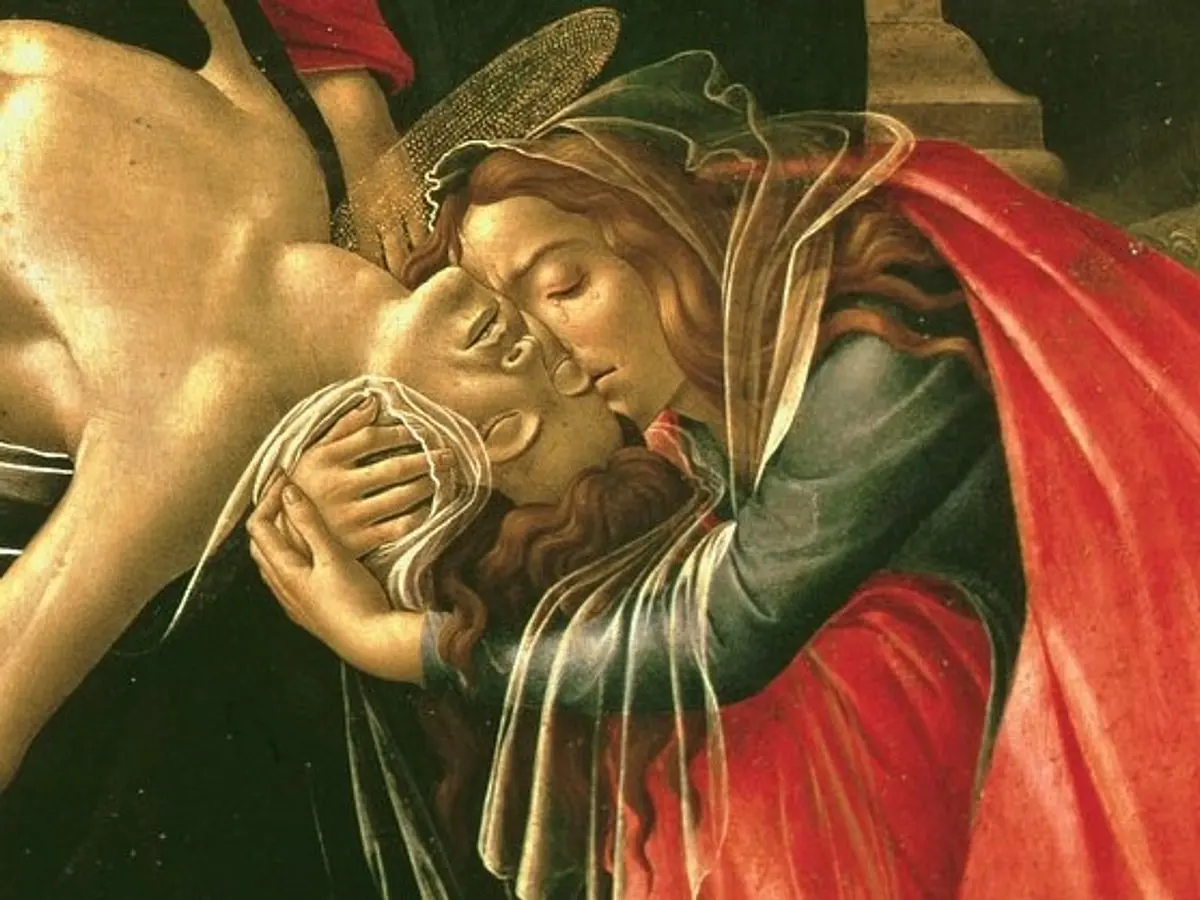
Identifying a Botticelli painting involves looking for specific technical and aesthetic markers that set him apart from peers like Leonardo da Vinci or Ghirlandaio. His figures often appear to float rather than stand firmly on the ground, creating a sense of ethereal movement. He utilized a distinct "linear" style, where the contour of the figure is emphasized over the modeling of volume through light and shadow.
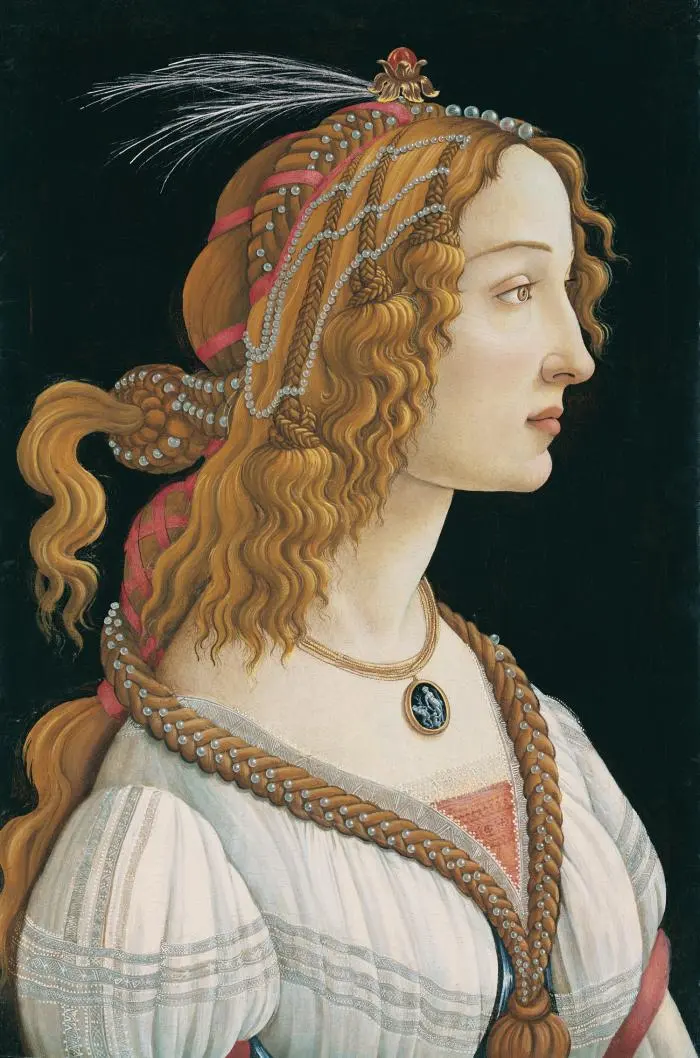
- Examine the faces: Look for pale, oval-shaped faces with delicate features and a melancholic or pensive expression.
- Observe the hair: Botticelli is famous for painting flowing, golden, or intricately braided hair that seems to move with a life of its own.
- Check the background: His landscapes often feature stylized, decorative foliage or distant, hazy vistas that serve as a backdrop for the narrative.
- Analyze the drapery: Notice the fine, fluttering folds of fabric that cling to the body, emphasizing the grace of the subject's posture.
Common mistakes when studying Renaissance art
A frequent error when viewing Botticelli’s work is applying modern standards of anatomical realism to his figures. Because he intentionally elongated limbs and necks to achieve a sense of elegance, some viewers mistakenly label these proportions as "errors" in draftsmanship. In reality, these stylistic choices were deliberate attempts to elevate the subject matter above the mundane world.
Another mistake is ignoring the influence of Neoplatonism, a philosophy popular in Florence at the time. Many viewers interpret his mythological scenes as simple stories, but they were intended as complex philosophical puzzles for an educated elite. To fully understand his work, one must consider the intellectual context of the Medici household, where art was meant to inspire contemplation of divine beauty and virtue through the lens of classical myths.
Where to see Botticelli’s work today
While Botticelli’s influence spread throughout Europe, the vast majority of his most significant paintings remain in Florence. The Uffizi Gallery is the primary destination for those wishing to see his major mythological and religious works in person. Planning a visit to this institution provides the best opportunity to observe the scale and color palette of his tempera panels, which often lose their vibrancy in digital reproductions.
- The Uffizi Gallery, Florence: Houses The Birth of Venus, Primavera, and The Adoration of the Magi.
- The National Gallery, London: Contains several important religious works and portraits, including Venus and Mars.
- The Metropolitan Museum of Art, New York: Features significant examples of his portraiture and smaller religious panels.
- The Gemäldegalerie, Berlin: Holds several works that demonstrate his stylistic evolution throughout his career.
When visiting these museums, take time to observe the paintings from different angles to appreciate the subtle gold leaf application and the fine brushwork that defines his signature aesthetic.
Key facts
- Sandro Botticelli was a leading painter of the Early Renaissance in Florence, Italy, born Alessandro di Mariano di Vanni Filipepi in 1445.
- He is most famous for his large-scale mythological paintings, specifically The Birth of Venus and Primavera, both housed in the Uffizi Gallery.
- Botticelli was one of the few artists invited by Pope Sixtus IV to paint frescoes on the walls of the Sistine Chapel in Rome between 1481 and 1482.
- His signature style features graceful, elongated figures, flowing lines, and a delicate, ethereal quality that departed from strict mathematical realism.
- To appreciate his work, look for his use of tempera on panel, which creates a luminous, matte finish distinct from the oil paintings that became popular later.
- Avoid the common mistake of assuming his work is purely religious; while he painted many Madonnas, his secular mythological themes were revolutionary for his time.
The bottom line
Sandro Botticelli remains a defining figure of the Italian Renaissance, celebrated for his poetic synthesis of classical mythology and Christian imagery. His mastery of line and graceful composition elevated painting beyond mere imitation, establishing an aesthetic of refined beauty. By studying his evolution from secular mythological allegories to intense religious devotion, one gains a deeper understanding of the shifting cultural and intellectual landscape of 15th-century Florence.
People also ask
Why did Botticelli’s popularity decline during his lifetime?
As the Renaissance moved into the High Renaissance, tastes shifted toward the dramatic realism and anatomical precision of artists like Leonardo da Vinci and Michelangelo. Botticelli’s more stylized, linear approach was increasingly viewed as outdated by the younger generation of patrons.
Did Botticelli have any famous students?
His most notable pupil was Filippino Lippi, who studied in his workshop and eventually helped complete some of Botticelli’s commissions. Lippi’s own style was heavily influenced by his master’s fluid lines and expressive faces.
Where can I see Botticelli's paintings today?
The Uffizi Gallery in Florence holds the largest collection of his masterpieces, including his most famous mythological works. Other significant pieces are located in the National Gallery in London, the Louvre in Paris, and the Metropolitan Museum of Art in New York.
What is the significance of the "Venus" in his paintings?
In The Birth of Venus, the figure represents the Neoplatonic ideal of divine beauty and love rather than a literal portrait. This intellectual concept was popular among his patrons, the Medici family, who valued classical philosophy alongside Christian theology.
Did Botticelli ever paint portraits?
Yes, he was a highly sought-after portraitist for the Florentine elite. His portraits are known for their psychological depth and the elegant, idealized features he bestowed upon his sitters, such as in the Portrait of a Young Man.
How did Savonarola influence Botticelli’s later work?
The fiery sermons of the monk Savonarola, who condemned secular art and vanity, reportedly caused Botticelli to burn some of his own non-religious paintings. His later works became more somber, spiritual, and intensely focused on religious themes.
This answer was created with the help of AI research tools and reference sources. Spotted an error? Let us know — we correct mistakes quickly. See our editorial policy.