What is Pieter Bruegel the Elder known for?
Short answer
Pieter Bruegel the Elder was a 16th-century Flemish painter celebrated for his innovative landscapes and detailed portrayals of peasant life. By shifting focus from religious iconography to the daily habits of common people, he transformed Northern Renaissance art. His work remains iconic for its complex compositions, moral commentary, and masterful atmospheric perspective.
On this page
Why is Pieter Bruegel the Elder famous?
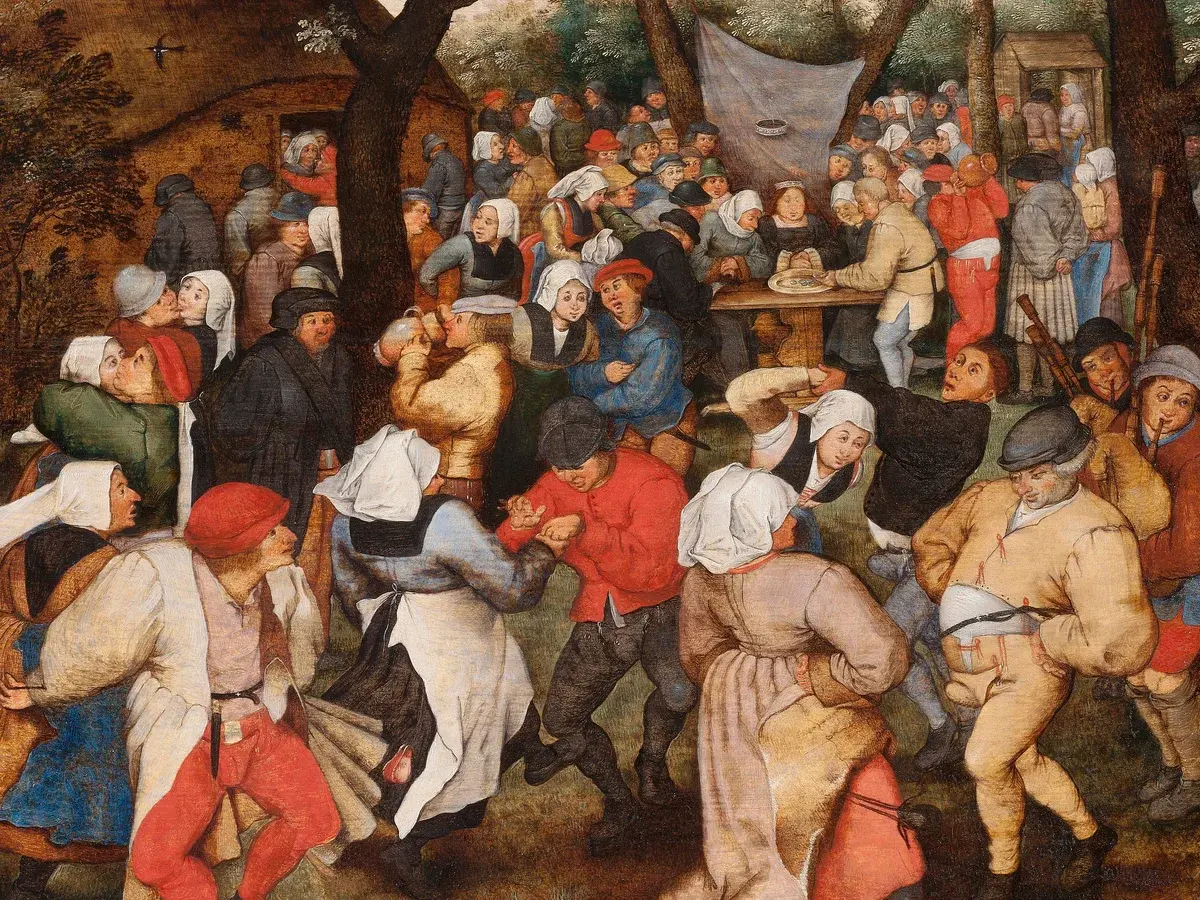
Bruegel is primarily recognized for elevating genre painting—the depiction of everyday life—to a level of artistic seriousness previously reserved for historical or religious subjects. While his contemporaries often focused on idealized figures or classical mythology, Bruegel turned his gaze toward the rural populace of the Netherlands. His ability to capture the human condition with both humor and biting social critique set him apart from the Italian Renaissance masters.
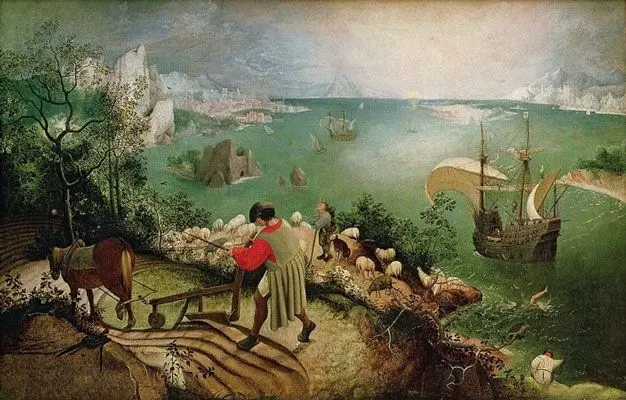
His fame also stems from his unique approach to landscape painting. Rather than using backgrounds merely as settings for figures, he treated the environment as a central character. His "Months" series, which depicts the changing seasons, demonstrates his deep observation of nature and the cyclical rhythm of agricultural life. This integration of man and environment remains a hallmark of his enduring legacy.
What are his most famous paintings?
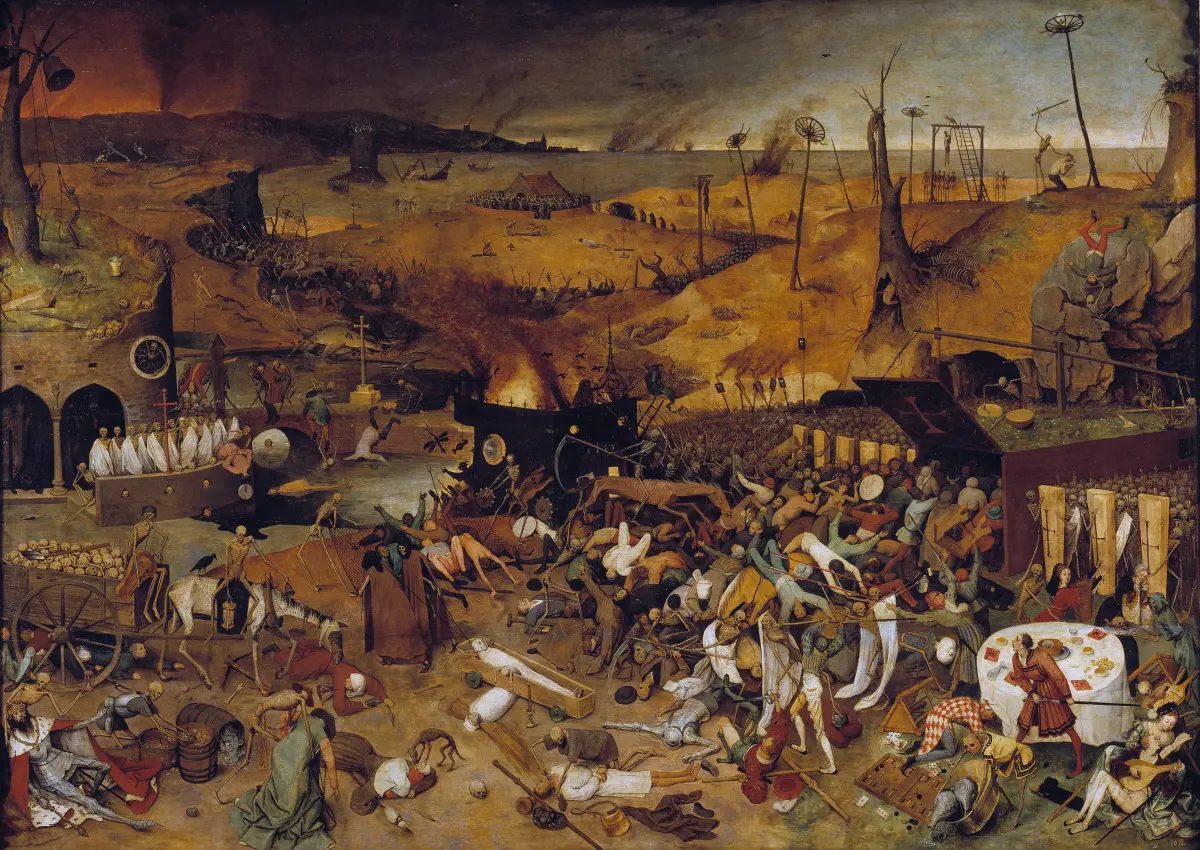
Bruegel produced a relatively small body of work, with only about 40 authenticated paintings surviving today. Many of these are held in major institutions like the Kunsthistorisches Museum in Vienna. His compositions are often densely packed with dozens, sometimes hundreds, of individual figures, each engaged in a specific activity that contributes to a larger narrative theme.
Some of his most significant works include:
- The Hunters in the Snow (1565): A masterpiece of winter atmosphere and composition.
- The Tower of Babel (1563): A sprawling depiction of human hubris and architectural ambition.
- The Peasant Wedding (1567): A vivid look at rural social customs and communal feasting.
- Children’s Games (1560): A comprehensive catalog of over 80 distinct games played in the 16th century.
- The Triumph of Death (c. 1562): A grim, panoramic vision of mortality that reflects the political unrest of his time.
How to analyze a Bruegel painting
When viewing a Bruegel work, it is helpful to look beyond the primary focal point. His paintings are designed to be "read" rather than just observed. Start by scanning the foreground for specific human interactions, then move your eyes toward the middle ground to see how those actions relate to the broader environment or social setting.
Follow these steps to better understand his complex visual language:
- Identify the season or time of day, as Bruegel often used light and color to denote the passage of time.
- Look for "hidden" details, such as a figure hiding behind a tree or a small animal, which often provide clues to the painting's moral message.
- Observe the perspective; Bruegel frequently used a high vantage point to allow the viewer to survey the entire landscape at once.
- Consider the historical context, specifically the religious and political tensions of the Habsburg Netherlands during the mid-1500s.
Common mistakes when studying Bruegel
One common error is assuming that his paintings are purely realistic or documentary in nature. While his depictions of peasant clothing and tools are historically accurate, the scenes themselves are often constructed to convey moral lessons or allegories. Treating them as simple photographs of 16th-century life ignores the satirical and philosophical layers he carefully wove into his compositions.
Another mistake is overlooking the influence of Hieronymus Bosch. Bruegel is often called "Peasant Bruegel," but his early works show a clear debt to the surreal, nightmarish imagery of Bosch. Failing to recognize this connection makes it difficult to understand the darker, more grotesque elements present in pieces like Dulle Griet or The Fall of the Rebel Angels. Always look for the tension between his realistic observations and his more imaginative, fantastical impulses.
Where to see his work today
If you wish to study his art firsthand, you must travel to specific European museums, as his works are rarely loaned due to their age and fragile condition. The Kunsthistorisches Museum in Vienna houses the largest collection, including the famous "Months" series. Other significant pieces can be found at the Royal Museums of Fine Arts of Belgium in Brussels and the Prado Museum in Madrid.
If you are planning a visit, keep these tips in mind:
- Check museum websites in advance to ensure specific pieces are not currently undergoing restoration.
- Use high-resolution digital archives to zoom in on the minute details that are often missed in crowded gallery spaces.
- Look for temporary exhibitions that might bring together works from different international collections, as this is the only way to see a large portion of his oeuvre in one location.
- Prioritize visiting the Vienna collection, as it provides the most comprehensive overview of his stylistic evolution from early panel paintings to his mature, large-scale masterpieces.
Key facts
- Pieter Bruegel the Elder (c. 1525–1569) was the most significant Flemish painter of the 16th century.
- He is best known for his innovative landscapes and detailed portrayals of peasant life, earning him the nickname "Peasant Bruegel."
- His masterpiece, The Hunters in the Snow (1565), is one of the most famous depictions of winter in Western art.
- Bruegel moved away from the Italian Renaissance focus on idealized figures, opting instead for expressive, earthy, and often humorous human subjects.
- He was a master of composition, frequently using a high vantage point to organize complex scenes containing dozens of individual stories.
- When viewing his work, look closely at the background; he often hid small, satirical details or moral lessons in the periphery of his large-scale paintings.
The bottom line
Pieter Bruegel the Elder transformed Northern European art by shifting the focus from religious idealism to the complexities of human existence and the natural world. His ability to blend intricate, panoramic landscapes with the gritty, authentic details of peasant life remains unparalleled. By studying his work, you gain a vivid, timeless perspective on the social, moral, and environmental realities of the 16th-century world.
People also ask
Did Pieter Bruegel the Elder have children who were also artists?
Yes, his sons Pieter Brueghel the Younger and Jan Brueghel the Elder both became successful painters. They helped preserve their father’s legacy by copying his works and developing their own distinct artistic styles.
Why are his paintings often called "encyclopedic"?
His works, such as Children’s Games or Netherlandish Proverbs, are packed with dozens of distinct activities or motifs. They serve as a visual record of 16th-century folklore, social customs, and daily life in the Low Countries.
What is the significance of his religious paintings?
Bruegel often placed biblical events, such as the Procession to Calvary, in contemporary 16th-century settings. This technique made the religious narratives feel immediate and relatable to his original audience.
How did he influence later landscape painting?
He shifted the landscape from a mere backdrop to the primary subject of the painting. By capturing seasonal changes and atmospheric conditions, he laid the groundwork for the Dutch Golden Age landscape tradition.
Are his paintings allegorical?
Many of his works contain deep moral or political messages, often critiquing human folly or the corruption of the time. For example, The Tower of Babel is widely interpreted as a commentary on human pride and the impossibility of universal unity.
Where can I see his original works today?
The Kunsthistorisches Museum in Vienna holds the largest collection of his paintings, including many of his most famous seasonal works. Other pieces are scattered across major museums like the Metropolitan Museum of Art and the Royal Museums of Fine Arts of Belgium.
This answer was created with the help of AI research tools and reference sources. Spotted an error? Let us know — we correct mistakes quickly. See our editorial policy.