What is rhythm in music?
Short answer
Rhythm is the placement of sounds in time, forming the fundamental pulse and pattern of music. It consists of beats, durations, and accents that organize musical movement. While melody provides the pitch, rhythm provides the framework, dictating when notes begin, how long they last, and how they emphasize the underlying musical flow.
On this page
What are the basic elements of rhythm?
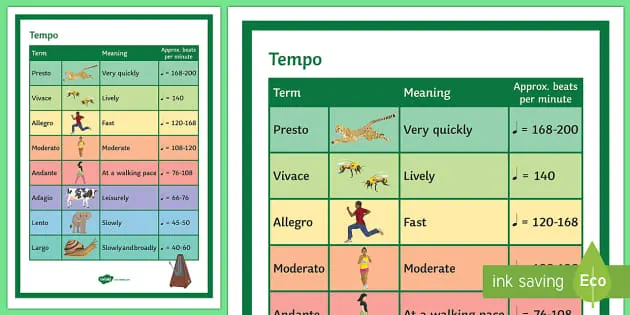
Rhythm is built upon a foundation of pulse, tempo, and meter. The pulse is the steady, recurring beat you feel when tapping your foot to a song, similar to a heartbeat. Tempo refers to the speed of this pulse, typically measured in beats per minute (BPM). Meter organizes these pulses into repeating groups, creating a sense of structure known as a measure or bar.
These elements work together to create the "feel" of a composition. For example, a march typically uses a strong, steady meter of four beats, while a waltz relies on a triple meter that emphasizes the first of every three beats. Understanding these components is essential for any musician, as they provide the grid upon which all other musical elements, such as melody and harmony, are placed. Without this underlying organization, music would lack its forward momentum and predictable structure.
How to count rhythm for beginners
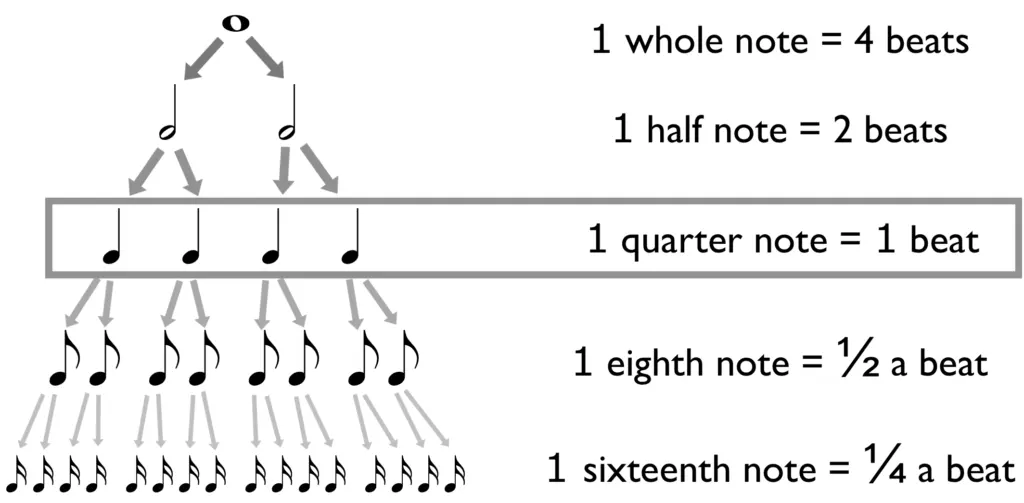
Counting is the most effective way to internalize complex rhythmic patterns. Most Western music is written in time signatures like 4/4, meaning there are four beats in a measure and the quarter note receives one beat. By vocalizing numbers, you turn abstract time into a physical, repeatable action.
- Set a metronome to a slow, comfortable tempo, such as 60 BPM.
- Count "1, 2, 3, 4" aloud in time with every click of the metronome.
- Once comfortable, subdivide the beats by saying "1-and, 2-and, 3-and, 4-and."
- Practice clapping on the numbers while keeping the "ands" silent to develop independence.
Consistently practicing these steps helps internalize the relationship between the pulse and the subdivisions. Beginners often struggle to maintain a steady tempo, so using a metronome is non-negotiable. As you progress, you can introduce more complex note values, such as eighth notes or triplets, to expand your rhythmic vocabulary.
Why syncopation creates rhythmic interest
Syncopation is the technique of placing emphasis on the "off-beats" or the weaker parts of a measure. In standard rhythms, the downbeat—the first beat of a bar—receives the strongest accent. Syncopation disrupts this expectation, creating a sense of surprise and energy that is central to genres like jazz, funk, and reggae.
By shifting the accent to the "and" of a beat, musicians create a push-pull sensation that drives the music forward. This technique is not just about playing loud notes; it is about rhythmic displacement. When a melody or a bassline consistently hits these unexpected spots, it creates a "groove." This rhythmic tension keeps the listener engaged, as the ear constantly seeks the resolution of the strong beat. Mastering syncopation requires a deep understanding of where the primary pulse lies, ensuring that the displaced accents do not cause the performer to lose track of the underlying tempo.
Common mistakes when learning rhythm
Many students focus too heavily on the notes themselves while neglecting the rhythmic duration. A common error is "rushing," where the performer subconsciously speeds up during difficult passages or slows down during easy ones. This inconsistency destroys the musicality of a performance and makes it difficult for others to play along.
- Failing to use a metronome during private practice sessions.
- Ignoring rests, which are just as important as the notes played.
- Over-complicating rhythms before mastering the basic pulse.
- Playing "ahead" of the beat due to performance anxiety.
Another frequent mistake is treating rests as dead air rather than active musical events. Silence is an integral part of rhythm; it defines the shape of the notes surrounding it. To avoid these issues, always practice with a metronome and record yourself. Listening back to your own playing often reveals subtle timing flaws that are not apparent while you are focused on the physical mechanics of your instrument.
How to improve your rhythmic accuracy
Improving rhythmic accuracy is a lifelong process that involves both physical training and active listening. You must train your body to internalize the pulse so that it becomes second nature. This involves more than just reading sheet music; it requires physical movement, such as walking, tapping, or dancing, to feel the rhythm in your entire body.
Active listening is equally important. When listening to professional recordings, try to isolate the drums or the bass line. Notice how they interact with the melody and where they place their accents. By analyzing the rhythmic choices of master musicians, you can begin to incorporate those same habits into your own playing. Remember that rhythm is a physical language. The more you connect your physical movements to the musical pulse, the more natural and authoritative your playing will become. Consistency is the key; even ten minutes of focused, metronome-based practice every day will yield significant results over time.
Key facts
- Rhythm is the placement of sounds in time, defined by the pattern of durations and silences.
- The "beat" acts as the steady, underlying pulse of a piece of music, similar to a ticking clock.
- Tempo refers to the speed of the beat, typically measured in beats per minute (BPM).
- A time signature, such as 4/4, indicates how many beats are in a measure and which note value gets one beat.
- Syncopation is the technique of placing emphasis on the "off-beats" or weak parts of a measure to create a sense of surprise.
- To practice rhythm, use a metronome to ensure your playing remains consistent rather than speeding up or slowing down.
The bottom line
Rhythm is the engine of music, transforming a collection of notes into a cohesive, driving force. By mastering the relationship between steady beats, varying durations, and precise tempo, you gain the ability to control the energy and flow of any performance. Whether you are a listener or a musician, understanding these temporal patterns is essential for appreciating the structural architecture that defines all musical genres.
People also ask
What is the difference between rhythm and tempo?
Rhythm refers to the specific arrangement of note lengths and rests within a musical phrase. Tempo is the constant speed or pace at which those rhythms are performed.
How can I improve my internal sense of rhythm?
Practice playing along with a metronome at slow speeds to build precision. Tapping your foot or clapping while listening to music helps internalize the pulse before you attempt to play it.
What is a time signature?
A time signature is a numerical symbol at the start of a staff that dictates the meter of the music. The top number shows beats per measure, while the bottom number identifies which note value represents one beat.
Why do musicians sometimes rush their rhythm?
Rushing often occurs when a player is nervous or unfamiliar with difficult passages, causing them to play faster to finish the section. Consistent practice with a click track is the most effective way to eliminate this habit.
What is a polyrhythm?
A polyrhythm occurs when two or more conflicting rhythms are played simultaneously, such as three notes against two. This creates a complex, layered texture common in African, Indian, and jazz music.
Can rhythm exist without melody?
Yes, rhythm is the foundational element of music and can stand alone. Percussion instruments, such as drums or shakers, provide rhythmic structures that define a song even without pitch or harmony.
This answer was created with the help of AI research tools and reference sources. Spotted an error? Let us know — we correct mistakes quickly. See our editorial policy.