What is music theory?
Short answer
Music theory is the study of the practices and possibilities of music. It provides a framework for analyzing how sounds are organized, including rhythm, melody, harmony, and form. By understanding these underlying structures, musicians can better interpret, compose, and communicate musical ideas, transforming raw sonic experiences into a coherent, expressive language.
On this page
What is the purpose of music theory?
Music theory serves as the grammar of musical expression. Just as linguistics explains the rules for constructing sentences, theory explains how notes, intervals, and chords function together to create emotional and structural impact. It is not a set of rigid laws that dictate how music must be written; rather, it is a descriptive system that identifies what works and why. By studying these patterns, listeners and performers gain a deeper appreciation for the mechanics behind their favorite compositions.
The discipline covers several essential pillars that define the musical experience:
- Rhythm: The placement of sounds in time and the organization of beats.
- Melody: A linear sequence of musical tones that the listener perceives as a single entity.
- Harmony: The vertical combination of notes played simultaneously to create chords.
- Form: The structural blueprint of a piece, such as sonata or verse-chorus structure.
- Timbre: The unique quality or "color" of a sound that distinguishes instruments.
How to start learning music theory
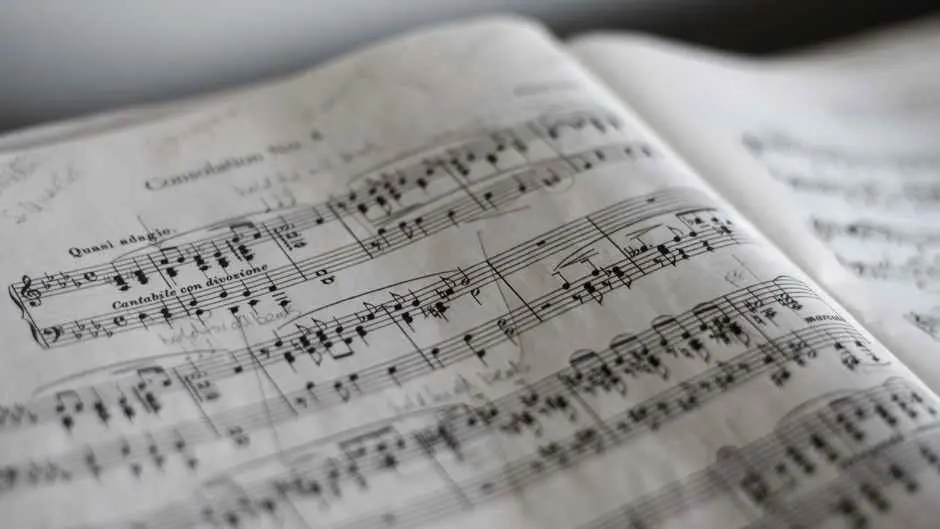
Beginners should focus on mastering the basics of pitch and rhythm before attempting complex harmonic analysis. Start by learning the grand staff, which uses the treble and bass clefs to represent notes. Understanding how these notes correspond to a piano keyboard is the most effective way to visualize intervals and scales. Once you have a grasp of the staff, move on to the circle of fifths, a geometric representation of the relationships between the twelve tones of the chromatic scale.
Follow these steps to build a solid foundation:
- Learn to read notes on both the treble and bass clefs.
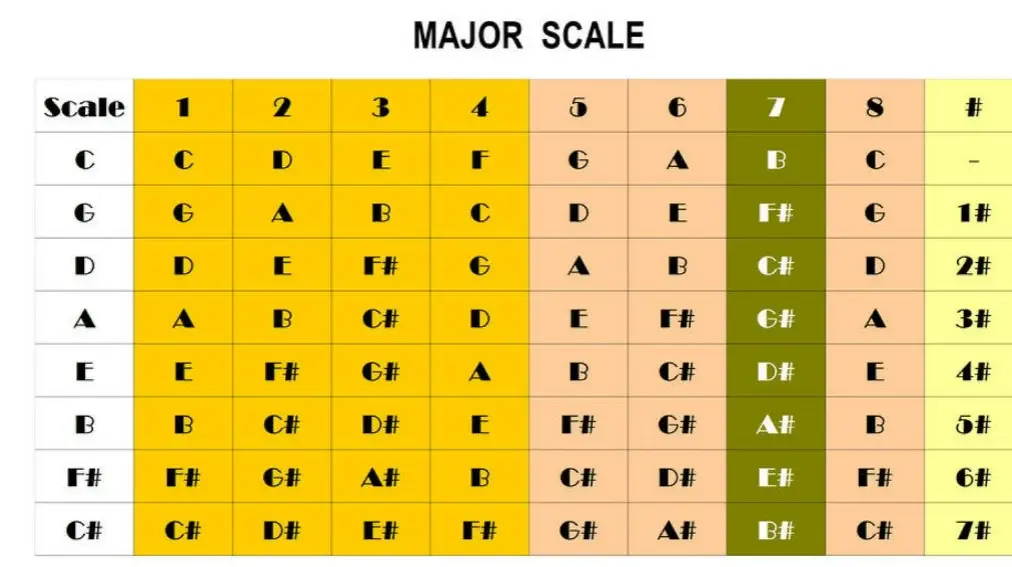
- Memorize the pattern of whole steps and half steps that create a major scale.
- Practice identifying intervals, such as thirds and fifths, by ear.
- Study basic chord construction by stacking thirds on top of root notes.
- Apply these concepts by analyzing the structure of a simple folk song or pop track.

Why do musicians study music theory?
Studying theory bridges the gap between intuition and technical proficiency. Many musicians play by ear, but theory provides the vocabulary to communicate ideas to other performers. When a band leader asks for a "secondary dominant" or a "suspension," a musician with theoretical knowledge understands exactly what is required. This shared language accelerates rehearsals and allows for more complex collaborative improvisation. Furthermore, it helps composers troubleshoot sections of music that sound "off" by identifying dissonant intervals or weak resolutions.
Beyond communication, theory acts as a creative catalyst. By understanding how different scales evoke specific moods—such as the brightness of a Lydian mode or the melancholy of a minor key—musicians can make deliberate choices to elicit particular emotional responses. It removes the guesswork from songwriting. When a composer knows the standard harmonic progressions used in jazz or classical music, they can either adhere to those traditions or purposefully subvert them to create surprise and tension for the listener.

Common mistakes when learning music theory
The most frequent error is treating theory as a set of restrictive rules rather than a descriptive tool. Beginners often worry that using a specific chord progression makes their music "unoriginal" or "incorrect." In reality, theory is meant to describe what has been done, not to limit what can be created. Another common mistake is neglecting ear training. Theory is purely abstract if you cannot hear the intervals and chords you are studying. Always connect your reading to active listening.
Avoid these pitfalls to ensure steady progress:
- Trying to memorize advanced jazz harmony before understanding basic triads.
- Ignoring rhythm while focusing exclusively on melody and harmony.
- Failing to use an instrument, like a keyboard or guitar, to hear the theory in action.
- Viewing music theory as a purely academic pursuit unrelated to performance.
- Getting discouraged by complex terminology instead of focusing on the underlying sonic concepts.
Best resources for music theory study
The best approach involves a combination of interactive software, classic textbooks, and active listening. Websites like Musictheory.net offer excellent, free visual lessons that are perfect for beginners. For those who prefer a structured academic approach, "The Complete Musician" by Steven G. Laitz is widely considered a gold standard in university curriculums. Additionally, mobile applications that focus on ear training, such as Tenuto or Functional Ear Trainer, are indispensable for developing the ability to recognize intervals and chords instantly.
Ultimately, the most valuable resource is the music itself. Select a piece of music you admire and attempt to transcribe its melody or identify its chord progression. This process of reverse engineering forces you to apply theoretical concepts to real-world sounds. Whether you are analyzing a Bach fugue or a contemporary rock song, the goal is to observe how the theory manifests in the music you love. By consistently applying these concepts to your own listening and playing, you will develop a sophisticated musical intuition that serves you for a lifetime.
Key facts
- Music theory is the study of the practices and possibilities of music, acting as a language to describe how sounds function together.
- The Western musical scale is built on 12 distinct pitches, known as semitones, which repeat across different octaves.
- A triad is the most fundamental chord in Western music, consisting of three notes stacked in intervals of thirds.
- Rhythm is defined by the division of time into patterns of long and short durations, organized by a steady pulse called the beat.
- Learning to read sheet music allows a musician to interpret the composer's intentions regarding pitch, duration, and volume.
- A common mistake is focusing purely on memorizing rules rather than listening to how those rules manifest in actual songs.
The bottom line
Music theory is essentially the grammar of music, providing a framework to analyze, compose, and perform with greater intention. By understanding the relationships between notes, chords, and time, you move beyond mere imitation toward true musical fluency. Whether you are a casual listener or a dedicated performer, mastering these foundational concepts empowers you to decode the complex architecture behind your favorite songs and creative expressions.
People also ask
Do I need to know music theory to be a good musician?
You do not need formal training to play music, but theory provides a toolkit to understand why certain sounds work well together. It helps you learn songs faster, improvise more effectively, and communicate your ideas to other musicians.
What is the difference between rhythm and tempo?
Tempo refers to the speed of the underlying beat, usually measured in beats per minute (BPM). Rhythm is the specific pattern of note lengths that occurs on top of that steady tempo.
What is a key signature?
A key signature is a collection of sharps or flats placed at the beginning of a musical staff. It tells the performer which notes should be adjusted throughout the piece to maintain a specific tonal center.
How can I start learning music theory today?
Begin by learning the names of the notes on your instrument and how they relate to the C major scale. Use online ear-training apps to connect the written symbols on a page to the actual sounds you hear.
What are intervals in music?
An interval is the distance in pitch between two notes. Understanding intervals is essential for recognizing melodies and building chords, as they form the basic building blocks of harmonic structure.
Is music theory different for jazz and classical music?
While the fundamental principles of pitch and rhythm remain the same, the application differs significantly. Classical theory often focuses on strict voice-leading rules, whereas jazz theory prioritizes complex chord extensions and improvisation techniques.
This answer was created with the help of AI research tools and reference sources. Spotted an error? Let us know — we correct mistakes quickly. See our editorial policy.