What is tempo in music?
Short answer
Tempo is the speed or pace of a given musical composition. It is typically measured in beats per minute (BPM), dictating how fast the underlying pulse of the music moves. Composers use tempo to establish the emotional character of a piece, ranging from slow, meditative movements to fast, energetic dance rhythms.
On this page
How is tempo measured in music?
Tempo is quantified using Beats Per Minute, or BPM. This numerical value represents the number of quarter-note beats that occur within one minute of time. For example, a tempo of 60 BPM means that one beat occurs exactly every second, mirroring the movement of a clock's second hand. A tempo of 120 BPM doubles that speed, resulting in two beats per second. This objective measurement allows musicians across the globe to interpret a composer's intended speed with high precision.
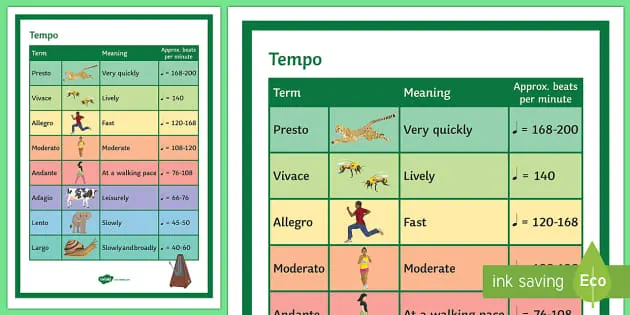
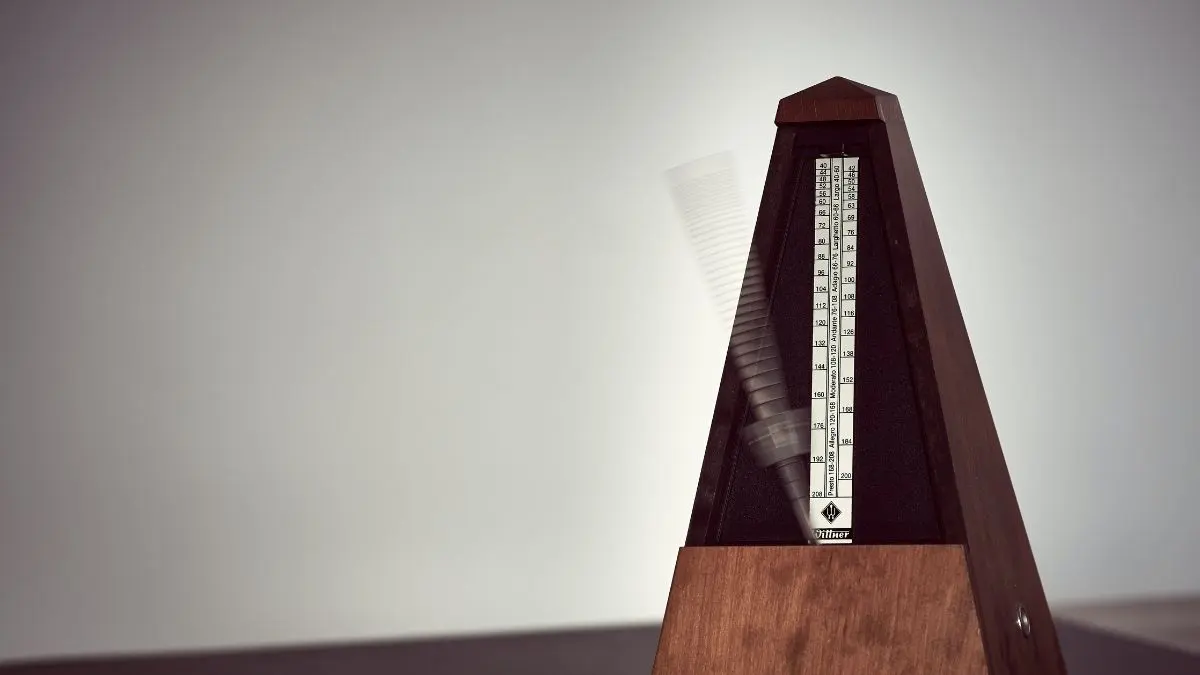
Before the invention of the mechanical metronome in the early 19th century, composers relied on descriptive Italian terms to indicate speed. While these terms are still used today, they provide a range rather than a specific number. Modern sheet music often includes both the traditional Italian term and a precise BPM marking to ensure clarity. Understanding this relationship between numbers and terminology is the foundation for accurate musical performance.
What are the common tempo markings?
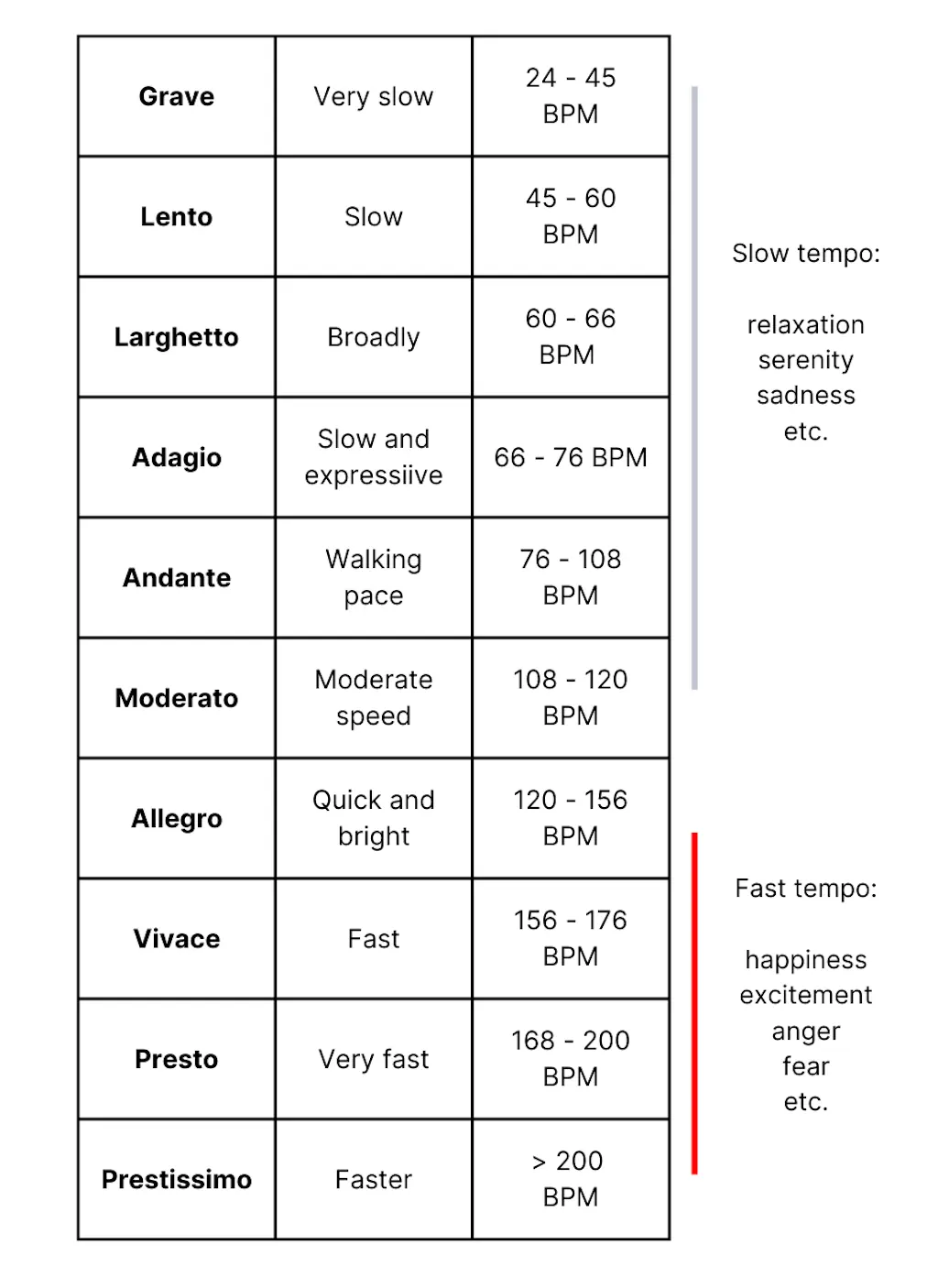
Traditional tempo markings are almost exclusively written in Italian. These terms describe the character and velocity of the music, providing performers with a guide for the desired mood. While these definitions are subjective, they generally fall into standard speed categories used by musicians worldwide.
- Grave: Extremely slow and solemn (25–45 BPM)
- Adagio: Slow and stately (66–76 BPM)
- Andante: At a walking pace (76–108 BPM)
- Moderato: A moderate speed (108–120 BPM)
- Allegro: Fast, quickly, and bright (120–156 BPM)
- Presto: Extremely fast (168–200 BPM)
These categories help performers understand the intent behind the music. For instance, an "Allegro" marking suggests a lively, energetic performance, whereas an "Adagio" marking requires a more sustained, expressive approach. Composers may also add modifiers, such as "molto" (very) or "non troppo" (not too much), to refine these instructions further.
How do musicians practice with tempo?
Maintaining a consistent tempo is one of the most significant challenges for students and professionals alike. The most effective tool for this is the metronome, a device that produces a steady pulse. Practicing with a metronome forces the musician to align their internal sense of rhythm with an external, objective standard. This practice prevents the common tendency to speed up during easy sections and slow down during difficult passages.
- Set the metronome to a tempo significantly slower than the target speed.
- Play the passage repeatedly until you can perform it without any rhythmic errors.
- Increase the BPM by increments of 5 to 10.
- Repeat the process until you reach the goal tempo.
- Record yourself to listen for subtle fluctuations in speed that the ear might miss while playing.
This disciplined approach builds "rhythmic muscle memory." By starting slowly, you allow your brain and muscles to coordinate the complex movements required for the piece. Gradually increasing the speed ensures that technical proficiency is maintained as the tempo rises.
Why does tempo change within a piece?
While many songs maintain a steady pulse, composers often use tempo fluctuations to add drama and expression. These changes are indicated by specific musical terms that tell the performer to deviate from the established beat. A "ritardando" (rit.) instructs the musician to gradually slow down, often used to signal the end of a section. Conversely, an "accelerando" (accel.) calls for a gradual increase in speed to build tension or excitement.
Some music requires "rubato," a technique where the performer intentionally pushes and pulls the tempo for emotional effect. In rubato, the underlying beat remains, but the melody may linger slightly behind or rush ahead of the pulse. This requires a high level of musicianship, as the performer must maintain a sense of the original tempo while exercising artistic freedom. These variations are essential for preventing a performance from sounding robotic or mechanical, breathing life into the written notes.
Common mistakes when managing tempo
One frequent error for beginners is the "unconscious acceleration" of music. This often happens when a player feels comfortable with a passage and instinctively speeds up, losing the original pulse. Another mistake is choosing a tempo that is too fast for one's current technical ability. Attempting to play a piece at the composer's intended speed before mastering the notes leads to uneven rhythms and poor tone quality.
- Ignoring the metronome during initial practice sessions.
- Failing to account for difficult transitions, which causes the tempo to stumble.
- Over-relying on rubato, which can make the music sound disorganized rather than expressive.
- Misinterpreting the "feel" of a tempo, such as playing a slow piece with too much nervous energy.
To avoid these pitfalls, prioritize consistency over speed. If you find yourself stumbling, it is almost always a sign that you should slow down. Remember that a clean, steady performance at a slower tempo is always more impressive than a fast, sloppy one. By mastering the pulse, you gain the control necessary to express the true character of the music.
Key facts
- Tempo is the speed or pace of a given piece of music, measured in beats per minute (BPM).
- Italian terms like Adagio (slow), Andante (walking pace), and Allegro (fast) are standard indicators for tempo.
- A metronome is the most accurate tool for maintaining a consistent tempo during practice.
- Composers often write the specific BPM at the top of a musical score to indicate the intended speed.
- Accelerando means to gradually speed up, while ritardando means to gradually slow down.
- A common mistake is rushing the tempo during difficult passages; practice slowly to build muscle memory.
The bottom line
Tempo is the fundamental pulse that drives a musical performance, defining the speed at which the beat occurs. Measured in beats per minute, it provides the framework for rhythm and emotional expression. Whether you are a listener or a musician, understanding tempo allows you to better appreciate the structure of a composition and maintain the necessary discipline to perform music with clarity, consistency, and professional timing.
People also ask
Does the time signature determine the tempo?
No, the time signature indicates how many beats are in a measure and which note gets the beat, but it does not dictate how fast those beats occur. Tempo is an independent instruction that defines the speed of those beats.
How do I find the BPM of a song I am listening to?
You can use a "tap tempo" app or website where you tap your finger along with the beat. The software calculates the average time between your taps to provide an estimated BPM.
What is the difference between tempo and rhythm?
Tempo is the consistent speed of the underlying pulse, while rhythm refers to the specific pattern of long and short note durations played over that pulse. Think of tempo as the heartbeat and rhythm as the melody's movement.
Can a performer change the tempo during a piece?
Yes, performers often use "rubato," which is the subtle speeding up and slowing down of tempo for expressive effect. However, in orchestral or ensemble music, the conductor usually maintains a steady tempo to keep everyone synchronized.
Why do musicians practice with a metronome?
Practicing with a metronome develops an internal sense of time and ensures that the player does not unintentionally speed up or slow down. It is the primary tool for achieving technical precision and rhythmic consistency.
Are there standard tempos for specific genres?
Many genres have typical tempo ranges, such as house music often sitting between 120 and 130 BPM. However, these are conventions rather than strict rules, and artists frequently experiment outside of these norms.
This answer was created with the help of AI research tools and reference sources. Spotted an error? Let us know — we correct mistakes quickly. See our editorial policy.