Why is Nighthawks so famous?
Short answer
Edward Hopper’s Nighthawks is famous because it masterfully captures the universal feeling of urban isolation and existential loneliness. Its cinematic composition, dramatic use of light, and mysterious narrative invite viewers to project their own stories onto the anonymous figures, making it an enduring icon of 20th-century American art and modern alienation.
On this page
Why is Nighthawks so famous?
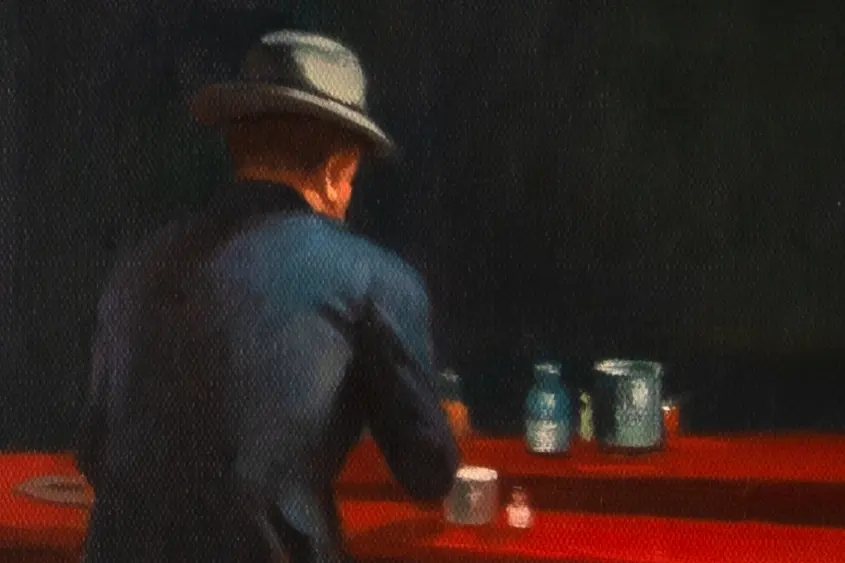
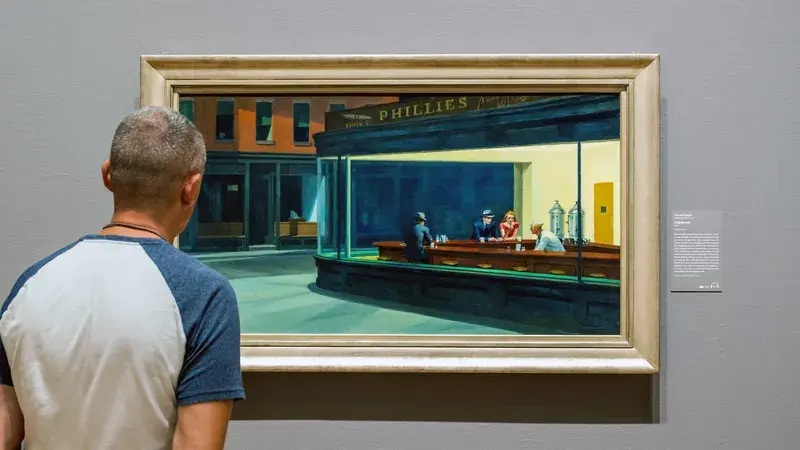
Edward Hopper painted Nighthawks in 1942, shortly after the United States entered World War II. The painting depicts four people in a brightly lit downtown diner late at night, surrounded by the dark, empty streets of Greenwich Village in New York City. Its fame stems from its ability to distill the complex psychological experience of city life into a single, static image that feels both timeless and deeply relatable.
The painting resonates because it avoids a clear narrative. We do not know who the people are, what they are discussing, or why they are out so late. This ambiguity forces the viewer to become an active participant in the scene. By leaving the story unfinished, Hopper ensures that the painting remains relevant to every generation, as it reflects the quiet, often overlooked moments of solitude that define the modern human experience.
How to analyze the composition of Nighthawks
The visual power of Nighthawks relies on Hopper’s precise use of geometry and perspective. The diner is shaped like a wedge, cutting into the street corner and creating a sharp, diagonal line that draws the viewer’s eye across the canvas. The lack of a visible door creates a sense of entrapment, suggesting that the characters are contained within a glass cage, separated from the outside world by the large, seamless window.
Hopper also utilized a high-contrast lighting scheme that was revolutionary for its time. The fluorescent light of the diner spills out onto the sidewalk, creating a harsh, artificial glow that makes the surrounding darkness feel even more oppressive. To analyze the painting effectively, consider these visual elements:
- The geometric lines that emphasize the diner’s isolation.
- The use of cool, muted colors for the exterior versus the warm, sickly yellow of the interior.
- The deliberate lack of clutter, which highlights the emptiness of the setting.
What makes Nighthawks an icon of American art
Nighthawks is frequently cited as the quintessential representation of American urban life. While Hopper denied that he intentionally infused his work with symbols of loneliness, he admitted that he was likely painting the loneliness of a large city. The painting captures the specific atmosphere of wartime America, where a sense of anxiety and uncertainty permeated the public consciousness, yet it transcends that historical moment to address broader existential themes.
The painting’s influence is evident in its pervasive presence in popular culture. Its aesthetic has been referenced in countless films, television shows, and advertisements, cementing its status as a visual shorthand for urban melancholy. Because it is so widely recognized, it has become a cultural touchstone that helps define how we perceive the modern city. It is not just a painting; it is a lens through which we view the relationship between the individual and the vast, impersonal architecture of urban spaces.
Common mistakes when interpreting Nighthawks
One common error is assuming that the painting is a literal depiction of a specific, real-life diner. While Hopper was inspired by various establishments in Greenwich Village, he synthesized these observations into a fictional, idealized space. Attempting to locate the exact "Nighthawks diner" in New York today is a futile effort, as the scene is a composite of memory and artistic invention rather than a documentary record of a specific location.
Another mistake is over-analyzing the specific relationships between the figures. Viewers often try to determine if the man and woman are a couple or if the man sitting alone is a stranger. By focusing too heavily on these social dynamics, one misses the broader point of the work. To gain a deeper understanding, avoid these pitfalls:
- Do not look for a hidden, specific plot or mystery to solve.
- Avoid projecting modern technological anxieties, such as phone use, onto the characters.
- Do not ignore the role of the architecture, which is just as important as the people.
How to appreciate Hopper’s artistic style
To truly appreciate Nighthawks, one must understand Hopper’s background as an illustrator. He possessed a keen eye for how light hits surfaces, which he translated into his paintings with incredible precision. His process was slow and methodical, often involving preliminary sketches that stripped away unnecessary details to focus on the essential mood of a scene. He preferred to paint the "in-between" moments of life rather than dramatic events.
When viewing his work, try to focus on the silence of the image. Hopper’s paintings are quiet; they demand a level of patience that is rare in the digital age. By standing before the canvas and observing how the light changes across the surfaces, you can begin to feel the stillness that he worked so hard to capture. Nighthawks remains a masterpiece because it provides a mirror for our own quiet moments, proving that art does not need to be loud to leave a lasting impression on the soul.
Key facts
- Edward Hopper painted Nighthawks in 1942, shortly after the United States entered World War II.
- The painting depicts a late-night scene in a Greenwich Village diner, inspired by a real location near Hopper’s studio.
- It is housed in the Art Institute of Chicago, which purchased the piece for $3,000 in 1942.
- The composition is famous for its lack of a visible door, trapping the patrons inside the brightly lit space.
- Hopper used a limited palette of greens, yellows, and reds to emphasize the contrast between the interior light and the dark street.
- To analyze the painting, look for the absence of personal belongings or trash, which heightens the sense of artificiality and stillness.
The bottom line
Nighthawks remains iconic because it masterfully captures the universal human experience of loneliness within a bustling city. By utilizing cinematic lighting and a carefully constructed, doorless composition, Edward Hopper created an atmosphere of mystery that invites endless interpretation. Its enduring fame stems from this ability to mirror the quiet, detached reality of modern existence, making it one of the most recognizable and evocative images in American art.
People also ask
Who are the people in the painting?
Hopper modeled the figures after himself and his wife, Josephine, though he did not intend them to be specific portraits. He described the figures as anonymous individuals who represent the universal feeling of urban isolation.
Is the diner based on a real place?
Hopper stated it was inspired by a restaurant on Greenwich Avenue, though he synthesized elements from several local diners. Despite extensive research by historians, the exact site has never been definitively identified.
Why is there no entrance to the diner?
The lack of a visible door is a deliberate artistic choice that creates a sense of entrapment or detachment from the outside world. This architectural omission forces the viewer to focus entirely on the interior scene.
What does the painting symbolize?
It is widely interpreted as a symbol of modern urban alienation and the loneliness of city life. The stark fluorescent lighting and the empty street reflect the psychological distance between people in a crowded metropolis.
How large is the original canvas?
The oil painting measures approximately 33 inches by 60 inches. Its horizontal orientation emphasizes the cinematic quality of the scene, resembling a still frame from a film noir.
Did Hopper paint other works like this?
Yes, Hopper frequently explored themes of solitude in works such as Automat and Morning Sun. These paintings share his signature style of stark lighting and quiet, contemplative subjects.
This answer was created with the help of AI research tools and reference sources. Spotted an error? Let us know — we correct mistakes quickly. See our editorial policy.