What is Bridget Riley known for?
Short answer
Bridget Riley is a preeminent British painter celebrated as a pioneer of the Op Art movement. She is known for creating complex, abstract compositions that use geometric patterns, high-contrast colors, and precise lines to produce optical illusions of movement, vibration, and depth, challenging the viewer’s perception of the two-dimensional canvas.
On this page
What is Op Art and how did Bridget Riley define it?
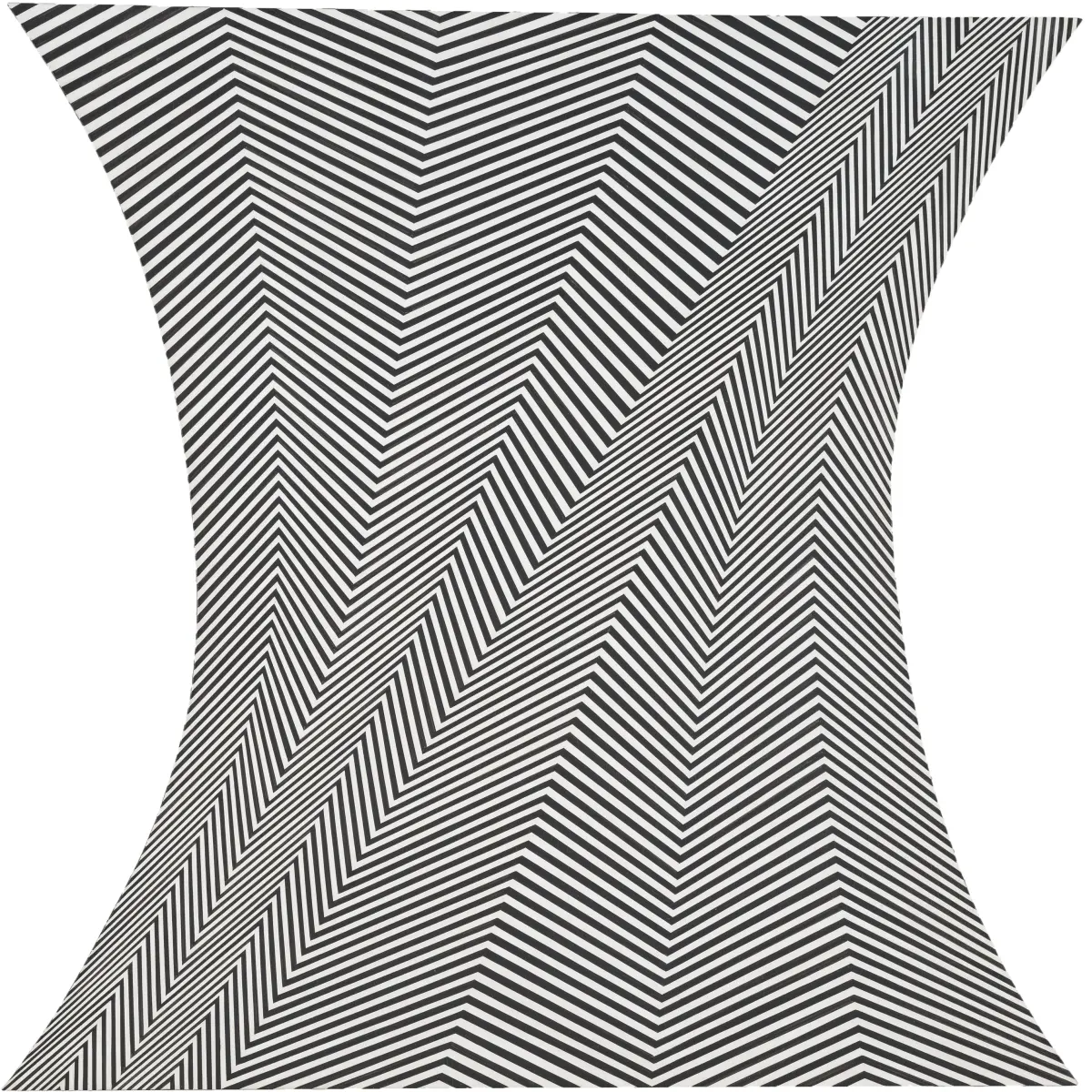
Op Art, or optical art, is a style of visual art that utilizes optical illusions to trick the eye. Bridget Riley became the face of this movement in the 1960s, moving away from representational painting to focus on the mechanics of human vision. Her early work was strictly monochromatic, utilizing black and white to create maximum contrast. By arranging simple shapes like circles, squares, and lines in repetitive, rhythmic patterns, she forced the viewer's eyes to perceive flickering movement or undulating surfaces that were not actually present on the canvas.
Her influence on the movement was cemented by the 1965 "The Responsive Eye" exhibition at the Museum of Modern Art in New York. This landmark show introduced the public to the disorienting, kinetic effects of her work. Unlike other artists who focused on emotional expression, Riley prioritized the physiological response of the eye. She treated the canvas as a laboratory where light, space, and movement could be manipulated through rigorous mathematical planning, effectively establishing a new visual language for modern abstraction.
How does Bridget Riley create her optical effects?
Riley’s process is rooted in meticulous preparation and mathematical precision. She does not paint spontaneously; instead, she spends months or even years developing a composition through small-scale studies. Her work relies on the concept of "perceptual ambiguity," where the brain struggles to reconcile the static image with the perceived motion. By adjusting the width, frequency, and curvature of lines, she controls how light hits the eye, creating a sensation of shimmering or waves.
The construction of these works requires extreme discipline. She often employs assistants to help execute the complex, large-scale paintings, ensuring that every line is perfectly placed. The effectiveness of her work depends on the exact relationship between adjacent colors or tones. If a line is off by even a millimeter, the optical vibration can be lost. Her technical approach involves:
- Creating detailed preparatory sketches on graph paper.
- Testing color combinations to see how they interact at their boundaries.
- Applying paint in thin, flat layers to avoid brushstroke textures that might distract from the geometry.
- Using masking tape to achieve razor-sharp edges that define the interaction between shapes.
Why did Bridget Riley start using color?
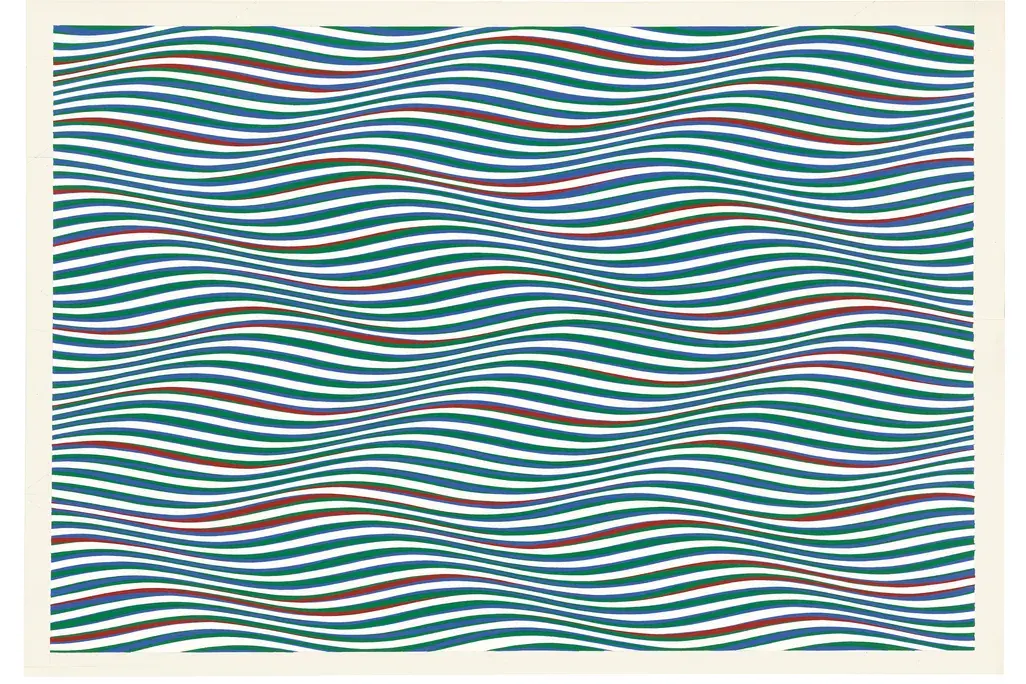
In 1967, Riley made a significant shift from her signature black-and-white palette to full color. This transition was not merely decorative; it was a deeper exploration of how color influences perception. She discovered that by placing specific hues next to one another, she could create "chromatic vibration," where colors seem to glow or pulse against each other. This period saw her utilizing stripes and interlocking shapes to create a sense of atmospheric light, moving beyond the stark, sometimes dizzying effects of her earlier monochromatic work.
Her color theory is heavily influenced by the Pointillist techniques of Georges Seurat, whose work she studied extensively. She realized that color is not an isolated property but a relational one. A blue stripe, for instance, will look vastly different depending on whether it is placed next to a yellow or a violet stripe. This insight led to her famous "stripe paintings," which use a systematic arrangement of hues to create a rhythmic, musical quality on the canvas. Her exploration of color remains a cornerstone of her legacy, proving that abstraction can convey depth and warmth.
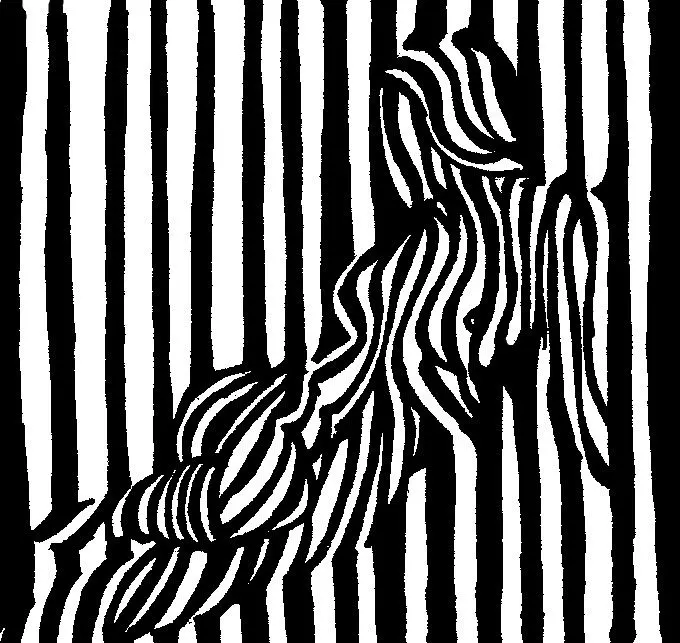
Common mistakes when analyzing Bridget Riley’s work
One common mistake when viewing Riley’s art is assuming it is purely mechanical or computer-generated. Because her work is so precise, many viewers mistakenly believe it was created without human touch. In reality, every curve and color shift is a deliberate, hand-painted choice. Another error is focusing only on the "trick" or the illusion. While the optical effect is the entry point, the true value of her work lies in the structural harmony and the emotional response evoked by the rhythm of the composition.
To better appreciate her work, follow these observational steps:
- Stand at a distance to see the overall movement of the pattern.
- Move closer to observe the individual brushstrokes and the quality of the paint application.
- Allow your eyes to wander across the surface rather than focusing on a single point.
- Notice how your peripheral vision reacts to the edges of the shapes.
- Consider how the light in the room changes the way the colors interact.
How to identify a Bridget Riley painting
Identifying a Riley work involves looking for specific formal characteristics that have remained consistent throughout her long career. Her paintings are almost always non-representational, focusing instead on the geometry of the image. You will rarely find a central focal point; instead, her compositions are "all-over," meaning the pattern is distributed evenly across the entire surface of the canvas. This design choice encourages the viewer to scan the entire work, keeping the eye in constant motion.
Key visual identifiers include:
- A sense of rhythmic, repetitive motion that feels musical or wave-like.
- The use of high-contrast, often vibrant color palettes in her post-1967 works.
- A total absence of narrative or symbolic content, emphasizing pure visual experience.
- A clean, flat surface that emphasizes the geometric precision of the design.
By focusing on these elements, one can distinguish her authentic style from the many imitators who attempted to replicate the Op Art trend without her rigorous commitment to the science of perception. Her work continues to challenge the limits of what a painting can do.
Key facts
- Bridget Riley is a leading figure in the Op Art movement, which uses geometric patterns to create the illusion of movement or vibration.
- Her signature style emerged in the early 1960s, characterized by stark black-and-white compositions that challenge the viewer's perception.
- She introduced color into her work in 1967, focusing on how adjacent hues interact to alter the perceived intensity of a painting.
- A practical tip for appreciating her work is to stand at varying distances from the canvas, as the optical effects change based on your proximity.
- Avoid viewing her large-scale murals through a camera lens, as digital screens often fail to capture the physical sensation of flickering light.
- Her 1965 work Current is one of her most famous pieces, featuring a series of wavy lines that appear to undulate when observed.
The bottom line
Bridget Riley transformed modern art by shifting the focus from the subject matter to the physical act of seeing. Through rigorous geometric precision and deliberate color placement, she forces the viewer to become an active participant in the creation of the image. Her work remains a profound exploration of how light, pattern, and human biology interact to construct our perception of the visual world.
People also ask
What materials does Bridget Riley use?
Riley typically uses acrylic or oil paint on canvas or board. She is known for her meticulous planning process, often sketching small-scale studies before committing to large, complex compositions.
How did the Op Art movement start?
Op Art, or Optical Art, gained international recognition following the 1965 exhibition "The Responsive Eye" at the Museum of Modern Art in New York. Riley was a centerpiece of this show, which highlighted artists experimenting with abstract geometric patterns.
Why do Riley's paintings sometimes make viewers feel dizzy?
The dizziness occurs because the human brain struggles to process the high-contrast, repetitive patterns. The visual system experiences "sensory overload," causing the retina to perceive motion where the surface is actually static.
Did Bridget Riley ever paint realistic portraits?
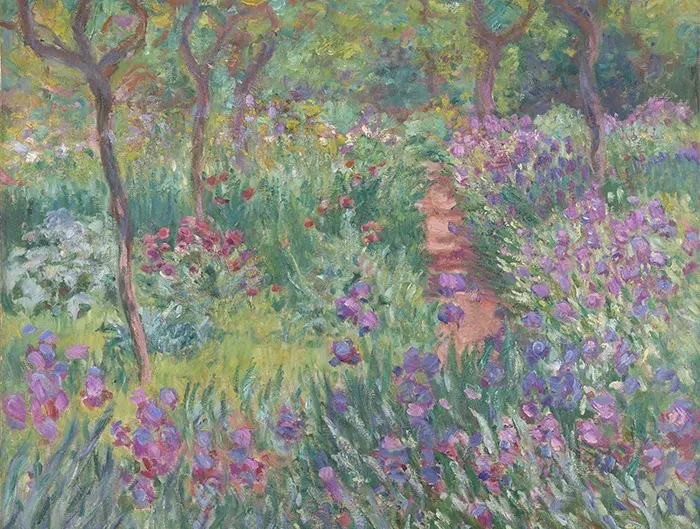
Early in her career, Riley practiced figurative painting and studied the works of Impressionist artists. She eventually moved toward abstraction to explore the fundamental mechanics of human sight rather than representing physical objects.
What is the significance of the "stripe" paintings?
In the late 1960s, Riley began using vertical stripes to explore color relationships. By placing specific colors side-by-side, she created the illusion of light shifting across the canvas, demonstrating her mastery of color theory.
Where can I see Bridget Riley's work in person?
Her pieces are held in major institutions worldwide, including the Tate in London, the Museum of Modern Art in New York, and the Centre Pompidou in Paris. Many public galleries hold rotating exhibitions of her prints and paintings.
This answer was created with the help of AI research tools and reference sources. Spotted an error? Let us know — we correct mistakes quickly. See our editorial policy.