What is trompe l'oeil?
Short answer
Trompe l’oeil is a French term meaning "deceive the eye," referring to a realistic painting technique designed to create the optical illusion that depicted objects exist in three dimensions. By utilizing precise perspective, shading, and shadows, artists make two-dimensional surfaces, such as walls or canvases, appear as physical objects or spaces.
On this page
What is the history of trompe l'oeil?
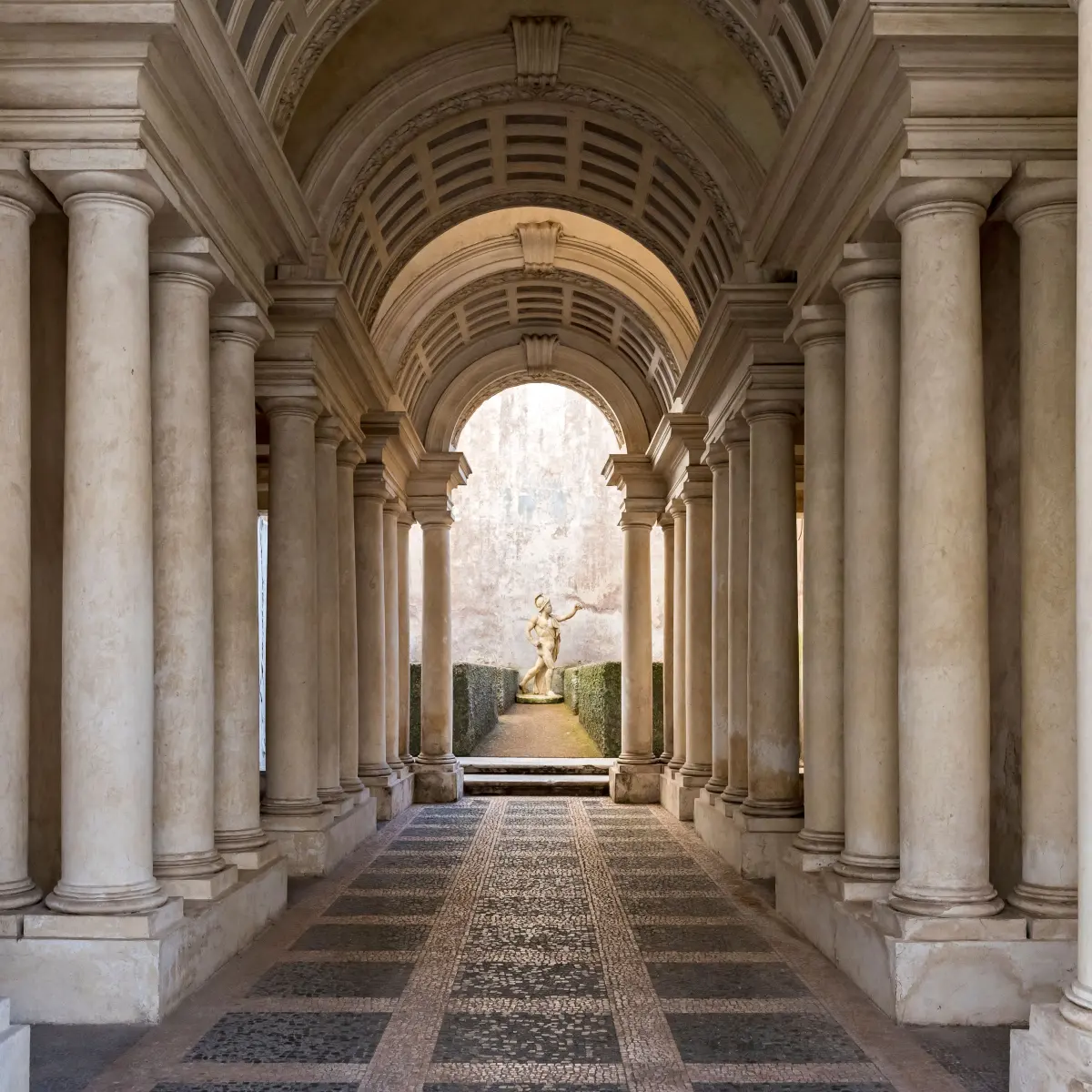
The origins of this art form date back to ancient Greece. According to legend, the painter Zeuxis created grapes so lifelike that birds attempted to peck at them. This anecdote highlights the primary goal of the technique: to blur the boundary between art and reality. Throughout the Renaissance, artists mastered linear perspective to create architectural illusions, often painting fake windows or doors on solid walls to expand the perceived size of a room.
During the 17th-century Dutch Golden Age, the style gained immense popularity through still-life paintings. Artists like Samuel van Hoogstraten created "quodlibet" paintings, which featured items like letters, combs, and ribbons pinned to a board, rendered with such precision that viewers felt compelled to reach out and touch them. This tradition continued into the 19th and 20th centuries, influencing movements like Surrealism, where artists used these realistic techniques to depict impossible, dreamlike scenarios that challenged the viewer's perception of physical laws.
How to create trompe l'oeil art
Creating a successful illusion requires a disciplined approach to light and shadow. The artist must determine a fixed light source and maintain it consistently across every element in the composition. If the shadows do not align with the intended light source, the illusion collapses immediately. Perspective is equally vital, as the vanishing point must be calculated based on the viewer’s expected eye level.
- Sketch the composition on your surface, paying close attention to scale and proportion.
- Apply a base coat to ensure the surface is smooth and free of texture.
- Paint the background, then layer the objects, starting from the furthest point and moving forward.
- Add cast shadows beneath or behind objects to ground them in the space.
- Apply highlights on the edges of objects to suggest volume and texture.
Best surfaces for trompe l'oeil
Choosing the right surface is essential for the longevity and credibility of the illusion. Smooth, non-porous surfaces are generally preferred because they allow for the fine brushwork required to mimic textures like wood grain, fabric, or stone. Drywall or plaster walls are common for large-scale murals, while primed wood panels or high-quality canvas are standard for smaller, portable works.
- Smooth-sanded wood panels: Ideal for small, highly detailed works.
- Primed plaster or drywall: Best for architectural illusions on walls or ceilings.
- Metal or glass: Requires specialized primers but offers a unique, reflective base.
- Canvas: Versatile and traditional, though texture must be minimized with gesso.
When selecting a surface, consider the environment where the piece will live. Outdoor murals require weather-resistant paints and sealants to prevent fading and cracking. Indoor pieces offer more freedom, but lighting conditions must be carefully evaluated. A surface that receives direct, harsh sunlight may cause the illusion to look flat or distorted, whereas soft, ambient light often enhances the depth of the painted shadows.
Why trompe l'oeil illusions work
The effectiveness of this technique relies on the human brain's tendency to process visual information by looking for familiar patterns and depth cues. When an artist mimics the way light hits a curved surface or how a shadow falls across a corner, the brain interprets these as physical realities. This cognitive shortcut is known as "perceptual constancy," where our mind fills in gaps to make sense of the visual data provided by the environment.
The technique succeeds when the artist successfully replicates "chiaroscuro," the contrast between light and dark. By painting a highlight on one side of an object and a deep, soft shadow on the other, the artist tricks the viewer into perceiving volume. Furthermore, the inclusion of "trompe l'oeil" elements—such as a painted frame that appears to be broken or an object that seems to be protruding past the edge of the canvas—further convinces the viewer that the image is not merely a painting, but a physical presence in their space.
Common mistakes when painting trompe l'oeil
One of the most frequent errors is failing to account for the viewer's perspective. If the painting is intended for a hallway, the vanishing point must be placed at the average eye level of a person standing in that specific spot. If the perspective is off by even a few inches, the entire illusion will appear warped or "leaning" when viewed from the intended vantage point. Another common issue is the neglect of ambient light.
- Ignoring the light source: Shadows must be consistent across all objects.
- Over-detailing: Too much detail in the background can flatten the image.
- Incorrect scale: Objects that are too large or small for their context break the illusion.
- Neglecting shadow softness: Sharp shadows suggest bright, direct light, while soft shadows suggest diffused light.
To avoid these pitfalls, always step back from your work frequently to view it from a distance. Use a mirror to look at your painting in reverse; this often reveals perspective errors that the brain ignores after staring at a piece for too long. Finally, ensure your color palette remains unified, as disparate colors can make individual objects look disconnected from the overall environment, effectively shattering the intended sense of realism and depth.
Key facts
- Trompe l'oeil is a French term meaning "deceive the eye," referring to an art technique that uses realistic imagery to create the optical illusion that depicted objects exist in three dimensions.
- The technique relies on extreme perspective, precise shading, and "foreshortening" to trick the viewer into believing a flat surface has depth.
- Ancient Roman wall paintings in Pompeii often used this style to simulate windows or garden views in windowless rooms.
- A common mistake for beginners is failing to account for the actual light source in the room, which must match the painted light source to maintain the illusion.
- To create a successful trompe l'oeil, keep the composition simple; overcrowding a space with too many illusions often breaks the viewer's suspension of disbelief.
- Always use a matte finish for your final varnish, as glossy reflections can reveal the flat surface of the wall and destroy the illusion.
The bottom line
Trompe l'oeil remains a sophisticated method for blurring the boundary between art and reality. By mastering perspective, light, and shadow, artists can transform mundane flat surfaces into immersive, three-dimensional experiences. Whether applied to grand architectural ceilings or small decorative furniture, the effectiveness of the illusion depends entirely on the artist's ability to align painted details with the viewer's physical environment and natural perception of space.
People also ask
What is the difference between trompe l'oeil and photorealism?
Photorealism is a painting style that aims to reproduce a photograph as accurately as possible. Trompe l'oeil, however, is specifically designed to trick the viewer into thinking the object is physically present in their space.
Can trompe l'oeil be used on furniture?
Yes, it is frequently used in furniture design to mimic materials like expensive marble or wood grain. This practice, known as faux bois or faux marbre, transforms common surfaces into luxury items.
Is trompe l'oeil only for professional artists?
While it requires patience and technical skill, anyone can learn the basics of perspective and shading. Start with small, high-contrast objects like a single painted nail or a piece of tape to practice depth.
Why do artists use shadows in these paintings?
Shadows are the most critical element for grounding an object in space. By painting a shadow that appears to fall onto the real floor or wall, the artist anchors the object to reality.
What are the most common surfaces for this technique?
Walls, ceilings, and doors are the most popular canvases. Ceilings are often used for "di sotto in su" effects, which simulate open skies or architectural domes above the viewer.
Does lighting affect the illusion?
Lighting is essential because the painted shadows must align with the ambient light of the room. If the light in the painting contradicts the room's light, the human brain immediately identifies the image as a flat surface.
This answer was created with the help of AI research tools and reference sources. Spotted an error? Let us know — we correct mistakes quickly. See our editorial policy.