What is autofocus?
Short answer
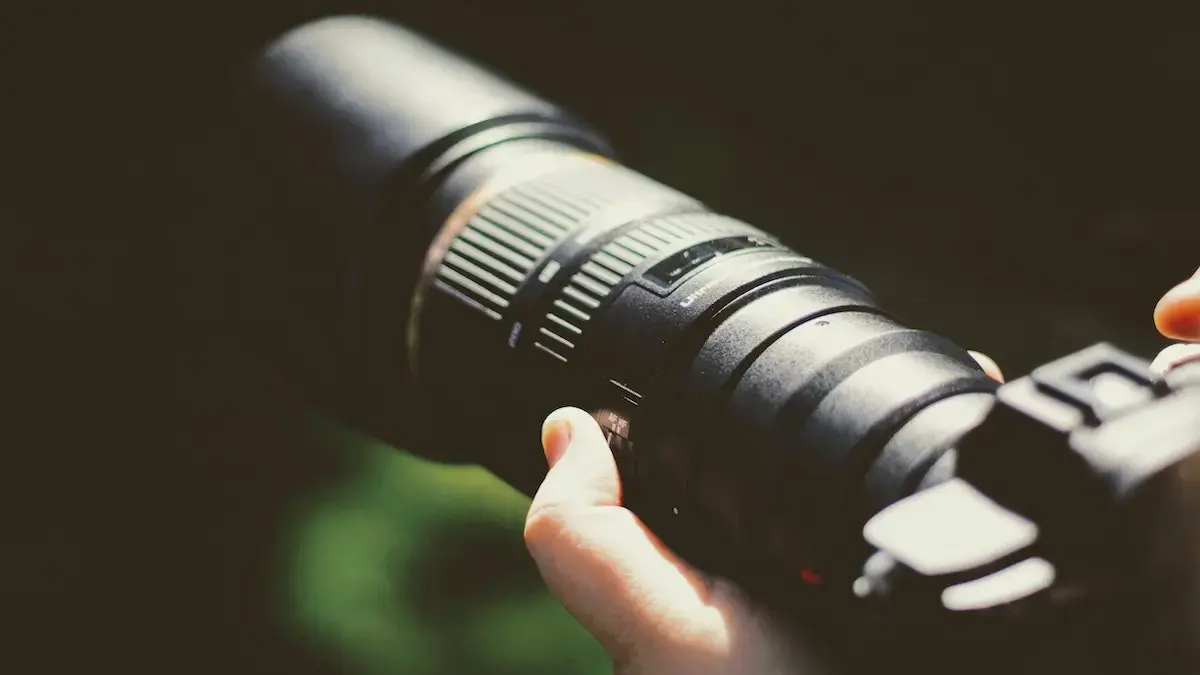
Autofocus is an optical system in cameras that automatically adjusts the lens to bring a subject into sharp focus. By measuring distance or contrast, the camera moves internal elements to ensure light converges precisely on the image sensor. This technology allows photographers to capture crisp, clear images without manual ring adjustments.
On this page
How does autofocus work?
Modern cameras utilize two primary methods to achieve sharp focus: phase detection and contrast detection. Phase detection systems split incoming light into pairs of images and compare them to determine if the subject is in front of or behind the focal plane. This method is exceptionally fast and is the standard for high-performance digital single-lens reflex (DSLR) and mirrorless cameras.
Contrast detection, conversely, analyzes the image sensor data to find the point where the difference in brightness between adjacent pixels is at its maximum. When the contrast is highest, the image is considered to be in focus. While historically slower than phase detection, modern hybrid systems now combine both technologies. These hybrid sensors offer the speed of phase detection with the high-precision accuracy of contrast detection, allowing cameras to track moving subjects reliably in various lighting conditions.
How to use autofocus modes effectively
Most cameras offer multiple autofocus modes tailored to different shooting scenarios. Understanding these settings is essential for capturing sharp photos of both stationary and moving subjects.
- Single-servo (AF-S or One-Shot): The camera locks focus once when the shutter button is pressed halfway. This is ideal for landscapes or portraits where the subject remains still.
- Continuous-servo (AF-C or Servo): The camera constantly adjusts focus as long as the shutter button is held halfway down. Use this mode for sports, wildlife, or any subject in motion.
- Automatic-servo (AF-A or AI Focus): The camera detects if the subject is moving and switches automatically between single and continuous modes.
By selecting the correct mode, you ensure the camera's processor prioritizes the right movement patterns. For example, using AF-S on a running child will likely result in a blurry image because the camera stops calculating distance the moment it achieves the initial lock.
Why autofocus fails in low light
Autofocus systems rely on light to function correctly, making low-light environments a significant challenge. When light levels drop, the camera's sensor struggles to distinguish edges or contrast, leading to "focus hunting." This occurs when the lens elements move back and forth continuously, unable to settle on a sharp point because the sensor cannot find a clear reference.
To mitigate these issues, many cameras feature an autofocus assist lamp, which emits a burst of light to illuminate the subject briefly. However, this is often distracting in quiet settings or at long distances. Photographers can improve performance by:
- Selecting high-contrast areas of the subject, such as the edge of a garment or a defined facial feature.
- Using a lens with a wider maximum aperture, such as f/1.8 or f/2.8, which allows more light to reach the sensor.
- Switching to manual focus if the camera repeatedly fails to lock onto the subject in near-darkness.
Common mistakes when using autofocus
Even with advanced technology, user error often leads to soft or out-of-focus images. One of the most frequent mistakes is failing to verify the active focus point. Many cameras default to "auto-area" mode, where the camera decides what to focus on, often choosing the foreground or the most prominent object rather than the intended subject.
- Relying on the camera's default center-point focus when the subject is off-center.
- Forgetting to switch back to single-servo mode after shooting action, which can cause the camera to "jitter" while trying to track a still subject.
- Obstructing the autofocus sensor with a large lens hood or fingers.
- Attempting to focus through dirty glass or mesh, which confuses the contrast detection system.
By manually selecting a specific focus point or using eye-tracking features, you maintain control over the composition. Taking the time to verify the focus box is green before fully depressing the shutter button prevents many common disappointments.
Best autofocus tips for beginners
Mastering autofocus is a journey of understanding how your specific camera views the world. Practice is the most effective way to learn the limitations of your gear. Start by photographing stationary objects at different distances to observe how the lens behaves. Once comfortable, move to subjects walking toward you at a steady pace, using continuous-servo mode to track their movement.
- Keep your camera firmware updated, as manufacturers frequently release software patches that improve autofocus speed and accuracy.
- Clean your lens front element regularly, as smudges and dust can interfere with light transmission and confuse the sensors.
- Use a tripod when shooting in low light to stabilize the camera, allowing the autofocus system more time to calculate distance without the interference of your own hand tremors.
- Learn the "back-button focus" technique, which separates the focus function from the shutter button, allowing for greater control over when the camera locks and tracks.
Consistent practice with these techniques will significantly increase your percentage of sharp, professional-looking photographs regardless of the equipment you use.
Key facts
- Autofocus (AF) is a camera system that automatically adjusts the lens to bring a subject into sharp focus.
- The first commercial autofocus camera, the Konica C35-AF, was released in 1977.
- Active autofocus systems emit infrared beams to measure distance, while passive systems analyze light contrast.
- Phase detection is the fastest method, commonly used in DSLR and mirrorless cameras to track moving subjects.
- Contrast detection is highly accurate but slower, often found in compact cameras and smartphones.
- Half-pressing the shutter button locks the focus, allowing you to recompose the shot before taking the picture.
The bottom line
Autofocus is an essential feature that simplifies photography by calculating the distance to your subject and adjusting the lens accordingly. By understanding the difference between phase and contrast detection, you can choose the right settings for your specific needs. Mastering the half-press technique and selecting appropriate focus points will significantly improve your image sharpness, ensuring your subjects remain clear and professional in various shooting conditions.
People also ask
Why is my photo still blurry even with autofocus?
Blur often occurs if the camera locks focus on the background instead of your subject or if the shutter speed is too slow to freeze movement. Ensure you are not closer to the subject than the lens's minimum focusing distance.
What is the difference between single and continuous autofocus?
Single autofocus locks onto a stationary subject once the button is pressed halfway. Continuous autofocus constantly adjusts the lens to track a moving subject, making it ideal for sports or wildlife photography.
How do focus points work?
Focus points are specific areas within the viewfinder that the camera uses to calculate sharpness. You can choose a single point for precision or use a group of points to track subjects across the frame.
Can autofocus work in low light?
Autofocus struggles in dark environments because the sensor cannot detect enough contrast or light to calculate distance. Many cameras use an AF-assist lamp to briefly illuminate the subject to help the system lock on.
Should I use manual focus instead?
Manual focus is preferred for macro photography, night scenes, or when the camera repeatedly fails to lock onto the desired subject. It provides total control in complex lighting or when shooting through obstructions like fences.
Do all lenses support autofocus?
Not all lenses are compatible with every camera body's autofocus system. Older manual-focus lenses or specialized cinema lenses lack the internal motors required for the camera to control the focus automatically.
This answer was created with the help of AI research tools and reference sources. Spotted an error? Let us know — we correct mistakes quickly. See our editorial policy.