What is manual focus?
Short answer
Manual focus is a camera setting that requires the photographer to physically adjust the lens to achieve image sharpness. Unlike autofocus, which uses sensors to lock onto a subject automatically, manual focus gives the operator total control over which part of the frame is in focus, essential for artistic depth and challenging lighting.
On this page
How does manual focus work?
Manual focus operates by physically moving the glass elements inside a lens to change the point where light converges on the camera’s digital sensor or film plane. When you rotate the focus ring on the lens barrel, you are shifting these internal components to align the focal plane with your intended subject. This mechanical process allows for precise placement of sharpness, ensuring that the exact area you desire—such as a subject's eye or a specific flower petal—is rendered with maximum clarity.
In modern cameras, this process is often assisted by electronic aids. Many mirrorless cameras and DSLRs feature "focus peaking," which highlights high-contrast edges in a bright color on the screen when they are in focus. Others use "digital split-image" or magnification tools that zoom into the frame to confirm sharpness. Understanding the relationship between the lens elements and the sensor is fundamental to mastering photography, as it removes the reliance on the camera's internal computer to interpret your creative intent.
Why use manual focus instead of autofocus?
There are several scenarios where manual focus outperforms even the most sophisticated autofocus systems. In low-light environments, autofocus sensors often struggle to find contrast, leading to "hunting," where the lens moves back and forth without locking on. Manual focus bypasses this frustration entirely. Furthermore, when shooting through obstructions like a chain-link fence or dense foliage, autofocus may mistakenly lock onto the foreground objects rather than the subject behind them.
Manual focus is also the standard for specific creative techniques that require deliberate control. For example, macro photography often requires extreme precision that automated systems cannot achieve, as the depth of field is razor-thin. Additionally, filmmakers prefer manual focus to perform "rack focus" shots, where the focus shifts smoothly from one subject to another during a single take. By controlling the focus ring manually, a photographer can dictate the narrative flow of an image or video sequence.
How to use manual focus effectively
Mastering manual focus requires practice and a steady hand. Follow these steps to ensure your images are consistently sharp:
- Locate the focus ring on your lens, typically found near the front element.
- Engage the "MF" switch on your lens or camera body to disable autofocus.
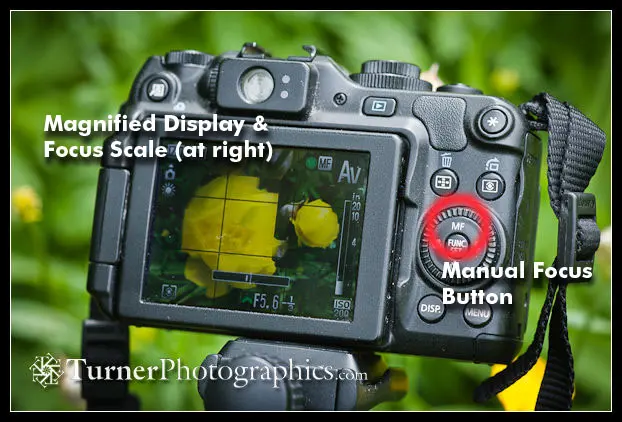
- Use your camera's magnification feature to zoom in on your subject on the display screen.
- Slowly rotate the focus ring until the subject appears crisp and clear.
- Take the shot while keeping the camera steady to avoid shifting the focal plane.
When practicing, start with static subjects like architecture or still-life objects. This allows you to take your time and observe how small movements of the ring affect the sharpness of the image. Once you feel comfortable, move on to subjects with more depth to understand how the aperture affects the range of focus.
Common mistakes when using manual focus
One of the most frequent errors beginners make is failing to use the camera’s built-in focusing aids. Relying solely on the optical viewfinder without zooming in can lead to images that look sharp on a small screen but appear blurry when viewed on a larger monitor. Another common mistake is ignoring the diopter adjustment on the viewfinder. If your viewfinder is not calibrated to your eyesight, your manual focus will be consistently inaccurate, regardless of how carefully you turn the ring.
- Assuming the image is sharp without checking focus peaking or magnification.
- Forgetting to reset the focus ring after moving from a close subject to a distant one.
- Using a very wide aperture (like f/1.4), which makes the focus plane extremely thin and difficult to manage.
- Attempting to focus on fast-moving subjects without sufficient experience or a tripod.
- Neglecting to stabilize the camera, causing the focus point to shift slightly during the exposure.
Best manual focus lenses for beginners
If you are interested in learning manual focus, you do not need expensive gear. In fact, many vintage lenses from the 1970s and 1980s are excellent for learning because they feature long, smooth focus throws that make precise adjustments easier than the short-throw rings found on modern autofocus lenses. Brands like Nikon (AI-S series), Canon (FD mount), or Pentax (K-mount) offer high-quality glass that can be adapted to almost any modern digital camera body using an inexpensive adapter.
For those who prefer modern equipment, several manufacturers produce dedicated manual-focus-only lenses specifically for mirrorless cameras. These lenses are often smaller, lighter, and more affordable than their autofocus counterparts because they lack complex internal motors. Companies like Samyang, Rokinon, and Voigtländer produce exceptional manual glass that provides a tactile experience that helps photographers develop a deeper understanding of optics. By investing in these tools, you gain a better appreciation for the mechanical artistry of image-making, ultimately leading to more intentional and technically proficient photography.
Key facts
- Manual focus requires the photographer to physically rotate the lens barrel to adjust the point of sharpest focus.
- Most modern lenses feature a focus ring located near the front element of the lens.
- Photographers use manual focus when the camera’s autofocus system struggles in low light or with low-contrast subjects.
- Macro photography relies heavily on manual focus because the depth of field is often razor-thin at close distances.
- Many cameras offer "focus peaking," a visual aid that highlights the sharpest edges in the frame with a bright color.
- To achieve perfect focus, zoom in on your digital viewfinder or LCD screen to inspect fine details before capturing the image.
The bottom line
Manual focus is a fundamental skill that grants photographers precise control over the plane of sharpness within an image. While autofocus is faster for daily snapshots, mastering the manual focus ring allows for intentional artistic choices, particularly in macro, landscape, and cinematic work. By utilizing focus aids like magnification and peaking, you can overcome the limitations of automatic systems and ensure your subjects are perfectly crisp.
People also ask
Why would a photographer choose manual over autofocus?
Manual focus provides total creative control, especially when shooting through obstructions like fences or glass where autofocus might lock onto the wrong subject. It is also essential for video production to ensure smooth, deliberate focus transitions.
What is the biggest mistake beginners make with manual focus?
Beginners often fail to verify focus at the maximum magnification level available on their camera's screen. Relying solely on a small LCD display can result in images that look sharp from a distance but are actually slightly out of focus.
Does manual focus work on all camera lenses?
Almost every interchangeable lens offers a manual focus mode, usually toggled via a switch on the lens barrel or a setting in the camera menu. However, some specialized "focus-free" or entry-level lenses lack a manual ring entirely.
How can I tell if my image is in focus while shooting?
Use the focus peaking feature found in most mirrorless cameras, which outlines sharp areas in red, yellow, or white. Alternatively, use the magnification tool to zoom into the subject's eyes or the specific area of interest.
Is manual focus slower than autofocus?
Yes, manual focus is generally slower, making it difficult to capture fast-moving subjects like sports or wildlife. It is best reserved for static subjects, landscapes, or controlled studio environments where timing is not the primary constraint.
Can I use manual focus with glasses on?
Yes, but you must ensure your camera’s diopter—the small dial next to the viewfinder—is calibrated to your specific vision. This ensures that what you see through the viewfinder accurately reflects the focus state of the lens.
This answer was created with the help of AI research tools and reference sources. Spotted an error? Let us know — we correct mistakes quickly. See our editorial policy.