What is Donatello known for?
Short answer
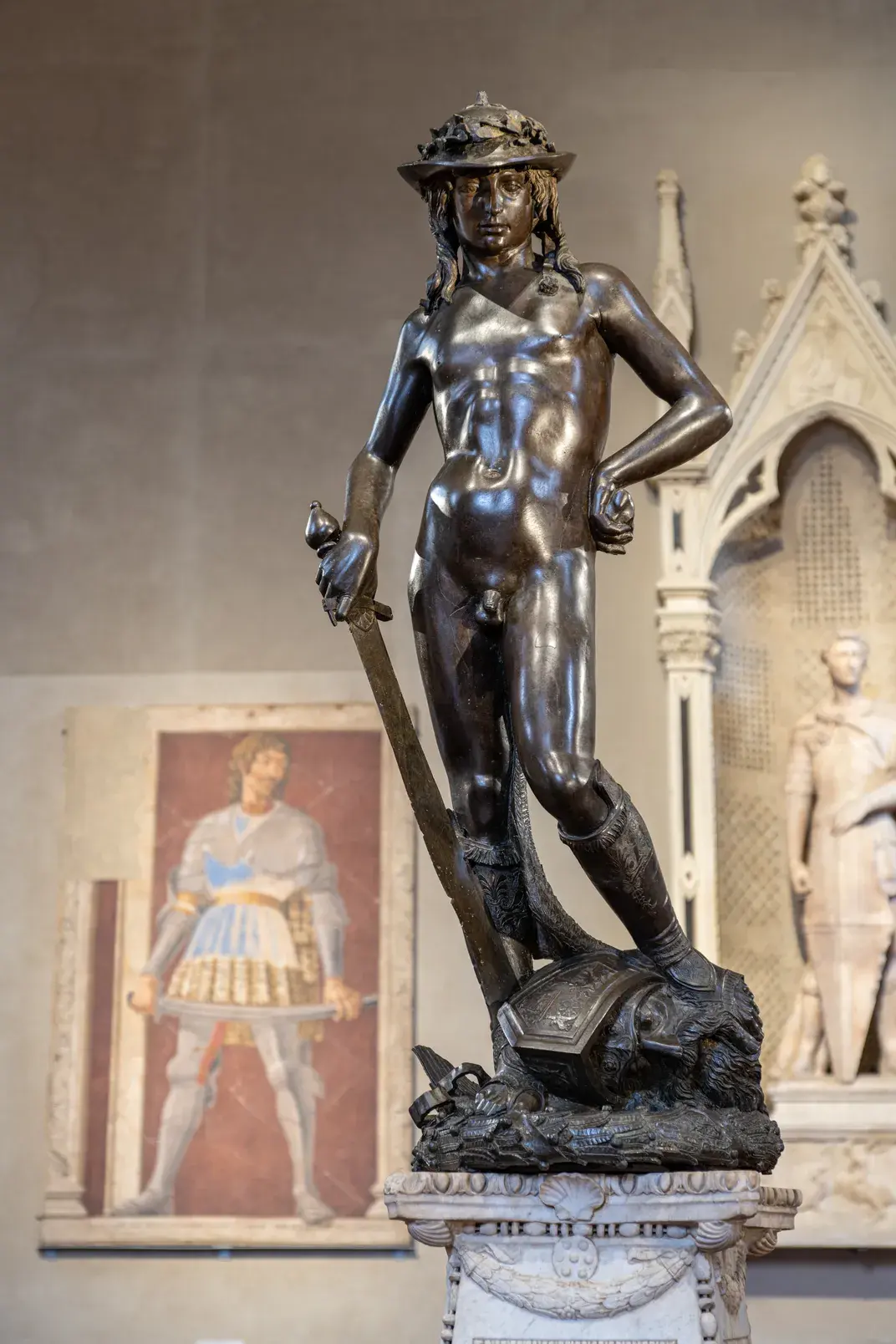
Donatello was a seminal Italian Renaissance sculptor celebrated for his mastery of depth, psychological realism, and the revival of classical techniques. He is best known for his bronze David, the first free-standing nude statue since antiquity, and his innovative use of schiacciato, a shallow relief technique that created unprecedented atmospheric perspective.
On this page
Why is Donatello considered a master of the Renaissance?
Donatello, born Donato di Niccolò di Betto Bardi in Florence around 1386, stands as the foundational figure of Renaissance sculpture. Before his influence, European art was largely dominated by the rigid, stylized forms of the Gothic period. Donatello broke this tradition by studying ancient Roman ruins and applying those classical proportions to his own work. He shifted the focus of art toward humanism, emphasizing the emotional state and physical presence of his subjects.
His ability to convey internal psychological depth through external physical form set him apart from his contemporaries. By observing the way muscles tensed and faces expressed grief or contemplation, he brought a new level of vitality to marble, bronze, and wood. This shift helped define the artistic trajectory of the 15th century, influencing masters like Michelangelo and Leonardo da Vinci. His legacy is not just in his specific statues, but in the fundamental change he brought to how artists perceived the human body in space.
How did Donatello change the technique of sculpture?
One of Donatello’s most significant technical contributions was the development of schiacciato, or "flattened" relief. This technique allowed him to carve marble in extremely shallow layers, creating the illusion of deep, atmospheric space on a nearly flat surface. By subtly varying the depth of the carving, he could suggest distant landscapes and architectural elements that seemed to recede into the background. This was a revolutionary departure from the high-relief carvings common in the Middle Ages.
In addition to his relief work, Donatello was a pioneer in the revival of lost-wax bronze casting. His technical expertise allowed for complex, free-standing figures that could be viewed from multiple angles. To understand his technical evolution, consider these primary innovations:
- Schiacciato relief: Using millimetric depth variations to create perspective.
- Contrapposto: Mastering the weight-shift pose where the figure’s weight rests on one leg.
- Material versatility: Successfully working in stone, bronze, wood, terracotta, and stucco.
- Psychological realism: Using facial expressions and bodily tension to convey narrative.
What are Donatello's most famous works?
Donatello produced a vast body of work, but a few key pieces define his career and impact. His bronze David, created in the 1440s, remains his most iconic achievement. It was the first unsupported bronze statue of a nude male figure since the Roman era. The statue is celebrated for its graceful, almost feminine fluidity, which contrasts sharply with the violent context of the biblical story it depicts.
Another masterpiece is his wooden Penitent Magdalene, which showcases his ability to depict raw, unidealized human suffering. Unlike the polished, youthful figures typical of the early Renaissance, this statue represents an aged, gaunt woman in the desert. It is a haunting study of piety and physical decay. Other essential works include:
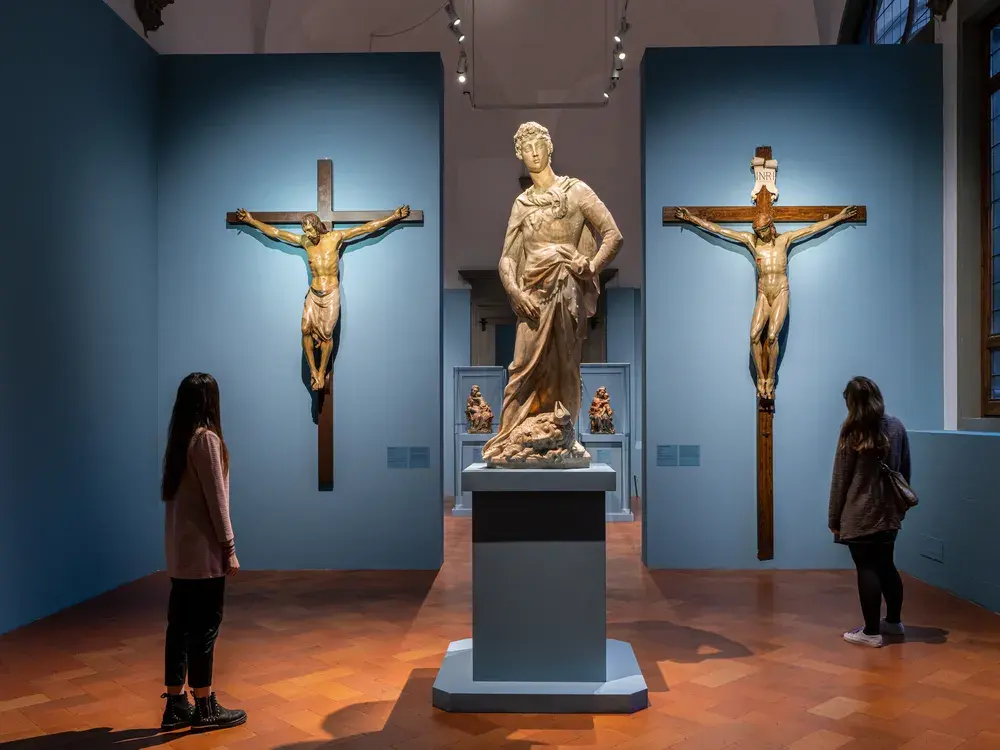
- St. George (Marble): Known for its intense, watchful gaze and alert posture.
- Gattamelata (Bronze): A massive equestrian statue in Padua, reviving the tradition of the Roman triumphal monument.
- Zuccone (Marble): A prophet statue for the Florence Cathedral, famous for its intense, craggy realism.
Common mistakes when analyzing Donatello's art
A frequent error when studying Donatello is viewing his work solely through the lens of modern aesthetics. Many observers expect Renaissance art to be perfectly idealized, yet Donatello often chose to portray grit, age, and imperfection to heighten the emotional impact. If you assume his figures are meant to be "beautiful" in a classical sense, you might miss the intentional psychological tension he built into the muscles and expressions of his subjects.
Another mistake is failing to consider the original placement of his works. Many of his statues were designed for specific niches or high-altitude pedestals in cathedrals. When viewed at eye level in a museum, the proportions may appear distorted because he intentionally elongated limbs or exaggerated features to ensure they looked correct from the ground looking up. To properly appreciate his skill, one must account for:
- The intended height of the statue's original installation.
- The specific lighting conditions of the church or public square.
- The theological or political message the patron intended to convey.
How can beginners appreciate Renaissance sculpture?
To begin appreciating the work of Donatello and his peers, start by focusing on the interaction between the figure and the space it occupies. Look for the "line of action" in the statue, which is the imaginary line running through the body that dictates its movement. In Donatello’s work, this line is rarely static; it usually suggests that the figure is in the middle of a thought or a physical shift.
If you are visiting a gallery or studying images, follow these steps to deepen your understanding:
- Walk around the statue if possible to see how the silhouette changes from different angles.
- Observe the hands and feet, as Donatello was famous for using these to anchor the emotional weight of his figures.
- Compare his work to a Gothic statue to see the difference in how the fabric of the clothing interacts with the body underneath.
- Research the material used, as the choice between cold bronze and warm wood often dictates the tone of the artwork.
By focusing on these details, you will see how Donatello transformed sculpture from a decorative craft into a profound medium for human expression.
Key facts
- Donatello (c. 1386–1466) was a foundational Florentine sculptor who pioneered the Renaissance style by reviving classical techniques.
- He is most famous for his bronze David, the first unsupported standing nude statue created since antiquity.
- He mastered "schiacciato," a technique of extremely shallow relief carving that creates an illusion of deep space and atmospheric perspective.
- His wooden Penitent Magdalene is celebrated for its raw, unflinching emotional realism, departing from the idealized beauty typical of his era.
- He spent significant time studying ancient ruins in Rome, which allowed him to incorporate precise anatomical accuracy into his figures.
- When viewing his work, look for the "contrapposto" stance, where the figure’s weight is shifted onto one leg to create a natural, dynamic posture.
The bottom line
Donatello remains a titan of art history for bridging the gap between medieval traditions and the human-centered focus of the Renaissance. By mastering anatomy, perspective, and emotional expression, he transformed sculpture from static decoration into a dynamic, narrative art form. His legacy persists in the way he prioritized the individual human experience, setting a standard for realism that continues to influence sculptors and artists centuries later.
People also ask
Did Donatello work in mediums other than bronze?
Yes, Donatello was highly versatile and worked extensively in marble, terracotta, wood, and stucco. His ability to adapt his style to the specific properties of each material allowed him to achieve varied textures and emotional depths.
How did Donatello influence Michelangelo?
Michelangelo studied Donatello’s works closely, particularly the David, while training in the Medici gardens. He adopted Donatello’s focus on human anatomy and psychological intensity, which became hallmarks of his own masterpieces.
Where can I see Donatello’s sculptures today?
Most of his major works are housed in Florence, Italy, primarily at the Bargello National Museum and the Museo dell'Opera del Duomo. Some pieces are also located in the Basilica of Saint Anthony in Padua.
What is the significance of the "schiacciato" technique?
This technique involves carving into stone with such subtle depth that the transition between figures and background is almost imperceptible. It allows the artist to depict complex scenes, such as landscapes or crowds, on a flat surface.
Was Donatello considered a successful artist during his lifetime?
He was highly regarded and received numerous commissions from the powerful Medici family. His reputation was so strong that he was invited to work in cities across Italy, including Rome, Siena, and Padua.
How can I identify a Donatello sculpture?
Look for a sense of movement and psychological tension, as his figures often appear caught in a specific, fleeting moment. His works frequently display a balance between classical proportions and a gritty, lifelike human quality.
This answer was created with the help of AI research tools and reference sources. Spotted an error? Let us know — we correct mistakes quickly. See our editorial policy.