What is Edgar Degas known for?
Short answer
Edgar Degas was a French Impressionist painter and sculptor renowned for his masterful depictions of movement and human form. He is best known for his iconic series of ballet dancers, racehorses, and intimate scenes of women bathing. His innovative compositions, influenced by photography and Japanese prints, redefined modern art techniques.
On this page
Why is Edgar Degas famous for ballet paintings?
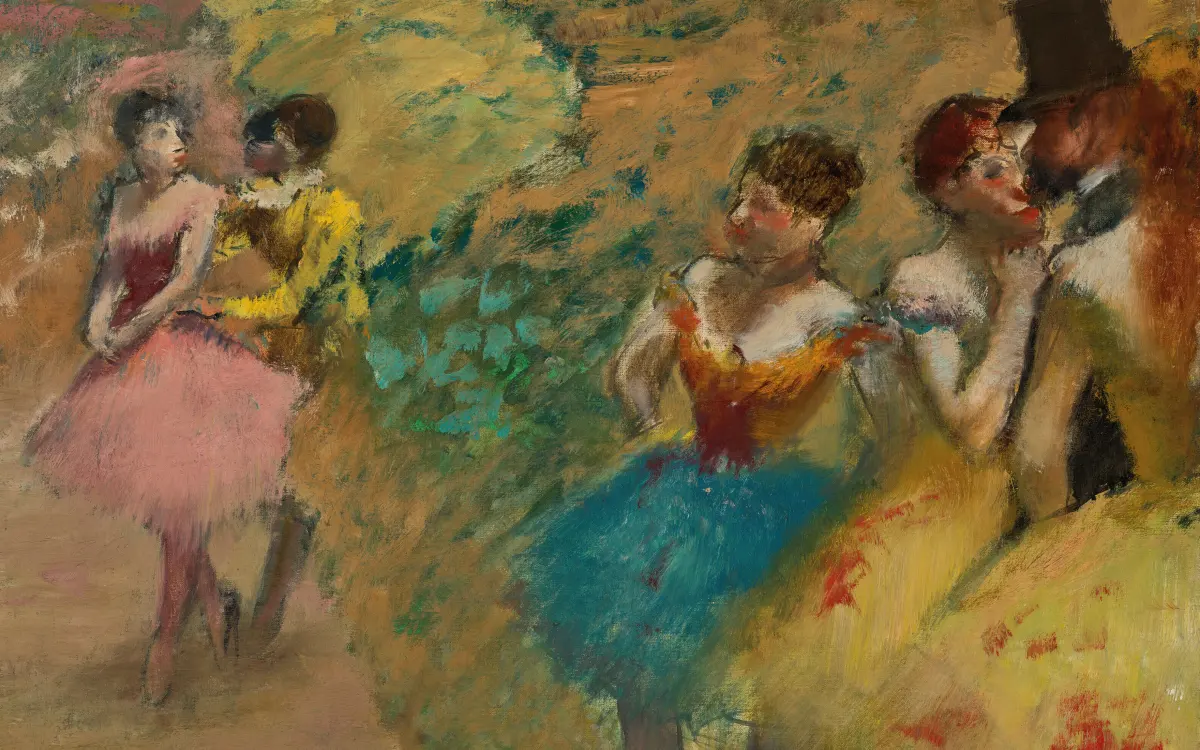
Degas is most celebrated for his obsessive study of the Parisian ballet, which accounted for over half of his total artistic output. He was fascinated by the contrast between the grueling physical labor behind the scenes and the ethereal glamour presented to the audience. Unlike his contemporaries, who often painted landscapes, Degas focused on the human figure in motion, capturing dancers adjusting their costumes, stretching, or waiting in the wings.
His approach to these subjects was unconventional for the late 19th century. He utilized "asymmetric" compositions, often cropping the figures at the edge of the frame to create a sense of spontaneity. This technique mimicked the candid nature of photography, a medium that was rapidly evolving during his lifetime. By focusing on the repetitive, mundane aspects of the dancers' lives, he elevated everyday professional labor into high art. Key characteristics of his ballet works include:
- High-angle perspectives that emphasize the stage floor.
- Use of artificial gaslight to create dramatic, unnatural shadows.
- Focus on the exhaustion and physical strain of the performers.
How do you identify a Degas sculpture?
While primarily known as a painter, Degas produced extensive sculptural work, most notably his wax figures. His most famous piece, The Little Fourteen-Year-Old Dancer, caused a scandal when it was exhibited in 1881 because it incorporated real fabric, hair, and a tutu. Most of his sculptures were never cast in bronze during his lifetime; they were intended as private studies to help him better understand the mechanics of movement for his paintings.
If you are looking at his sculptures today, you will notice a distinct focus on realism rather than idealized beauty. He often depicted subjects in awkward or strained positions to study muscle tension. To distinguish his sculptural style, look for these specific traits:
- Rough, textured surfaces that retain the marks of his fingers in wax.
- Figures caught in fleeting, asymmetrical poses rather than static, heroic stances.
- A lack of traditional finishing, as he viewed these works as experimental tools.
- Subjects frequently involve dancers or bathers in private, unposed moments.
What techniques did Degas use in his art?
Degas was a master of experimentation, frequently blending mediums to achieve unique textures and light effects. He famously moved away from traditional oil painting to embrace pastel, which allowed him to work more quickly and create vibrant, layered colors. By the 1880s, he was using a technique called "peinture à l'essence," where oil paint was thinned with turpentine to create a matte, watercolor-like finish. This allowed for faster drying times and a more sketch-like quality.
His technical approach was heavily influenced by his interest in Japanese woodblock prints, which emphasized flat planes of color and unconventional framing. He also experimented with monotypes, a process of printing a single image from a metal plate, which he used to create dark, atmospheric scenes of interior life. When analyzing his work, keep in mind:
- He often layered pastels over monotypes to add depth and luminosity.
- He avoided the "pretty" color palettes favored by academic painters of his day.
- His brushwork often appears frantic or deliberate, depending on the desired energy of the scene.
Common mistakes when analyzing Impressionist art
A frequent error is assuming that Degas was a traditional Impressionist who focused solely on outdoor light. While he exhibited with the Impressionists, he frequently rejected the label, preferring to call himself a "Realist" or "Independent." He rarely painted en plein air, or outdoors, because he found the changing light of nature distracting. Instead, he preferred the controlled environment of his studio, where he could manipulate lighting and poses to suit his precise compositional needs.
Another mistake is viewing his work as purely sentimental or decorative. Because many of his subjects are dancers, some viewers assume his work is lighthearted. In reality, Degas was often cynical and detached, portraying his subjects with a clinical, almost voyeuristic eye. To avoid these pitfalls, consider the following:
- Do not equate his work with the bright, sunny landscapes of Claude Monet.
- Look for the psychological tension in his portraits rather than just the beauty of the subject.
- Understand that his "candid" scenes were often meticulously staged in his studio.
Best way to study Degas for beginners
To truly appreciate his work, you should focus on how he frames his subjects. Start by visiting a museum collection or viewing high-resolution digital archives to compare his early historical paintings with his later, more radical works. Pay attention to the "voids" in his paintings—the empty spaces that create tension and draw the viewer's eye toward the main action. This technique was revolutionary and remains a fundamental lesson in modern composition.
If you are just beginning your study, follow these steps to gain a deeper understanding of his creative process:
- Start with his "bather" series to see how he captured the human body in private, unposed moments.
- Read about his relationship with photography to see how he learned to crop images.
- Compare his sketches of horses to his finished paintings to see how he refined movement.
- Visit a gallery that displays his pastels to see how he built color through layers.
By focusing on these specific areas, you will move past the superficial beauty of his subjects and begin to see the complex, analytical mind of a true master.
Key facts
- Edgar Degas was a leading French Impressionist painter and sculptor, born in Paris in 1834.
- He is most famous for his depictions of ballet dancers, who account for more than half of his total body of work.
- Unlike many Impressionists who painted outdoors, Degas preferred working in a studio, often using photography to capture candid poses.
- He was a master of the pastel medium, frequently layering colors to achieve vibrant, textured effects on paper.
- Degas suffered from failing eyesight in his later years, which led him to experiment more with sculpture and bold, simplified forms.
- When viewing his work, look for his signature "off-center" compositions, which were heavily influenced by the Japanese woodblock prints popular in the 19th century.
The bottom line
Edgar Degas remains a pivotal figure in art history for his innovative approach to movement and composition. By blending traditional techniques with modern subjects like ballet and urban life, he captured the essence of 19th-century Paris. His mastery of pastel and sculpture, combined with his experimental use of perspective, continues to influence artists, proving that even the most fleeting moments can be immortalized through careful observation.
People also ask
Why did Degas focus so much on ballet dancers?
Degas was fascinated by the movement and physical discipline of dancers. He spent years observing rehearsals at the Paris Opera, allowing him to capture the tension and grace of the human body in motion.
Was Degas officially an Impressionist?
While he helped organize the first Impressionist exhibition in 1874, he preferred the term "Independent." He disliked the label because he rejected the group's focus on painting landscapes en plein air.
Did Degas create sculptures?
Yes, he created many wax sculptures, though only one, "Little Dancer Aged Fourteen," was exhibited during his lifetime. Most of his sculptures were cast in bronze by his heirs after he died in 1917.
How did photography influence his paintings?
Degas used photography to study how light hit objects and to capture spontaneous, "snapshot" compositions. This allowed him to paint figures cut off at the edge of the frame, creating a sense of realism.
What were his most common painting subjects besides dancers?
He frequently painted scenes of Parisian nightlife, including café-concerts, horse races, and women at their toilettes. These subjects allowed him to explore lighting and intimate, private moments.
What is the best way to appreciate Degas's art?
Focus on his unique angles and his ability to capture fleeting moments. Notice how he uses color to define form rather than relying on strict outlines, which gives his work a modern, energetic feel.
This answer was created with the help of AI research tools and reference sources. Spotted an error? Let us know — we correct mistakes quickly. See our editorial policy.