What is Helen Frankenthaler known for?
Short answer
Helen Frankenthaler was a transformative American Abstract Expressionist painter celebrated for pioneering the "soak-stain" technique. By thinning oil paints with turpentine and pouring them directly onto unprimed canvases, she created ethereal, color-drenched compositions. Her innovative approach bridged the gap between Abstract Expressionism and the later Color Field painting movement, profoundly influencing contemporary abstraction.
On this page
What is the soak-stain technique?
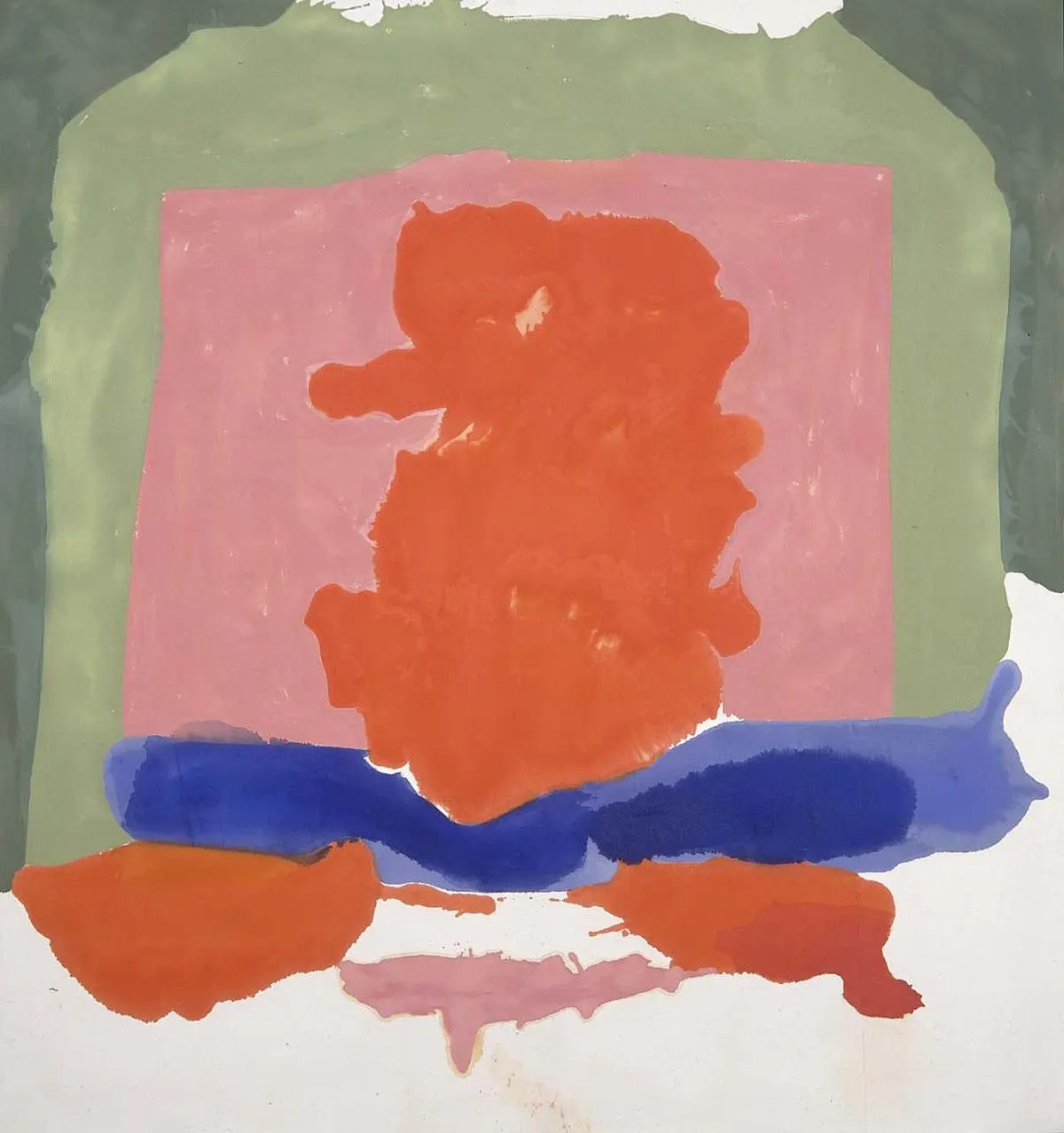
The soak-stain technique is Frankenthaler’s most significant contribution to art history, first introduced in her 1952 masterpiece, Mountains and Sea. Unlike traditional painters who applied thick, opaque layers of pigment, she thinned her paints to a watercolor-like consistency. She then poured these pigments onto raw, unprimed cotton duck canvas, allowing the fabric to absorb the color directly into its fibers. This process removed the physical barrier between the paint and the support, making the color appear as if it were an intrinsic part of the material.
This method shifted the focus of painting from the artist’s dramatic brushwork to the fluid, atmospheric interaction of color and space. By eliminating the heavy impasto textures common in the works of contemporaries like Jackson Pollock, Frankenthaler achieved a luminous, stained effect that felt both spontaneous and deeply controlled. Her technique required a high level of physical engagement, as she often moved around the canvas on the floor, manipulating the flow of paint with sponges, brushes, and gravity.
How did she influence Color Field painting?
Frankenthaler served as a vital bridge between the gestural, aggressive style of early Abstract Expressionism and the more meditative, formalist approach of Color Field painting. Artists such as Morris Louis and Kenneth Noland visited her studio in the early 1950s and were immediately struck by the possibilities of her staining method. They adopted her technique to create expansive works that prioritized pure color over representational imagery or emotional angst.
The movement flourished throughout the 1960s, characterized by large, flat areas of color that invited viewers to experience art as a purely optical phenomenon. Frankenthaler’s legacy in this development remains foundational for several reasons:
- She proved that paint did not need to sit on the surface to be effective.
- She demonstrated that large-scale canvases could feel light and airy rather than heavy.
- She encouraged a focus on the inherent properties of the medium, such as transparency and saturation.
- She provided a blueprint for future generations to explore the emotional resonance of color without relying on traditional figurative subjects.
Why is her work considered innovative?
Frankenthaler’s innovation lay in her ability to balance chance with intentionality. While the pouring process allowed for unpredictable results, she carefully directed the flow to create complex, layered compositions that possessed a sense of depth and movement. She often combined this with charcoal or pencil lines to anchor the floating shapes, demonstrating a sophisticated understanding of composition that many critics initially underestimated.
Beyond her technical prowess, she was a pioneer for women in a male-dominated art world. She navigated the New York School with a distinct voice, refusing to be categorized by the prevailing trends of the era. Her work evolved over five decades, incorporating woodcuts, lithography, and sculpture, yet she always returned to the core principle of color as the primary subject. By treating the canvas as a field of potential rather than a surface to be covered, she redefined the relationship between the artist, the material, and the viewer.
Common mistakes when analyzing Frankenthaler
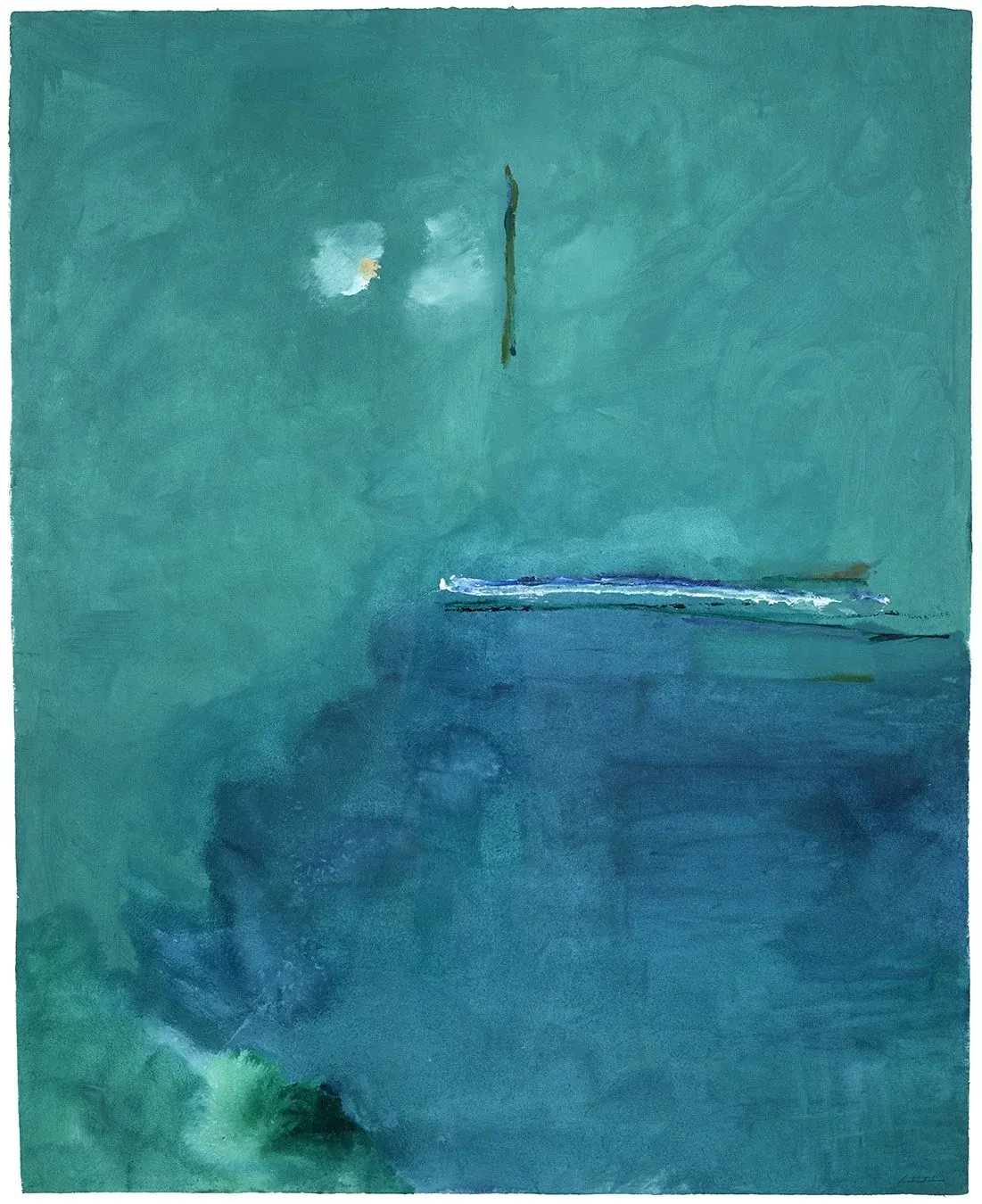
When studying Frankenthaler’s work, viewers often make the mistake of viewing her paintings as purely accidental or "automatic." While she embraced the fluidity of paint, she was a highly disciplined artist who spent hours deciding where to place a color and how to balance the negative space. Another common error is assuming her work lacks emotional depth because it is abstract. In reality, her paintings are deeply evocative, often inspired by landscapes, memories, and the changing light of the seasons.
To better appreciate her work, follow these steps:
- Examine the edges of the color shapes to see how far the pigment bled into the raw canvas.
- Look for the faint traces of charcoal or pencil that she used to define the boundaries of her forms.
- Stand at a distance to observe the overall balance of color, then move closer to examine the texture of the weave.
- Consider the title of the work, as she often chose names that hint at specific places or emotional states.
- Avoid comparing her work solely to Jackson Pollock; while they shared a studio floor, her goals were centered on light and transparency rather than chaotic energy.
Best ways to view her art today
To truly understand the scale and luminosity of Frankenthaler’s work, one must see her canvases in person. Digital reproductions often fail to capture the subtle variations in transparency and the way the paint interacts with the texture of the raw cotton. Many major museums, including the Museum of Modern Art in New York and the National Gallery of Art in Washington, D.C., hold significant collections of her paintings.
When visiting an exhibition, try to spend at least ten minutes in front of a single large-scale piece. Allow your eyes to adjust to the subtle shifts in hue and the way the colors seem to recede and advance within the frame. By observing the work in a quiet environment, you can better experience the meditative quality she intended to convey. Her work remains a testament to the power of color to evoke complex human experiences, securing her place as one of the most influential painters of the twentieth century.
Key facts
- Helen Frankenthaler was a pioneering American Abstract Expressionist painter born in 1928.
- She is most famous for inventing the "soak-stain" technique, which involved thinning oil paints with turpentine to create watercolor-like effects on unprimed canvas.
- Her breakthrough work, Mountains and Sea (1952), is considered a foundational piece of the Color Field painting movement.
- She transitioned from oil to acrylic paints in the early 1960s, which allowed for more vibrant colors and better preservation of the canvas.
- To emulate her style, use unprimed cotton duck canvas and thin your pigments significantly; avoid using thick, impasto applications that sit on the surface.
- When practicing soak-stain, work on a flat surface to prevent unintended drips and ensure the paint absorbs evenly into the fabric fibers.
The bottom line
Helen Frankenthaler remains a pivotal figure in 20th-century art, celebrated for her revolutionary soak-stain technique. By abandoning traditional brushwork for fluid, atmospheric color washes, she bridged the gap between Abstract Expressionism and the Color Field movement. Her legacy is defined by her mastery of light, space, and color, which transformed the canvas from a surface for representation into a field of pure, resonant emotional expression.
People also ask
How did Helen Frankenthaler influence other artists?
Her innovative techniques directly inspired Color Field painters like Morris Louis and Kenneth Noland. By showing that paint could be integrated into the fabric rather than sitting on top of it, she opened new possibilities for abstract composition.
What materials did Frankenthaler use for her soak-stain paintings?
She primarily used unprimed canvas and thinned oil paints, later switching to acrylics. She applied these mixtures with sponges, brushes, and even household mops to achieve large, fluid washes of color.
Was Helen Frankenthaler part of a specific art movement?
She is primarily associated with Abstract Expressionism and later became a leading figure in the Color Field movement. Her career spanned over five decades, allowing her to evolve alongside changing artistic trends.
Where can I see Helen Frankenthaler's artwork today?
Her works are held in major institutions worldwide, including the Museum of Modern Art in New York, the National Gallery of Art in Washington, D.C., and the Tate in London. Many museums feature her large-scale canvases in their permanent collections.
Did Frankenthaler create art other than paintings?
Yes, she was a prolific printmaker and experimented with various mediums, including woodcuts, ceramics, and sculpture. Her prints are highly regarded for their complexity and the way they translate her painterly aesthetic into new formats.
What is the main difference between her style and traditional oil painting?
Traditional oil painting relies on layering thick pigment on a primed surface to create texture and depth. Frankenthaler’s style focused on the transparency of the paint and the texture of the raw canvas, emphasizing color as the primary subject.
This answer was created with the help of AI research tools and reference sources. Spotted an error? Let us know — we correct mistakes quickly. See our editorial policy.