Why is the Winged Victory of Samothrace so famous?
Short answer
The Winged Victory of Samothrace is celebrated for its masterful Hellenistic craftsmanship, particularly the dramatic sense of motion and the intricate, realistic rendering of wind-whipped drapery. Created around 190 BCE, this marble masterpiece remains an icon of Western art, symbolizing triumph and artistic innovation through its dynamic, triumphant posture and monumental scale.
On this page
What makes the Winged Victory of Samothrace so iconic?
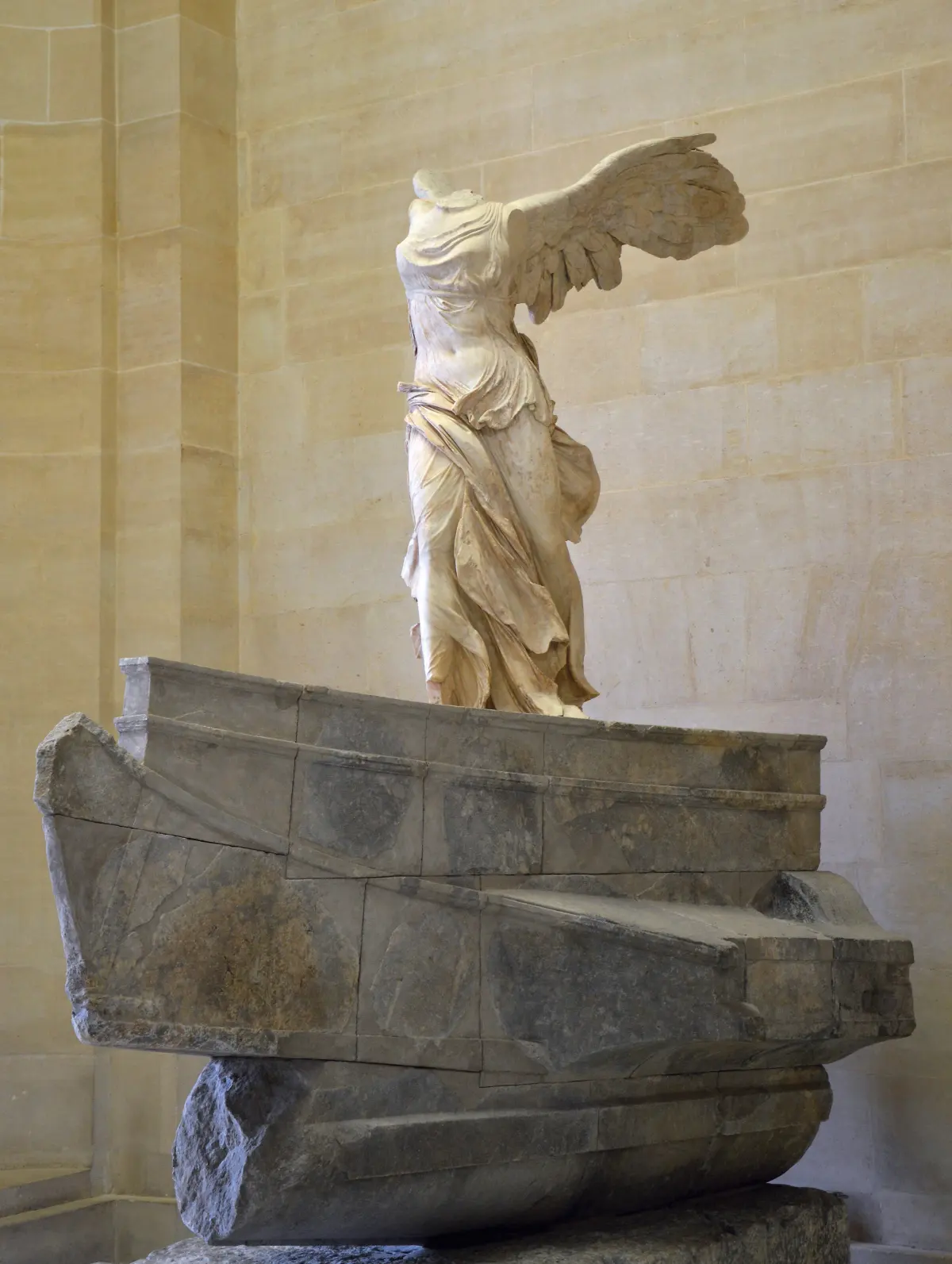
The Winged Victory of Samothrace, also known as the Nike of Samothrace, is a Hellenistic marble sculpture representing the goddess Nike. Discovered on the island of Samothrace in 1863, it stands over eight feet tall and is composed of Parian marble. Its fame stems from the sculptor’s ability to imbue cold stone with the sensation of living, breathing movement. Unlike the static, idealized figures of the earlier Classical period, this statue captures a fleeting, high-energy moment.
The sculpture is renowned for its technical virtuosity, particularly in the treatment of the clothing. The fabric appears to cling to the goddess's body as if dampened by sea spray, while the heavy folds of the drapery billow behind her, suggesting a powerful gust of wind. This masterful contrast between the smooth, exposed skin and the deeply carved, complex textures of the garments creates a visual rhythm that draws the viewer’s eye across the entire form.
How was the Winged Victory of Samothrace discovered?
The statue was unearthed by Charles Champoiseau, a French diplomat and amateur archaeologist, in the ruins of the Sanctuary of the Great Gods on Samothrace. Initially, the sculpture was found in hundreds of fragments, requiring extensive reconstruction to resemble the figure seen today. It was not until later that archaeologists realized the statue was originally designed to stand upon a stone base shaped like the prow of a warship.
The discovery process involved several distinct phases of excavation and assembly:
- Initial identification of the torso and wing fragments in the hillside.
- Careful cataloging of hundreds of smaller marble shards.
- The realization that the statue was part of a larger naval monument.
- The transport of the heavy marble pieces to the Louvre Museum in Paris.
- Final assembly and restoration to place the goddess on her pedestal.
This complex history of discovery adds to the statue's mystique. It represents a triumph of archaeological reconstruction, as experts pieced together a fragmented history to restore a symbol of ancient naval victory.
Why is the movement in the statue considered revolutionary?
The Winged Victory represents a pivotal shift in ancient art toward "Hellenistic Baroque" aesthetics. While Classical statues often focused on balance and stoic composure, this work prioritizes drama, tension, and theatricality. The goddess is shown in a forward-leaning posture, her right leg extended and her wings spread wide, creating a diagonal composition that guides the viewer's gaze upward and forward.
This sense of motion is achieved through several deliberate artistic choices:
- The asymmetrical placement of the wings, which suggests a sudden landing or a shift in flight.
- The deep undercutting of the drapery, which creates dramatic shadows and emphasizes the force of the wind.
- The placement on a ship’s prow, which anchors the figure in a specific, high-stakes maritime context.
- The use of varied textures to differentiate between the feathers, the skin, and the wet fabric.
By breaking the rigid verticality of earlier sculptures, the artist successfully created a three-dimensional experience that feels active rather than posed.
What is the historical context of the statue?
Most historians believe the statue was commissioned to commemorate a naval victory, likely by the Macedonian king Demetrius I Poliorcetes or perhaps the Rhodian navy. The statue served as a votive offering to the gods, placed in a hillside sanctuary to thank the divine for protection during a sea battle. This religious function was central to its design, as the statue was meant to be viewed from below, enhancing its imposing and divine presence.
The statue’s location on Samothrace was significant because the island was home to the Sanctuary of the Great Gods, a site of mystery cults. Visitors to the sanctuary would have encountered the statue in a dramatic, open-air setting, likely with water features nearby to mimic the sea. This environmental context was essential to the viewer’s experience, as the sound of water and the play of sunlight would have amplified the statue’s inherent sense of motion and victory.
Common mistakes when analyzing the Winged Victory
When viewing or studying this masterpiece, observers often fall into common traps that diminish their appreciation of the work. One frequent mistake is assuming the statue was always meant to be seen in a museum gallery. In reality, the Winged Victory was designed for a specific outdoor, mountainous environment where natural light would have constantly shifted across the marble surfaces. Viewing it in a static, indoor setting often obscures the artist's original intent regarding shadow and light.
Another error is focusing solely on the missing head and arms. While these features are absent, the power of the work lies in its torso and drapery. Focusing on what is missing prevents the viewer from appreciating the incredible anatomical precision and the emotional weight conveyed through the goddess's posture. To truly understand the statue, one must observe how the body’s weight shifts and how the fabric reacts to the implied wind, rather than lamenting the lost limbs. By focusing on the surviving details, the viewer can better grasp the enduring artistic legacy of this ancient Hellenistic masterpiece.
Key facts
- The statue, also known as the Nike of Samothrace, dates to approximately 190 BCE and represents the Greek goddess of victory.
- It was discovered in 1863 on the island of Samothrace by French consul Charles Champoiseau.
- Standing over 8 feet (2.44 meters) tall, the sculpture is crafted from Parian marble.
- The work is celebrated for its "wet drapery" technique, which creates the illusion of fabric clinging to the body against a strong sea breeze.
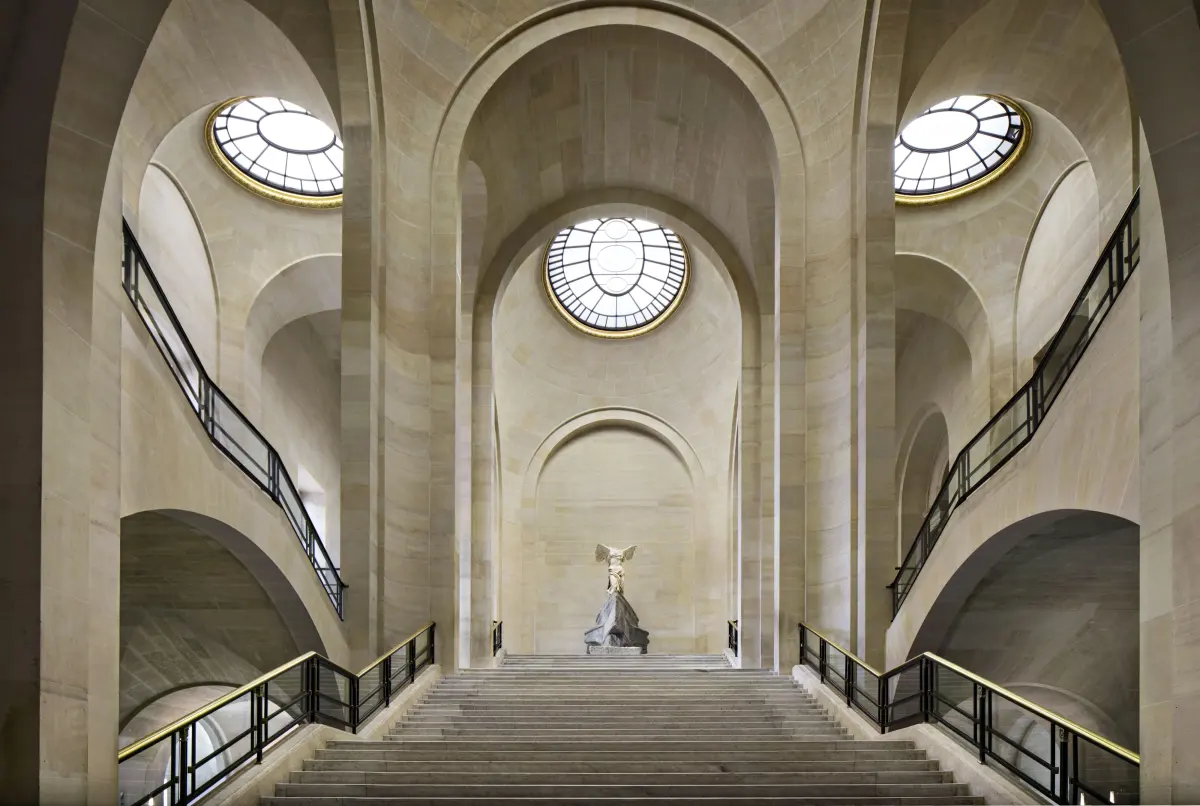
- It is currently housed in the Louvre Museum in Paris, positioned prominently at the top of the Daru staircase.
- When viewing the statue, stand at the base of the stairs to appreciate the dramatic upward composition intended to mimic a ship's prow.
The bottom line
The Winged Victory of Samothrace remains iconic because it perfectly captures the Hellenistic transition from static idealism to dynamic, emotional realism. Its mastery of light, shadow, and movement transforms cold marble into a breathtaking representation of flight. By blending architectural context with sculptural brilliance, the work serves as a timeless symbol of triumph, continuing to inspire awe in millions of visitors at the Louvre every year.
People also ask
Was the Winged Victory of Samothrace always missing its head and arms?
Yes, the statue was found in over 100 fragments, and the head and arms were never recovered. Despite these missing pieces, the sculpture is considered a masterpiece of Hellenistic art due to its expressive movement and technical precision.
What does the statue represent?
It is widely believed to commemorate a naval victory, likely by the Macedonian general Demetrius I Poliorcetes or the Rhodian fleet. The figure stands on a stone ship’s prow, symbolizing the goddess descending from the heavens to bless the triumph.
Why is the statue placed on a staircase in the Louvre?
The Louvre curators placed it on the Daru staircase in the 1880s to recreate the dramatic, elevated setting of the original sanctuary on Samothrace. This positioning forces visitors to look up at the figure, enhancing the sense of divine arrival.
Is the sculpture made of a single piece of marble?
No, it is composed of several distinct blocks of marble, including the torso, the wings, and the base. The masterful joinery allows the heavy stone to appear light and airy, as if the goddess is truly in flight.
Are there any replicas of the Winged Victory?
Yes, numerous plaster casts and marble copies exist worldwide, including a prominent version at the Caesars Palace in Las Vegas. These replicas are often used for educational purposes or as decorative elements in public squares.
How should I avoid common mistakes when viewing the statue?
Do not rush past the statue; take time to walk around the base to see the intricate carving of the feathers and the folds of the garment. Avoid focusing only on the missing head, as the true genius lies in the torso's dynamic twist and the texture of the stone.
This answer was created with the help of AI research tools and reference sources. Spotted an error? Let us know — we correct mistakes quickly. See our editorial policy.