Why is Lady with an Ermine so famous?
Short answer
Leonardo da Vinci’s Lady with an Ermine is famous for its revolutionary psychological depth, technical mastery, and status as one of the few authentic portraits by the artist. Painted around 1489–1490, it transformed Renaissance portraiture by replacing static, profile poses with dynamic movement, lifelike anatomical precision, and complex symbolic layers that continue to fascinate viewers.
On this page
Why is Lady with an Ermine so famous?
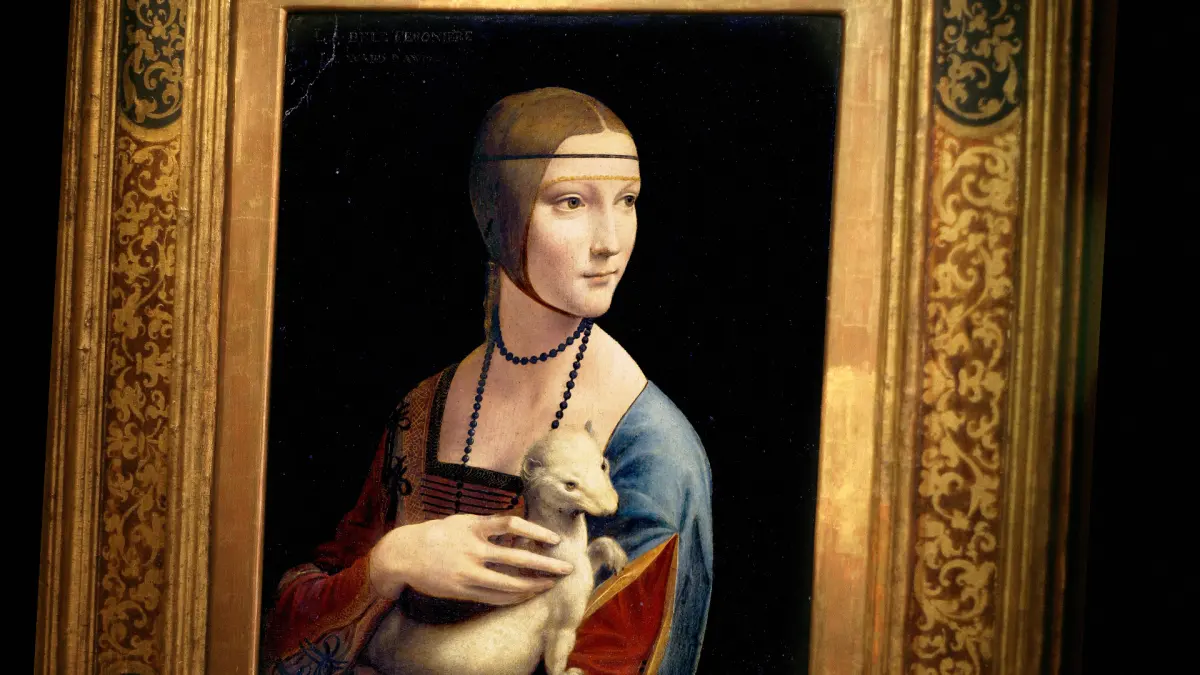
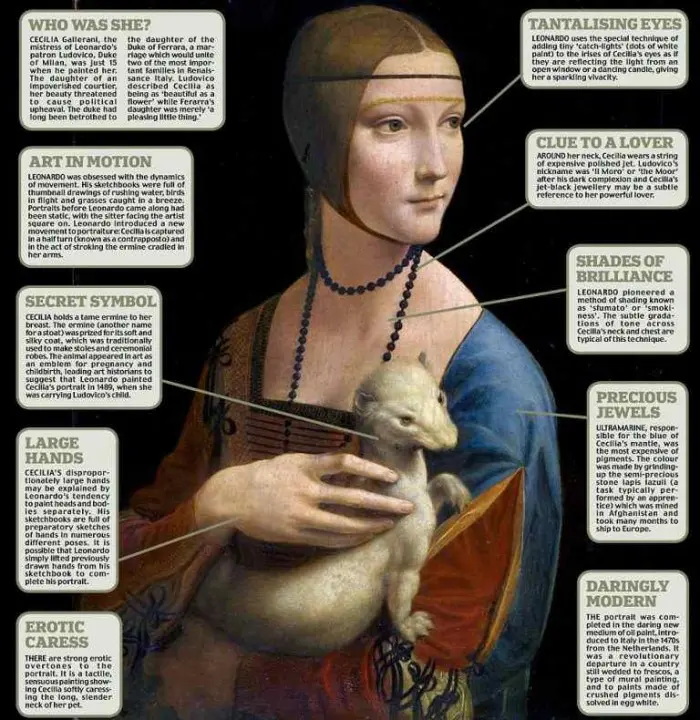
The portrait depicts Cecilia Gallerani, the young mistress of Ludovico Sforza, the Duke of Milan. Unlike the rigid, flat portraits common in the 15th century, Leonardo captured Gallerani in a three-quarter turn, creating a sense of fleeting motion as if she has just been interrupted. This "living" quality was unprecedented for the time, marking a significant shift in how artists approached human subjects.
Beyond the technical execution, the painting is celebrated for its masterful use of light and shadow, known as chiaroscuro. Leonardo utilized subtle gradations of tone to model the subject’s facial features and the muscular structure of the ermine, lending the work a three-dimensional presence. This focus on naturalism and the psychological connection between the subject and the viewer cemented the painting's reputation as a cornerstone of High Renaissance art.
How did Leonardo da Vinci paint the ermine?
The inclusion of the ermine is central to the painting’s fame, serving both as a visual anchor and a complex symbol. In the late 15th century, the ermine was a common emblem of purity and moderation, but it also functioned as a clever visual pun on the subject’s name. The Greek word for ermine is galē, which echoes the first four letters of Cecilia Gallerani’s surname.
Leonardo’s approach to the animal was highly analytical, reflecting his lifelong obsession with nature and anatomy. He studied the behavior and physical form of the creature to ensure its inclusion felt organic rather than merely decorative. The interaction between the subject’s hand and the animal’s fur demonstrates his meticulous attention to texture and light.
- The ermine’s white fur symbolizes the moral purity of the sitter.
- The animal’s alert posture mirrors the watchful gaze of Gallerani.
- Leonardo’s layering of oil glazes created the soft, realistic sheen of the animal's coat.
What is the history of the portrait?
The painting has survived a turbulent history, which has only added to its legendary status among art historians and the public. After Gallerani’s death, the portrait disappeared from public records for centuries, eventually surfacing in the collection of Prince Adam Jerzy Czartoryski in the early 19th century. During World War II, it was seized by the Nazis and moved across several locations in Europe.
Following the war, the painting was returned to Poland, where it is now housed in the Czartoryski Museum in Kraków. Its survival through theft, displacement, and the chaos of global conflict has made it a symbol of cultural resilience. The painting’s provenance is well-documented, which distinguishes it from many other Renaissance works that have uncertain origins or disputed attributions.
- The painting was acquired by the Czartoryski family in Italy around 1800.
- It was hidden in a country house to protect it from Nazi looting in 1939.
- It was recovered by Allied forces in Germany after the war ended in 1945.

How to appreciate the technical details?
When viewing the painting, look closely at the hands and the delicate jewelry, which reveal Leonardo’s interest in human anatomy. He spent years dissecting cadavers to understand how muscles and tendons functioned under the skin, and he applied this knowledge to the sitter’s fingers. The way her hand rests on the ermine is not just a pose; it is a calculated study of tension and grace.
To truly appreciate the work, avoid focusing solely on the face. Observe the following elements to understand Leonardo’s genius:
- The subtle, dark background that pushes the figure into the foreground.
- The intricate embroidery on the sitter’s sleeve, which highlights the wealth of the Sforza court.
- The soft, diffused light that eliminates harsh lines, a technique Leonardo perfected to create a sense of atmospheric depth.
By observing these details, you can see how Leonardo moved away from the linear, graphic style of his predecessors toward a more fluid and realistic representation of the human form.
Common mistakes when analyzing Renaissance portraits
One common mistake is assuming that every object in a Renaissance portrait is merely decorative. In reality, artists like Leonardo embedded layers of meaning into every accessory, pose, and animal. When analyzing such works, avoid viewing the subject as a static figure; instead, consider the social and political context of the sitter. For instance, Gallerani’s jewelry and clothing were specific indicators of her status as the Duke’s mistress.
Another error is ignoring the impact of later restorations on the painting's appearance. Over the centuries, the original work underwent changes, including the darkening of the background and some alterations to the sitter’s hair. Understanding that the painting has changed over 500 years helps the viewer appreciate the original intent while acknowledging the physical reality of the aging canvas. By looking past the surface and considering the artist’s scientific approach, you gain a deeper understanding of why this masterpiece remains a pinnacle of Western art history.
Key facts
- Leonardo da Vinci painted Lady with an Ermine around 1489–1490 using oil on a walnut wood panel.
- The subject is Cecilia Gallerani, the young mistress of Ludovico Sforza, the Duke of Milan.
- The ermine represents purity and moderation, but it also serves as a pun on Gallerani’s Greek surname, galē, meaning weasel or ermine.
- This work is one of only four portraits of women definitively attributed to Leonardo da Vinci.
- It is considered the first truly modern portrait because of the subject's dynamic, three-quarter turn and psychological depth.
- The painting is currently housed at the Czartoryski Museum in Kraków, Poland, after surviving centuries of war and theft.
The bottom line
Lady with an Ermine remains famous because it marks a pivotal shift in Renaissance art. By abandoning static profile poses for a dynamic, psychological engagement with the viewer, Leonardo da Vinci transformed portraiture into a narrative medium. The painting’s technical mastery, combined with its dramatic history of survival through global conflict, ensures its status as a foundational masterpiece of Western art that continues to captivate modern audiences.
People also ask
Why is the subject holding an ermine?
The animal is likely a symbolic reference to Ludovico Sforza, who was known as "The Ermine" because he was a member of the Order of the Ermine. It also highlights Cecilia Gallerani's status and virtue as a courtly figure.
How can you tell this is a Leonardo painting?
Experts identify his hand through the sophisticated use of sfumato, a technique involving soft, blurred transitions between colors and tones. The anatomical precision of the subject's hand and the subtle, lifelike expression are also hallmarks of his style.
Has the painting been altered over time?
Yes, the background was originally blue-grey, but it was painted over with black during the 19th century. X-ray analysis has also revealed that a door or window was once visible behind the subject.
What makes the subject's pose so revolutionary?
Before this portrait, most sitters were painted in strict profile. Leonardo broke this convention by showing the subject turning her head as if reacting to someone entering the room, creating a sense of motion and intimacy.
Is the ermine in the painting realistic?
The animal is slightly larger than a real ermine and possesses human-like facial features. Leonardo likely stylized the creature to better complement the composition and emphasize the narrative connection between the woman and the animal.
Where did the painting go during World War II?
The painting was looted by the Nazis from the Czartoryski collection in Poland. It was moved to various locations, including Hans Frank’s residence in Germany, before being recovered and returned to Poland after the war.
This answer was created with the help of AI research tools and reference sources. Spotted an error? Let us know — we correct mistakes quickly. See our editorial policy.