What is the most expensive painting ever sold?
Short answer
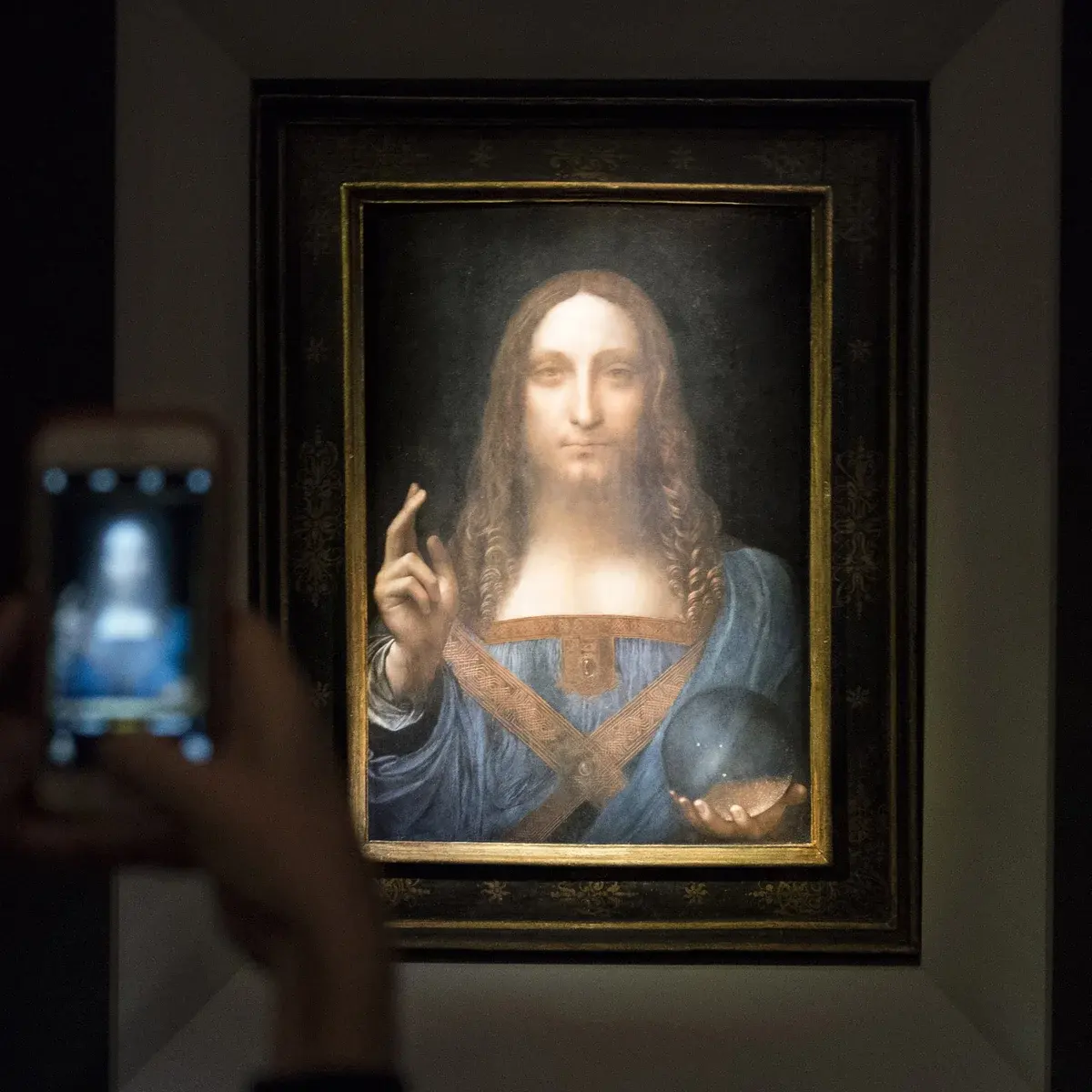
Salvator Mundi, a portrait of Jesus Christ attributed to Leonardo da Vinci, is the most expensive painting ever sold. It was purchased for $450.3 million at a Christie’s auction in New York on November 15, 2017. The record-breaking sale price included the buyer's premium and remains the highest amount paid for any artwork.
On this page
What is the most expensive painting ever sold?
The painting titled Salvator Mundi, meaning "Savior of the World," depicts Christ in Renaissance dress, making a sign of the cross with his right hand while holding a crystal orb in his left. Attributed to Leonardo da Vinci, it dates to approximately 1500. Its journey to becoming the world's most expensive artwork involved a complex history of ownership, restoration, and intense international debate regarding its true authorship.
Before the 2017 auction, the painting was acquired by Russian billionaire Dmitry Rybolovlev for $127.5 million in 2013. When it went to auction at Christie’s four years later, the pre-sale estimate was approximately $100 million. The bidding war lasted nearly 20 minutes, involving telephone bidders who drove the price to an unprecedented $450.3 million. This sale shattered previous records for both Old Master paintings and contemporary works, fundamentally changing the global art market's perception of value.
Why is Salvator Mundi so valuable?
The primary driver of the painting's immense value is the attribution to Leonardo da Vinci. Because there are fewer than 20 known paintings universally accepted as being by the master's hand, any new discovery of a "lost" Leonardo creates a frenzy among collectors. The scarcity of his work ensures that when a piece surfaces, particularly one of this size and subject matter, institutions and private collectors compete aggressively.
Beyond the signature, the painting's allure is bolstered by its dramatic restoration history and the "Leonardo brand." The work had been heavily overpainted and damaged over centuries, leading some experts to question whether it was a studio production rather than a solo work by Leonardo. Despite these debates, the marketing campaign surrounding the 2017 sale framed it as the "Last Da Vinci," which solidified its status as a trophy asset.
- The painting is oil on walnut panel.
- It measures approximately 26 by 18 inches.
- It was once part of the collection of King Charles I of England.
- The work disappeared from public view for centuries before being rediscovered in 2005.
How are record-breaking paintings valued?
Valuing a masterpiece is not an exact science but rather a combination of historical provenance, physical condition, and market demand. Provenance refers to the documented history of ownership, which adds significant value if the work can be traced back to royal collections or famous patrons. A clean, verified history helps collectors feel secure that the work is authentic and legally obtained.
Market conditions also play a massive role in the final price of high-end art. During periods of economic growth, wealthy investors often view art as a "store of value" or a hedge against inflation. Auction houses use psychological tactics, such as setting low starting prices to encourage bidding momentum, to push the final sale price as high as possible.
- Assess the artist's historical significance and current market demand.
- Verify the painting's provenance to ensure authenticity.
- Examine the condition report to identify past restorations or damage.
- Compare the work against recent sales of similar items by the same artist.
- Account for the "trophy" factor, which is the premium paid for owning a famous, unique object.
Common mistakes when buying expensive art
One of the most frequent mistakes investors make is failing to conduct deep due diligence on the painting's condition. Many old paintings have been heavily restored, meaning much of the visible surface may be modern paint rather than the original work of the master. If a buyer does not consult an independent conservator, they risk overpaying for a piece that has lost its historical integrity.
Another common error is ignoring the legal risks associated with international art transactions. Collectors must verify that the painting has not been stolen, looted, or subject to export restrictions in its country of origin. Failing to perform a thorough title search can lead to years of litigation or the seizure of the work by authorities, which effectively destroys both the financial value and the prestige of the investment.
How to track the most expensive art sales
If you are interested in following the high-end art market, you should monitor the annual reports published by major auction houses like Christie’s, Sotheby’s, and Phillips. These reports provide transparent data on the top-selling lots of the year, including the final prices achieved. Additionally, industry publications like Artnet and The Art Newspaper provide expert analysis on market trends and the movement of significant collections.
It is helpful to distinguish between public auction sales and private treaty sales. While record-breaking prices are often associated with public auctions, many of the world's most expensive transactions occur privately between galleries and collectors. These private sales are rarely disclosed in full, meaning the true "most expensive" painting in existence might actually be a work that changed hands in a quiet, confidential deal that never reached the public eye.
Key facts
- The most expensive painting ever sold is Salvator Mundi, attributed to Leonardo da Vinci.
- It was purchased for $450.3 million at a Christie’s auction in New York in November 2017.
- The painting depicts Jesus Christ in Renaissance dress, making a sign of the cross with his right hand.
- Provenance and attribution remain subjects of intense debate among art historians and experts.
- When buying high-value art, always verify the work’s provenance and secure an independent condition report.
- Avoid purchasing art without professional due diligence, as restoration history can drastically affect long-term value.
The bottom line
The record for the most expensive painting ever sold belongs to Leonardo da Vinci’s Salvator Mundi, which fetched over $450 million in 2017. While this figure represents the pinnacle of the art market, the sale remains shrouded in mystery regarding the painting's location and disputed authorship. For collectors, this sale highlights the importance of rigorous provenance research and expert authentication before investing in high-value fine art.
People also ask
Who bought the most expensive painting ever sold?
The painting was purchased by Prince Badr bin Abdullah, reportedly acting on behalf of the Saudi Arabian Department of Culture and Tourism.
Are there more expensive paintings held in private collections?
Many masterpieces are held in private hands, but their values are speculative since they have not been sold publicly. Private sales are often confidential, meaning their true market price is rarely disclosed.
Why is the attribution of Salvator Mundi controversial?
Some scholars argue that the work was largely executed by Leonardo’s assistants rather than the master himself. The heavy restoration the piece underwent has also led to questions regarding how much of the original paint remains.
Where is Salvator Mundi currently located?
The painting’s current location is unknown, and it has not been displayed in public since its 2017 sale. Rumors suggest it may be kept on a superyacht or in a secure storage facility.
How do auction houses determine the starting price of a masterpiece?
Experts analyze historical sales data, the artist’s market demand, and the rarity of the specific work. They then set a reserve price, which is the minimum amount the seller is willing to accept.
Does the price of a painting reflect its artistic quality?
Price is determined by market forces, rarity, and historical significance rather than objective aesthetic quality. A high price tag often reflects the prestige of the artist and the scarcity of available works on the market.
This answer was created with the help of AI research tools and reference sources. Spotted an error? Let us know — we correct mistakes quickly. See our editorial policy.