What is Winslow Homer known for?
Short answer
Winslow Homer is celebrated as one of the preeminent American painters of the 19th century, renowned for his masterful depictions of the sea and rugged coastal life. He transitioned from a successful career as a Civil War illustrator to creating iconic, atmospheric watercolors and powerful oil paintings that define American realism.
On this page
How did Winslow Homer begin his career?
Winslow Homer began his professional life in Boston as an apprentice to a lithographer at age 19. He soon moved to New York City to work as a freelance illustrator for popular periodicals such as Harper’s Weekly. During the American Civil War, he traveled to the front lines to document the conflict, producing sketches that captured the daily, often grueling, life of soldiers rather than just heroic battle scenes.
His early work in illustration provided him with a keen eye for composition and narrative detail. By the late 1860s, he began transitioning toward oil painting, focusing on scenes of rural life and leisure. His early paintings often featured women and children in idyllic settings, reflecting a post-war desire for normalcy. This period was essential in developing his ability to translate complex human emotions and social dynamics onto canvas.
What are the characteristics of his famous seascapes?
Homer’s most enduring legacy is his dramatic series of seascapes, particularly those painted after he moved to Prout’s Neck, Maine, in 1883. These works are characterized by a profound sense of isolation and the raw, untamed power of the Atlantic Ocean. He abandoned the human-centric focus of his early career to study the physics of waves, the texture of foam, and the shifting light of the northern coast.
His technique involved a rigorous observation of nature, often spending hours watching tides to capture their movement accurately. He used a limited, earthy palette to convey the weight and intensity of the water. Key elements of his mature style include:
- A low horizon line that emphasizes the vastness of the ocean.
- High-contrast lighting that highlights the violence of crashing surf.
- Minimalist compositions that strip away unnecessary details to focus on elemental forces.
How to appreciate his watercolor technique?
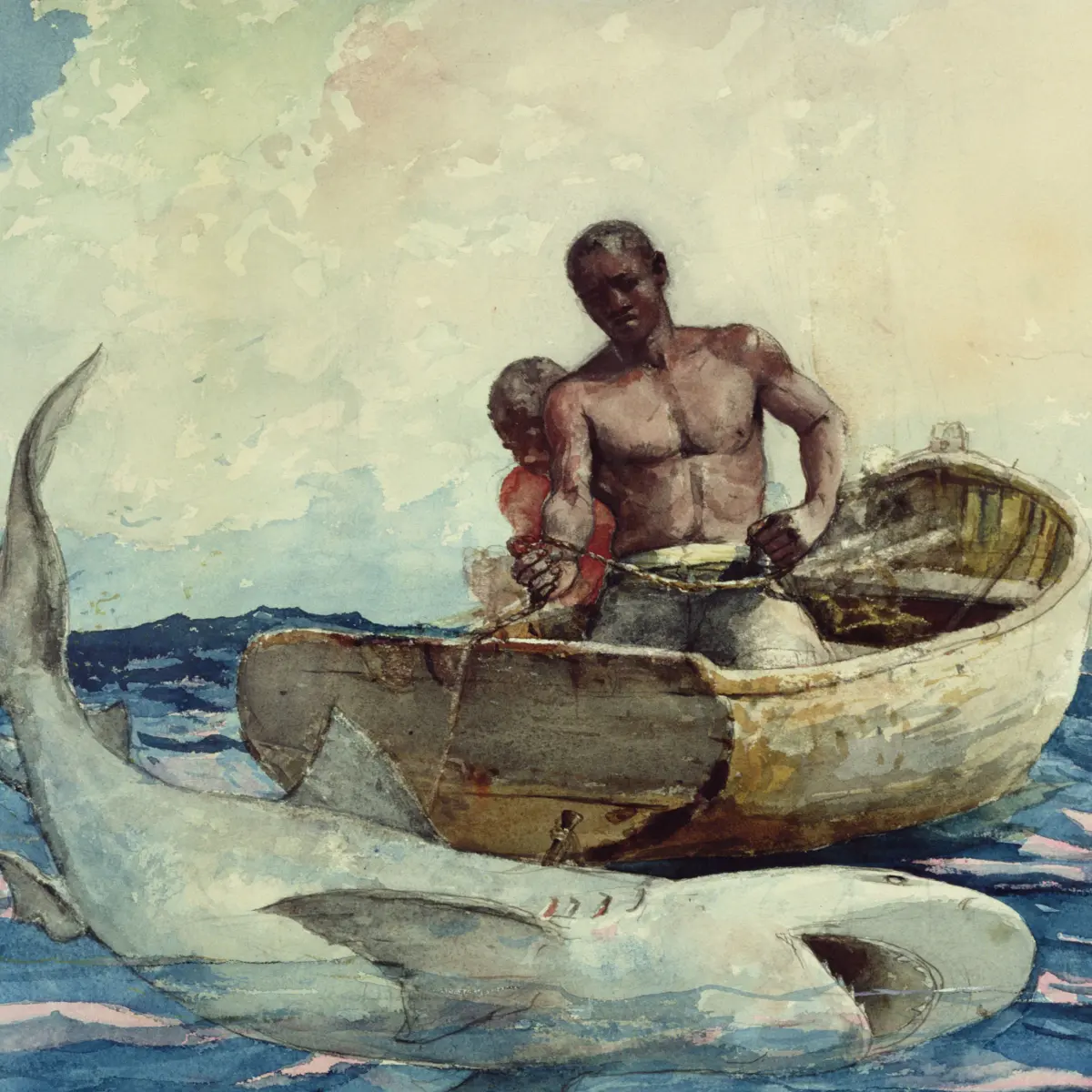
Homer is widely considered the artist who elevated watercolor from a medium for sketches to a serious form of fine art. Unlike many of his contemporaries who used watercolors to tint drawings, Homer applied bold, fluid washes and precise brushwork to create finished, exhibition-quality pieces. He traveled extensively to the Caribbean, Florida, and the Adirondacks, using these trips to capture the vibrant light and color of diverse landscapes.
To appreciate his watercolor technique, observe how he utilizes the white of the paper to represent light. He rarely used opaque white paint, preferring instead to leave areas of the paper untouched to create brilliant highlights. When studying his work, follow these steps:
- Identify the unpainted areas of the paper that act as light sources.
- Examine the layering of transparent washes to create depth in the sky or water.
- Note the speed and confidence of his brushstrokes, which suggest movement rather than static detail.
Why are his paintings considered American realism?
Homer’s work is a cornerstone of American realism because it eschews the romanticized, idealized subjects popular in European art of the time. He focused on the dignity of labor, the struggle of humanity against nature, and the authentic experiences of ordinary people. Whether painting fishermen in Cullercoats, England, or hunters in the Maine woods, he presented his subjects with a stoic, objective honesty that resonated with the American spirit.
He avoided moralizing or sentimentalizing his subjects, allowing the viewer to interpret the narrative. His realism was not just about visual accuracy; it was about capturing the essence of a moment. By depicting the harsh realities of life, such as the dangers faced by sailors or the quiet solitude of the wilderness, he created a visual record of the American experience that felt both contemporary and timeless.
Common mistakes when studying Winslow Homer
Many viewers make the mistake of assuming his work is purely documentary or simple landscape painting. While he was a master of observation, his paintings are highly curated compositions designed to evoke specific emotional responses. Another common error is overlooking his early illustrative work, which is essential for understanding the structural discipline he brought to his later, more impressionistic oil paintings.
To gain a deeper understanding of his artistic evolution, avoid these common pitfalls:
- Ignoring the influence of his time as a commercial illustrator on his later compositions.
- Misinterpreting his seascapes as purely decorative rather than studies of human struggle.
- Failing to recognize the technical difficulty of his watercolor methods.
- Overlooking the social context of his post-Civil War paintings.
By focusing on these elements, you can better appreciate how Homer bridged the gap between the detailed traditions of the 19th century and the more expressive, modern movements that would follow in the 20th century. His work remains a vital study in the power of observation and the mastery of light.
Key facts
- Winslow Homer (1836–1910) is widely considered one of the foremost American painters of the 19th century.
- He began his career as a commercial illustrator, notably documenting the American Civil War for Harper's Weekly.
- His transition to watercolor in 1873 revolutionized the medium, elevating it from a sketching tool to a serious exhibition art form.
- Homer is best known for his dramatic, powerful depictions of the Atlantic Ocean and the rugged Maine coastline.
- He lived in relative isolation at Prout’s Neck, Maine, for the final 27 years of his life to focus on his work.
- When viewing his paintings, pay attention to his use of light and shadow, which he used to capture the raw, untamed energy of nature.
The bottom line
Winslow Homer stands as a titan of American art, bridging the gap between 19th-century illustration and modern realism. By evolving from a war correspondent into a master of the sea, he captured the essence of the American spirit and the power of the natural world. His legacy remains defined by his technical innovation in watercolor and his profound, atmospheric depictions of life on the Atlantic coast.
People also ask
Did Winslow Homer have any formal art training?
Homer had very little formal training. He apprenticed at a lithography shop in Boston at age 19 and later took a few night classes at the National Academy of Design, but he largely considered himself self-taught.
What are his most famous paintings?
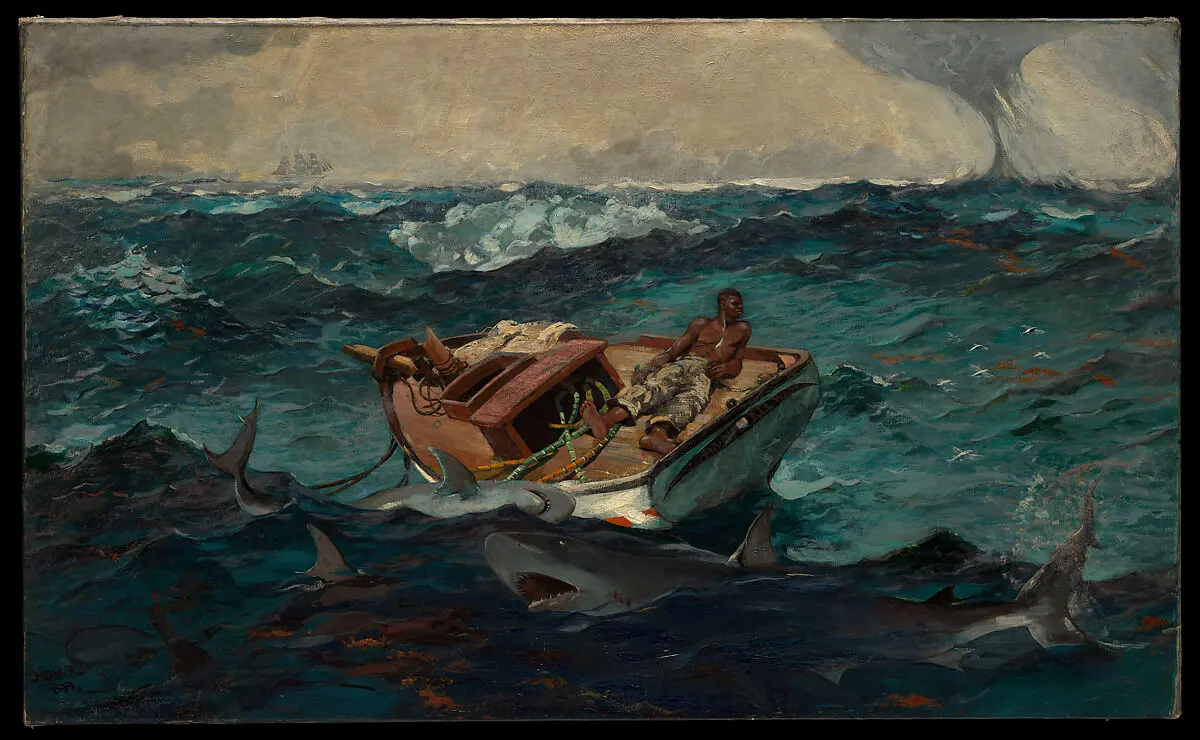
Some of his most celebrated works include The Gulf Stream, Breezing Up (A Fair Wind), and The Life Line. These paintings exemplify his mastery of narrative and his interest in the struggle between humanity and the sea.
How did his time as a war illustrator influence his style?
His experience as a Civil War correspondent taught him to observe scenes with journalistic precision. This background helped him develop a keen eye for human posture and realistic detail that defined his later oil paintings.
Why did he move to Maine?
Homer sought solitude and a direct connection to the natural world. The dramatic cliffs and storms of the Maine coast provided the perfect subject matter for his mature period, allowing him to paint directly from the elements.
How do I identify a Winslow Homer watercolor?
Look for bold, fluid brushwork and a sophisticated use of "white space" where he left the paper unpainted to represent highlights. He often used a technique of wetting the paper beforehand to achieve soft, atmospheric transitions.
What is the main theme of his later work?
His later work focuses on the indifference of nature toward human life. He moved away from the lighter, social scenes of his early career to explore the primal, often dangerous relationship between people and the ocean.
This answer was created with the help of AI research tools and reference sources. Spotted an error? Let us know — we correct mistakes quickly. See our editorial policy.