Why is The Last Supper so famous?
Short answer
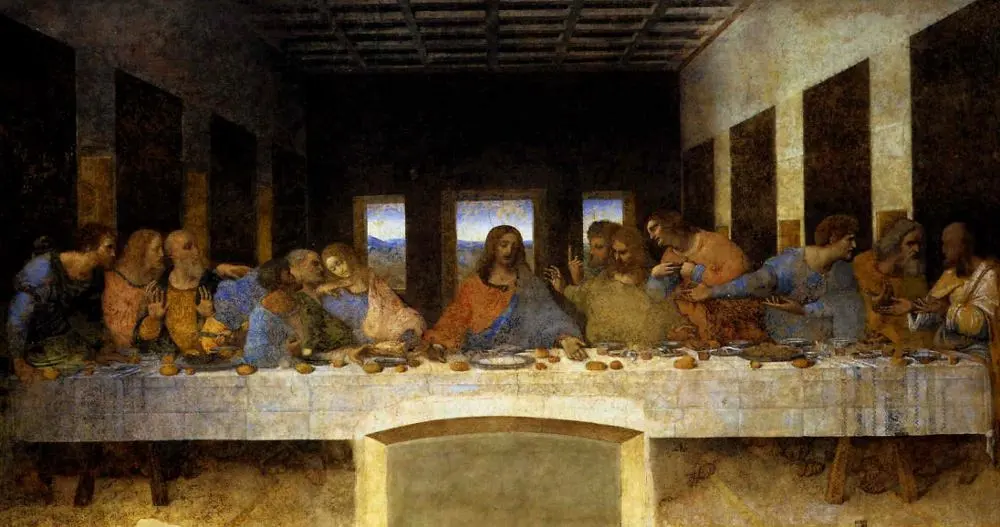
Leonardo da Vinci’s The Last Supper is famous for revolutionizing Western art through its mastery of perspective, psychological depth, and dramatic composition. Painted between 1495 and 1498 in Milan, it captures the precise moment Jesus announces his betrayal. Its technical innovation and emotional resonance have made it an enduring icon of human creativity.
On this page
Why is The Last Supper considered a masterpiece?
Leonardo da Vinci transformed religious painting by moving away from the stiff, formal depictions common in the 15th century. Instead of portraying the apostles as static figures, he captured a dynamic, chaotic reaction to the words, "One of you will betray me." This choice introduced human emotion and psychological realism into high art, setting a new standard for the Renaissance.
The composition is anchored by Jesus at the center, creating a focal point that draws the viewer's eye immediately. Leonardo used linear perspective, with all architectural lines converging behind Christ’s head, to create an illusion of depth on the flat wall of the refectory. This technical precision, combined with the masterful use of light and shadow, gives the scene a lifelike quality that remains influential to artists today.
How do I understand the symbolism in the painting?
The painting is dense with hidden meanings and deliberate choices that reveal the narrative intent of the artist. Each apostle is characterized by a unique reaction, ranging from shock and anger to sorrow and confusion. Leonardo carefully grouped the figures into four sets of three, creating a rhythmic balance that guides the viewer through the emotional narrative.
Key elements to look for when analyzing the work include:
- The placement of Judas Iscariot, who is positioned in shadow, clutching a bag of silver.
- The absence of a traditional halo, which Leonardo omitted to emphasize the humanity of the figures.
- The open window behind Christ, which acts as a natural halo through the use of light.
- The specific hand gestures of each apostle, which reflect their personality and individual response to the betrayal.
Where can I see The Last Supper today?
The painting is located on the north wall of the dining hall at the Convent of Santa Maria delle Grazie in Milan, Italy. Unlike many famous works housed in museums, this piece is a mural painted directly onto the wall. Because of this, it cannot be moved and remains in its original architectural context, which is essential for experiencing the intended perspective.
To view the painting, you must follow strict protocols:
- Book tickets at least three to four months in advance, as they sell out almost immediately.
- Arrive at the convent at least 20 minutes before your scheduled time slot.
- Pass through a climate-controlled airlock designed to protect the fragile paint from external pollutants.
- Spend your allotted 15 minutes observing the details of the mural without using flash photography.
Why is the painting in such poor condition?
The current state of the painting is a result of Leonardo’s experimental technique. Rather than using the traditional buon fresco method, which involves painting onto wet plaster, he used a mixture of tempera and oil on a dry wall. This allowed him to work more slowly and achieve finer detail, but the paint failed to bond properly with the surface.
Within a few decades of its completion, the mural began to flake and peel. Over the centuries, it suffered further damage from humidity, wartime bombing, and multiple well-intentioned but harmful restoration attempts. Today, the work is a shadow of its original brilliance, yet it remains protected by a sophisticated filtration system that prevents further deterioration. What we see now is a delicate balance of original pigment and later restorations.
Common mistakes when studying The Last Supper
Many observers make the mistake of assuming the painting is a traditional fresco. Understanding that it is a tempera-on-stone experiment explains why the surface looks so weathered compared to other works of the same era. Another common error is focusing solely on the central figure without observing the intricate interplay between the apostles, which is where the true narrative genius lies.
When you prepare to study or visit the piece, avoid these common pitfalls:
- Expecting the vibrant colors seen in high-quality art books, which often use digital enhancements.
- Ignoring the surrounding architecture of the refectory, which was designed to align with the painting’s perspective.
- Assuming the painting was intended to be a permanent monument, when Leonardo actually viewed it as a technical challenge.
- Overlooking the historical context of the Sforza family, who commissioned the work to establish their political and religious legacy in Milan.
Key facts
- Leonardo da Vinci painted The Last Supper between 1495 and 1498 on the wall of the Santa Maria delle Grazie monastery in Milan.
- The mural measures approximately 15 by 29 feet, dominating the refectory wall to create the illusion of an extension of the room.
- Leonardo experimented with a dry tempera and oil mixture instead of traditional wet fresco, which led to the paint flaking off within his own lifetime.
- The composition captures the exact moment Jesus announces that one of his disciples will betray him, showing the immediate emotional reaction of the group.
- The work uses linear perspective, with all architectural lines converging at the right temple of Jesus to draw the viewer's eye to the center.
- To view the original in Milan, you must book tickets months in advance, as only small groups are allowed inside for 15-minute intervals to protect the fragile surface.
The bottom line
The fame of The Last Supper stems from Leonardo da Vinci’s revolutionary approach to human psychology and spatial geometry. By abandoning stiff, traditional religious iconography, he transformed a biblical narrative into a dramatic, lifelike event. Its enduring status is maintained by its technical brilliance, the mystery surrounding its rapid decay, and its survival through centuries of conflict, making it a definitive masterpiece of the High Renaissance.
People also ask
Why is the painting in such poor condition?
Leonardo’s experimental technique failed to bond with the stone wall, causing the paint to deteriorate almost immediately. Centuries of humidity, war damage, and amateur restoration attempts further degraded the original pigment.
Is there a hidden code or secret message in the painting?
While popular fiction suggests hidden musical notes or cryptic symbols, art historians emphasize that the "secrets" are actually deliberate mathematical compositions. The symmetry and perspective were designed to evoke divine order rather than conceal occult meanings.
Where is the original painting located?
It remains in its original location on the wall of the refectory at the Convent of Santa Maria delle Grazie in Milan, Italy. It was never moved, despite the building suffering significant damage during World War II.
What do the gestures of the disciples represent?
Each disciple is depicted with a unique physical reaction that reflects his personality and reaction to the news of betrayal. Leonardo used these gestures to create a dynamic narrative flow across the long horizontal table.
How did the painting survive the bombing of Milan?
During World War II, the refectory was hit by an Allied bomb in 1943. The wall containing the painting was protected by sandbags and scaffolding, which prevented the mural from being destroyed by the blast.
Can I take photographs of the painting?
Photography is strictly prohibited inside the refectory to protect the mural from the damage caused by camera flashes. Visitors must keep their cameras and phones stored away during their brief viewing window.
This answer was created with the help of AI research tools and reference sources. Spotted an error? Let us know — we correct mistakes quickly. See our editorial policy.