Why is The Swing by Fragonard so famous?
Short answer
Jean-Honoré Fragonard’s The Swing (1767) is famous for epitomizing the frivolous, erotic spirit of the French Rococo era. Its technical brilliance, vibrant color palette, and scandalous narrative—featuring a hidden lover catching a glimpse of a lady’s undergarments—capture the decadence of the pre-revolutionary aristocracy, making it an enduring icon of art history.
On this page
Why is The Swing so famous?
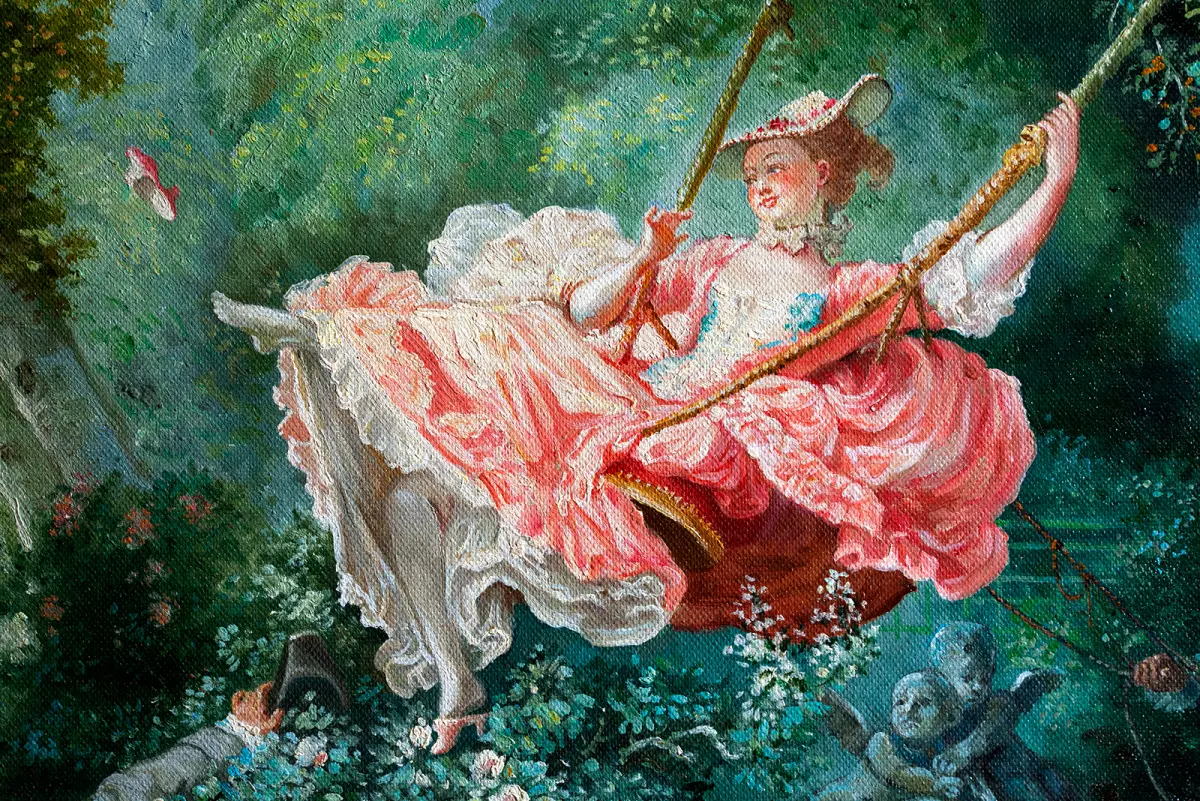
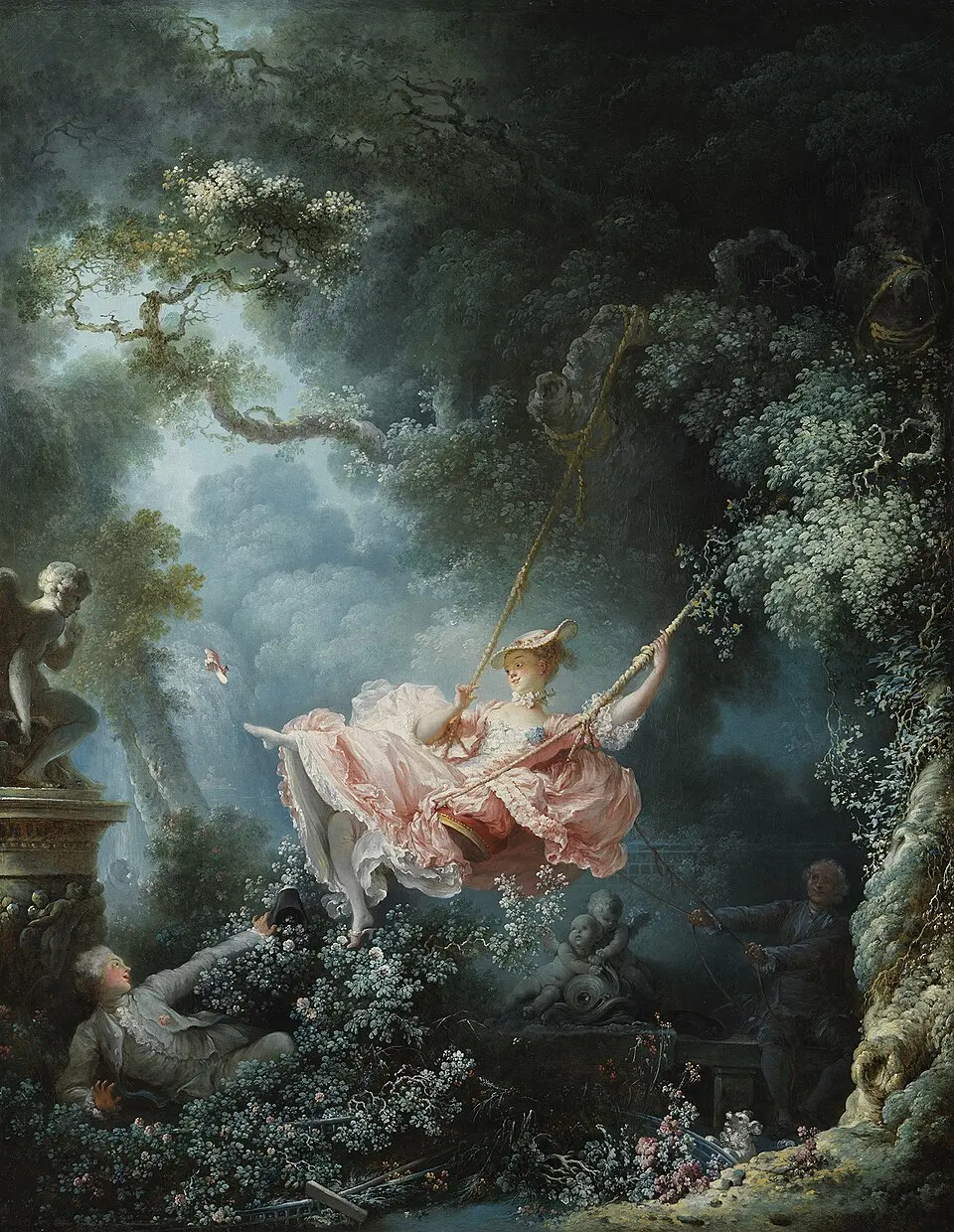
The Swing is widely considered the quintessential masterpiece of the Rococo movement, a style defined by playfulness, lightheartedness, and decorative elegance. Painted in 1767, the work depicts a young woman in a lush garden being pushed on a swing by an elderly bishop, while her secret lover hides in the bushes below. The composition is famous for its technical mastery, particularly the way Fragonard uses soft, dappled light and a pastel color palette to create an atmosphere of dreamy, idyllic sensuality.
Beyond its aesthetic appeal, the painting is celebrated for its narrative wit and social symbolism. It captures the illicit desires and clandestine romances that characterized the French court under Louis XV. By juxtaposing the innocence of a garden setting with the overt eroticism of the lady kicking off her slipper, Fragonard created a visual shorthand for the libertine lifestyle of the 18th-century French elite. This blend of technical skill and provocative storytelling has ensured its status as one of the most recognizable paintings in the Western canon.
How to analyze the symbolism in the painting
To truly understand the fame of The Swing, one must decode the specific symbols Fragonard included to enhance the painting’s erotic tension. Every element in the garden serves a narrative purpose, guiding the viewer’s eye toward the central act of flirtation.
- The lady’s flying slipper: Represents a loss of modesty and the surrender of virtue.
- The statue of Cupid: Placed to the left, the figure holds a finger to his lips, signaling the need for secrecy.
- The two cherubs: Located near the dolphin statue, they represent the presence of love and the complications of romantic entanglement.
- The overgrown garden: Symbolizes the untamed, natural urges of the lovers, contrasting with the structured life of the aristocracy.
When viewing the work, look for how these symbols interact with the lighting. The bright light on the woman’s dress draws immediate attention, while the dark, shadowed bushes provide the perfect cover for the lover. This contrast highlights the central theme of the work: the intersection of public appearance and private indulgence.
What is the historical context of the Rococo era
The Rococo period emerged in the early 18th century as a reaction against the rigid, formal grandeur of the Baroque style favored by Louis XIV. It was a time when the French aristocracy moved away from the heavy atmosphere of Versailles to the more intimate, private townhouses known as hôtels particuliers in Paris. This shift in lifestyle demanded a new kind of art that was lighter, more intimate, and focused on pleasure rather than state power or religious piety.
Fragonard was a master of this transition, utilizing fluid brushwork and a soft palette to reflect the fleeting nature of pleasure. The era was marked by a fascination with pastoral themes and the "fête galante," a genre depicting the nobility in outdoor settings. The Swing stands as the apex of this trend, capturing the final, glittering moments of an era before the French Revolution fundamentally altered the social and political landscape of Europe.
Common mistakes when interpreting Fragonard’s work
Many viewers make the mistake of viewing The Swing through a modern lens, assuming it is merely a lighthearted portrait. However, failing to recognize the underlying social commentary can lead to a misunderstanding of the artist's intent. Another common error is ignoring the role of the elderly man pushing the swing, who represents the oblivious authority of the church or the older generation.
To avoid these pitfalls, follow these analytical steps:
- Research the specific commission: The painting was requested by a courtier who explicitly asked to be depicted looking up his mistress’s skirt.
- Examine the brushwork: Fragonard’s technique is incredibly loose and spontaneous, which was a radical departure from the polished, academic style of his predecessors.
- Compare with other artists: Look at the works of François Boucher, Fragonard’s teacher, to see how the Rococo style evolved from more formal subjects to these highly stylized, eroticized scenes.
By focusing on these details, you can appreciate the painting as a sophisticated piece of social satire rather than just a decorative object.
Where to see The Swing today
The Swing is currently housed in the Wallace Collection in London, a museum renowned for its exceptional collection of 18th-century French paintings and decorative arts. The painting is displayed in a setting that mimics the opulent, private atmosphere of the period, allowing visitors to experience the work in a context that honors its original purpose. Seeing the painting in person reveals the scale and texture of the paint that digital reproductions often fail to capture.
The Wallace Collection provides an excellent opportunity to view other works from the same period, allowing for a deeper understanding of the artistic environment in which Fragonard thrived. Whether you are an art historian or a casual visitor, observing the work in its designated gallery offers a unique window into the past. It remains one of the most visited and discussed pieces in the museum, serving as a permanent reminder of the artistic brilliance and social complexities of the 18th century.
Key facts
- Painted in 1767, The Swing is the quintessential masterpiece of the French Rococo movement.
- The painting features a young woman on a swing, kicking her shoe toward a hidden lover while her elderly husband pushes the swing.
- Jean-Honoré Fragonard used a soft, pastel color palette and loose brushwork to create a dreamlike, lighthearted atmosphere.
- The work was commissioned by a courtier named Baron de Saint-Julien, who requested a portrait of his mistress being pushed by a bishop.
- It is currently housed in the Wallace Collection in London, where it remains one of the most visited items in the gallery.
- When viewing the painting, look for the statue of Cupid to the left, which holds a finger to its lips, signaling the secrecy of the affair.
The bottom line
The Swing remains famous because it perfectly encapsulates the spirit of the French Rococo era: playful, erotic, and visually opulent. By blending technical mastery with a scandalous narrative, Fragonard created a timeless image of aristocratic indulgence. It serves as both a beautiful decorative object and a window into the complex social dynamics and moral attitudes of 18th-century France, captivating audiences centuries after its creation.
People also ask
What does the flying shoe symbolize in the painting?
The shoe flying off the woman’s foot is a classic symbol of erotic surrender and the loss of maidenly virtue. It directs the viewer's eye toward the lover hidden in the bushes, emphasizing the illicit nature of the encounter.
Why is the Rococo style considered controversial?
Rococo art was often criticized by Enlightenment thinkers for being frivolous, decadent, and overly focused on the pleasures of the aristocracy. Critics viewed it as a symbol of the moral decay that eventually led to the French Revolution.
Who is the man pushing the swing?
In the painting, the man pushing the swing is the woman’s husband. He is depicted as unaware of the lover’s presence, highlighting the theme of infidelity that was popular in 18th-century French art.
What techniques did Fragonard use to create depth?
Fragonard utilized sfumato, a technique of blurring edges, combined with dramatic lighting to draw the eye into the lush, overgrown garden. This creates a sense of voyeuristic intimacy, as if the viewer is spying on a private moment.
How did the French Revolution affect the painting’s reputation?
During the Revolution, the painting was viewed as a symbol of the corrupt and self-indulgent lifestyle of the French nobility. Its popularity waned for decades before being rediscovered and celebrated as a pinnacle of artistic expression in the 19th century.
Where can I see the painting in person?
The painting is part of the permanent collection at the Wallace Collection in London. It is displayed in a room dedicated to 18th-century French paintings, allowing visitors to see it alongside similar works from the period.
This answer was created with the help of AI research tools and reference sources. Spotted an error? Let us know — we correct mistakes quickly. See our editorial policy.