What is John Singer Sargent known for?
Short answer
John Singer Sargent is celebrated as the premier portraitist of the Gilded Age, renowned for his technical brilliance and ability to capture the elegance of high society. Beyond his iconic oil portraits, he was a prolific watercolorist and muralist, leaving a vast legacy of over 900 oil paintings and 2,000 watercolors.
On this page
Why is John Singer Sargent considered a master of portraiture?
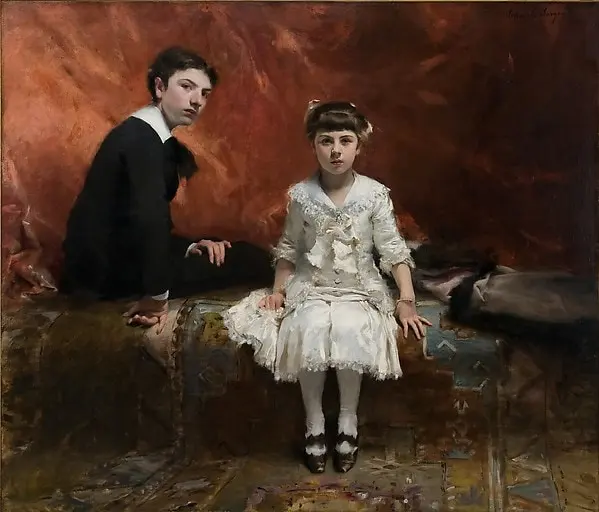
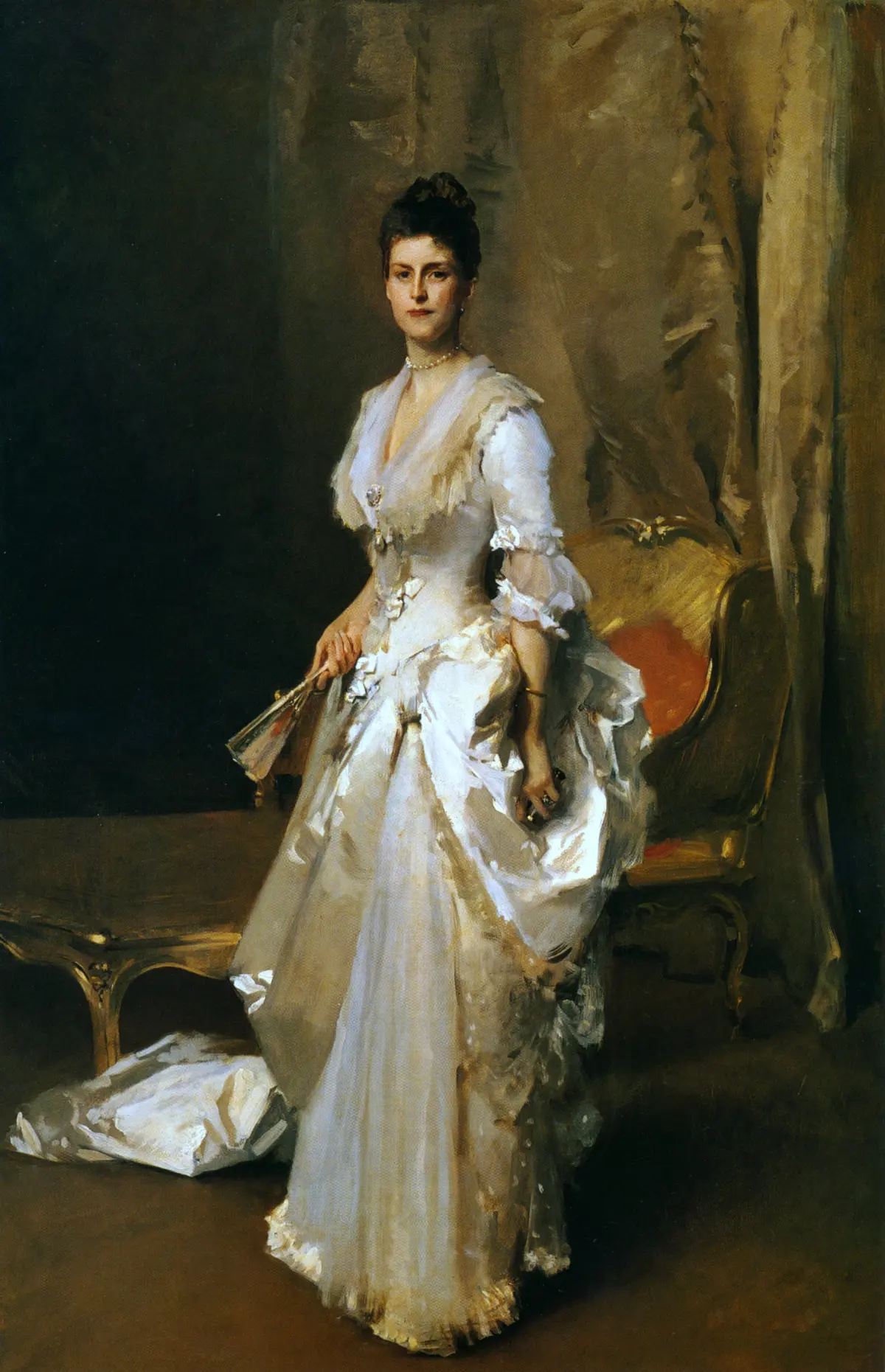
Sargent achieved international fame by painting the elite of Europe and America during the late 19th and early 20th centuries. His style is characterized by a fluid, bravura brushwork that conveys a sense of effortless spontaneity while maintaining a rigorous structural integrity. He possessed an uncanny ability to capture the psychological depth and social standing of his sitters, often using dramatic lighting and bold poses to emphasize their status.
His most famous work, Madame X (1884), remains a defining example of his aesthetic. By depicting Virginie Gautreau in a daring black dress with a plunging neckline, Sargent pushed the boundaries of contemporary fashion and social propriety. Although the painting initially caused a scandal in Paris, it solidified his reputation as an artist who could transform a subject into a timeless icon. His portraits are not merely records of appearance but sophisticated character studies that continue to influence modern figurative painting.
How to identify a Sargent painting
To recognize a Sargent work, look for his signature "loose" brushwork, which appears abstract up close but resolves into precise detail from a distance. He frequently employed a technique known as alla prima, or wet-on-wet painting, which allowed him to complete sections of a canvas in a single session. This method gives his portraits their signature energy and vibrant, light-filled surfaces.
When examining his compositions, consider these key identifying features:
- Dramatic use of chiaroscuro to define facial features and fabric textures.
- A sophisticated, often muted color palette punctuated by vibrant accents.
- Elegant, elongated poses that suggest movement or momentary stillness.
- Highly detailed treatment of hands and accessories, contrasted against looser backgrounds.
- The inclusion of luxurious textiles like satin, velvet, and lace, rendered with minimal strokes.
What are the characteristics of his watercolors?
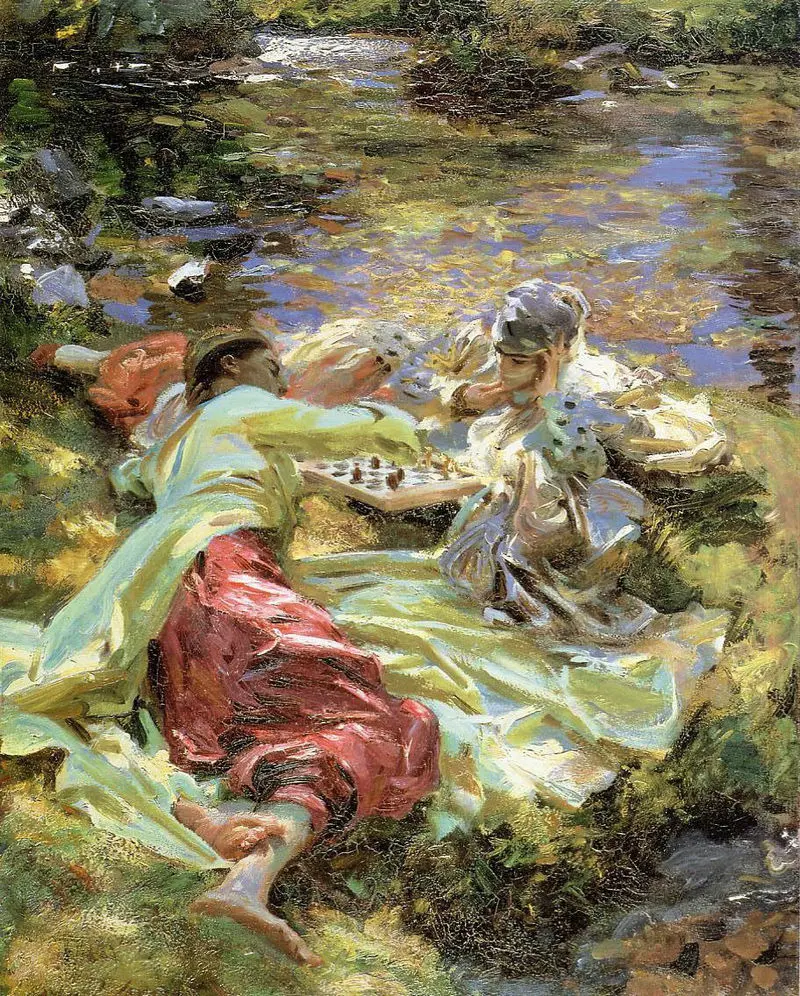
While Sargent is best known for his formal portraits, his watercolors reveal a more experimental and intimate side of his practice. During his travels through Italy, Spain, and the Middle East, he produced thousands of landscapes and architectural studies. These works demonstrate his mastery of light and shadow, often capturing the blinding sun of the Mediterranean or the cool, damp atmosphere of Venetian canals.
Unlike his commissioned portraits, these watercolors were often painted for his own pleasure. They are characterized by:
- Rapid, decisive applications of pigment that prioritize light over line.
- The use of "white space" left by the paper to represent the brightest highlights.
- A focus on ephemeral subjects like laundry drying on a line or the reflection of light on water.
- A sense of immediacy that contrasts sharply with the formal constraints of his studio portraiture.
Common mistakes when analyzing his work
A frequent error is assuming that Sargent’s portraits were purely photographic or realistic. In reality, he frequently manipulated the proportions of his sitters to enhance the composition, often elongating necks or adjusting limbs to create a more harmonious silhouette. He was not a traditionalist who sought to mimic reality; he was a stylist who sought to improve upon it for the sake of the image.
Another mistake is overlooking his significant contributions to public art. Many viewers are unaware that Sargent spent the latter part of his career working on massive mural cycles for the Boston Public Library and the Museum of Fine Arts. These works, influenced by Renaissance masters, show his ability to manage large-scale narrative compositions. Ignoring his murals misses a crucial dimension of his artistic evolution from a fashionable portraitist to a serious historical and religious painter.
How to study Sargent for artistic improvement
For artists looking to emulate Sargent’s technique, the most effective approach is to focus on "seeing" in terms of masses and values rather than lines. Start by practicing the simplification of complex forms into three or four distinct tonal values. This prevents the common trap of over-rendering details before the foundation of the painting is established.
Follow these steps to practice his approach:
- Limit your palette to a few earth tones to master value relationships before introducing color.
- Use large, flat brushes to force yourself to work in big shapes rather than tiny details.
- Practice painting "edges," ensuring that some parts of the subject blend into the background while others remain sharp.
- Limit your painting sessions to a set time frame to encourage efficiency and discourage overworking the canvas.
- Study his sketches to understand how he prioritized the most essential elements of a scene.
By focusing on the economy of strokes, you can begin to capture the same spirit that made Sargent the most sought-after painter of his generation.
Key facts
- John Singer Sargent (1856–1925) was the leading portrait painter of his generation, celebrated for his technical virtuosity and fluid brushwork.
- He produced approximately 900 oil paintings and over 2,000 watercolors throughout his prolific career.
- His most famous work, Madame X (1884), caused a scandal in Paris due to the subject's daring, low-cut gown and pale skin.
- To capture his signature "alla prima" style, avoid over-blending; place each brushstroke decisively and leave it undisturbed to maintain freshness.
- Sargent traveled extensively, often painting landscapes and architectural studies in Venice, the Middle East, and the American West.
- When painting portraits, focus on the "big shapes" of light and shadow before adding fine details to ensure the figure maintains a solid, realistic presence.
The bottom line
John Singer Sargent remains a towering figure in art history, revered for his ability to capture the elegance and character of the Edwardian elite. His legacy rests on a unique synthesis of classical discipline and modern, spontaneous brushwork. By studying his approach to light, color, and composition, artists can learn to balance technical precision with a sense of vibrant, living energy in their own creative work.
People also ask
Why did Sargent stop painting portraits in 1907?
Sargent grew weary of the social demands and perceived superficiality of commissioned portraiture. He shifted his focus toward landscapes, watercolors, and large-scale mural commissions for institutions like the Boston Public Library.
Was Sargent an Impressionist painter?
While he was friends with Claude Monet and adopted some Impressionist techniques, Sargent remained primarily a realist. He balanced loose, painterly surfaces with a traditional commitment to accurate drawing and structural integrity.
What materials did Sargent prefer for his watercolors?
He favored heavy-weight, rough-textured paper and high-quality pigments that allowed him to layer washes quickly. He often used wax resist or dry-brush techniques to create highlights and texture in his outdoor scenes.
How did Sargent treat his subjects during sittings?
He was known for his intense concentration and often stood several feet away from the canvas to view the entire composition at once. He frequently requested that sitters remain still for hours, sometimes requiring them to return for dozens of sessions.
Where can I see his major mural works?
His most significant mural cycles are located in the Boston Public Library and the Museum of Fine Arts, Boston. These expansive, narrative-driven pieces showcase his transition from portraiture to complex, allegorical storytelling.
Did Sargent ever paint himself?
Yes, he painted several self-portraits, including a notable commission for the Uffizi Gallery in Florence. These works reveal his introspective nature and his mastery of capturing psychological depth through subtle lighting and expression.
This answer was created with the help of AI research tools and reference sources. Spotted an error? Let us know — we correct mistakes quickly. See our editorial policy.