Why is Wanderer above the Sea of Fog so famous?
Short answer
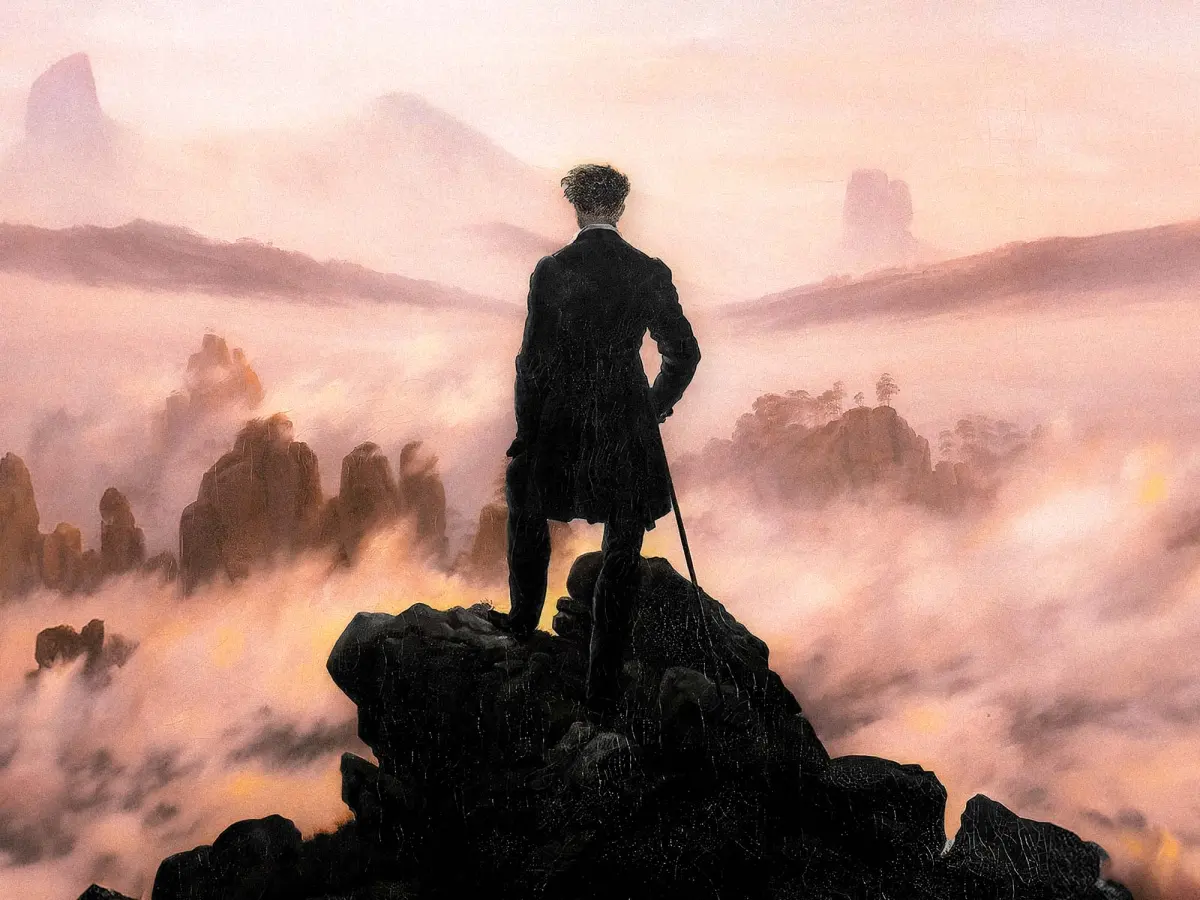
Caspar David Friedrich’s 1818 masterpiece, Wanderer above the Sea of Fog, is iconic because it perfectly encapsulates the Romantic movement’s focus on individual introspection and the sublime power of nature. Its composition, featuring a lone figure surveying a vast, mist-covered landscape, serves as a universal symbol for human contemplation, ambition, and existential mystery.
On this page
Why is Wanderer above the Sea of Fog so famous?
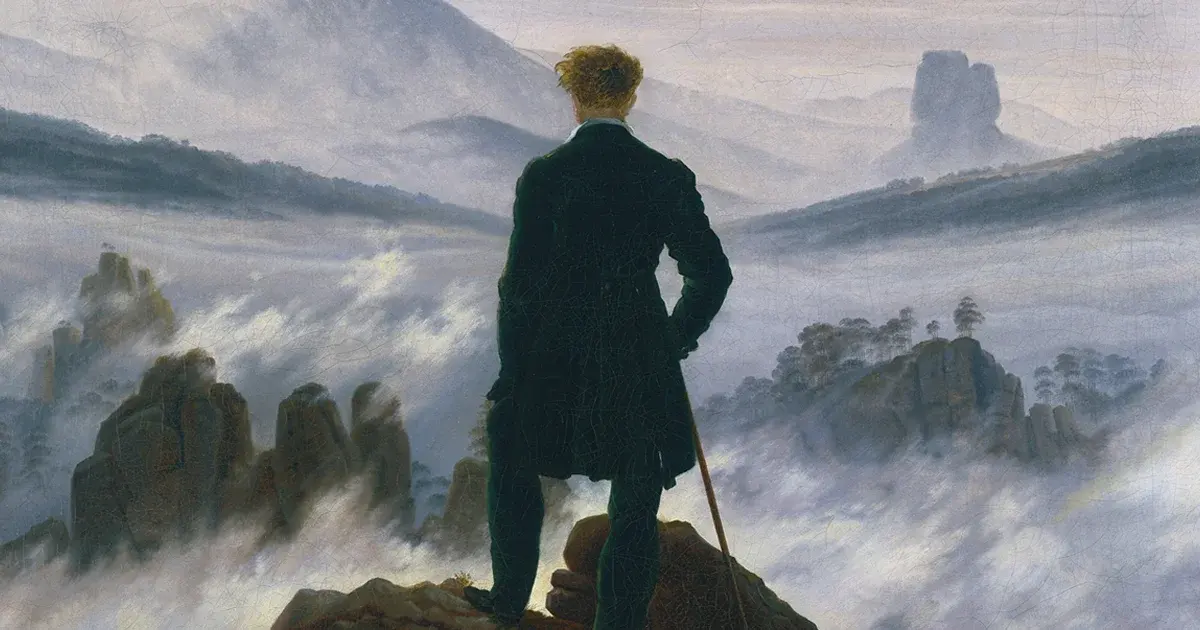
The painting resonates globally because it captures the essence of the "Rückenfigur," a compositional technique where a figure is seen from behind. By obscuring the subject's face, Friedrich invites the viewer to step into the wanderer’s shoes and experience the landscape through their own perspective. This anonymity allows the painting to transcend its 19th-century origins, making it a mirror for anyone pondering their place in a vast, uncertain world.
Beyond its technical execution, the work is a definitive statement of Romanticism. During the early 1800s, artists shifted away from Enlightenment logic toward emotional intensity and the awe-inspiring power of the natural world. The jagged, mountainous terrain and the swirling, ethereal fog represent the "sublime"—a concept describing nature as both beautiful and terrifying. This emotional depth ensures the painting remains a staple of art history curricula and a frequent reference in contemporary pop culture.
How to analyze the composition of the painting
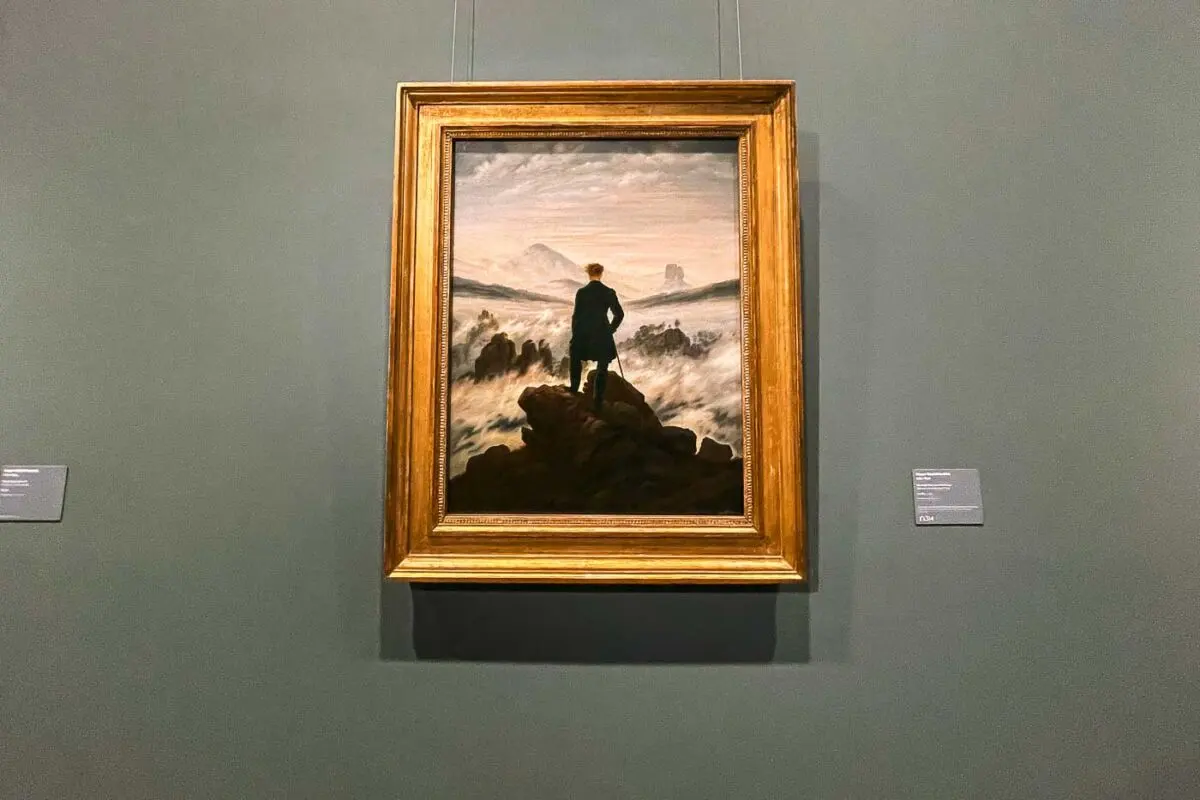
To understand the painting's impact, one must look at how Friedrich uses geometry to guide the eye. The wanderer stands on a central, triangular rock formation that acts as an anchor for the entire composition. This creates a clear focal point, while the surrounding layers of fog and distant peaks create a sense of infinite depth. The balance between the stable foreground and the chaotic background highlights the tension between human presence and the uncontrollable wild.
When viewing the painting, consider these elements to deepen your appreciation:
- The vertical orientation: The tall, narrow canvas emphasizes the height of the mountain and the scale of the climb.
- The color palette: Friedrich uses cool blues, grays, and whites to convey a sense of cold, atmospheric distance.
- The contrast: The dark, well-defined silhouette of the man contrasts sharply with the soft, blurred edges of the clouds.
- The perspective: The low horizon line forces the viewer to look up, reinforcing the feeling of being small in a vast environment.
What is the historical context of the work?
Friedrich painted this piece in 1818, a period of significant political and social change in Germany. Following the Napoleonic Wars, there was a surge in German nationalism and a growing interest in the rugged landscapes of the Elbe Sandstone Mountains. The wanderer is often interpreted as a symbol of the German spirit—resilient, introspective, and searching for a new identity amidst the remnants of the old world.
The painting also reflects the era's fascination with the "heroic individual." Unlike earlier art that focused on religious or aristocratic figures, Friedrich elevated the ordinary traveler to a status of profound importance. This shift mirrored the rise of individualism in European philosophy, where the human mind was seen as the primary lens through which reality is constructed. By placing a solitary man at the summit, Friedrich celebrated the human capacity to confront the unknown and seek meaning in solitude.
How to visit the painting in person
If you wish to see the original work, you must travel to the Hamburger Kunsthalle in Hamburg, Germany. The museum houses one of the world's most significant collections of 19th-century art, with Friedrich’s work serving as a centerpiece. Because the painting is a national treasure, it is rarely loaned out, making a trip to Hamburg the most reliable way to experience its true scale and texture.
To ensure a successful visit, follow these steps:
- Check the museum’s official website for current exhibition schedules to confirm the painting is on display.
- Book your tickets in advance to avoid long queues during peak tourist seasons.
- Plan your visit for a weekday morning when the galleries are typically less crowded.
- Allow yourself at least thirty minutes to sit in front of the piece, as its impact is best felt through quiet observation rather than a quick glance.
Common mistakes when interpreting the painting
A frequent error is assuming the figure is a specific historical person, such as Napoleon or a famous philosopher. In reality, art historians generally agree that the wanderer is an idealized construct rather than a portrait of a specific individual. Attributing a singular identity to the subject limits the painting's power, as its primary strength lies in its ability to represent any person—or no one at all—facing the vastness of existence.
Another common mistake is focusing solely on the man while ignoring the landscape. Friedrich was a master of landscape painting, and the terrain shown is a composite of several locations in the Saxon Switzerland region. The mountains are not merely a backdrop; they are an active participant in the narrative, representing the obstacles and mysteries of life. To truly understand the work, you must view the man and the mountain as a singular, inseparable entity that defines the human condition.
Key facts
- Caspar David Friedrich painted Wanderer above the Sea of Fog in 1818 during the height of the Romantic movement.
- The painting features a lone man standing on a jagged precipice, looking out over a dense, swirling landscape of mist and mountain peaks.
- It is currently housed in the Hamburger Kunsthalle museum in Hamburg, Germany.
- The work measures approximately 94.8 centimeters by 74.8 centimeters, making it smaller than many viewers expect.
- The figure is painted from behind, a technique known as Rückenfigur, which invites the viewer to step into the wanderer’s shoes.
- To appreciate the painting, focus on the contrast between the sharp, detailed foreground rocks and the soft, ambiguous background clouds.
The bottom line
Wanderer above the Sea of Fog remains an iconic masterpiece because it perfectly captures the human desire to confront the infinite. By using the Rückenfigur technique, Friedrich transforms a static canvas into an immersive psychological experience. It serves as a timeless reminder of our smallness in the face of nature’s vastness, inviting every viewer to contemplate their own journey through the uncertainties of life and existence.
People also ask
Who is the man in the painting?
The figure is widely believed to be Colonel Friedrich Gotthard von Steinkist, a high-ranking forest official, though many scholars argue it serves as a self-portrait or a universal symbol of humanity.
What does the sea of fog represent?
The fog symbolizes the mysteries of the future, the unknown, and the sublime power of nature that transcends human understanding.
Is the landscape based on a real location?
Friedrich created a composite landscape by sketching various rock formations in the Elbe Sandstone Mountains of Saxony and Bohemia.
What is the significance of the Romantic art movement?
Romanticism emphasized intense emotion, individualism, and the awe-inspiring majesty of the natural world over the strict logic of the Enlightenment.
Why is the figure facing away from the viewer?
By concealing the subject's face, the artist prevents the viewer from focusing on a specific person, allowing them to project their own thoughts and feelings into the scene.
How should one interpret the composition?
The triangular structure of the man’s stance creates a sense of stability, while the vast, chaotic fog provides a sense of infinite scale and spiritual depth.
This answer was created with the help of AI research tools and reference sources. Spotted an error? Let us know — we correct mistakes quickly. See our editorial policy.