What is an illuminated manuscript?
Short answer
An illuminated manuscript is a handwritten book from the Middle Ages or Renaissance decorated with gold, silver, or vibrant pigments. The term "illumination" refers to the literal light reflected by gold leaf applied to the pages. These documents were primarily religious texts, meticulously crafted by monks and professional scribes on animal-skin parchment.
On this page
What defines an illuminated manuscript?
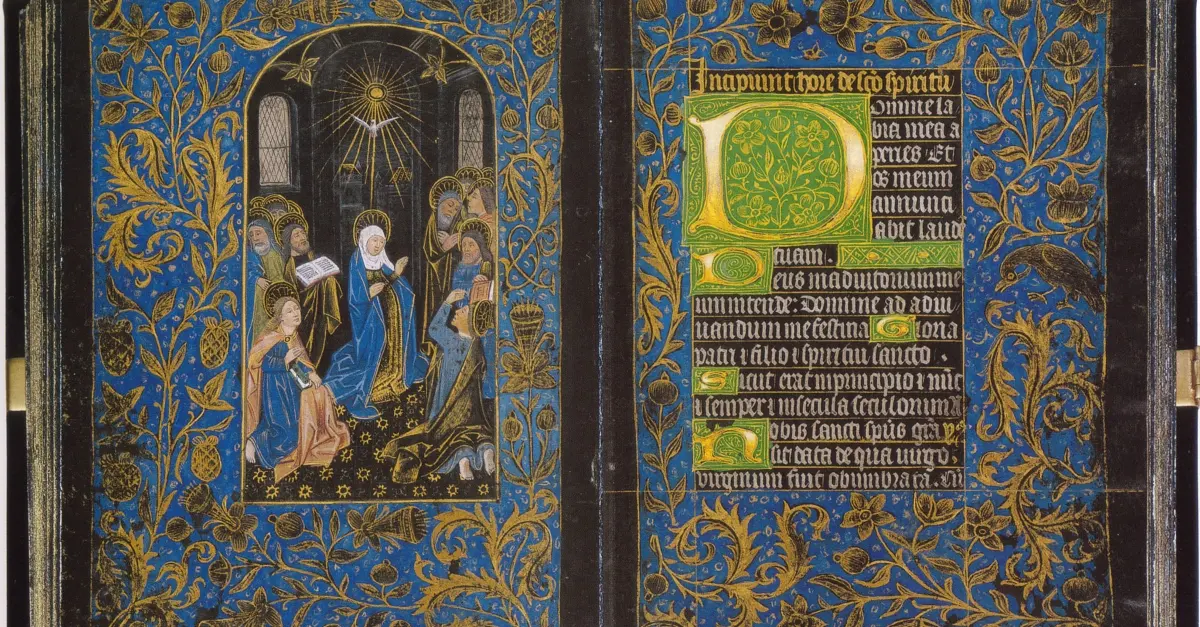
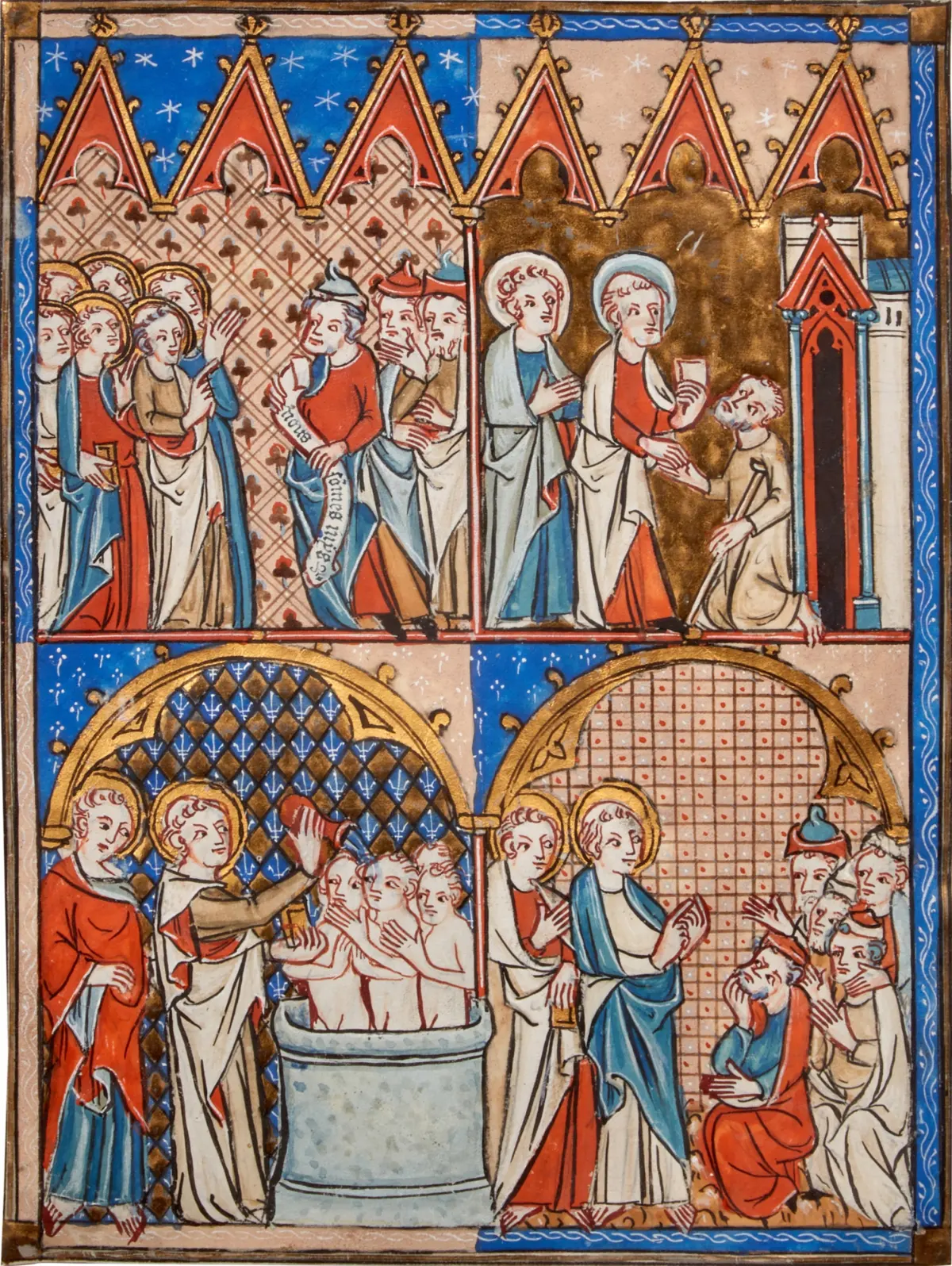
An illuminated manuscript is defined by its physical composition and artistic embellishment. Unlike modern printed books, these volumes were written by hand on vellum or parchment, which are prepared animal skins. The "illumination" comes from the application of precious metals, such as gold or silver leaf, which catch the light and make the pages appear to glow.
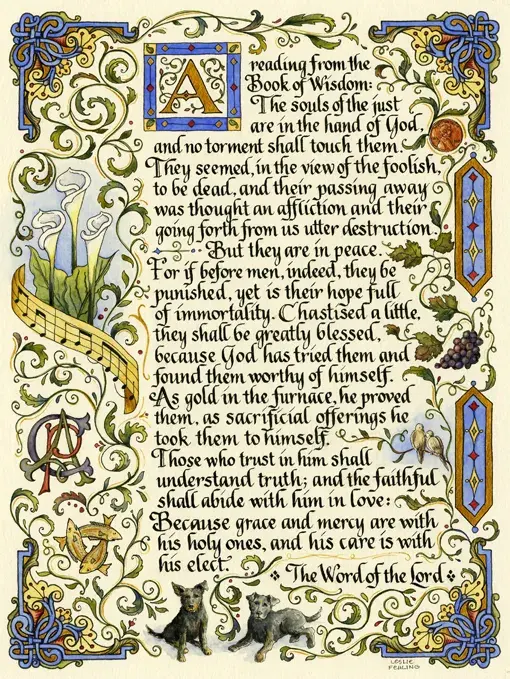
Beyond the metallic accents, these manuscripts feature intricate illustrations known as miniatures, elaborate borders, and historiated initials. A historiated initial is a large, decorative letter at the start of a paragraph that contains a small scene or figure related to the text. These elements were not merely decorative; they served to guide the reader through complex religious narratives and emphasize the spiritual importance of the written word.
How were illuminated manuscripts made?
The production of a manuscript was a labor-intensive, collaborative process that could span several years. It began with the preparation of the parchment, followed by the ruling of lines to ensure uniform text. Scribes would then carefully copy the text, leaving intentional gaps for the illuminators to fill with artwork.
The creation process followed a precise sequence:
- Scribes copied the text using iron gall ink and quill pens.
- Illuminators sketched the outlines of images and decorative borders.
- Gold leaf was applied using a sticky base known as gesso or bole.
- Pigments made from ground minerals, plants, and insects were painted over the designs.
- The final pages were bound together between wooden boards covered in leather.
Artists often used expensive materials like lapis lazuli for blue pigments, which added immense value to the finished object.
Why were illuminated manuscripts created?
Most illuminated manuscripts were produced for religious purposes, acting as essential tools for devotion and liturgy. Monasteries were the primary centers of production for centuries, as monks viewed the copying of sacred texts as an act of prayer. These books were used in churches for services or by individuals for private meditation.
During the later Middle Ages, the demand for manuscripts shifted toward secular settings. Wealthy nobility and royals began commissioning personalized prayer books, known as Books of Hours, as status symbols. These private commissions allowed for more creative freedom, often featuring portraits of the patrons themselves alongside biblical figures. The transition from monastic scriptoria to professional urban workshops allowed for a wider variety of styles and subjects, including courtly romances, historical chronicles, and scientific treatises.
How to identify an authentic manuscript?
Identifying an authentic manuscript requires a keen eye for the materials and techniques used by medieval artisans. One of the most reliable indicators is the texture and quality of the support material. Genuine parchment has a distinct grain and irregular edges, as it was cut from the skins of calves, sheep, or goats.
When examining a manuscript, look for these specific characteristics:
- The presence of pricking marks along the margins, used by scribes to guide their lines.
- Variations in ink density that indicate the natural flow of a quill pen.
- The three-dimensional quality of gold leaf, which often sits slightly raised above the surface of the page.
- The use of natural pigments that may have faded or oxidized unevenly over several centuries.
- Visible sewing holes or remnants of binding cords along the spine of the pages.
Avoid assuming that any old, hand-drawn book is an illuminated manuscript, as many later imitations exist.
Common mistakes when studying manuscripts?
A frequent error is assuming that all medieval books were created by monks. While monasteries dominated early production, professional lay artists and scribes became the primary producers in the 13th and 14th centuries. These workshops operated like modern businesses, fulfilling commissions for whoever could afford the high costs of parchment and pigments.
Another common mistake is ignoring the context of the text. Readers often focus solely on the visual beauty of the illuminations, overlooking the fact that the text itself was the primary purpose of the book. Understanding the relationship between the written content and the marginal decorations is crucial for interpreting the manuscript's intended message. Finally, do not underestimate the impact of climate on these objects. Manuscripts are highly sensitive to humidity and light, which can cause the delicate pigments to flake or the parchment to warp. Proper preservation requires stable, cool, and dark environments, which is why most surviving examples are kept in climate-controlled museum archives today.
Key facts
- An illuminated manuscript is a handmade book where the text is supplemented with decorations such as initials, borders, and miniature illustrations.
- The term "illuminated" comes from the Latin illuminare, meaning to light up, referring to the use of gold or silver leaf that reflects light.
- Most medieval manuscripts were written on parchment or vellum, which are prepared animal skins from sheep, calves, or goats.
- Scribes used quill pens made from bird feathers, while artists applied pigments made from ground minerals, plants, and insects.
- The Book of Kells, created around 800 CE, is one of the most famous examples of Insular art, featuring intricate Celtic knotwork.
- When attempting to replicate these techniques, avoid using modern acidic inks or paper, as they will degrade the artwork over time.
The bottom line
Illuminated manuscripts represent a pinnacle of medieval craftsmanship, blending sacred text with intricate visual storytelling. By utilizing precious materials like gold leaf and mineral pigments on durable animal skins, medieval scribes and artists created enduring cultural artifacts. Today, these works remain vital for understanding the history of art, religion, and literacy, serving as a testament to the immense patience and skill of their anonymous creators.
People also ask
What is the difference between parchment and vellum?
Parchment is a general term for any animal skin used for writing, while vellum specifically refers to high-quality skin from young calves. Vellum is thinner, smoother, and lighter in color, making it the preferred surface for luxury manuscripts.
How long did it take to produce a single manuscript?
Depending on the complexity, a large manuscript could take months or even years to complete. A single scribe might spend an entire day copying only a few pages of text before an artist began the decorative work.
Why were these books often written in Latin?
Latin served as the universal language of the Roman Catholic Church and the educated elite throughout the Middle Ages. It ensured that the religious and scholarly texts remained accessible to a standardized international audience.
What are the most common colors found in these manuscripts?
Artists frequently used lapis lazuli for deep blue, vermilion for bright red, and orpiment for yellow. Gold leaf was applied using a sticky base called gesso to create a raised, metallic effect that caught the candlelight.
Are these manuscripts still being produced today?
While modern printing has replaced hand-copying for mass production, a small community of calligraphers and artists still practices traditional illumination. These contemporary works are usually created as art pieces or bespoke commissions rather than functional books.
Where can I see original illuminated manuscripts?
Major institutions like the British Library in London, the Morgan Library in New York, and the Vatican Library hold extensive collections. Many of these museums also offer online digital archives that allow you to view high-resolution scans of the pages.
This answer was created with the help of AI research tools and reference sources. Spotted an error? Let us know — we correct mistakes quickly. See our editorial policy.