What is Persian miniature painting?
Short answer
Persian miniature painting is a traditional, highly detailed art form characterized by vibrant colors, intricate patterns, and a unique flattened perspective. Historically used to illustrate literary manuscripts, these small-scale works often depict scenes from epic poetry, royal life, or mythology, utilizing mineral pigments and gold leaf on fine, handmade paper.
On this page
What defines the style of Persian miniature painting?
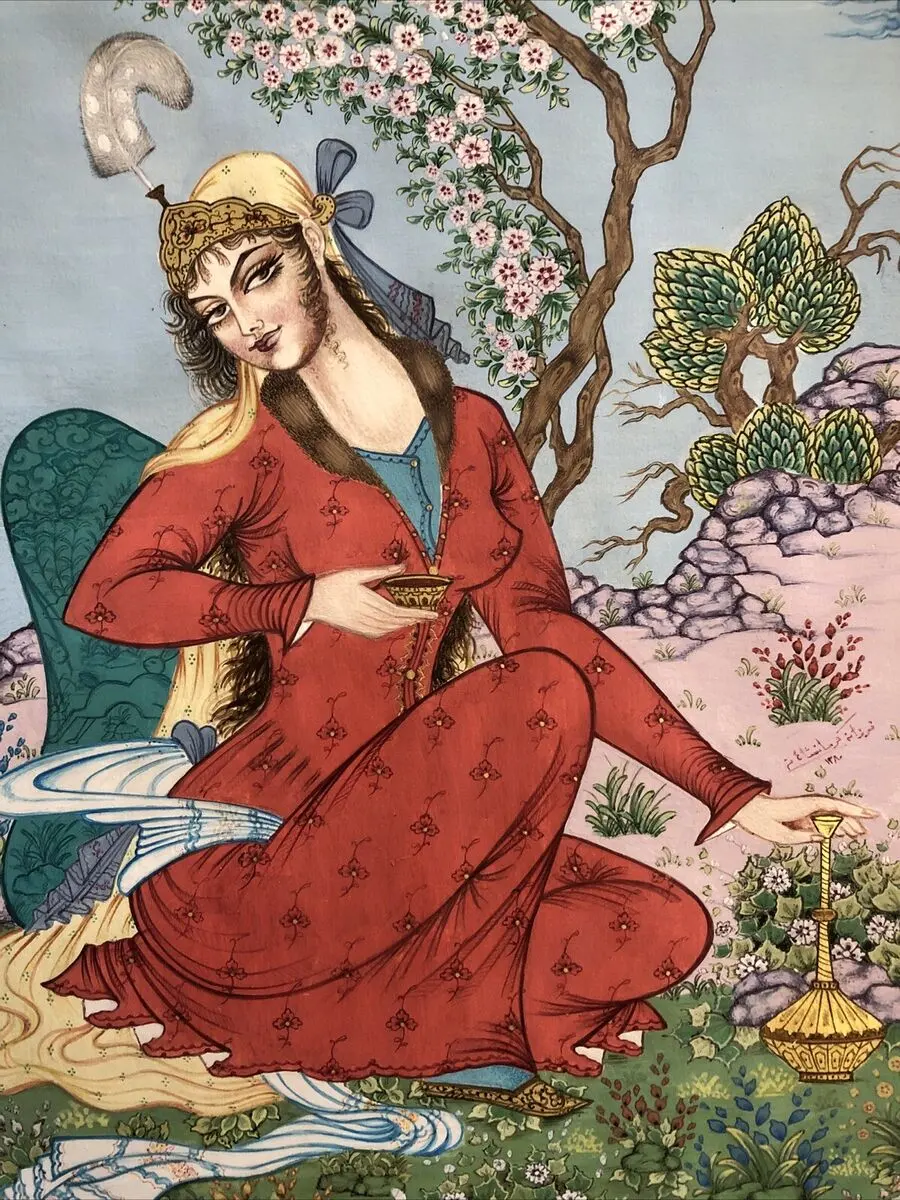
Persian miniature painting is defined by its meticulous attention to detail and a distinct rejection of Western linear perspective. Instead of creating an illusion of depth through vanishing points, artists utilize a "bird's-eye view" or stacked perspective, where figures and landscapes are arranged vertically to fill the entire surface. This approach allows the viewer to see multiple planes of action simultaneously, emphasizing the decorative quality of the composition over spatial realism.
The aesthetic is further distinguished by its use of brilliant, jewel-toned pigments derived from natural minerals. Lapis lazuli provides intense blues, malachite offers rich greens, and cinnabar creates vivid reds. Gold and silver leaf are frequently applied to architectural elements, sky, or clothing to signify wealth and divine light. Figures are typically rendered with delicate, flowing lines, and the surrounding flora and fauna are stylized with rhythmic precision, reflecting the idealized beauty of the Persian garden.
How are Persian miniatures created?
The creation of a traditional miniature is a labor-intensive process that requires specialized tools and materials. Artists traditionally work on muhara paper, which is polished with an agate stone to create a smooth, non-porous surface that prevents ink from bleeding. The brushes are crafted from the fine hair of a kitten’s tail, often consisting of only a few strands, allowing for the extreme precision required for facial features and intricate textile patterns.
- Prepare the paper by sizing it with a starch-based solution and burnishing it until it is perfectly smooth.
- Outline the composition using a light charcoal or fine ink sketch, ensuring the proportions align with traditional aesthetic standards.
- Apply the base colors using mineral pigments mixed with a binder like gum arabic, building up layers from light to dark.
- Add the final details, such as gold leaf application and the "hair-line" brushwork, to define expressions and textures.
- Burnish the finished painting with a smooth stone to unify the colors and add a subtle, lasting luster.
Who were the most famous Persian miniature artists?
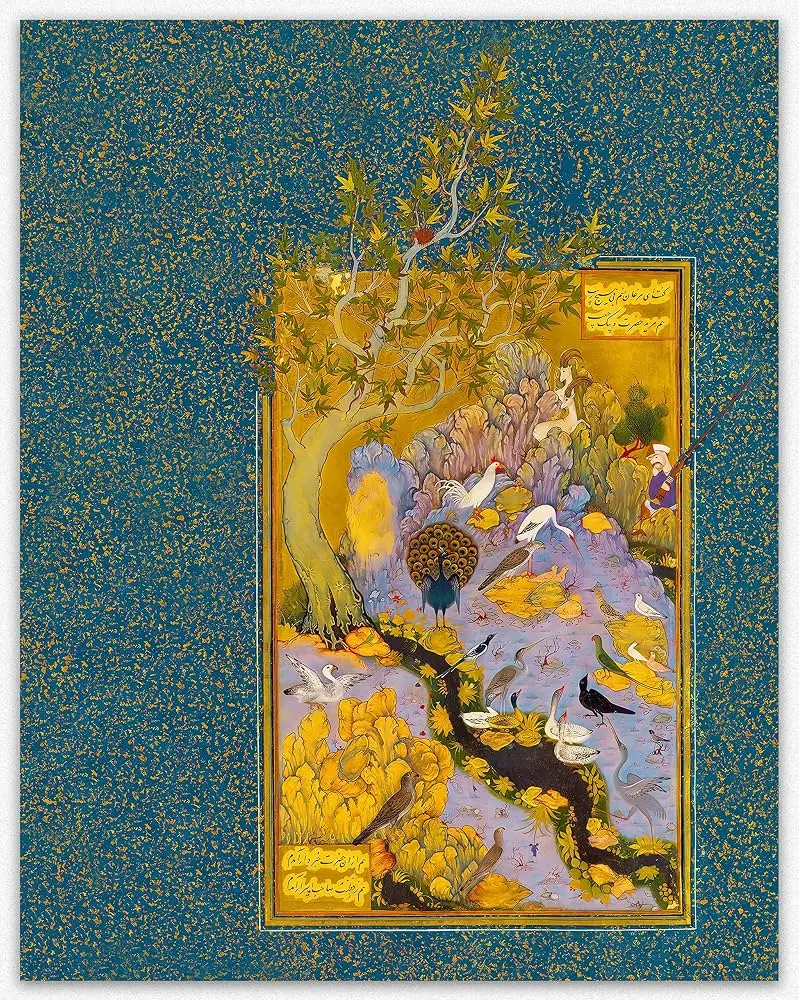
The history of this art form is marked by the patronage of royal courts, particularly during the Timurid and Safavid dynasties. Kamal ud-Din Behzad, active in the late 15th and early 16th centuries, is widely considered the greatest master of the genre. He introduced a new level of psychological depth and naturalism to the figures, moving away from the rigid, stylized poses of his predecessors and creating dynamic, crowded scenes that felt alive.
Other influential figures include Sultan Muhammad, who brought a more whimsical, fantastical element to the Safavid style, and Reza Abbasi, who focused on individual portraits and single figures rather than complex manuscript illustrations. These artists worked within kitabkhanas, or royal workshops, where they collaborated with calligraphers, paper makers, and binders. This collaborative environment ensured that the miniature was not just a standalone painting, but an integral part of a larger, harmonious book design.
Why is Persian miniature painting historically significant?
Persian miniatures served as the visual narrative for the great works of Persian literature, such as Ferdowsi’s Shahnameh (Book of Kings) and the poetry of Nizami Ganjavi. By illustrating these texts, the paintings helped preserve the cultural identity and historical mythology of the region. They functioned as status symbols for the elite, who commissioned lavishly illustrated manuscripts to demonstrate their refinement, wealth, and support for the arts.
Beyond their cultural value, these paintings influenced artistic traditions across the Islamic world and beyond. The techniques and stylistic motifs traveled along the Silk Road, impacting Mughal painting in India and the Ottoman court in Turkey. The intricate floral motifs, known as islimi, and the balance of negative space became hallmarks of Islamic art, influencing architecture, carpet weaving, and tile work for centuries. Today, they remain a primary source for understanding the fashion, customs, and intellectual life of pre-modern Persia.
Common mistakes when studying or collecting miniatures
When approaching Persian miniatures, beginners often mistake the lack of vanishing points for a lack of technical skill. It is crucial to recognize that the flattened perspective is a deliberate artistic choice meant to prioritize narrative clarity and decorative harmony over realistic depth. Another common error is assuming that these works are merely "small paintings"; they are, in fact, highly complex intellectual compositions meant to be viewed closely, often requiring a magnifying glass to appreciate the fine brushwork.
- Do not confuse later, mass-produced souvenir copies with authentic, hand-painted historical miniatures.
- Avoid exposing original manuscripts to direct sunlight or high humidity, as mineral pigments and gold leaf are sensitive to environmental damage.
- Be aware that many pieces sold as "antique" may be later 19th-century reproductions; always look for the quality of the paper and the fluidity of the ink lines.
- Do not attempt to clean or restore a miniature yourself, as the natural binders are extremely fragile and can be easily damaged by moisture or improper handling.
Key facts
- Persian miniatures are small-scale, highly detailed paintings traditionally created to illustrate literary manuscripts or decorate album pages.
- Artists used natural pigments derived from minerals, semi-precious stones like lapis lazuli, and organic sources like gold leaf.
- The style is characterized by a lack of traditional Western linear perspective, instead utilizing a "bird's-eye view" where multiple planes are visible simultaneously.
- Miniature painting reached its zenith during the Timurid (1370–1507) and Safavid (1501–1736) dynasties under royal patronage.
- A common practical mistake is applying paint too thickly; the medium requires thin, translucent layers to maintain the signature jewel-like brilliance.
- Brushes were historically crafted from the fine hair of squirrel tails, providing the extreme precision needed for hair-thin line work.
The bottom line
Persian miniature painting represents a sophisticated fusion of literature, philosophy, and technical mastery. By prioritizing intricate detail and vibrant, mineral-based color palettes over Western-style perspective, these artists created timeless visual narratives. Whether illustrating epic poetry or royal court life, the art form remains a testament to the precision of the human hand and the enduring cultural legacy of the historic Persianate world.
People also ask
How did artists achieve such vibrant colors?
Artists ground minerals like malachite for green and lapis lazuli for blue into fine powders, mixing them with a binder like gum arabic. This process ensured the colors remained lightfast and vivid for centuries.
Why are there no shadows in traditional Persian miniatures?
The style emphasizes decorative clarity and spiritual ideals rather than physical realism. By omitting shadows, artists focused on the intricate patterns of textiles and architecture, creating a flat, dreamlike aesthetic.
What subjects were most commonly depicted in these paintings?
Common themes included scenes from epic poems like the Shahnameh, romantic tales of Layla and Majnun, and courtly life. These narratives allowed artists to display their skill in depicting horses, flora, and elaborate palace interiors.
Did the artists sign their work?
While many masterpieces remain anonymous, some artists began signing their work in the 15th century. Famous masters like Bihzad became celebrities in their own time, often noted by patrons for their distinct artistic signatures.
What is the significance of the gold used in these paintings?
Gold was used to represent divine light and to highlight architectural details or the sky. It was applied as a liquid suspension, requiring a steady hand to create shimmering, reflective surfaces that contrast with the matte pigments.
Can I learn to paint in this style today?
Yes, many contemporary schools teach the traditional techniques of tazhib (illumination) and negargari (miniature painting). Beginners should start by practicing fine-line brush control and learning to mix pigments before attempting complex compositions.
This answer was created with the help of AI research tools and reference sources. Spotted an error? Let us know — we correct mistakes quickly. See our editorial policy.