What is Titian's most famous painting?
Short answer
Assumption of the Virgin is widely considered Titian’s most famous and significant masterpiece. Completed in 1518 for the Basilica di Santa Maria Gloriosa dei Frari in Venice, this monumental altarpiece revolutionized Renaissance art through its dynamic composition, vibrant use of color, and the unprecedented emotional intensity of the figures depicted within the scene.

On this page
Why is Assumption of the Virgin so famous?
The Assumption of the Virgin stands as a pivotal work because it marked Titian’s emergence as the preeminent painter in Venice. Before this commission, the Venetian art scene was dominated by figures like Giovanni Bellini and Giorgione. By delivering a work of such immense scale and dramatic power, Titian proved that he could synthesize classical harmony with a new, energetic style that prioritized movement and light.
The painting is celebrated for its tripartite structure, which guides the viewer’s eye from the apostles on the ground, through the soaring figure of the Virgin Mary, to the divine realm of God the Father above. This vertical composition was revolutionary for the time, breaking away from the static, balanced arrangements common in earlier religious art. It established a new standard for monumental altarpieces, influencing generations of artists across Europe who sought to emulate its sense of spiritual grandeur and technical mastery.
How to appreciate Titian's use of color
Titian is legendary for his "colore" technique, which emphasizes the application of paint to create form and depth rather than relying solely on rigid outlines. In his most famous works, he achieved this by layering thin glazes of pigment over a textured base. This method allowed him to capture the way light interacts with different surfaces, such as the soft skin of the Virgin or the heavy, tactile fabric of the apostles' robes.
To truly appreciate this mastery, consider these elements when viewing his paintings:
- The saturation of reds, which became known as "Titian red," used to draw the eye to focal points.
- The subtle transitions between light and shadow, known as sfumato, which add a sense of atmosphere.
- The visible brushwork in his later years, which adds a raw, expressive quality to the canvas.
- The use of gold and warm earth tones to create a sense of divine radiance that feels grounded in reality.
Where can you see Titian's masterpieces today?
While the Assumption of the Virgin remains in its original location in Venice, Titian’s vast body of work is distributed among the world’s most prestigious museums. Because he was a prolific artist who lived to a great age, his career spanned several decades, allowing his style to evolve from the polished, classical aesthetic of his youth to the loose, impressionistic brushwork of his final years.
If you are planning a trip to view his art, consider these major collections:
- The Gallerie dell'Accademia in Venice, which provides the best context for his early and mid-career Venetian works.
- The Prado Museum in Madrid, home to one of the largest and most significant collections of his paintings, thanks to his close relationship with Emperor Charles V.
- The National Gallery in London, which holds several key mythological and religious paintings.
- The Kunsthistorisches Museum in Vienna, which houses many of his finest portraits and late-period masterpieces.
Common mistakes when studying Titian's work
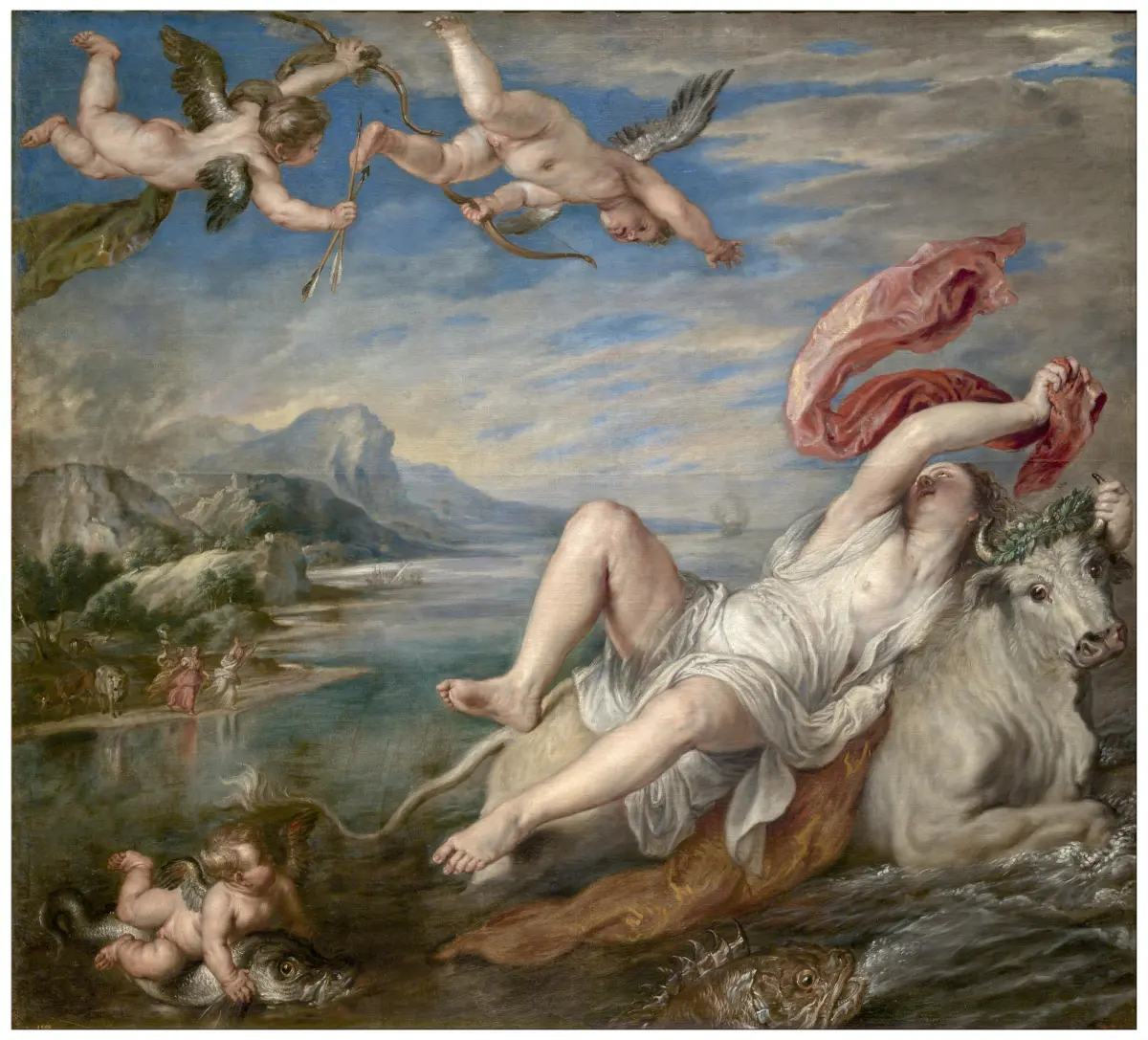
One frequent mistake is assuming that Titian’s work remained consistent throughout his life. Many viewers look at his early, highly detailed religious scenes and compare them to his late, blurry, and atmospheric canvases, assuming one must be inferior to the other. In reality, his shift toward a more abstract, tactile style was a deliberate artistic evolution, not a decline in skill. Understanding this progression is essential to appreciating his true genius.
Another common error is ignoring the influence of his patrons. Titian was a savvy businessman who worked for the most powerful figures in Europe, including the Pope and the Holy Roman Emperor. His paintings were often tailored to the political and religious messages his patrons wished to convey. When analyzing a work, always look for the context of the commission, as this often explains the specific choice of subject matter, the scale of the painting, and the symbolic elements included within the composition.
How to identify a Titian painting
Identifying a Titian is often a matter of looking for his signature approach to human anatomy and natural light. Even in his mythological scenes, such as Bacchus and Ariadne, he renders figures with a sense of weight and physical presence that feels remarkably human. He avoided the overly stylized or stiff poses of some of his contemporaries, preferring instead to capture a sense of action or psychological tension.
When attempting to identify his hand in a work, look for these specific traits:
- A preference for rich, warm color palettes dominated by deep crimsons and golden yellows.
- Dynamic, often diagonal arrangements that suggest the figures are in the middle of a narrative event.
- A focus on the interaction between figures, often involving subtle glances or gestures that suggest a complex emotional backstory.
- The presence of lush, detailed landscapes that serve as a backdrop to the primary action, reflecting the Venetian love for nature.
Key facts
- Titian's most famous painting is widely considered to be the Venus of Urbino, created around 1534.
- The work is an oil-on-canvas masterpiece currently housed in the Uffizi Gallery in Florence, Italy.
- It depicts a reclining nude woman, likely a courtesan, set within a lavish domestic interior.
- The painting is celebrated for its mastery of color and the subtle, glowing flesh tones achieved through Titian's glazing technique.
- A common mistake when viewing the work is to focus only on the figure; look for the hidden details like the sleeping dog and the servants searching a chest.
- To appreciate the painting's scale, note that it measures approximately 119 centimeters by 165 centimeters.
The bottom line
Titian’s Venus of Urbino remains his most iconic achievement, serving as a cornerstone of Renaissance art. By blending mythological themes with contemporary realism and unparalleled color mastery, he redefined the depiction of the human form. Whether you are studying art history or visiting the Uffizi, this painting provides essential insight into the technical genius and cultural influence of the Venetian school during the sixteenth century.
People also ask
Why is the Venus of Urbino considered so influential?
It set the standard for the reclining nude in Western art for centuries. Artists like Édouard Manet later used it as a direct inspiration for his famous work, Olympia.
Was the woman in the painting a goddess?
While titled Venus, the painting likely depicts a contemporary noblewoman or courtesan rather than a mythological deity. Titian used the title to give the sensuality of the portrait a classical, acceptable veneer.
What does the dog at the foot of the bed represent?
The small dog is a traditional symbol of fidelity and loyalty. Its presence contrasts with the erotic nature of the scene, adding a layer of domestic complexity.
Where can I see Titian's other major works?
His paintings are scattered globally, but major collections reside in the Prado Museum in Madrid, the National Gallery in London, and the Scuola Grande di San Rocco in Venice.
How did Titian achieve such realistic skin tones?
Titian applied many thin, translucent layers of oil paint known as glazes. This method allowed light to penetrate the surface and reflect back, creating a luminous, lifelike quality.
Did Titian sign all of his paintings?
Not always, as he operated a large, busy workshop. Some works attributed to him were likely collaborations with his assistants, though the Venus of Urbino is widely accepted as his own hand.
This answer was created with the help of AI research tools and reference sources. Spotted an error? Let us know — we correct mistakes quickly. See our editorial policy.