What is Caravaggio's most famous painting?
Short answer
The Calling of Saint Matthew is widely considered Caravaggio’s most famous and significant masterpiece. Painted between 1599 and 1600 for the Contarelli Chapel in Rome, it revolutionized Western art through its dramatic use of chiaroscuro. This work established the artist’s signature style, blending intense spiritual themes with gritty, contemporary realism.
On this page
Why is The Calling of Saint Matthew so famous?
The fame of The Calling of Saint Matthew stems from its radical departure from the idealized Renaissance style that preceded it. Caravaggio placed the biblical scene in a dark, nondescript tavern, depicting the tax collector Matthew and his associates in modern 17th-century attire. This grounded approach made the divine encounter feel immediate and relatable to the common viewer.
The painting is most celebrated for its masterful use of chiaroscuro and tenebrism. A sharp, diagonal beam of light cuts through the darkness, following the gesture of Jesus Christ as he points toward Matthew. This light serves as a metaphor for divine grace, illuminating the shocked faces of the men at the table. By stripping away ornate backgrounds, Caravaggio forced the viewer to focus entirely on the psychological tension and the transformative moment of conversion.
How to identify a Caravaggio painting
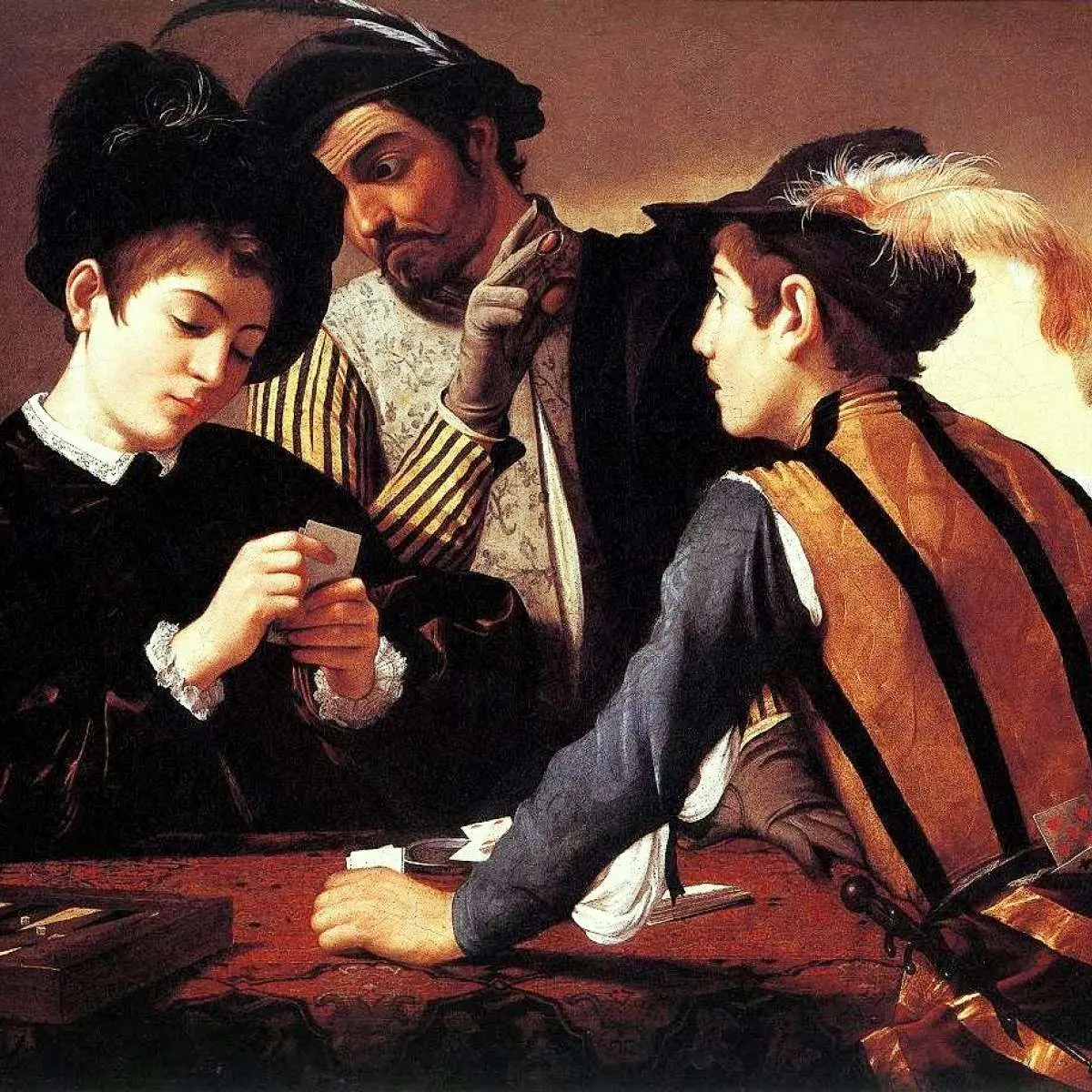
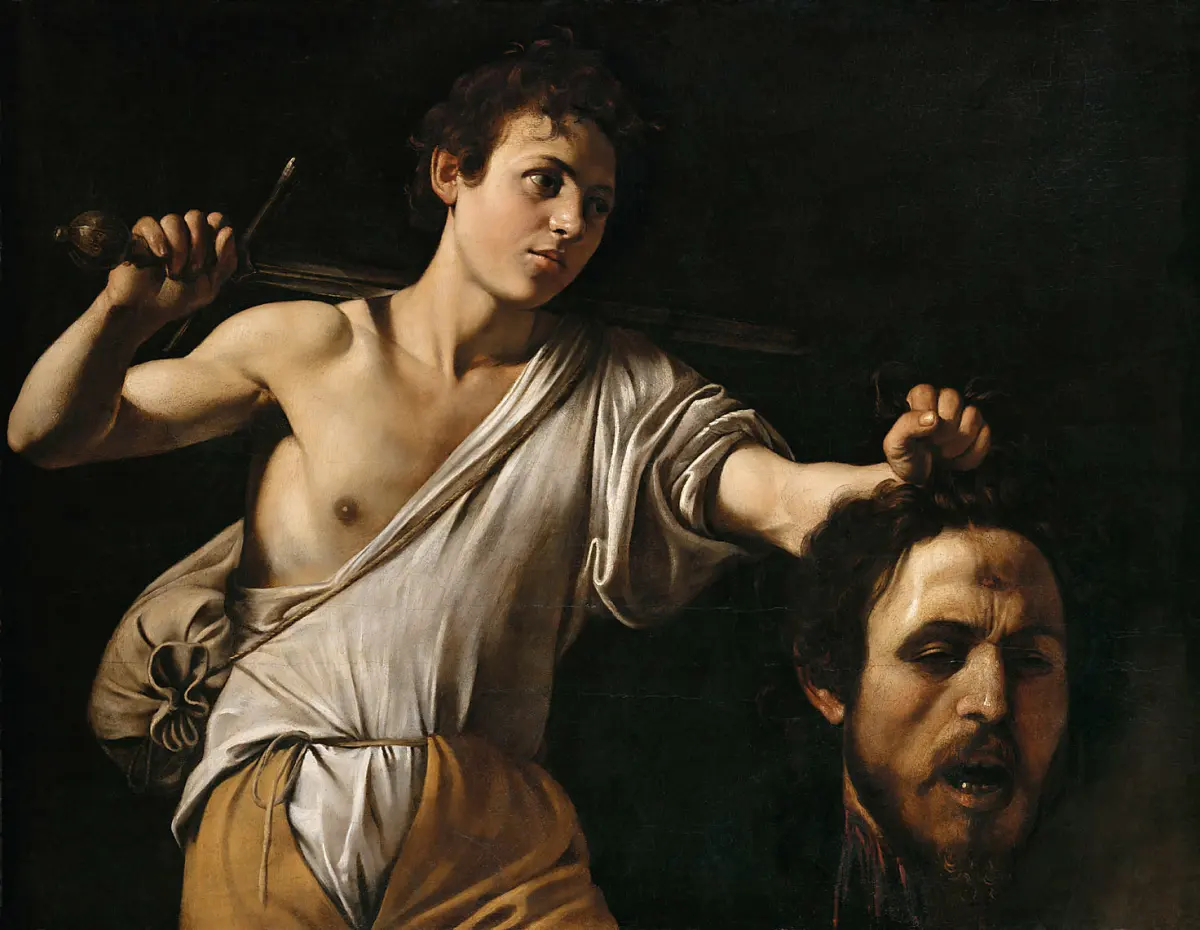
Identifying a work by Caravaggio requires looking for specific technical hallmarks that defined his brief but influential career. His paintings are rarely cluttered with background detail, as he preferred to let the figures emerge from an impenetrable, ink-black void. This focus on the foreground creates a theatrical quality, as if the scene is being illuminated by a single, harsh stage light.
When examining his works, keep these identifying characteristics in mind:
- High-contrast lighting that emphasizes volume and physical presence.
- The use of "low-life" models, such as laborers or street people, to portray saints and holy figures.
- A lack of preparatory sketches, as he often painted directly onto the canvas.
- Intense, frozen moments of action or emotional realization.
- Earthy, somber color palettes punctuated by deep reds and ochres.
Where can you see Caravaggio's masterpieces today?
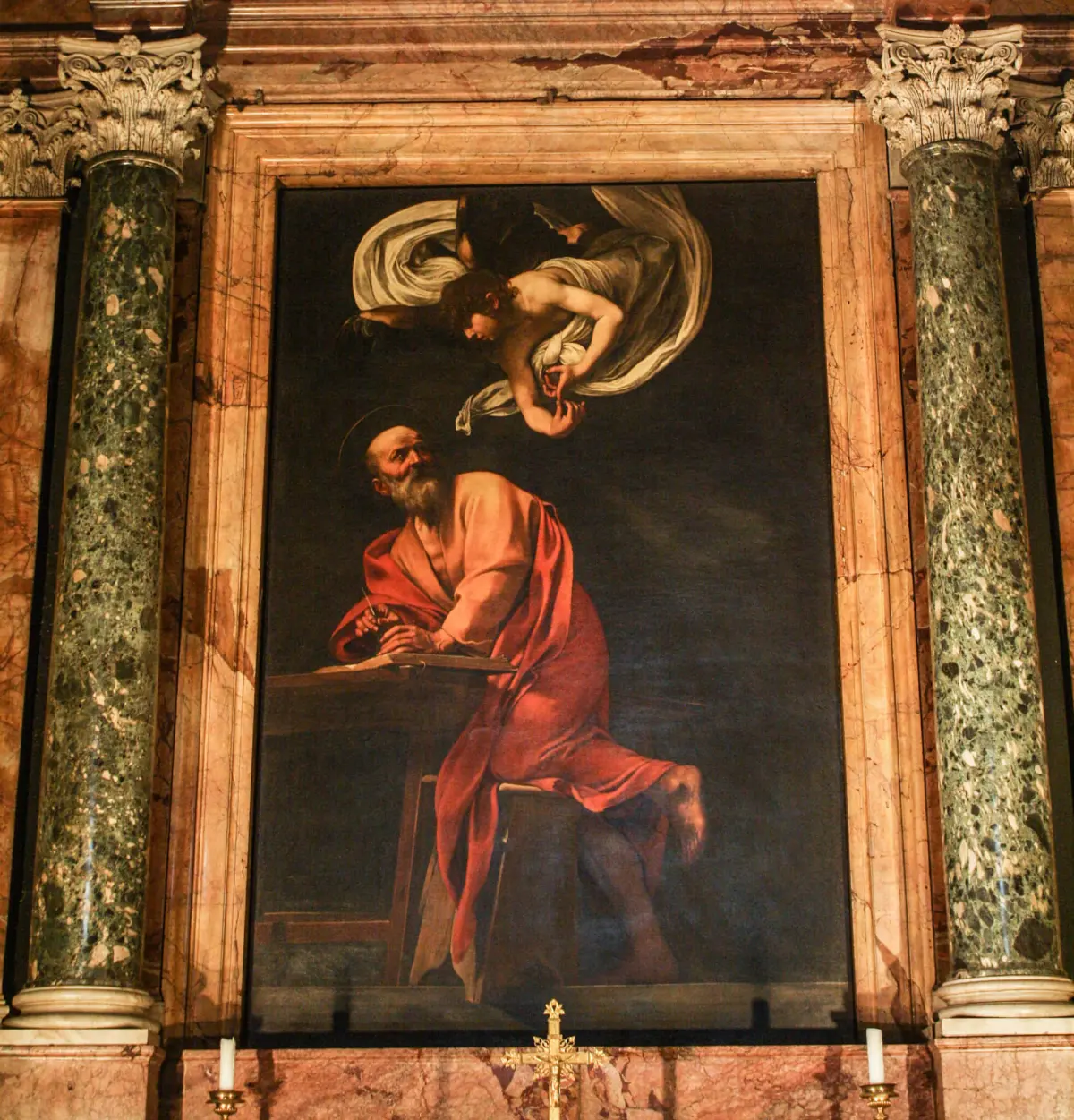
While his works are scattered across the globe, the highest concentration of Caravaggio paintings remains in Rome, where he spent his most productive years. The city offers a unique opportunity to view his art in the exact locations for which they were commissioned. Many of these churches, such as San Luigi dei Francesi, allow public access to the chapels housing these monumental canvases.
For those planning a trip to view his work, consider these primary locations:
- San Luigi dei Francesi, Rome: Houses the famous Matthew cycle.
- Galleria Borghese, Rome: Holds one of the most significant collections, including David with the Head of Goliath.
- The Uffizi Gallery, Florence: Features the iconic Medusa and Bacchus.
- The National Gallery, London: Displays The Supper at Emmaus.
- The Louvre, Paris: Contains The Death of the Virgin.
Common mistakes when studying Caravaggio
One common mistake is assuming that Caravaggio’s realism was merely a stylistic choice rather than a theological statement. Many viewers interpret his use of dirty feet or wrinkled clothing as a sign of disrespect toward religious subjects. In reality, Caravaggio believed that the sacred could be found within the mundane, and he sought to bring the gospel to the level of the ordinary person.
Another frequent error is confusing his work with that of his many followers, known as the "Caravaggisti." Artists like Artemisia Gentileschi and Gerrit van Honthorst adopted his dramatic lighting, but their narratives often lack the raw, psychological intensity that Caravaggio achieved. If you are analyzing a painting, look for the specific emotional weight in the eyes of the subjects; Caravaggio’s figures often appear caught in a moment of profound, irreversible change, whereas his followers often focused more on the technical gimmickry of the light itself.
How to appreciate the technique of chiaroscuro
To truly appreciate Caravaggio’s technique, one must understand that chiaroscuro is not just about darkness; it is about the selective revelation of form. By obscuring large portions of the canvas, Caravaggio directs the viewer’s eye with precision. This technique creates a sense of mystery, as the mind is forced to fill in the gaps left by the shadows.
When looking at his paintings, try the following exercise to better understand his process:
- Stand at a distance to observe the overall composition and the dramatic path of the light.
- Move closer to examine the textures, noting how he uses thick paint to catch the light on skin or fabric.
- Observe how the shadows are not just black, but contain subtle gradations of brown and grey.
- Consider the source of the light in the painting and how it dictates the mood of the scene.
- Reflect on how the absence of light creates a sense of silence or isolation around the figures.
Key facts
- Caravaggio’s most celebrated work is widely considered to be "The Calling of St. Matthew," painted between 1599 and 1600.
- The painting is permanently housed in the Contarelli Chapel of the Church of San Luigi dei Francesi in Rome.
- It is a prime example of tenebrism, a technique characterized by dramatic, high-contrast lighting and deep, dark shadows.
- The work depicts the moment Jesus Christ inspires Matthew the tax collector to follow him, using a sharp beam of light to symbolize divine grace.
- When visiting the chapel, bring small denomination coins to operate the light box that illuminates the painting for a few minutes.
- Avoid using flash photography, as it is strictly prohibited and can damage the historical pigments of the canvas.
The bottom line
While Caravaggio produced many iconic works, "The Calling of St. Matthew" remains his most famous due to its revolutionary use of light and profound narrative impact. By transforming a mundane tax office into a site of divine revelation, he set a new standard for Baroque painting. Visiting this masterpiece in Rome offers a unique opportunity to experience the dramatic tension that defined his short, turbulent career.
People also ask
Why is Caravaggio’s lighting style so significant?
His signature use of chiaroscuro and tenebrism revolutionized Baroque art by creating intense psychological depth. By plunging backgrounds into darkness, he forced the viewer to focus entirely on the human drama unfolding in the light.
Did Caravaggio paint other famous religious scenes?
Yes, he produced numerous masterpieces, including "The Entombment of Christ" and "The Supper at Emmaus." These works are also known for their raw realism and the depiction of biblical figures with common, weathered features.
Was Caravaggio a controversial artist?
He was notorious for his volatile temper and frequent brushes with the law, including an arrest for murder in 1606. This turbulent personal life often bled into his art, which favored gritty, lifelike portrayals over idealized beauty.
Can I see Caravaggio paintings outside of Italy?
While many of his greatest works remain in Rome, major museums worldwide hold his pieces. Notable examples include "The Musicians" at the Metropolitan Museum of Art in New York and "The Supper at Emmaus" at the National Gallery in London.
What should I look for when viewing his paintings?
Pay close attention to the hands and feet of his subjects, as he often painted them with dirt or imperfections to emphasize their humanity. Observe how the light source is rarely visible, creating a mysterious, theatrical atmosphere.
How did Caravaggio influence later artists?
His dramatic style, known as Caravaggism, deeply influenced masters like Rembrandt, Velázquez, and Peter Paul Rubens. These artists adopted his intense lighting techniques to add emotional weight and narrative tension to their own compositions.
This answer was created with the help of AI research tools and reference sources. Spotted an error? Let us know — we correct mistakes quickly. See our editorial policy.