Who painted The Starry Night?
Short answer
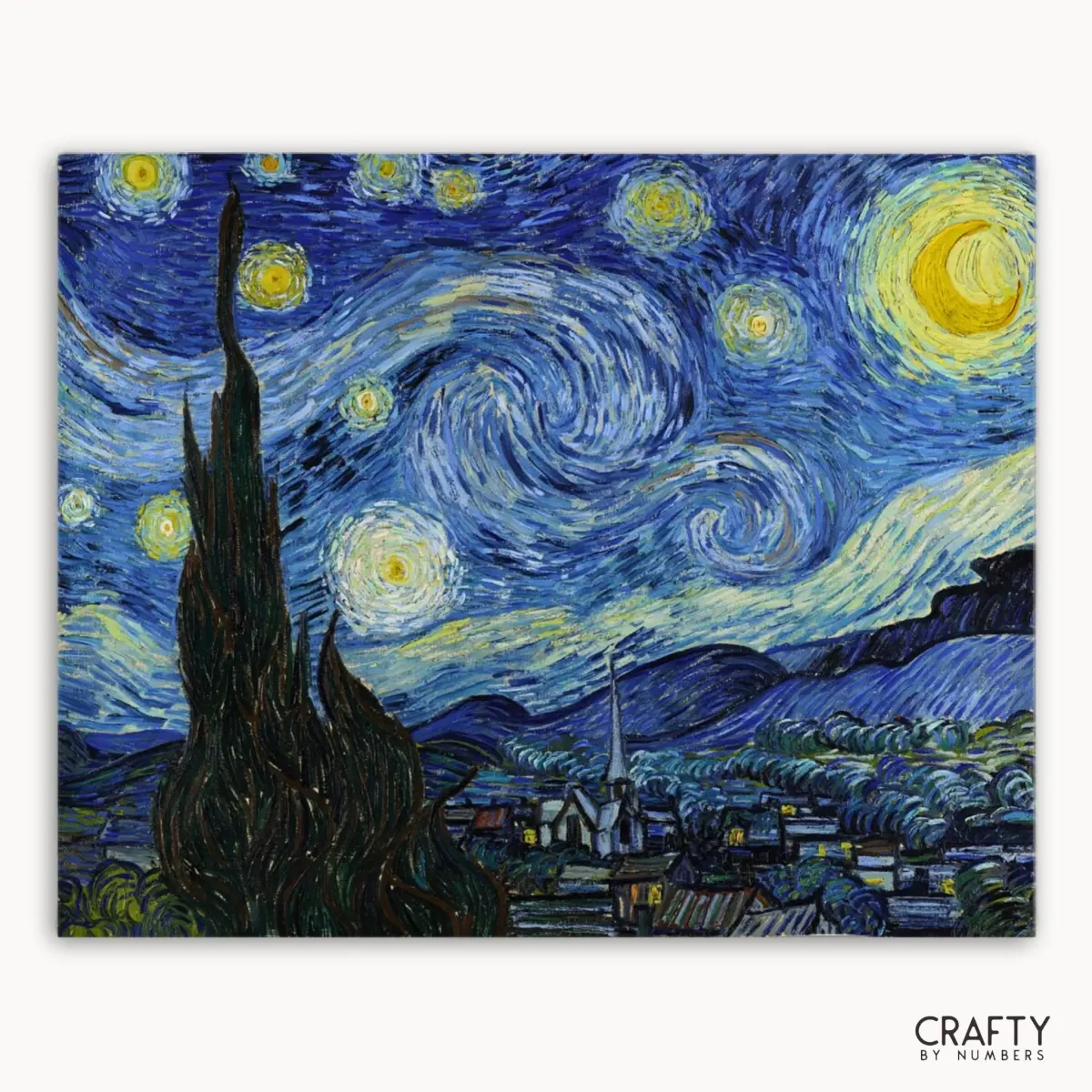
Vincent van Gogh painted The Starry Night in June 1889. The Dutch Post-Impressionist artist created this iconic oil-on-canvas masterpiece while staying at the Saint-Paul-de-Mausole asylum in Saint-Rémy-de-Provence, France. It remains one of the most recognized works in Western art history, celebrated for its expressive brushwork and vibrant, swirling night sky.
On this page
Who was Vincent van Gogh?
Vincent van Gogh was a Dutch Post-Impressionist painter who became one of the most influential figures in the history of Western art. Born in 1853, he did not begin his artistic career until his late twenties, initially working as an art dealer and a missionary. Despite struggling with severe mental health issues and poverty throughout his life, he produced approximately 2,100 artworks in just over a decade. His style is defined by bold colors, dramatic, impulsive, and expressive brushwork that contributed to the foundations of modern art.
Van Gogh’s life was marked by intense emotional volatility and a deep commitment to his craft. He famously moved to Arles in the south of France to establish an artists' colony, but his mental state deteriorated, leading to the well-known incident where he severed part of his own left ear. Following this, he voluntarily checked himself into the asylum at Saint-Rémy-de-Provence. It was during this period of confinement that he produced some of his most celebrated paintings, including The Starry Night, which reflects his unique perception of the world around him.
How was The Starry Night created?
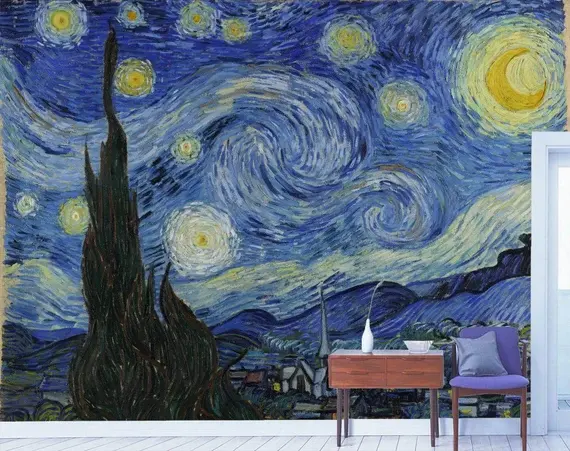
The Starry Night was painted in June 1889 during Van Gogh’s year-long stay at the asylum in Saint-Rémy. Unlike many of his other works that were painted directly from nature, this piece was composed in his ground-floor studio. He observed the view from his east-facing bedroom window just before sunrise, adding his own imaginative elements to the scene. The painting combines his direct observations with his memories and emotions, resulting in a stylized, dreamlike interpretation of the Provençal landscape.
The technical execution of the painting involved several distinct methods that contributed to its textured appearance:
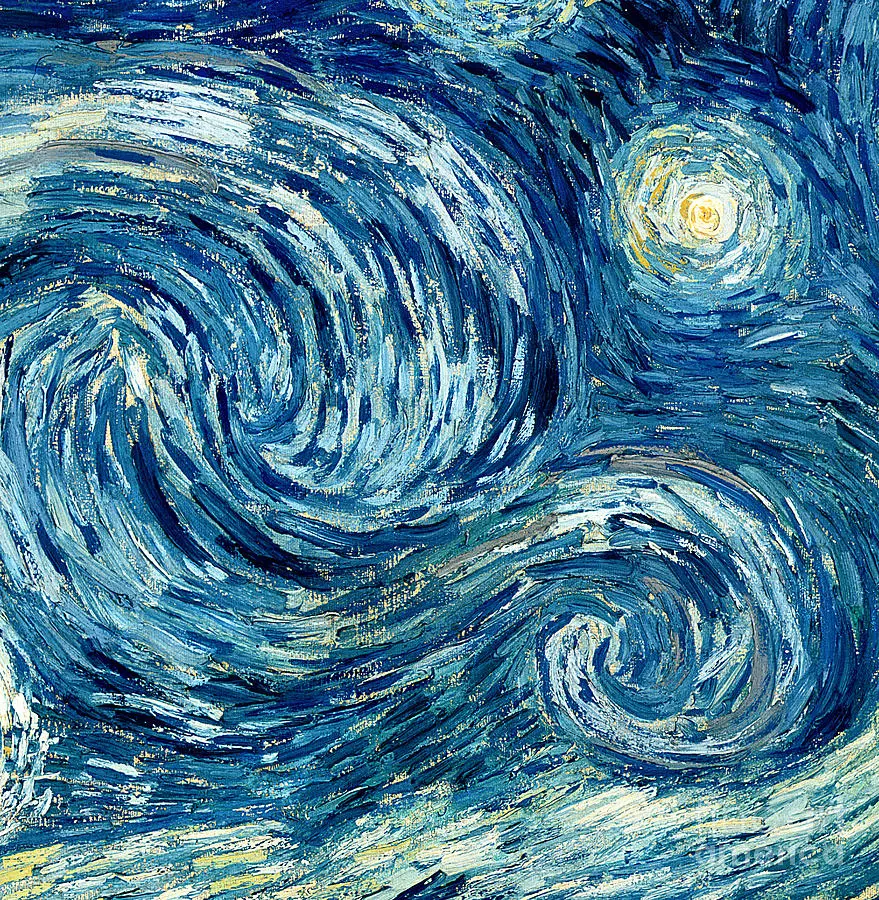
- Thick application of paint, known as impasto, to create physical depth.
- Use of complementary colors, specifically the contrast between the yellow moon and blue sky.
- Rhythmic, swirling brushstrokes that guide the viewer’s eye across the canvas.
- A deliberate composition that balances the vertical cypress tree against the horizontal rolling hills.
Where can you see the painting today?
The original The Starry Night is currently housed in the Museum of Modern Art (MoMA) in New York City. It has been part of the museum's permanent collection since 1941, having been acquired through the Lillie P. Bliss Bequest. It is widely considered the crown jewel of the museum’s collection and remains one of the most frequently visited artworks in the world. Visitors can view the painting in the museum’s galleries, where it is protected under climate-controlled conditions to preserve its delicate oil pigments.
If you are planning a visit to see the painting in person, keep these tips in mind:
- Check the MoMA website for current gallery locations, as the painting is occasionally moved for special exhibitions.
- Arrive early in the morning or during weekday evenings to avoid the largest crowds.
- Observe the painting from different distances to appreciate both the overall composition and the individual, thick brushstrokes.
- Be aware that photography is permitted, but flash usage is strictly prohibited to protect the artwork.
Why is The Starry Night so famous?
The fame of The Starry Night stems from its profound emotional resonance and its departure from traditional landscape painting. At the time, artists were moving away from realism toward personal expression, and Van Gogh’s work represents a pinnacle of this shift. The swirling sky is often interpreted as a representation of his turbulent mental state, while the quiet village below suggests a longing for peace and stability. The painting captures a universal human experience of looking at the stars and feeling both small and connected to the cosmos.
Beyond its emotional weight, the painting is a technical marvel. The way Van Gogh manipulated light and movement on a flat surface was revolutionary for the late 19th century. By using short, rhythmic strokes, he created a sense of vibration and energy that makes the sky appear to be in constant motion. This mastery of color theory and texture continues to influence artists, designers, and historians, ensuring that the work remains a central point of study in art schools and museums globally.
Common mistakes when analyzing Van Gogh's work
A frequent error when discussing Van Gogh is assuming that his paintings were purely the result of madness. While his mental health certainly influenced his perspective, his work was the product of a highly disciplined and intellectual approach to color and composition. Another common mistake is ignoring the influence of Japanese woodblock prints on his style. Van Gogh was an avid collector of these prints, which heavily influenced his use of bold outlines and flattened perspectives, both of which are clearly visible in the structure of The Starry Night.
When studying this painting, avoid these pitfalls to gain a better understanding:
- Do not assume the village in the painting is a literal representation of Saint-Rémy; it is a composite of Dutch-style architecture and his own imagination.
- Do not overlook the cypress tree, which was traditionally associated with mourning and death, adding a layer of melancholy to the vibrant scene.
- Avoid focusing only on the sky; the balance between the dark, grounded foreground and the luminous, active background is essential to the painting’s overall impact.
Key facts
- The Dutch Post-Impressionist painter Vincent van Gogh created The Starry Night in June 1889.
- He painted the work while staying at the Saint-Paul-de-Mausole asylum in Saint-Rémy-de-Provence, France.
- The canvas depicts the view from his east-facing bedroom window just before sunrise, with the addition of an idealized village.
- The painting is currently housed in the permanent collection of the Museum of Modern Art (MoMA) in New York City.
- Van Gogh used oil paint on a canvas measuring approximately 29 by 36 inches.
- When viewing the painting, look for the thick, rhythmic brushstrokes known as impasto that define his unique style.
The bottom line
Vincent van Gogh painted The Starry Night during a period of confinement at a French asylum, transforming a simple window view into a masterpiece of emotional expression. Through bold colors and swirling, impasto brushwork, he captured a dreamlike vision of the night sky. Today, the painting stands as a definitive example of Post-Impressionism, celebrated globally for its profound influence on modern art and creative perception.
People also ask
What do the swirling patterns in the sky represent?
Art historians often interpret the swirls as expressions of Van Gogh’s turbulent emotional state or his interest in celestial motion. Some scientists suggest they may also reflect the mathematical principles of turbulent flow found in fluid dynamics.
Is the village in the painting real?
The village is largely imagined, though it is often compared to the architecture of Saint-Rémy or his native Netherlands. Van Gogh combined his observations of the countryside with his own memories and artistic inventions.
Why is there a large, dark structure in the foreground?
The tall, flame-like object is a cypress tree, which was a common motif in Van Gogh’s work during this period. It serves as a visual bridge between the earth and the sky while providing a dark contrast to the bright stars.
How long did it take him to paint it?
While he produced the work in June 1889, he likely completed it in a single session or a few days of intense work. He often worked rapidly to capture the fleeting effects of light and color.
Did Van Gogh consider this one of his best works?
Van Gogh actually expressed doubt about the painting in his letters to his brother, Theo. He felt it was perhaps too stylized or lacked the direct observation he preferred in his other landscapes.
How can I see the painting in person?
You can view The Starry Night at the Museum of Modern Art in Midtown Manhattan. It is one of the most popular attractions in the museum, so visiting early on a weekday is recommended to avoid crowds.
This answer was created with the help of AI research tools and reference sources. Spotted an error? Let us know — we correct mistakes quickly. See our editorial policy.