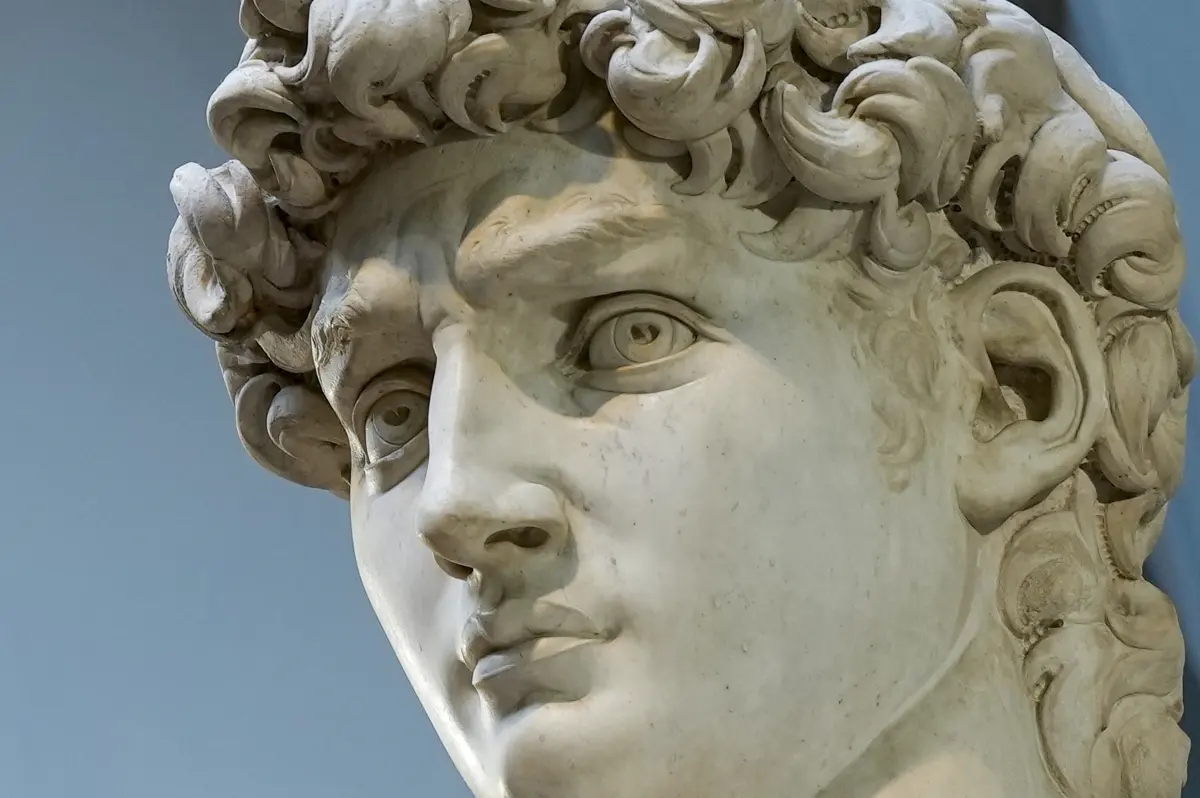
Why is Michelangelo's Pietà so famous?
Short answer
Michelangelo’s Pietà is famous for its technical perfection, emotional resonance, and the unprecedented youth of the Virgin Mary. Completed in 1499 when the artist was only 24, the sculpture transformed a single block of Carrara marble into a lifelike masterpiece of Renaissance art, establishing Michelangelo as a preeminent sculptor of his generation.
On this page
Why is the Pietà considered a masterpiece?
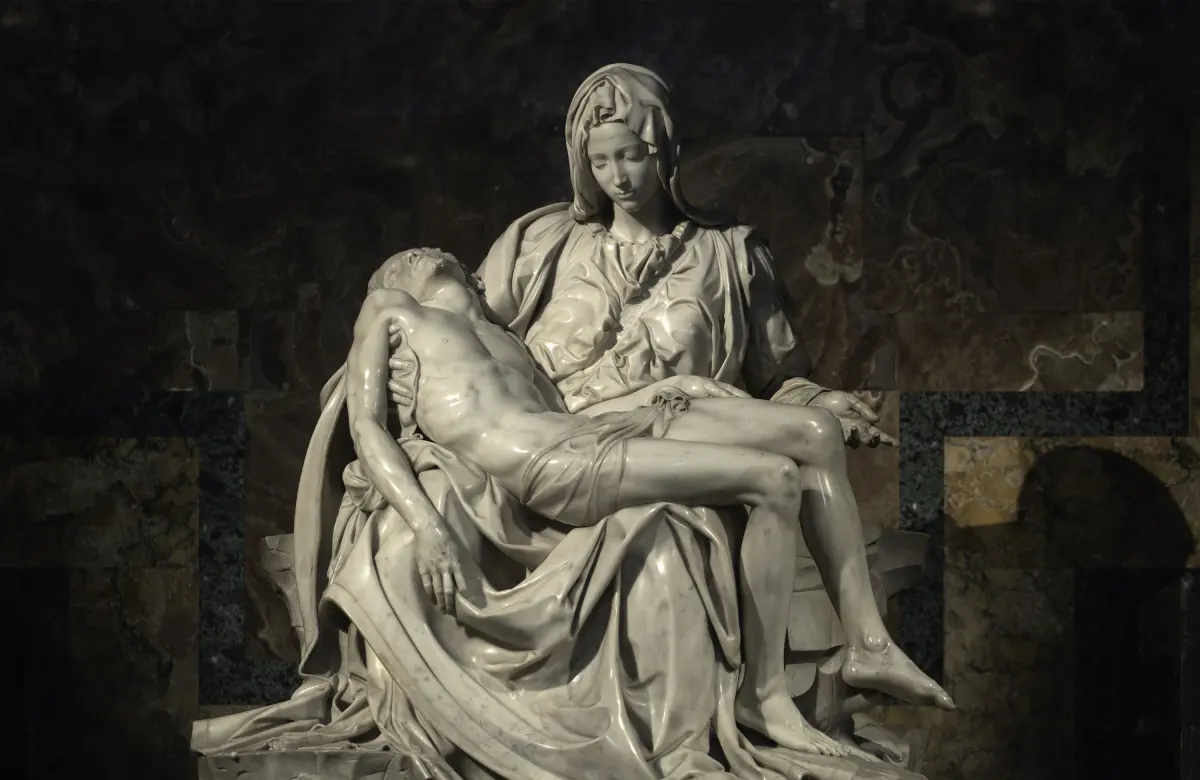
The Pietà is widely regarded as a masterpiece because of Michelangelo’s technical command over marble, a medium that is notoriously unforgiving. When he carved the work, he was a young man in his early twenties, yet he demonstrated a level of anatomical precision and textural variety that far surpassed his contemporaries. The way he rendered the heavy, complex folds of the Virgin’s robes creates a dramatic contrast with the smooth, lifeless body of Christ, drawing the viewer’s eye through the composition.
Beyond the technical skill, the work is famous for its emotional restraint. Rather than depicting a scene of violent suffering, Michelangelo chose a moment of quiet, contemplative grief. This choice allowed him to focus on the humanity of the figures, creating a sense of intimacy that resonates with viewers across centuries. The sculpture remains the only work Michelangelo ever signed, an act he reportedly performed after hearing visitors attribute the work to another sculptor.
How do you analyze the composition?
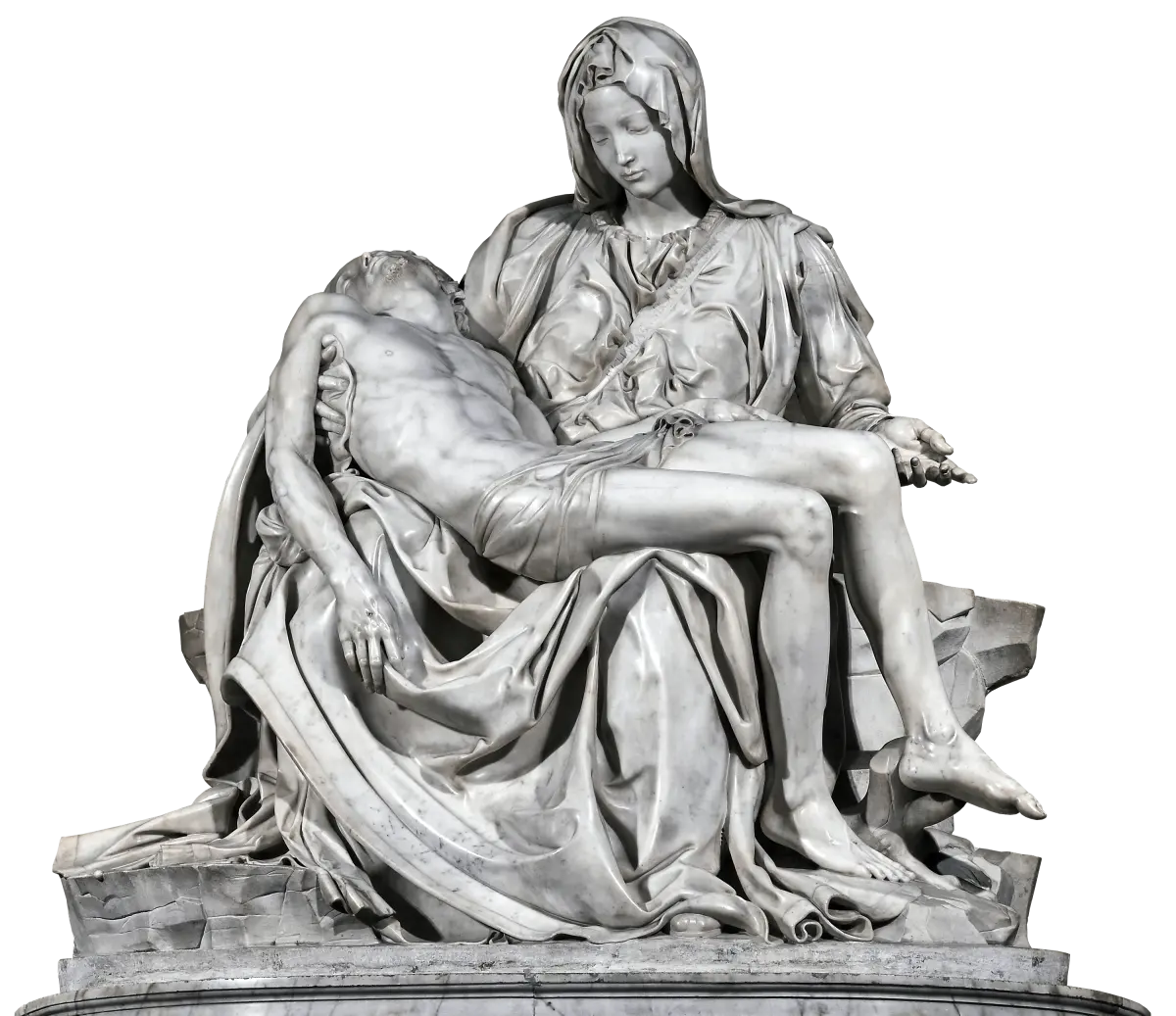
To analyze the Pietà effectively, one must look at the structural geometry that anchors the figures. Michelangelo utilized a pyramidal composition, which provides a sense of stability and balance to the sorrowful scene. The base of the pyramid is formed by the wide, cascading drapery of Mary’s gown, while the apex is found at the top of her head. This arrangement ensures that the viewer’s gaze is directed upward toward the faces of the figures.
When observing the sculpture, consider these key elements:
- The scale: Mary is depicted as larger than Christ to support his weight naturally without the composition looking awkward.
- The anatomy: Christ’s body shows signs of death, such as the slight sagging of the skin and the tension in the muscles, while Mary remains youthful.
- The texture: The contrast between the polished, skin-like finish of the bodies and the rougher, deep-cut shadows in the clothing.
Why does the Virgin Mary look so young?
A common question regarding the Pietà is why the Virgin Mary appears to be the same age, or perhaps even younger, than her son. During the Renaissance, artists often prioritized theological symbolism over literal historical accuracy. Michelangelo explained that Mary’s purity and lack of sin preserved her youth, suggesting that chaste women remain youthful longer than those who have experienced the physical trials of life.
This choice was not an oversight but a deliberate artistic decision to emphasize the spiritual nature of the subject. By making Mary appear youthful, Michelangelo highlights her divine grace and innocence. This interpretation allows the viewer to focus on the universal theme of a mother’s loss rather than a specific historical timeline. When studying this piece, avoid the mistake of viewing it as a documentary photograph; instead, treat it as a visual poem meant to evoke a specific emotional and spiritual response.
What is the history of the sculpture?
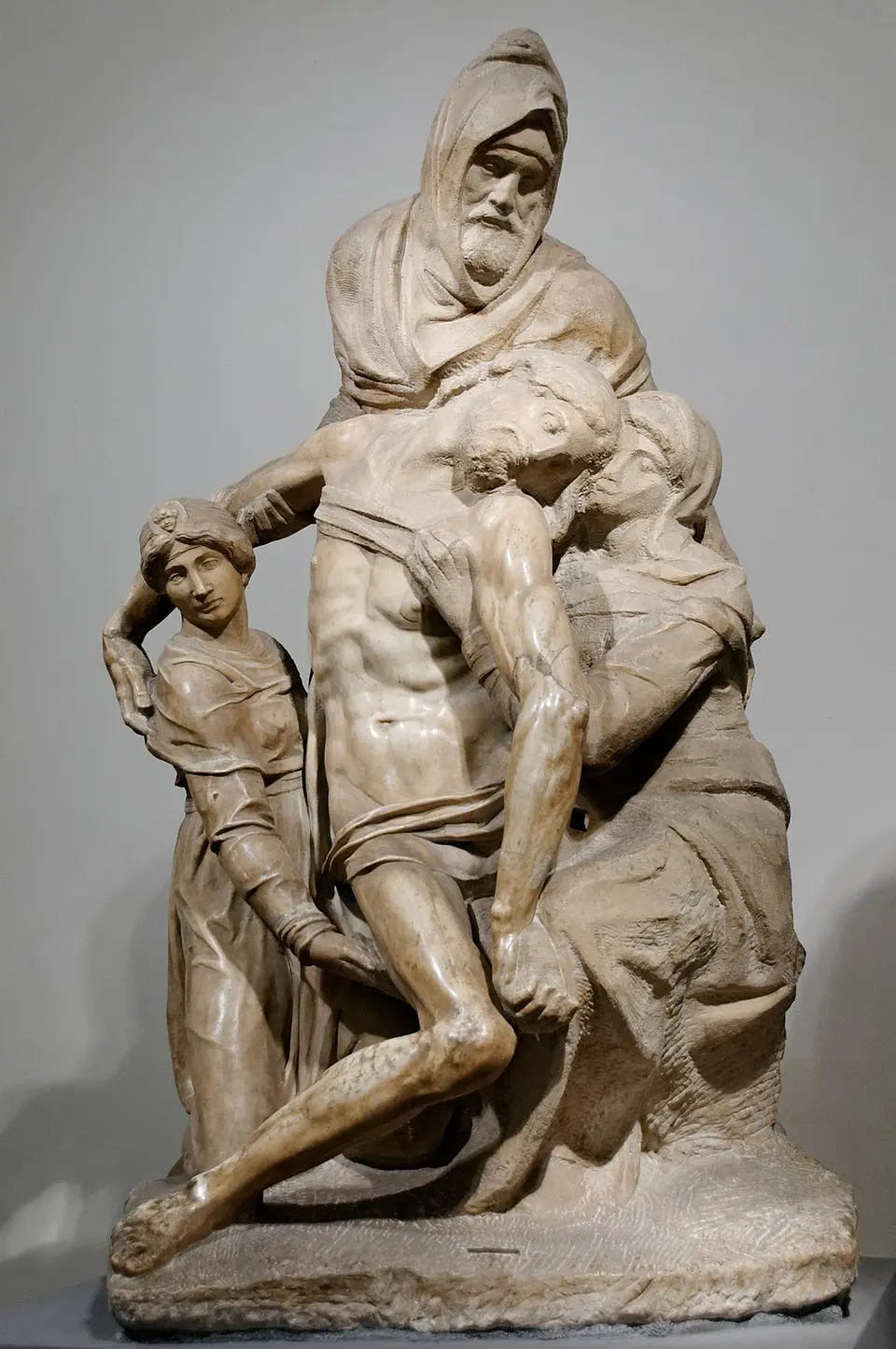
Commissioned in 1497 by the French Cardinal Jean de Bilhères, the Pietà was intended for his funeral monument in Old St. Peter’s Basilica. At the time, Michelangelo was relatively unknown in Rome, and the commission was a significant opportunity for him to prove his talent. He spent two years working on the piece, personally selecting the finest marble from the quarries in Carrara, Italy.
The history of the work is also marked by its physical endurance. Over the centuries, it has been moved several times within St. Peter’s Basilica and suffered minor damage, most notably in 1972 when a man attacked the sculpture with a hammer. Following that event, the piece underwent an extensive restoration process to repair the damage to Mary’s arm and veil. Today, it is protected behind bulletproof glass, ensuring that future generations can continue to study the intricate details of the marble that Michelangelo carved over five centuries ago.
How to visit the Pietà in Rome?
- Plan your visit to St. Peter’s Basilica early in the morning to avoid the longest queues at the security checkpoint.
- Enter the basilica through the main doors and head toward the first chapel on the right side of the nave.
- Observe the sculpture from the designated viewing area, which allows for a clear line of sight while maintaining the necessary distance for preservation.
- Take time to move slightly to the left and right of the barrier to appreciate how the shadows change across the marble folds.
Common mistakes when visiting include rushing through the basilica to reach the Pietà without noticing the surrounding architecture, or failing to check the basilica’s schedule for liturgical events that may restrict access to the chapel. Remember that the area is a place of worship; maintain a respectful volume and avoid using flash photography, as it can be distracting to others and is often prohibited. By approaching the sculpture with patience and an understanding of its history, you will gain a much deeper appreciation for why this work remains one of the most significant achievements in the history of Western art.
Key facts
- Michelangelo carved the Pietà from a single block of Carrara marble between 1498 and 1499.
- It is the only work of art that Michelangelo ever signed, with his name etched across the sash on the Virgin Mary’s chest.
- The sculpture stands 5 feet 9 inches tall and is located in St. Peter's Basilica in Vatican City.
- Mary is depicted as exceptionally young, a choice Michelangelo defended by suggesting that chaste women retain their youth longer.
- The work was commissioned by Cardinal Jean de Bilhères for his funeral monument.
- When visiting the sculpture, avoid touching the marble, as skin oils can permanently damage the porous surface.
The bottom line
Michelangelo’s Pietà remains iconic because it perfectly balances technical mastery with profound emotional resonance. By transforming cold, hard Carrara marble into the soft, draped fabric and lifelike anatomy of the Virgin and Christ, Michelangelo redefined Renaissance sculpture. Its lasting fame stems from this unique combination of youthful idealism, precise anatomical detail, and the tragic, universal human experience of grief captured in a single, timeless composition.
People also ask
Why did Michelangelo carve the Virgin Mary to look so young?
Michelangelo intended to represent the purity and incorruptibility of the Virgin Mary. He believed that her lack of sin prevented the physical aging process typically associated with grief and time.
Has the Pietà ever been damaged?
Yes, the most significant incident occurred in 1972 when a geologist named Laszlo Toth attacked the statue with a hammer. He broke off the Virgin’s arm and damaged her nose and eye, but the sculpture was painstakingly restored afterward.
Is the Pietà displayed behind glass?
Yes, it is protected by a bulletproof glass enclosure. This measure was implemented following the 1972 attack to ensure the safety of the marble from future vandalism.
How long did it take to complete the Pietà?
Michelangelo completed the masterpiece in less than two years. He was only 24 years old when the work was finished, which helped establish his reputation as a premier sculptor in Rome.
Does the sculpture depict a specific moment in the Bible?
The Pietà represents a "Vesperbild," a scene not explicitly described in the Gospels but common in Northern European devotional art. It captures the moment after the Crucifixion when Mary holds the body of Jesus on her lap.
Why is the signature on the sash significant?
Michelangelo reportedly added the signature after overhearing visitors attribute the work to another sculptor. He felt insulted and carved his name to ensure his authorship was permanently recognized.
This answer was created with the help of AI research tools and reference sources. Spotted an error? Let us know — we correct mistakes quickly. See our editorial policy.