How do you draw a swamp for beginners?
Short answer
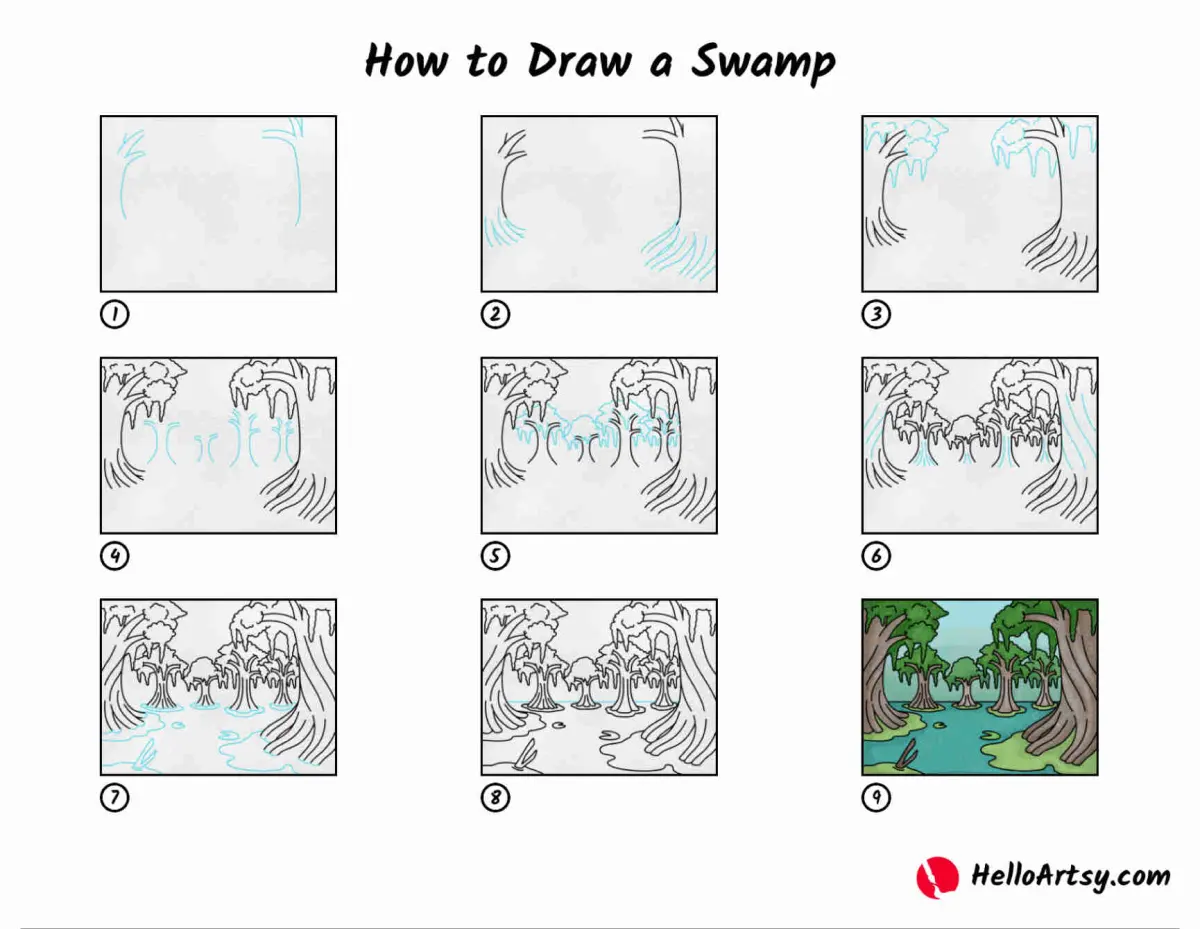
Drawing a swamp requires layering organic shapes to create depth and atmosphere. Start by establishing a horizontal horizon line, then sketch gnarled trees with exposed roots, still water surfaces, and dense vegetation. Use varying line weights to distinguish between foreground foliage and distant misty backgrounds to achieve a realistic, immersive environment.
On this page
How to structure a swamp drawing
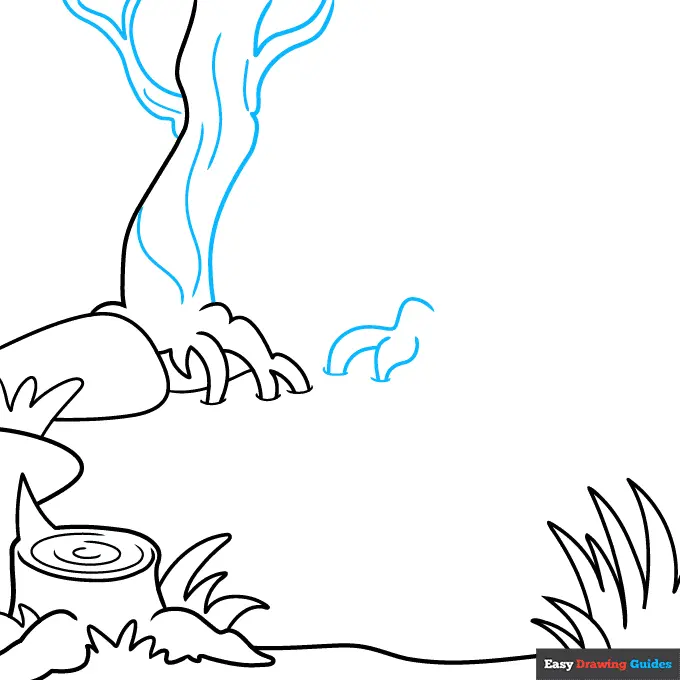
Begin by dividing your page into three distinct horizontal zones: the foreground, the midground, and the background. The foreground should contain the most detail, such as large, knobby cypress roots or patches of mossy grass. The midground is where you place the primary water surface and the base of your main trees. The background should be kept simple and hazy to suggest distance and density.
Use a light pencil to sketch the horizon line, keeping it relatively low to emphasize the height of the trees. When drawing the water, use long, horizontal strokes to suggest a flat, reflective surface. Avoid drawing perfect circles or straight lines, as swamps are defined by their chaotic, organic, and irregular forms. By establishing this framework early, you ensure that the final composition feels balanced rather than cluttered.
Best drawing techniques for beginners
To capture the unique texture of a swamp, focus on varied line quality and shading. Use jagged, uneven lines for tree bark and soft, rounded shapes for hanging Spanish moss. When rendering the water, leave small white gaps to represent light reflections, which helps differentiate the liquid surface from the solid ground.
- Start with a light outline of the trees and major root systems.
- Add texture to the bark using short, broken vertical lines.
- Draw hanging moss by creating light, drooping, cloud-like shapes from branches.
- Use horizontal shading across the water to indicate stillness.
- Add dark shadows under roots and near the water line to create depth.
By following these steps, you build a sense of volume. Remember that shadows in a swamp are often deep and murky, so do not be afraid to use heavy pressure with your pencil or ink.
Why swamps look mysterious in art
The atmosphere of a swamp is largely defined by its lighting and the density of its vegetation. Because swamps are often humid, they frequently feature fog or mist, which obscures distant objects and softens edges. You can replicate this effect by using lighter pencil pressure for background elements and avoiding sharp, dark outlines in the distance.
Another key factor is the reflection on the water. In a swamp, the water is often dark and still, acting like a mirror for the trees above. When drawing these reflections, mirror the shapes of the trees but make them slightly more distorted and vertically elongated. This technique grounds the trees in their environment and enhances the feeling of a heavy, humid, and enclosed space that is characteristic of wetland landscapes.
Common mistakes when drawing swamps
One of the most frequent errors is making the water look too much like a solid surface or a flat, empty plane. If you do not include reflections or ripples, the water will appear as a hole in the ground rather than a body of liquid. Always ensure that the trees and vegetation interact with the water line by adding dark, blurred shadows where the trunks meet the surface.
- Drawing trees that are perfectly vertical, which makes them look unnatural.
- Forgetting to add roots, which are essential for the "swampy" look.
- Making the background too dark, which destroys the sense of atmospheric perspective.
- Using uniform line weights, which flattens the entire image.
- Neglecting the "messiness" of the vegetation, such as reeds, lily pads, and fallen branches.
Avoid these pitfalls by observing reference photos of real wetlands. Nature is rarely symmetrical, so embrace the irregularities and allow your lines to wander and overlap in unpredictable ways.
How to add detail to swamp landscapes
Once your basic composition is set, you can add life to the scene with specific details. Small elements like lily pads, dragonflies, or protruding logs add interest and scale to the drawing. Place these items strategically to guide the viewer’s eye through the scene. For example, a trail of lily pads leading toward the background can create a strong sense of depth.
Focus on the transition between the water and the land. In a real swamp, this edge is rarely a clean line; it is usually a tangle of mud, decaying leaves, and submerged roots. Use stippling or small, quick dashes to suggest this messy transition zone. By layering these fine details over your broader shapes, you transform a simple sketch into a complex, believable ecosystem. Take your time with these final touches, as they provide the character that makes the drawing feel authentic and alive.
Key facts
- Use horizontal lines to establish the water level, which acts as the foundation for your swamp landscape.
- Draw cypress trees with wide, flared bases called "buttresses" to mimic their natural adaptation to saturated soil.
- Add "knees," which are small, knobby root structures protruding from the water around tree trunks.
- Incorporate Spanish moss hanging from branches using light, jagged, downward-curving lines to create a humid atmosphere.
- Reflect trees and vegetation in the water by drawing inverted, slightly distorted versions of the objects above the horizon.
- Vary the density of your line work to suggest murky, stagnant water versus open, reflective patches.
The bottom line
Drawing a swamp requires balancing the verticality of gnarled trees with the horizontal stillness of murky water. By mastering the flared bases of cypress trees and adding atmospheric details like hanging moss and surface reflections, you can create a convincing wetland scene. Focus on texture and lighting to capture the humid, mysterious mood of these unique ecosystems, ensuring your final composition feels both grounded and immersive.
People also ask
How do I make the water look stagnant?
Use horizontal, wavy lines that are broken up by debris like lily pads or floating logs. Avoid perfectly straight lines, as they suggest a flowing river rather than a still swamp.
What colors work best for a swamp?
Focus on a palette of deep greens, muddy browns, and muted grays. Adding hints of dark blue or purple in the shadows helps create a sense of depth and mystery.
Should I include animals in my swamp drawing?
Including silhouettes of herons, turtles, or alligators adds life to the scene. Keep them small to emphasize the vastness of the wetland environment.
How do I draw Spanish moss effectively?
Start by drawing thin, irregular strings hanging from branches. Add clusters of smaller, fuzzy marks along these strings to simulate the texture of the moss.
Why does my swamp drawing look like a forest?
You likely forgot to emphasize the water level or the reflection. Ensure the horizon line is clear and that the tree trunks disappear into the water rather than sitting on a solid floor.
What is the best pencil technique for swamp textures?
Use cross-hatching for the dark, mossy bark of trees and soft, circular shading for the water surface. This contrast helps separate the solid land from the liquid environment.
This answer was created with the help of AI research tools and reference sources. Spotted an error? Let us know — we correct mistakes quickly. See our editorial policy.