How do you draw a planet?
Short answer
Drawing a planet requires establishing a perfect circle, applying a consistent light source, and layering values to create volume. By using a spherical shading technique—transitioning from highlights to deep shadows—you transform a flat shape into a three-dimensional celestial body. Adding atmospheric details like craters or cloud bands enhances the final realism.
On this page
How to draw a perfect sphere
The foundation of any convincing planet is a clean, symmetrical circle. Freehand drawing often results in oval shapes, so using a compass or tracing a circular object is the most reliable method for beginners. Once the outline is established, lightly sketch a crosshair through the center to help map out your perspective. This grid acts as a guide for placing features later, ensuring they follow the curvature of the sphere rather than appearing flat.
To achieve a professional look, focus on your line weight. Keep the outer boundary of the planet relatively thin and consistent, as a heavy or uneven outline can make the object look like a flat sticker. If you are drawing on paper, use a hard lead pencil like an HB for these initial structural lines. Light pressure is essential here, as you will want to erase or blend these marks once the shading process begins.
How to shade a planet for depth
Shading is the primary tool for turning a two-dimensional circle into a spherical object. You must first decide where the light source is located; if the sun is at the top right, the highlight must be on the top right, while the shadow falls on the bottom left. Use a soft-leaded pencil, such as a 4B or 6B, to build up tones gradually. Avoid jumping straight to dark black, as this often creates a harsh, unnatural look.
Follow these steps to create a realistic spherical gradient:
- Identify the highlight area and leave it white or very light.
- Apply a mid-tone across the majority of the planet’s surface.
- Darken the area opposite the light source to create the core shadow.
- Add a small sliver of reflected light on the edge of the shadow side to give the planet depth.
- Smooth the transitions between these tones using a blending stump or a piece of soft tissue.
Best tools for planetary textures
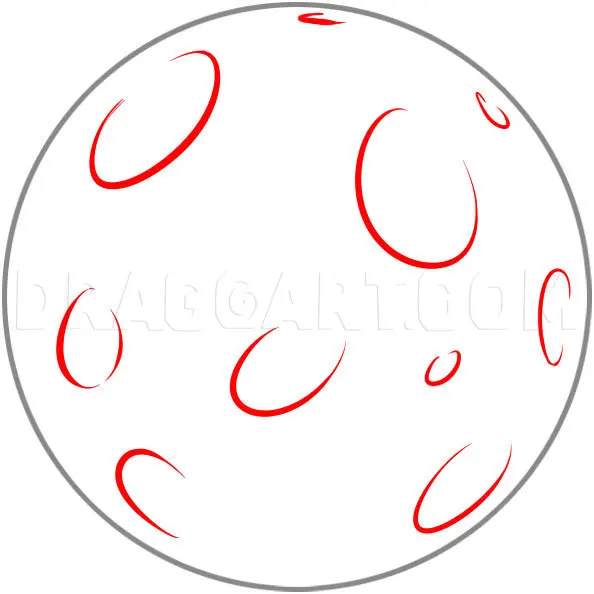
The texture of your planet defines its identity, whether it is a rocky terrestrial world or a gaseous giant. For rocky planets like Mars or Mercury, use a sharp pencil to stipple small dots or draw irregular, jagged craters. Focus on placing these details more densely near the terminator line, which is the boundary between light and shadow, as this highlights the three-dimensional form of the surface features.
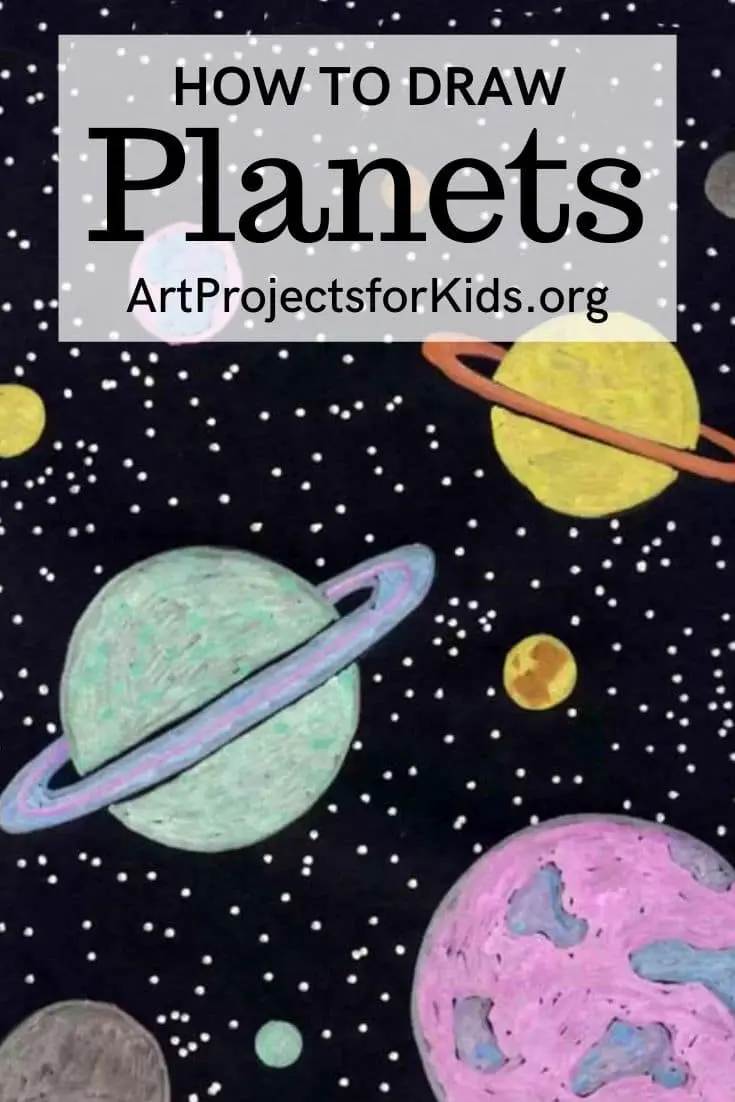
For gas giants like Jupiter, prioritize horizontal lines and swirling, elongated shapes to mimic atmospheric bands. Use a kneaded eraser to lift graphite off the page, creating lighter streaks that represent high-altitude clouds. Layering is key; start with faint, broad strokes for the base color and gradually add darker, sharper details on top. By varying your pressure and using different pencil grades, you can replicate the complex, shifting surfaces found throughout our solar system.
Why lighting creates realism
Realism in space art depends entirely on the consistency of the light source. A common error is placing shadows in multiple directions, which confuses the viewer and flattens the image. Imagine the planet as a glass marble under a single desk lamp; the light hits one side, creating a bright spot, while the opposite side falls into darkness. This consistent approach to value is what tricks the human eye into perceiving volume where there is only paper.
Another critical element is the cast shadow. If your planet is floating in space, it may not have a cast shadow, but it should have a subtle "terminator" line—the transition zone where light fades into shadow. If you choose to place the planet near a surface, ensure the cast shadow is elliptical and follows the ground's perspective. This grounding effect provides a sense of place and scale, making the object feel like a physical entity rather than a floating icon.
Common mistakes when drawing planets
Many artists struggle with the "flatness" problem, which usually stems from a lack of contrast. If your drawing looks like a simple circle, you likely need a wider range of values. Ensure your darkest darks are truly dark and your highlights are bright enough to provide a high-contrast focal point. Beginners often fear using heavy pressure, but bold shadows are necessary to convey the massive scale of a planet.
Avoid these frequent pitfalls to improve your results:
- Using a heavy, dark outline that prevents the planet from blending into the background.
- Making the terminator line a sharp, straight edge instead of a soft, curved gradient.
- Forgetting to include reflected light in the shadow area, which makes the sphere look hollow.
- Placing craters or surface details randomly without considering the curvature of the globe.
- Ignoring the atmospheric haze that softens edges on planets with thick, gaseous envelopes.
By correcting these common errors, you will significantly enhance the professional quality of your astronomical illustrations and achieve a more convincing sense of depth.
Key facts
- Planets are spherical due to hydrostatic equilibrium, meaning gravity pulls mass toward the center.
- Use a compass or a circular object to ensure your initial outline is a perfect circle.
- Light sources determine shading; place a bright highlight on one side and a deep shadow on the opposite curve.
- Atmospheric haze causes the edges of a planet to appear slightly blurred rather than razor-sharp.
- Add texture by layering subtle craters, swirling clouds, or distinct rings to create depth.
- Cast a shadow on the planet’s surface if it has moons or rings passing in front of it.
The bottom line
Drawing a convincing planet requires mastering the interplay of light and shadow on a spherical surface. By establishing a clear light source, you can create volume through careful shading and atmospheric effects. Whether you are sketching a barren, cratered world or a swirling gas giant, focus on the curvature and texture to bring your celestial body to life within the vast, dark expanse of space.
People also ask
How do I make a planet look three-dimensional?
Apply a gradient of shading that transitions from a bright highlight to a dark shadow along the curved edge. Avoid flat coloring, as the transition from light to dark is what defines the spherical volume.
What is the best way to draw planetary rings?
Draw an ellipse around the planet that is slightly tilted to create perspective. Ensure the rings pass behind the planet on one side and in front on the other to show spatial depth.
How do I add realistic surface textures?
Use stippling or light cross-hatching to represent craters or rocky terrain. For gas giants, use long, flowing horizontal lines to mimic the appearance of high-altitude jet streams and cloud bands.
Should I use a black background for my planet?
A dark background provides high contrast, which makes the planet's colors pop and simulates the vacuum of space. You can add tiny white dots to represent distant stars for a more immersive environment.
How do I choose a color palette?
Reference real celestial bodies like Mars, which uses iron oxide reds, or Neptune, which features deep blues. Mixing complementary colors can help create more vibrant and natural-looking planetary atmospheres.
What is a common mistake when drawing planets?
A frequent error is placing the shadow in the center of the sphere rather than along the edge. Remember that the shadow should follow the curvature of the planet to maintain the illusion of a sphere.
This answer was created with the help of AI research tools and reference sources. Spotted an error? Let us know — we correct mistakes quickly. See our editorial policy.