What does a key symbolize in art?
Short answer
A key in art primarily symbolizes access, authority, and the transition between states of being. It represents the power to unlock hidden knowledge, spiritual salvation, or physical boundaries. Depending on the context, a key can signify guardianship, the burden of secrets, or the liberation of the soul from earthly constraints.
On this page
What does a key represent in religious art?
In Christian iconography, the key is most famously associated with Saint Peter. According to the Gospel of Matthew, Jesus granted Peter the "keys of the kingdom of heaven," symbolizing his authority over the church and his role as the gatekeeper of salvation. Artists from the Renaissance to the Baroque period frequently depicted Peter holding two keys—one gold and one silver—representing the power to bind and loose sins on Earth and in heaven.
Beyond Peter, the key often functions as an attribute of other saints or figures who guard sacred spaces. It serves as a visual shorthand for protection, exclusivity, and divine access. When a key appears in a painting of the Virgin Mary, it may refer to her title as the "Gate of Heaven," emphasizing her role as the vessel through which the divine entered the human world.
- Gold keys: Often signify spiritual authority or the keys to the kingdom.
- Silver keys: Frequently represent the power of excommunication or earthly judgment.
- Crossed keys: A common heraldic symbol denoting the papacy and apostolic succession.
How do keys function as symbols of domesticity and power?
In secular art, particularly during the 17th-century Dutch Golden Age, keys became potent symbols of household management and domestic virtue. A woman depicted with a bunch of keys at her waist signaled her status as the mistress of the house, responsible for the security of the pantry, linens, and family wealth. This imagery emphasized the values of order, thrift, and moral integrity within the private sphere.
Conversely, in portraits of monarchs or high-ranking officials, a key held in the hand or resting on a table could symbolize territorial control or the possession of a fortress. It suggests that the subject holds the literal and metaphorical power to grant or deny entry to their domain. This usage highlights the key’s role as an instrument of political influence and territorial sovereignty.
- Observe the placement of the key in relation to the subject's hands.
- Identify whether the key is attached to a belt, indicating domestic duty.
- Assess the size of the key; larger, ornate keys often imply institutional or royal power.
- Look for accompanying objects, such as ledgers or children, which reinforce the theme of management.
Why are keys used to represent secrets and hidden knowledge?
The key’s physical function—to open a lock—makes it a natural metaphor for the transition from ignorance to enlightenment. In art depicting mythological or occult subjects, a key often represents the discovery of forbidden knowledge or the unveiling of a mystery. It suggests that the truth is present but remains inaccessible to those who lack the proper understanding or "key" to interpret it.
In Surrealist art, the symbolism of the key shifted toward the psychological. Artists like Salvador Dalí or René Magritte used keys to represent the subconscious mind. A key might appear in a dreamlike landscape, suggesting that the viewer is on the verge of unlocking a repressed memory or a hidden aspect of the self. This usage moves away from traditional religious or social authority, focusing instead on the internal, subjective experience of the individual.
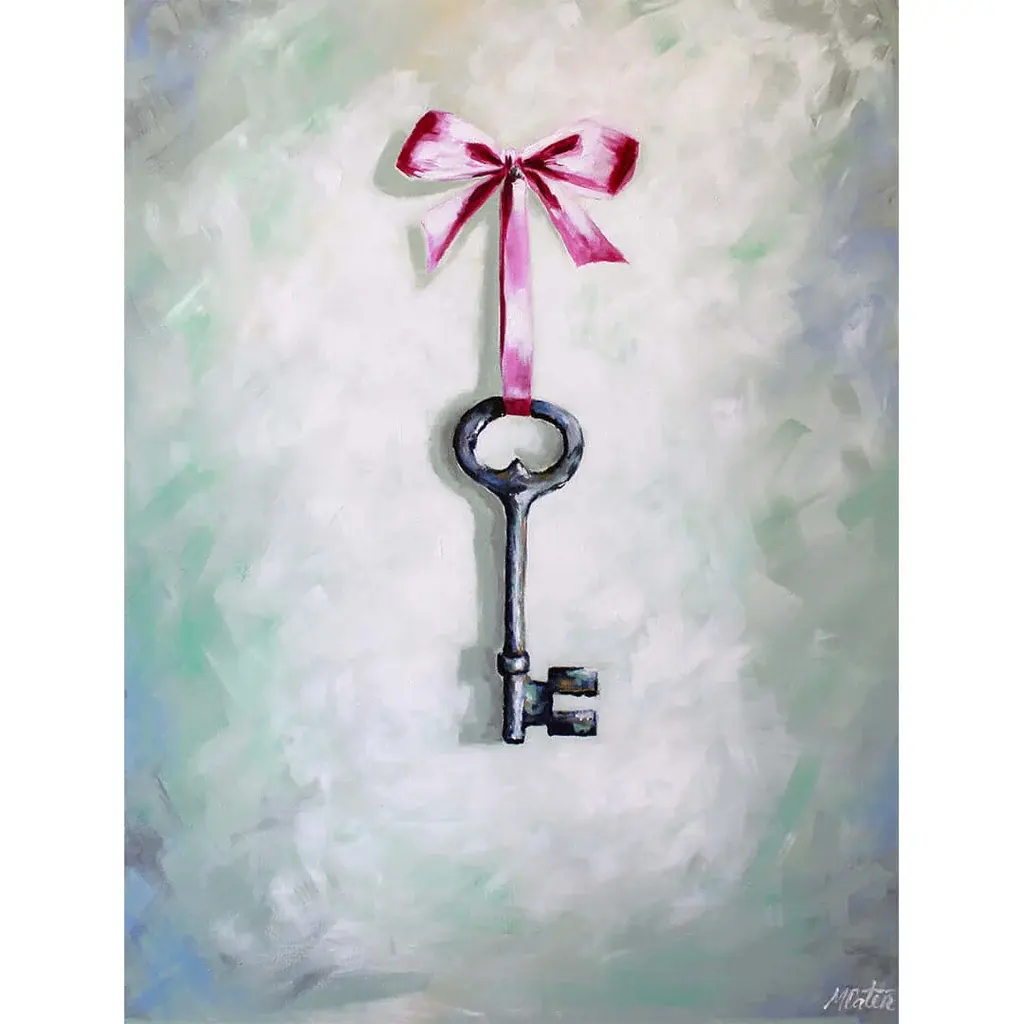
How to interpret keys in contemporary art
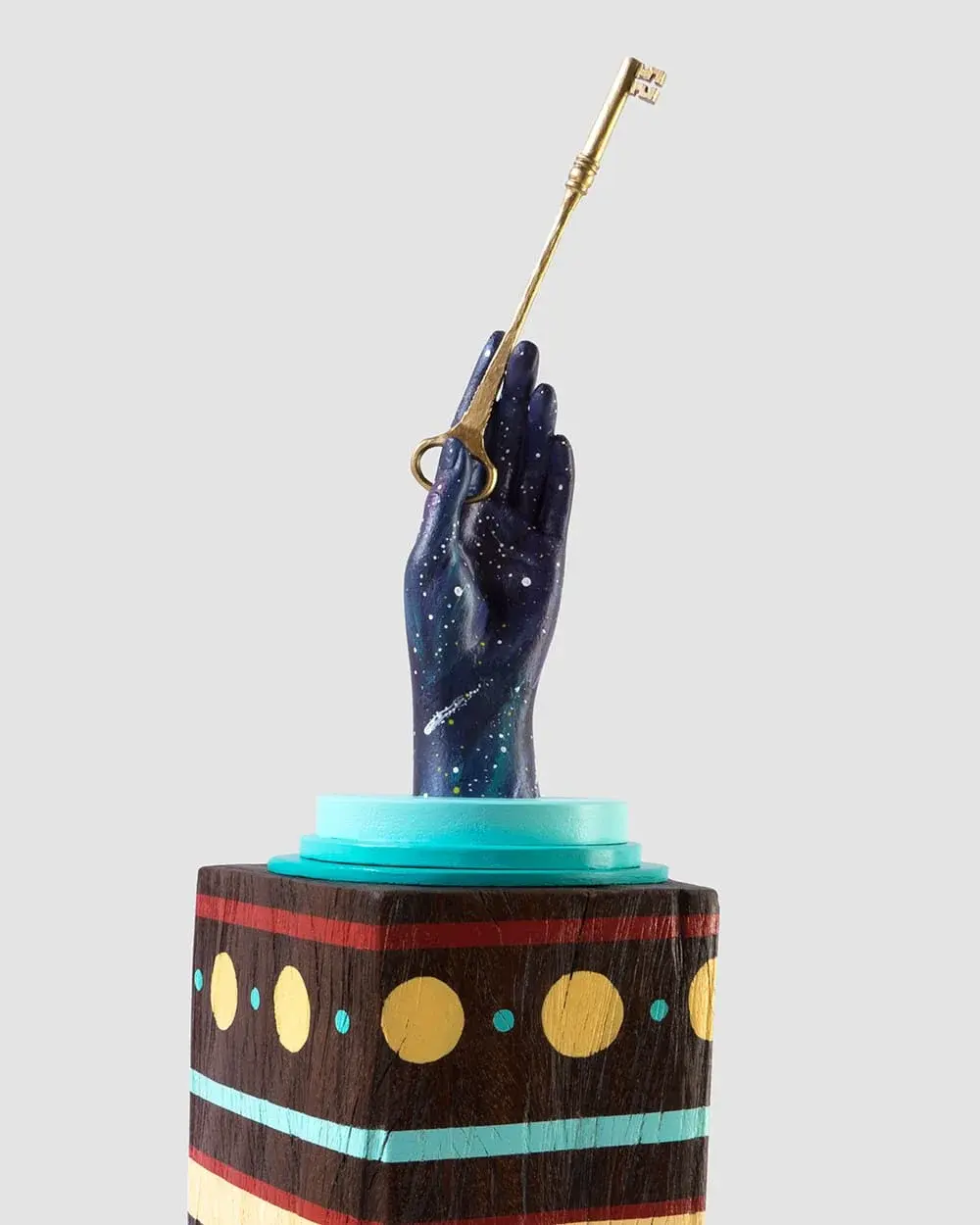
Contemporary artists often subvert traditional meanings, using keys to comment on themes of displacement, migration, and memory. For many people who have fled their homes due to conflict, a physical key to a lost house becomes a poignant relic of a former life. In these works, the key symbolizes a connection to a place that no longer exists or is no longer accessible, representing both hope and profound grief.
When analyzing a key in a modern installation or photograph, consider the context of the surrounding objects. Is the key rusted or broken? A broken key may signify a lost opportunity, a permanent separation from the past, or the failure of a system. By moving the key from a symbol of power to a symbol of personal history, modern artists challenge the viewer to think about what "access" means in a globalized, often fragmented world.
- Rusted keys: Suggest the decay of memory or the passage of significant time.
- Multiple keys on a ring: Represent the complexity of identity or the burden of many secrets.
- Keys encased in glass: Imply that the knowledge or home they represent is now unreachable.
Common mistakes when analyzing key symbolism
A frequent error in art historical analysis is assuming that a key always carries the same meaning regardless of the period. For instance, interpreting a 17th-century Dutch domestic key through the lens of modern psychological theory ignores the specific social expectations placed on women during that era. Context is essential; a key in a painting of a saint is a religious attribute, while the same object in a still life is a commentary on material wealth and security.
Another mistake is overlooking the lock itself. The relationship between the key and the lock is a binary that defines the symbol’s function. If a key is shown without a lock, the artist may be emphasizing potential or the idea of an "open" state. If the key is locked inside a box, the artist is likely highlighting the irony of restricted access. Always look for the lock to understand the full narrative of the artwork.
Key facts
- In Christian iconography, keys represent the authority of Saint Peter, often shown holding two keys symbolizing the power to bind and loose in heaven and on earth.
- Keys frequently function as symbols of transition, representing the unlocking of secrets, hidden knowledge, or the passage from one state of being to another.
- In secular art, a key held by a figure often denotes domestic authority, stewardship, or the role of a gatekeeper within a household.
- When depicted as broken, a key signifies the loss of power, the end of an opportunity, or the impossibility of returning to a previous state.
- Artists use keys to suggest intimacy or betrayal, such as a key left on a table in a Dutch interior painting to imply a secret affair.
- To identify the meaning of a key in a painting, always look at the figure holding it and the surrounding objects, as context determines if the key represents liberation or imprisonment.
The bottom line
The key is a versatile symbol in art, shifting between themes of spiritual authority, domestic responsibility, and psychological discovery. Whether it represents the divine power of Saint Peter or the secrets of a private household, its meaning is entirely dependent on its context. By observing how a key is held and what it interacts with, viewers can unlock the deeper narrative intentions of the artist.
People also ask
Why are keys often depicted with a cross in religious art?
The combination of a key and a cross emphasizes the divine authority granted to the church. It signifies that the spiritual key is held by religious figures through the sacrifice of Christ.
What does it mean when a key is shown hanging from a woman's belt in 17th-century art?
This traditionally symbolizes the woman's role as the mistress of the house. It highlights her responsibility for the household's supplies, security, and domestic management.
Can a key represent death in art?
Yes, a key can symbolize the transition from life to death. It is often viewed as the tool that unlocks the gates of the afterlife or the finality of a soul's journey.
What is the significance of a skeleton key in modern surrealist art?
Surrealists often use skeleton keys to represent the unlocking of the subconscious mind. It serves as a bridge between the rational world and the hidden, irrational depths of human dreams.
Are there gendered associations with keys in art history?
Historically, keys were often associated with female figures in domestic settings and male figures in positions of institutional or ecclesiastical power. These roles were rigid reflections of the social structures of the time.
What is a common mistake when interpreting a key in art?
A common error is assuming every key symbolizes "freedom." One must examine if the key is locking a door or opening one, as a locked door suggests restriction rather than liberation.
This answer was created with the help of AI research tools and reference sources. Spotted an error? Let us know — we correct mistakes quickly. See our editorial policy.