What techniques did J.M.W. Turner use?
Short answer
J.M.W. Turner revolutionized landscape painting through radical light manipulation and experimental material application. He utilized thin, translucent glazes to build luminosity, scratched through wet paint with palette knives to reveal underlayers, and employed a "white ground" technique to maximize brilliance. These methods transformed traditional oil painting into atmospheric, light-filled visionary works.
On this page
How did J.M.W. Turner use light and color?
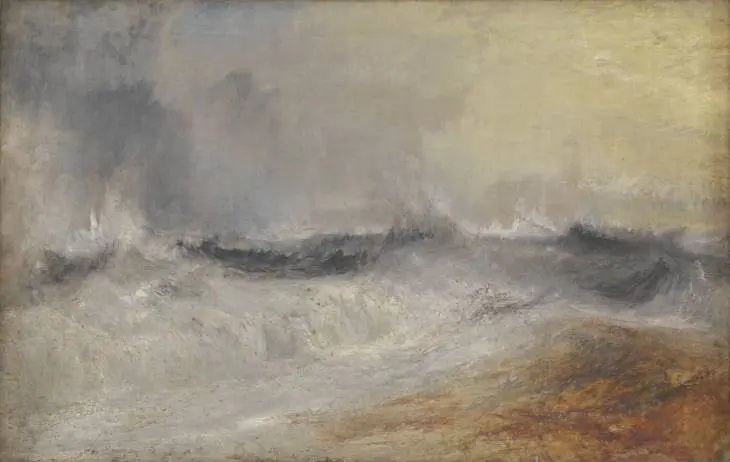
Turner moved away from the somber, dark palettes favored by his predecessors, choosing instead to emphasize the radiant qualities of light. He frequently utilized a white ground, or primer, on his canvases, which allowed light to reflect back through his thin layers of paint. This technique gave his skies and water a luminous, ethereal quality that seemed to glow from within. He often applied colors in a systematic, almost scientific manner, favoring high-contrast pairings to create the illusion of intense brightness.
By the 1830s and 1840s, his work became increasingly abstract as he prioritized color over distinct forms. He famously used a technique known as "scumbling," where he dragged opaque, light-colored paint over a darker, dry underlayer. This created a hazy, atmospheric effect that perfectly captured the feeling of mist, steam, or fog. To achieve these vibrant results, he relied on a specific set of practices:
- Applying transparent glazes to deepen shadows without sacrificing color clarity.
- Using pure, unmixed pigments to create focal points of intense light.
- Layering cool tones beneath warm tones to suggest depth and atmospheric distance.
What materials did Turner use in his paintings?
Turner was an experimentalist who frequently pushed the boundaries of traditional 19th-century art supplies. He often mixed unconventional additives into his oil paints, including megilp, a gelatinous medium made of mastic varnish and linseed oil. While this substance allowed for a buttery, fluid application that was perfect for capturing movement, it also caused his paintings to yellow and crack over time. He was not afraid to use watercolor techniques on oil canvases, blurring the lines between the two mediums.
His toolkit was extensive and often improvised to suit his immediate creative needs. He famously used his fingers, rags, and even his fingernails to manipulate paint on the canvas surface. By incorporating these non-traditional tools, he could soften edges and create textures that brushes alone could not provide. Consider these essential components of his material approach:
- High-quality pigments like cobalt blue and chrome yellow, which were relatively new during his career.
- A variety of palette knives used to scrape away paint and expose the lighter ground beneath.
- Sponges and dry brushes used to lift wet paint, creating soft, diffused transitions.
How to achieve Turner's atmospheric effects?
To replicate Turner's signature atmosphere, you must focus on the concept of "lost edges," where objects dissolve into the surrounding air. Start by establishing a bright white or light-toned base, as a dark background will absorb too much light. When painting skies or water, avoid hard outlines. Instead, work with a wet-on-wet technique, allowing colors to bleed into one another to mimic the chaotic, shifting nature of weather.
Building depth requires a patient, multi-layered approach. Start with thin, watery washes to establish the general composition and tonal balance. Once the base is dry, begin adding thicker, more opaque layers to define the light sources. If you find your work looking flat, try these steps:
- Apply a thin, transparent glaze of a warm color over a cool, dry area to create a sense of glowing heat.
- Use a dry, stiff brush to lightly "scrub" pigment into the canvas weave, creating a soft, misty texture.
- Leave certain areas of the white primer exposed to act as the brightest highlights in the composition.
Common mistakes when painting like Turner
A frequent error for beginners is over-blending colors, which results in a muddy, dull appearance. Turner’s work remains vibrant because he often placed distinct, unmixed colors side-by-side, allowing the viewer's eye to perform the optical blending. If you over-mix your paint on the palette, you lose the energy and luminosity that defined his style. Always test your mixtures on a separate surface before applying them to the main canvas.
Another common pitfall is the misuse of dark tones, which can quickly overwhelm a composition and kill the light. Turner used dark colors sparingly, usually only to anchor the composition or to provide a sharp contrast to his bright centers of interest. Avoid using black paint directly; instead, create deep, rich darks by mixing complementary colors like burnt sienna and ultramarine blue. This ensures that your shadows retain a sense of color and life rather than appearing as flat, lifeless voids.
Why Turner's techniques changed over time
Turner’s stylistic evolution was driven by his desire to capture the sublime power of nature. In his early years, he followed the strict, classical rules of perspective and composition, but he gradually abandoned these constraints in favor of emotional expression. His later works, such as Rain, Steam and Speed, demonstrate a total rejection of precise detail in favor of pure energy and light. This progression was not a lack of skill, but a deliberate choice to prioritize the "idea" of a scene over its physical reality.
His later techniques were heavily influenced by his travels across Europe, particularly his time in Venice. The unique, shimmering light of the Italian coast inspired him to push his color theory further, leading to the near-abstract canvases that shocked his contemporaries. By understanding that his methods were a response to his environment, you can better adapt his approach to your own artistic goals. Ultimately, Turner’s legacy teaches that technique should always serve the artist's vision, even when that vision requires breaking every established rule of the medium.
Key facts
- Turner frequently applied thin, translucent glazes of oil paint over a light-colored ground to create a luminous, atmospheric effect.
- He often used a palette knife to scrape back layers of wet paint, revealing the underlying colors and adding physical texture to his canvases.
- To achieve his signature "vaporous" look, he utilized a technique called scumbling, where opaque, light-colored paint is dragged lightly over a darker base.
- He was known for working with a limited, high-key palette in his later years, focusing on pure yellows, reds, and blues to capture the intensity of light.
- Turner often added "scratches" or incisions into the paint surface with the handle of his brush to define details like ship masts or architectural lines.
- When painting watercolors, he frequently used a sponge or a rag to lift pigment off the paper, creating soft edges and misty, atmospheric transitions.
The bottom line
J.M.W. Turner revolutionized landscape painting by prioritizing the emotional impact of light over strict topographical accuracy. By combining traditional glazing with experimental techniques like scraping and scumbling, he transformed the canvas into a vibrant, atmospheric space. His legacy lies in his willingness to abandon rigid detail in favor of fluid, expressive forms that capture the raw, transient power of the natural world.
People also ask
Did Turner paint his landscapes on location?
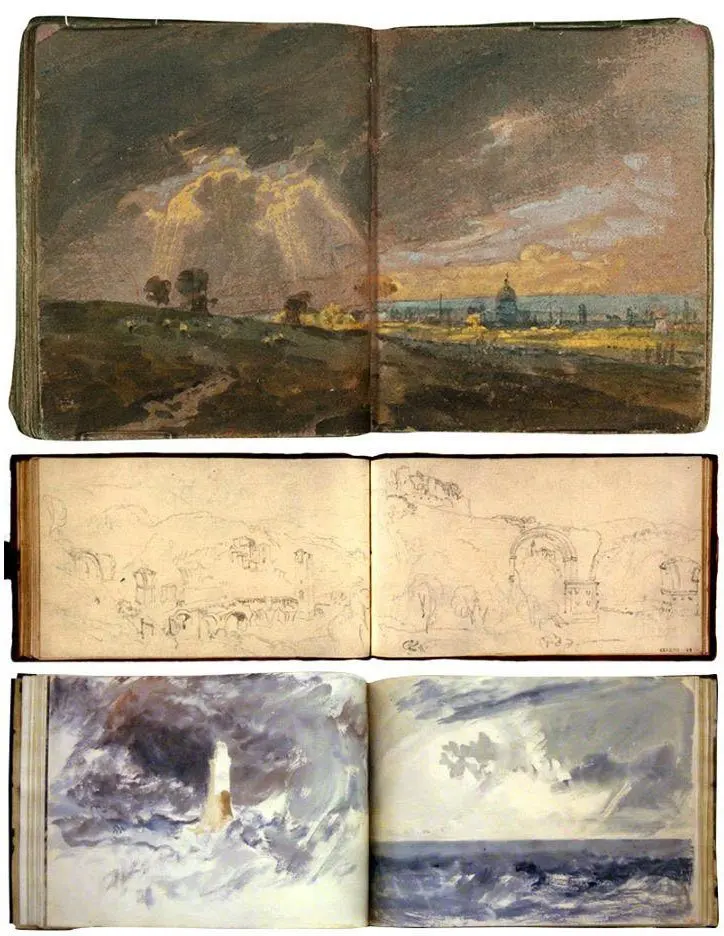
Turner typically made quick pencil sketches and watercolor studies while traveling, but he composed his large-scale oil paintings in his studio. He used these field notes as references to recreate the mood and light of a scene from memory.
Why did Turner use so much yellow in his later works?
Turner was obsessed with the physics of light and color theory, particularly the theories of Johann Wolfgang von Goethe. He used yellow to represent the sun and divine energy, often pushing the boundaries of color to evoke emotional intensity rather than literal realism.
What was Turner's approach to preparing his canvases?
He preferred a bright white or light-colored ground, which acted as a reflector for the light passing through his thin glazes. This preparation was crucial for achieving the brilliant, glowing luminosity that defines his most famous maritime and landscape paintings.
Did Turner use traditional brushes for all his work?
No, Turner was highly experimental and often used his fingers, palette knives, and even sponges to manipulate paint. He believed that the tool was secondary to the effect, often applying paint with whatever object allowed him to achieve the desired texture.
How did Turner achieve the sense of movement in his paintings?
He used swirling, vortex-like compositions and blurred edges to suggest the chaotic power of nature. By avoiding rigid outlines and focusing on the interplay of light and shadow, he created a sense of kinetic energy in storms and fires.
What is a common mistake when trying to emulate Turner’s style?
A common error is over-blending the paint, which results in a muddy appearance rather than a luminous one. To replicate his style, one must maintain transparency by layering colors carefully and allowing the light-colored base to shine through.
This answer was created with the help of AI research tools and reference sources. Spotted an error? Let us know — we correct mistakes quickly. See our editorial policy.