Why is Les Demoiselles d'Avignon so famous?
Short answer
Les Demoiselles d’Avignon is famous for fundamentally shattering traditional artistic conventions. By abandoning linear perspective and anatomical realism in favor of fragmented, geometric forms, Pablo Picasso created a radical blueprint for Cubism. This 1907 masterpiece remains a pivotal turning point in modern art history, permanently altering how artists represent space and human perception.
On this page
Why is Les Demoiselles d'Avignon considered revolutionary?
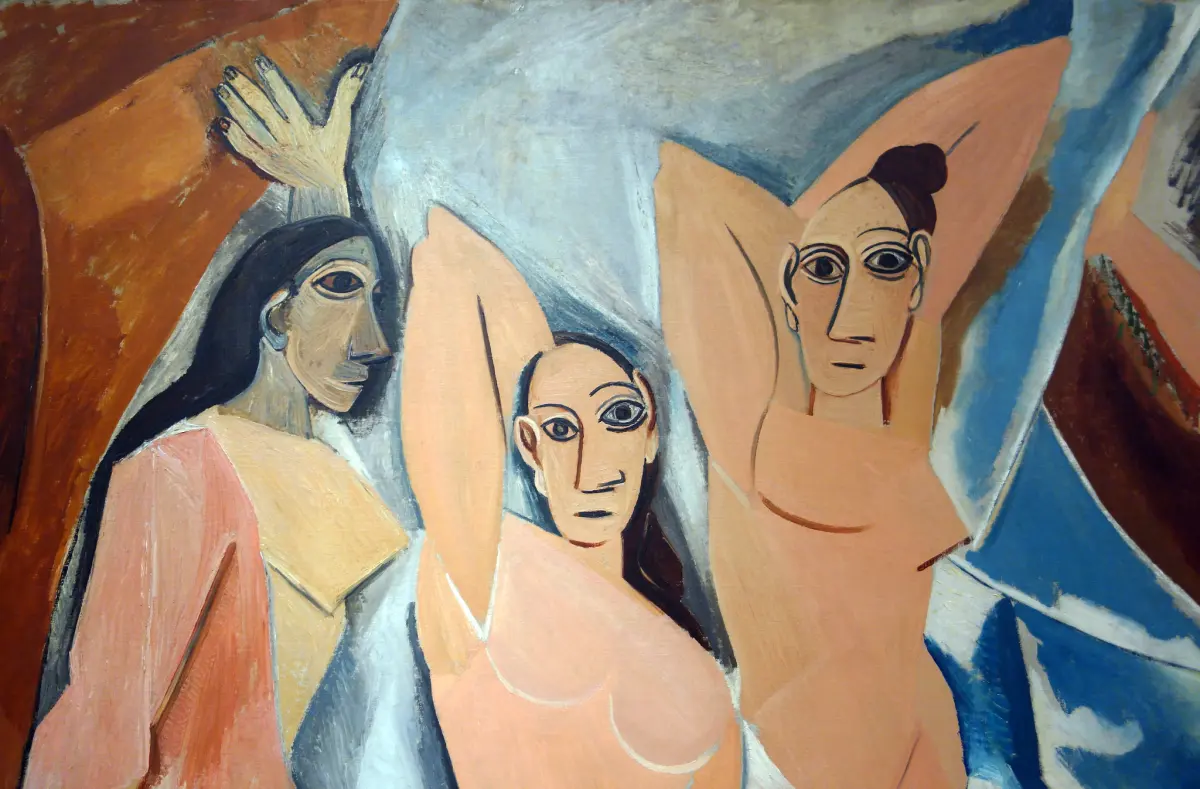
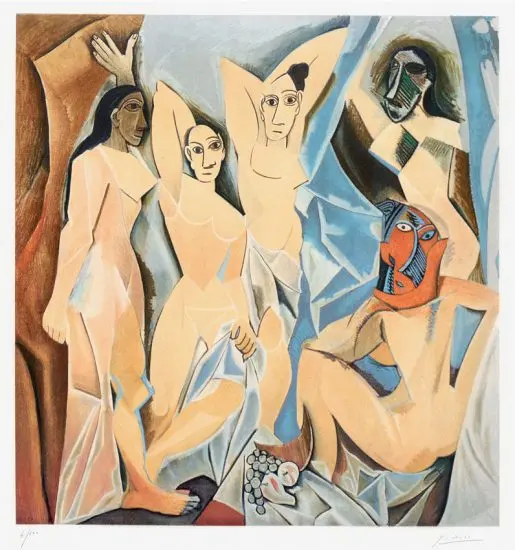
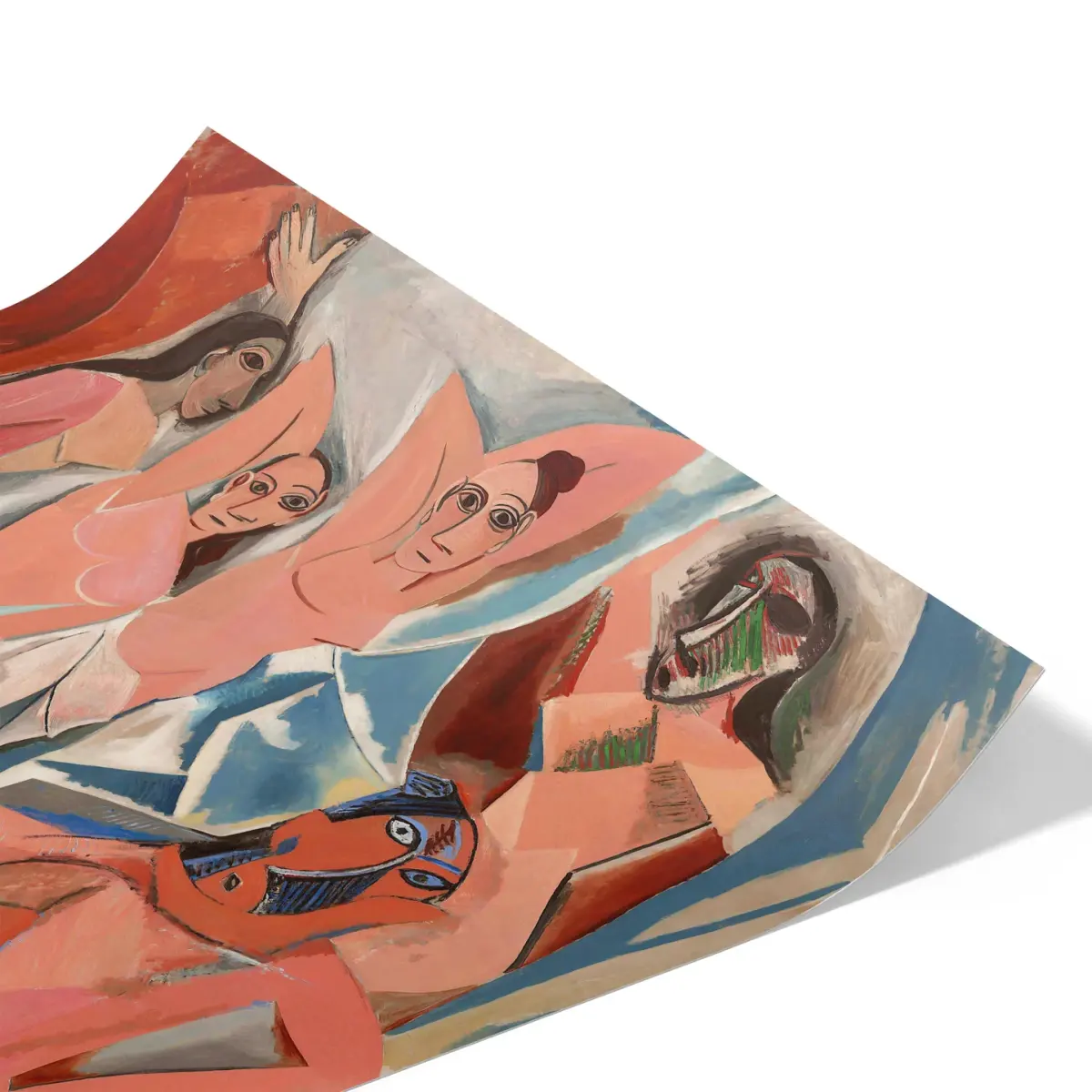
Painted in 1907, this large-scale oil painting depicts five nude prostitutes in a brothel on Carrer d'Avinyó in Barcelona. At the time, the work was shocking because it rejected the Renaissance tradition of idealized beauty and spatial depth. Picasso replaced soft, rounded forms with jagged, angular shapes that forced the viewer to confront the canvas as a flat, two-dimensional surface rather than a window into a realistic scene.
The painting serves as the primary bridge between post-Impressionism and the birth of Cubism. By distorting the bodies of the women and compressing the background into sharp, splintered planes, Picasso challenged the viewer’s expectation of harmony. This deliberate "ugliness" was a calculated assault on the academic standards of the era, establishing a new visual language that prioritized conceptual expression over naturalistic imitation.
How did African art influence the painting?
During the creation of the work, Picasso visited the Trocadéro Museum of Ethnography in Paris, where he encountered masks from sub-Saharan Africa. He was deeply struck by the power and abstraction of these objects, particularly those from the Fang and Dan cultures. He subsequently repainted the faces of the two figures on the right side of the canvas to resemble these masks, imbuing them with a primitive, mask-like intensity.
This influence was not merely aesthetic; it provided Picasso with a way to move beyond the constraints of Western realism. By incorporating these non-Western stylistic elements, he introduced a sense of psychological tension and spiritual mystery that had been absent from European portraiture. This synthesis of styles helped liberate modern art from the burden of historical tradition, allowing for a more subjective and emotive approach to the human figure.
What are the key features of the composition?
The painting is defined by a series of radical departures from classical composition. The figures are not arranged in a coherent space; instead, they appear to collide with one another and the foreground. The lack of a single vanishing point means the viewer is presented with multiple perspectives simultaneously, a technique that would soon define the Cubist movement.
Key visual elements include:
- Sharp, geometric facial features influenced by Iberian sculpture and African masks.
- A shallow, claustrophobic background that eliminates traditional depth.
- A palette dominated by harsh ochres, blues, and pinks that emphasize the starkness of the figures.
- Asymmetrical poses that intentionally avoid grace or elegance in favor of raw, confrontational energy.
How to analyze the painting like an expert
When viewing the work, look past the initial shock of the distorted figures to understand the structural logic at play. Start by observing the tension between the foreground and background, noting how the curtain-like shapes seem to push the women forward into the viewer's space. This intentional flattening of space is the most important technical achievement of the piece.
Follow these steps to conduct a professional visual analysis:
- Identify the five figures and note how their poses shift from the relatively traditional left side to the highly abstracted right side.
- Examine the brushwork, which varies from smooth, academic-style rendering to rough, aggressive strokes.
- Consider the gaze of the figures; unlike traditional nudes who look away, these women stare directly at the viewer, turning the act of looking into a mutual confrontation.
- Compare the sharp, broken lines of the bodies with the still-life elements at the bottom, which provide a grounding point for the chaotic composition.
Common mistakes when interpreting the work
A frequent error is assuming the painting is merely a depiction of a brothel. While the setting is biographical, the painting is primarily an intellectual exercise in spatial geometry and the subversion of art history. Focusing too heavily on the narrative of the prostitutes often causes viewers to miss the more significant achievement of the painting, which is the complete restructuring of pictorial space.
Another mistake is viewing the work through a lens of moral judgment rather than artistic evolution. Many early critics were so offended by the subject matter that they dismissed the technical innovation entirely. To understand its fame, one must look past the provocative subject and recognize the painting as a laboratory for new ideas. By treating the canvas as a site of experimentation rather than a moralizing scene, you can appreciate why this work remains the foundational document of twentieth-century modernism.
Key facts
- Painted in 1907, Les Demoiselles d'Avignon marks the radical transition from traditional perspective to the fragmented forms of Cubism.
- The work depicts five nude prostitutes in a brothel on Carrer d'Avinyó in Barcelona, challenging conventional standards of beauty.
- Pablo Picasso drew significant inspiration from African tribal masks, which he viewed at the Trocadéro Museum in Paris.
- The painting measures approximately 8 feet by 7.7 feet, making it a monumental and physically imposing work of art.
- To appreciate the painting, stand back to observe the overall composition, then step closer to examine the jagged, non-naturalistic brushwork.
- Avoid looking for realistic anatomy; instead, focus on how the artist breaks the human form into geometric planes to suggest multiple viewpoints simultaneously.
The bottom line
Les Demoiselles d'Avignon remains famous because it fundamentally shattered the rules of Western art that had persisted since the Renaissance. By abandoning perspective and embracing the raw, geometric influence of African masks, Picasso forced viewers to confront a new, fragmented reality. It is the definitive bridge between traditional figurative painting and the birth of modernism, forever changing how we perceive the human form.
People also ask
Why did the painting cause such a scandal when it was first unveiled?
The work shocked Picasso’s contemporaries because it abandoned classical beauty, linear perspective, and soft modeling. Its aggressive, angular figures and mask-like faces were seen as ugly and psychologically disturbing by early viewers.
How did African art influence the creation of this painting?
Picasso was deeply moved by the stylized, expressive features of African masks, which he felt possessed a spiritual and primal power. He incorporated these features into the faces of the two figures on the right to break away from European artistic traditions.
Is this painting considered the first Cubist work?
It is widely cited as the "proto-Cubist" masterpiece that laid the foundation for the movement. While it does not fully utilize the analytical Cubism seen in later years, its rejection of depth and focus on geometric fragmentation defined the new style.
Where is the painting located today?
The painting has been part of the permanent collection at the Museum of Modern Art (MoMA) in New York City since 1939. It is considered one of the most important pieces in the museum's history.
What do the different figures represent in the composition?
The figures represent a shift in how artists depict the human body, moving from individual portraits to symbolic, flattened shapes. The varying styles of the faces suggest a clash between Western academic tradition and non-Western aesthetic influences.
Why is the title of the painting significant?
The title refers to a street in Barcelona known for its brothels, grounding the work in a specific, gritty reality. It strips away the romanticism usually associated with the "nude" in art history, replacing it with a confrontational and raw depiction.
This answer was created with the help of AI research tools and reference sources. Spotted an error? Let us know — we correct mistakes quickly. See our editorial policy.