What is Amedeo Modigliani known for?
Short answer
Amedeo Modigliani is best known for his distinctive portraits and nudes characterized by elongated faces, necks, and limbs. Working in early 20th-century Paris, he fused influences from Italian Renaissance painting, African sculpture, and Cubism. His melancholic, mask-like subjects remain some of the most recognizable and emotionally resonant images in modern art history.
On this page
What defines the Modigliani style?
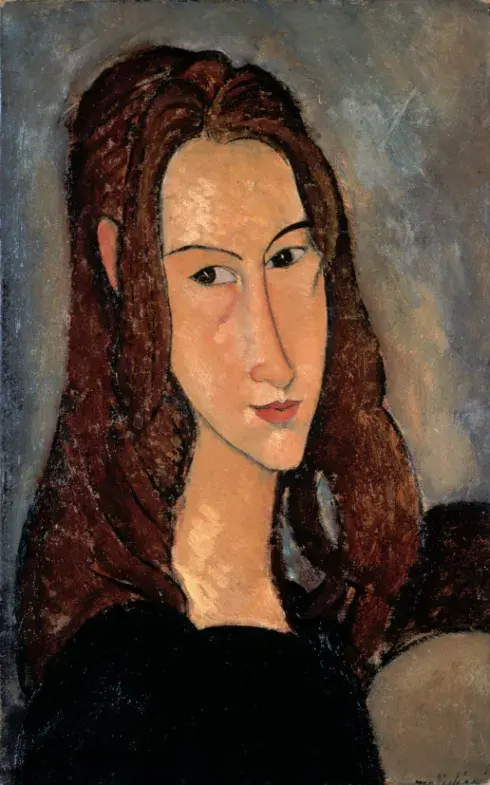
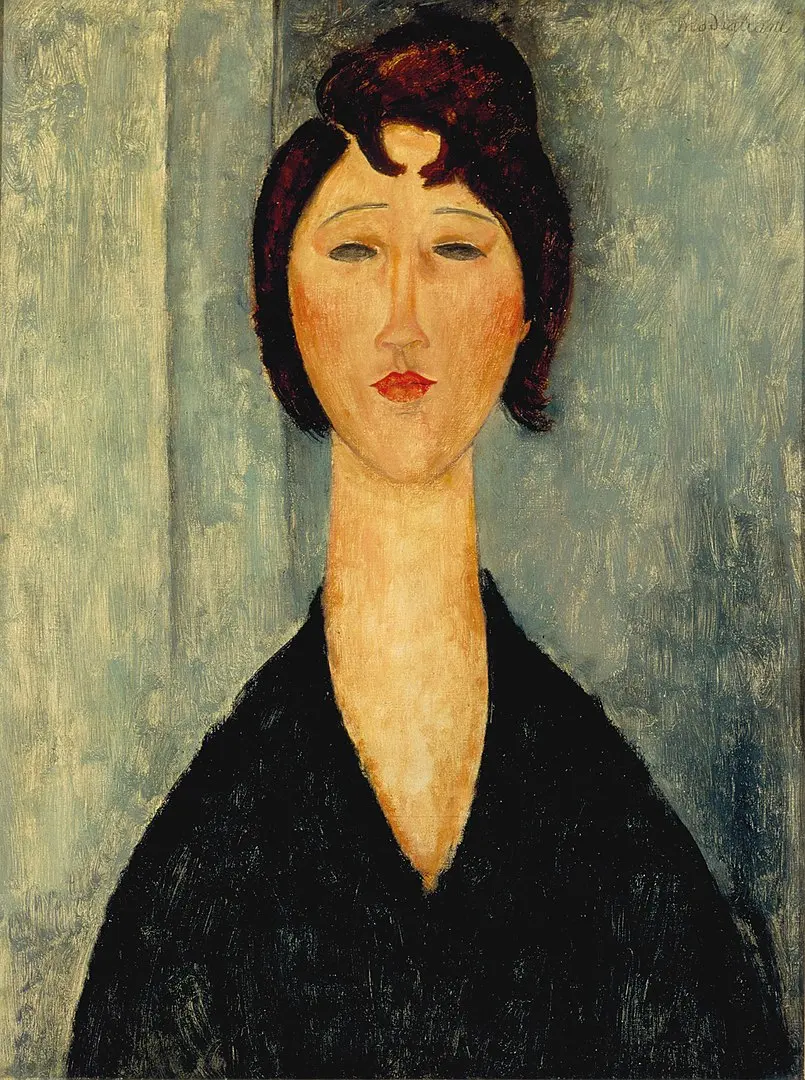
Modigliani’s signature aesthetic is defined by a deliberate distortion of the human form. His subjects typically feature almond-shaped, often sightless eyes, tiny mouths, and swan-like necks that create a sense of elegant, fragile grace. This stylistic choice was not meant to reflect reality but rather to capture a psychological essence or a specific emotional depth within the sitter.
Beyond the elongation, his color palette often relied on warm, earthy tones—ochres, burnt oranges, and deep reds—set against muted, flat backgrounds. This technique pushed the focus entirely onto the subject’s silhouette and posture. His work serves as a bridge between the traditional portraiture of the Italian masters, such as Botticelli, and the radical simplification favored by avant-garde contemporaries.
- Elongated, oval-shaped faces.
- Minimalist, mask-like facial features.
- Fluid, rhythmic lines defining the body.
- Restricted, warm color schemes.
How did African art influence his work?
During his time in Paris, Modigliani became deeply fascinated by African tribal masks and sculpture, which were gaining popularity among artists like Pablo Picasso. He saw in these objects a raw, spiritual power that felt more authentic than the academic traditions of Western art. This influence is most visible in the structural simplification of his portraits, where the nose often becomes a straight, sharp line and the eyes are reduced to simple slits.
This fusion of cultures allowed him to move away from the rigid realism of the 19th century. By treating the human face as a sculptural object, he was able to emphasize form and balance over anatomical accuracy. This approach was revolutionary, as it stripped away the clutter of detail to reveal a more primal, universal human expression.
- Study the geometric shapes found in traditional African masks.
- Observe how he translates these shapes into two-dimensional painting.
- Notice the lack of shadow, which mimics the flat planes of carved wood.
- Compare his early stone carvings to his later oil paintings.
Why are his nudes considered controversial?
In 1917, Modigliani held his only solo exhibition at the Galerie Berthe Weill, which featured a series of reclining nudes. At the time, the police ordered the show to close because the paintings were considered scandalous due to their overt sensuality and the inclusion of pubic hair. Unlike the idealized, mythological nudes of the past, Modigliani’s subjects were contemporary, flesh-and-blood women depicted with an unvarnished, human reality.
These paintings are now celebrated for their warmth and the intimacy they convey between the artist and the model. They are not merely objects of desire but are rendered with a profound tenderness that softens their provocative poses. The controversy that once surrounded them has faded, leaving behind a legacy of works that are prized for their technical mastery and their honest portrayal of the female form.
Common mistakes when analyzing Modigliani
A frequent error is assuming that Modigliani’s style was a direct result of his personal struggles with substance abuse. While his life was indeed marked by poverty and illness, his artistic choices were highly calculated and rooted in deep study of art history. He was a disciplined draftsman who spent years refining his technique, and his distortions were intentional artistic decisions rather than the byproduct of a chaotic lifestyle.
Another common mistake is mislabeling his work as strictly Cubist. While he was friends with many Cubists, he rejected their fragmented, multi-perspective approach. Modigliani preferred a more fluid, continuous line that emphasized the unity of the figure. He remained an independent artist who borrowed elements from various movements but ultimately followed his own distinct path, prioritizing the soul of the sitter above all else.
- Assuming his style was accidental or erratic.
- Overlooking the influence of the Italian Renaissance.
- Misinterpreting his portraits as mere caricatures.
- Failing to recognize the structural influence of his sculpture.
How to appreciate his work today
To truly understand Modigliani, one should look at his work in the context of the Parisian art scene of the 1910s. He lived in Montparnasse, a neighborhood teeming with poets, writers, and painters who were all searching for a new visual language. By visiting museums that hold his collections, such as the Musée de l'Orangerie or the Tate, viewers can see the subtle textures of his brushwork that are often lost in digital reproductions.
When viewing his paintings, pay close attention to the eyes. While many appear blank, the tilt of the head and the curve of the shoulders often convey a specific mood, ranging from melancholy to defiant confidence. He was a master of capturing the fleeting nature of human personality, and his ability to distill complex emotions into simple, elegant forms is why his work remains timeless and continues to captivate audiences more than a century after his death.
Key facts
- Amedeo Modigliani (1884–1920) was an Italian painter and sculptor best known for his portraits featuring elongated faces, necks, and figures.
- His signature style was heavily influenced by African tribal masks and the simplified, elegant lines of Italian Renaissance masters like Botticelli.
- He spent the majority of his career in Paris, where he lived a bohemian lifestyle and associated with artists like Pablo Picasso and Chaim Soutine.
- While he began his career as a sculptor, he largely abandoned the medium by 1914 due to health issues caused by inhaling stone dust.
- His only solo exhibition, held in 1917 at the Galerie Berthe Weill, was shut down by police on opening day because the authorities deemed his nude paintings indecent.
- When viewing his work, look for his distinct use of "mask-like" eyes, which are often depicted as empty, almond-shaped voids without pupils.
The bottom line
Amedeo Modigliani remains an iconic figure of the early 20th-century art world, remembered for his hauntingly beautiful portraits and minimalist aesthetic. By blending the influences of African sculpture with the grace of the Italian Renaissance, he created a unique visual language that transcended his era. Despite a life marked by hardship and obscurity, his distinct, elongated style continues to captivate audiences and influence modern portraiture today.
People also ask
Why are the necks in Modigliani's paintings so long?
Modigliani elongated his subjects' features to emphasize elegance and emotional abstraction rather than anatomical realism. This stylistic choice reflected his interest in the simplified, geometric forms found in non-Western art and archaic sculpture.
Did Modigliani achieve fame during his lifetime?
Modigliani struggled with poverty and poor health for most of his life and did not achieve significant commercial success before his death at age 35. It was only in the years following his passing that his work gained widespread critical acclaim and high market value.
What materials did Modigliani use for his sculptures?
He primarily carved his sculptures from limestone blocks, often salvaged from construction sites in Paris. He aimed to create a "primitive" aesthetic that focused on the structural integrity of the stone rather than intricate surface detail.
How can I distinguish a real Modigliani from a forgery?
Modigliani’s work is frequently forged due to its high value and relatively simple stylistic markers. Authentication relies on rigorous provenance research, technical analysis of paint pigments, and expert evaluation of his unique, fluid brushwork.
Who was Jeanne Hébuterne?
Jeanne Hébuterne was an artist and Modigliani’s common-law wife, who served as his most frequent model. Tragically, she died by suicide one day after his death, leaving behind their young daughter.
What was Modigliani’s relationship with the School of Paris?
He is considered a central figure of the School of Paris, a group of international artists who lived and worked in the city during the early 20th century. His work bridged the gap between traditional European portraiture and modern, avant-garde expressionism.
This answer was created with the help of AI research tools and reference sources. Spotted an error? Let us know — we correct mistakes quickly. See our editorial policy.