What is Alma Thomas known for?
Short answer
Alma Thomas is best known as a pioneering African American abstract painter who gained national recognition in her seventies. She is celebrated for her vibrant, rhythmic compositions featuring concentric circles and dashes of color. Her work, characterized by light and nature, broke racial and gender barriers in the mid-century American art world.
On this page
What is Alma Thomas famous for?
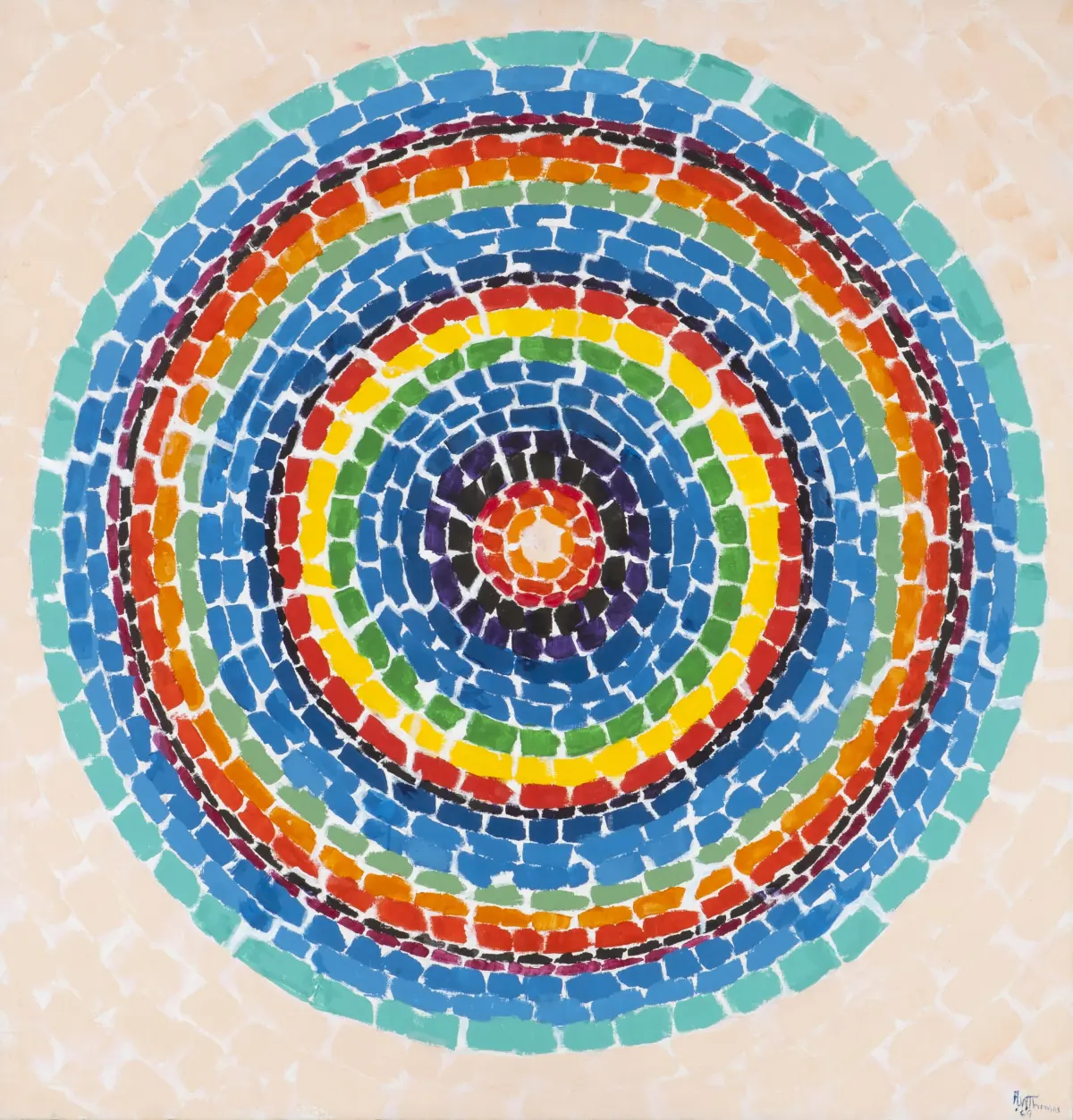
Alma Thomas is primarily recognized for her late-career transition into abstract expressionism, a style that defined her legacy. After a long career as a public school art teacher in Washington, D.C., she retired in 1960 and began focusing entirely on her own painting. Her signature style emerged during this period, characterized by bold, rhythmic patterns of color applied in short, staccato brushstrokes. These works often utilized concentric circles or geometric arrangements that seemed to vibrate with energy, reflecting her deep interest in light, space, and the natural world.
Her reputation grew significantly in 1972 when she became the first African American woman to have a solo exhibition at the Whitney Museum of American Art in New York City. This milestone marked her arrival on the national stage, cementing her status as a major figure in American modernism. Her ability to translate the complexities of nature—such as the patterns of flowers in her garden or the light hitting a window—into abstract visual language remains her most enduring contribution to art history.
How did Alma Thomas develop her style?
Thomas’s artistic development was deeply rooted in her academic training and her observations of the world around her. She was the first graduate of the fine arts department at Howard University in 1924, where she studied under James V. Herring. Later, she earned a master’s degree from Columbia University. Her early work was more representational, but she eventually moved toward abstraction, influenced by the Washington Color School, a group of artists who explored the emotional power of pure color.
Key elements of her technical approach included:
- The use of heavy, acrylic paints to create texture.
- A focus on "color fields" that allowed the canvas to breathe.
- The repetition of geometric shapes to create a sense of movement.
- A palette inspired by her own garden, featuring bright yellows, deep reds, and cool blues.
She often worked on the floor, allowing her to approach the canvas from all sides, which gave her compositions a sense of being organic and unbounded by traditional perspective.

Why is Alma Thomas considered a pioneer?
Thomas’s career is a testament to perseverance, as she achieved her greatest success well into her seventies. Her status as a pioneer is not only due to her technical innovation but also her role as a trailblazer for women and artists of color. In an era when the art world was dominated by white men, Thomas navigated systemic exclusion with grace and determination. She did not allow the limitations placed upon her by society to stifle her creative evolution, choosing instead to focus on the universality of beauty.
Her influence extends beyond her paintings; she was a committed educator who believed that art was essential to the human experience. By integrating her roles as a teacher and an artist, she fostered a community of young creators in Washington, D.C. Her legacy is defined by:
- Breaking the gender barrier in major American museums.
- Proving that artistic innovation is not limited by age.
- Establishing abstract art as a medium for expressing joy and optimism.
- Inspiring future generations of Black artists to pursue non-representational forms.
Common mistakes when analyzing her work
One common mistake when viewing Thomas’s art is to interpret her work solely through the lens of political activism. While she was a participant in the 1963 March on Washington, her paintings were intentionally apolitical, focusing instead on the sublime beauty of light and nature. Viewers often search for hidden social messages or historical narratives that simply are not present in her abstract patterns. By forcing a political reading onto her work, one risks overlooking the specific aesthetic goals she set for herself, which were centered on color theory and the joy of visual perception.
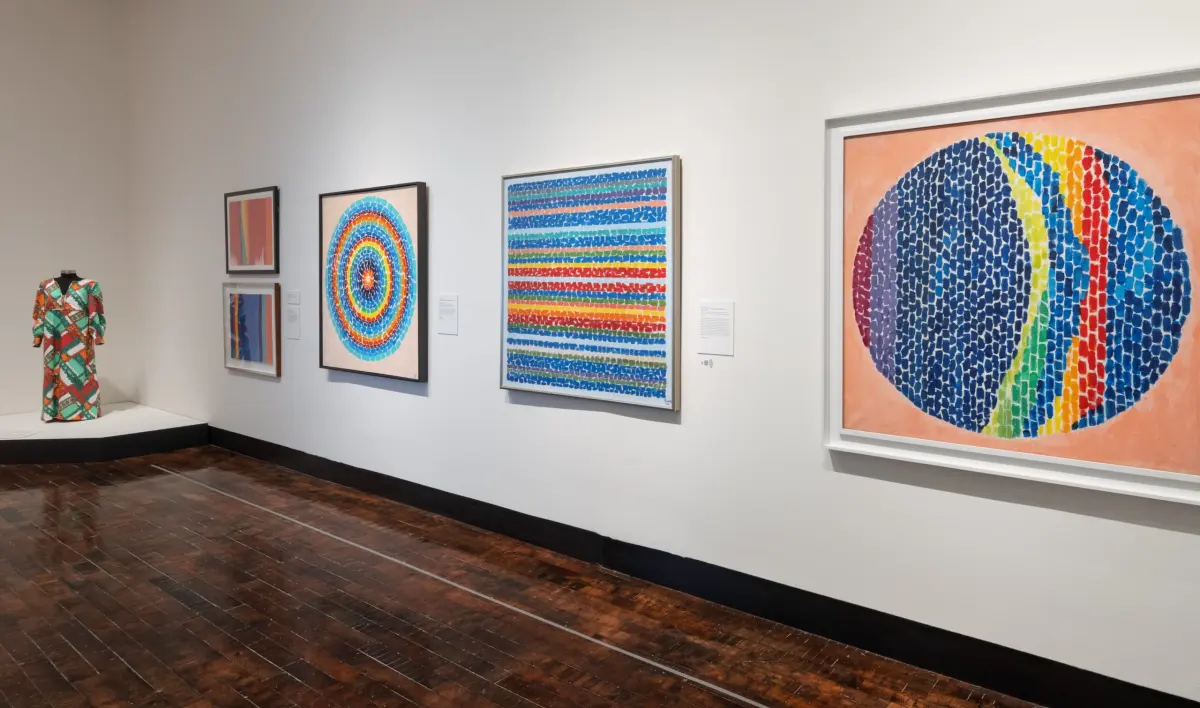
Another error is assuming her work was static or repetitive because of her consistent use of circles and dashes. In reality, her application of paint varied significantly depending on the series. For instance, her "Space" series, inspired by the Apollo moon landings, utilized different color palettes and spacing techniques compared to her "Earth" series. To truly appreciate her work, one must look closely at the variation in brushstroke density and the way she manipulated light through color contrast.
Best ways to appreciate Alma Thomas today
To gain a genuine understanding of her work, it is best to view her paintings in person whenever possible. Because she focused so heavily on the interaction of colors, digital reproductions often fail to capture the luminosity and depth of her surfaces. When visiting a museum, take time to stand at different distances from the canvas. From afar, the paintings appear as unified, glowing fields of color, but up close, the individual, rhythmic marks become visible, revealing the meticulous physical labor behind each piece.
If you are a student or an aspiring artist, consider the following steps to study her methods:
- Select a natural subject, such as a sunset or a flower bed, and simplify it into basic geometric shapes.
- Experiment with a limited color palette to see how different hues interact when placed side-by-side.
- Practice applying paint in uniform, short strokes to create a sense of rhythm across a surface.
- Observe how changing the background color of your canvas alters the perceived brightness of the shapes on top.
By engaging with her process, you can better understand why she remains a vital figure in the history of American art.
Key facts
- Alma Thomas was the first African American woman to have a solo exhibition at the Whitney Museum of American Art in 1972.
- She is best known for her signature style of rhythmic, concentric circles and patterns of bright, vibrant acrylic paint.
- Thomas did not begin her professional career as a full-time painter until she retired from teaching art in 1960 at age 69.
- Her work was deeply inspired by nature, including the flowers in her garden, and the NASA Apollo moon landings.
- She spent 35 years as an art teacher at Shaw Junior High School in Washington, D.C., where she mentored many young students.
- To appreciate her work, view it from a distance to let the individual dabs of color blend into a cohesive, pulsating light effect.
The bottom line
Alma Thomas stands as a pivotal figure in 20th-century American art, celebrated for her radiant, abstract compositions that explore the emotional power of color. By transitioning from a dedicated educator to a trailblazing painter in her late sixties, she broke significant barriers for women and African American artists. Her legacy remains a vibrant reminder that artistic vision can flourish at any stage of life.
People also ask
What artistic movement is Alma Thomas associated with?
She is primarily associated with the Washington Color School, a group of abstract painters who explored the effects of color and light. While she shared their interest in chromatic intensity, her work remained distinct due to her unique, mosaic-like brushwork.
How did the Apollo moon missions influence her art?
Thomas was fascinated by the space program and created a series of paintings titled the "Space" series. These works, such as Blast Off (1970), used abstract patterns to capture the energy and movement of rockets leaving Earth.
Did she paint anything other than abstract circles?
While her concentric patterns are her most famous contribution, she also painted representational works earlier in her career. She experimented with various forms of expressionism and still lifes before settling into her mature, abstract style in her later years.
Where can I see Alma Thomas's paintings today?
Her works are held in major collections, including the Smithsonian American Art Museum, the Museum of Modern Art, and the White House collection. In 2015, her painting Resurrection became the first work by an African American woman to enter the White House permanent collection.
What materials did she typically use?
She primarily used acrylic paints on canvas, which allowed for the bold, saturated colors that define her work. She applied the paint in small, distinct rectangular dabs, creating a textured surface that resembles a stained-glass window or a mosaic.
Why is her late start in the art world significant?
Her success after age 70 serves as a powerful testament to the idea that creative potential is not limited by age. She proved that a lifetime of teaching and observation could culminate in a highly original and influential artistic breakthrough during one's retirement years.
This answer was created with the help of AI research tools and reference sources. Spotted an error? Let us know — we correct mistakes quickly. See our editorial policy.