What art style did Paul Cézanne use?
Short answer
Paul Cézanne’s work is primarily categorized as Post-Impressionism, though he served as a crucial bridge to modern art. He moved beyond the fleeting light effects of Impressionism to focus on structural integrity, geometric simplification, and the use of color to define form, ultimately laying the essential groundwork for the development of Cubism.
On this page
What defines the art style of Paul Cézanne?
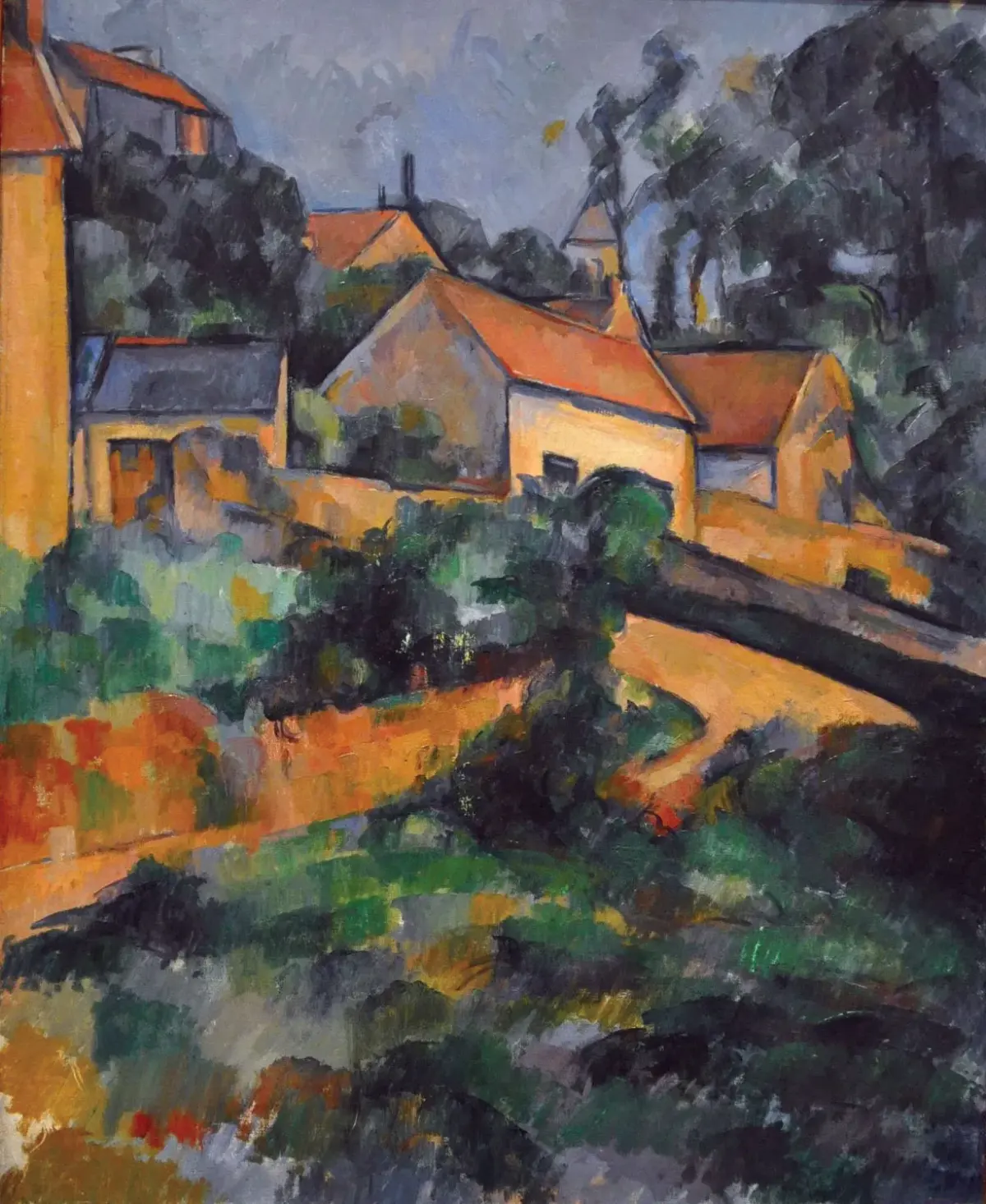
Cézanne’s unique approach is often described as a synthesis of Impressionist color and a rigorous, structural analysis of nature. While he began his career influenced by the loose brushwork of Camille Pissarro and the Impressionist movement, he eventually rejected their focus on transitory moments. Instead, he sought to make Impressionism something solid and durable, like the art of the museums. He achieved this by treating nature in terms of the cylinder, the sphere, and the cone, reducing complex landscapes and still lifes into their fundamental geometric components.
His style is characterized by the use of "constructive strokes"—small, rhythmic patches of color applied in a grid-like fashion. These strokes do not merely represent light; they build the physical volume of the objects on the canvas. By layering these patches, he created a sense of depth and weight that traditional perspective often failed to capture. This method allowed him to flatten the pictorial space while simultaneously suggesting a profound, tangible reality that influenced generations of modern painters.
How did Cézanne influence modern art movements?
The impact of Cézanne’s work on the trajectory of 20th-century art cannot be overstated. By breaking objects into geometric planes, he provided the blueprint for Cubism, a movement pioneered by Pablo Picasso and Georges Braque. They viewed his late work, particularly his series of Mont Sainte-Victoire paintings, as a revelation in how to represent three-dimensional space on a two-dimensional surface. His willingness to distort perspective to prioritize the composition over realistic representation liberated artists from the constraints of traditional academic painting.
Beyond Cubism, his influence extended to Fauvism and Expressionism through his bold, non-naturalistic use of color. He often used color to create tension and structure rather than to mimic the local hue of an object. This shift in priority signaled the birth of abstraction, as the focus moved from the subject matter itself to the internal logic of the painting. His legacy is defined by several key contributions:
- The systematic reduction of forms to geometric primitives.
- The use of color planes to define depth rather than traditional linear perspective.
- A focus on the intellectual structure of a scene rather than a fleeting atmospheric impression.
- The concept of "passage," where planes of color overlap and bleed into one another to unify the composition.
Why did Cézanne paint the same subjects repeatedly?
Cézanne was famously obsessive, often spending months or even years on a single canvas. He returned to the same subjects—most notably the Mont Sainte-Victoire mountain, his wife Hortense, and various still lifes—to investigate the relationship between perception and representation. He believed that the eye does not see a static image but rather a series of shifting viewpoints. By painting the same mountain dozens of times, he could experiment with different ways of capturing its essence through varied color harmonies and structural arrangements.
This repetition was not a sign of a lack of imagination, but a scientific approach to painting. He treated the canvas as a laboratory where he could test how light and shadow interacted with form. He was constantly refining his technique, striving to capture the "sensation" of nature rather than a mere photographic copy. This process-oriented mindset meant that he often left parts of his canvases unfinished, as he felt he had reached the limit of what paint could express for that particular study.
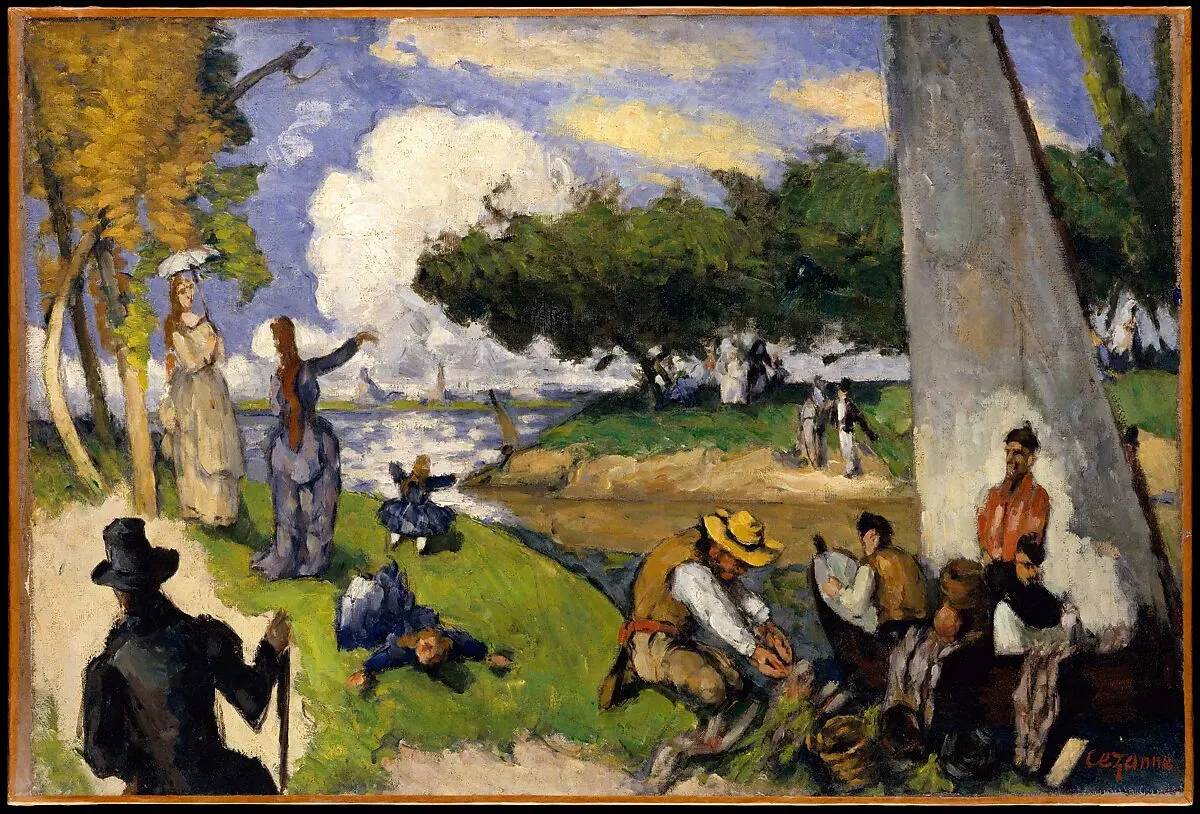
Common mistakes when analyzing Cézanne’s work
One common error is assuming that Cézanne’s distortions of perspective were caused by a lack of technical skill. Critics in his own time often dismissed his tilted tabletops and skewed architectural lines as incompetence. However, modern art historians recognize these as deliberate choices. Cézanne intentionally manipulated space to represent the way humans actually experience a scene, which involves moving our eyes and heads, rather than looking through a fixed, singular lens.
Another mistake is viewing his work solely through the lens of Impressionism. While he shared their vibrant palette, his goals were fundamentally different. He was not interested in the "gossip" of the moment, such as the shimmer of water or the bustle of a city street. Instead, he sought the timeless, architectural quality of his subjects. To properly analyze his work, one must look past the subject matter and observe the underlying grid of color. When studying his paintings, follow these steps to see his technique clearly:
- Identify the primary geometric shapes hidden within the objects.
- Observe how the brushstrokes follow the contour of the form rather than the direction of the light.
- Notice how the colors shift in temperature to create depth without using black shadows.
Best way to appreciate Cézanne for beginners
To truly appreciate Cézanne, it is helpful to look at his still-life paintings before tackling his complex landscapes. In his still lifes, such as those featuring apples and ginger jars, the geometric structure is more apparent and easier to deconstruct. Notice how he tilts the surface of a table toward the viewer, which allows him to display more of the objects while creating a dynamic, tilted composition. This technique forces the viewer to engage with the painting as a constructed object rather than a window into reality.
When visiting a museum or viewing his work online, try to focus on the "constructive strokes" rather than the objects themselves. Look at how the colors of an apple might bleed into the background, creating a unified surface. This is the hallmark of his genius: the ability to make the entire canvas vibrate with a singular, cohesive energy. By shifting your focus from "what" he is painting to "how" he is building the image, you will gain a deeper understanding of why he is considered the father of modern art.
Key facts
- Paul Cézanne is primarily classified as a Post-Impressionist, serving as the crucial bridge between 19th-century Impressionism and 20th-century Cubism.
- He rejected the fleeting light effects of Impressionism, preferring to paint with structured, geometric forms to reveal the underlying permanence of his subjects.
- Cézanne often applied paint in small, rhythmic, constructive brushstrokes that built up color intensity and spatial depth simultaneously.
- He famously reduced natural forms to their essential shapes, specifically the cylinder, the sphere, and the cone.
- To capture movement, he frequently painted objects from multiple perspectives within a single canvas, a technique that directly inspired Pablo Picasso and Georges Braque.
- When practicing his style, avoid blending colors into smooth gradients; instead, layer distinct, flat patches of color to create a sense of solidity and volume.
The bottom line
Paul Cézanne transformed art history by shifting the focus from capturing momentary light to analyzing the structural essence of objects. By utilizing geometric simplification, rhythmic brushwork, and multiple perspectives, he dismantled traditional representational rules. His methodical approach allowed him to create a sense of monumental stability, effectively bridging the gap between the soft, atmospheric techniques of the Impressionists and the fractured, analytical vision of the modern era.
People also ask
Did Paul Cézanne belong to the Impressionist movement?
Cézanne exhibited with the Impressionists in 1874 and 1877, but he eventually grew dissatisfied with their lack of formal structure. He sought to make Impressionism something solid and durable, like the art found in museums.
Why is Cézanne called the "father of modern art"?
Both Henri Matisse and Pablo Picasso famously referred to Cézanne as the father of us all. His departure from traditional perspective and his focus on geometric simplification paved the way for Fauvism, Cubism, and abstract art.
What subjects did Cézanne paint most often?
He focused heavily on still lifes, landscapes, and portraits. His series of paintings depicting Mont Sainte-Victoire in Provence and his numerous studies of apples remain his most iconic works.
How did Cézanne influence the development of Cubism?
Cubist painters adopted his method of breaking down objects into geometric planes. By viewing his work, they learned how to represent three-dimensional space on a two-dimensional surface without relying on traditional vanishing points.
What was Cézanne’s approach to color?
He used color to build form rather than just describe it. By placing warm colors like red or orange next to cool colors like blue or green, he created a sense of depth and vibration without using traditional shadows.
Did Cézanne achieve fame during his lifetime?
For most of his career, he was ignored or mocked by the Parisian art establishment. It was only during his final years, particularly after a major solo exhibition in 1895, that he gained recognition among younger artists.
This answer was created with the help of AI research tools and reference sources. Spotted an error? Let us know — we correct mistakes quickly. See our editorial policy.